sinkholeSF23 — Hidden Damage Before Visible Collapse
The collapse is never the beginning.
It’s the reveal.
By the time the ground opens, the system has already failed.
In 1995, the Sea Cliff event in San Francisco didn’t start with a sinkhole.
It started with hidden damage inside a buried sewer line nearing 100 years old.
Heavy rain didn’t create the failure.
It exposed it.
Water entered a compromised system.
Pressure increased inside weakened pipe walls.
Leaks formed.
Soil began to move.
The structure above had no signal.
Until it lost support.
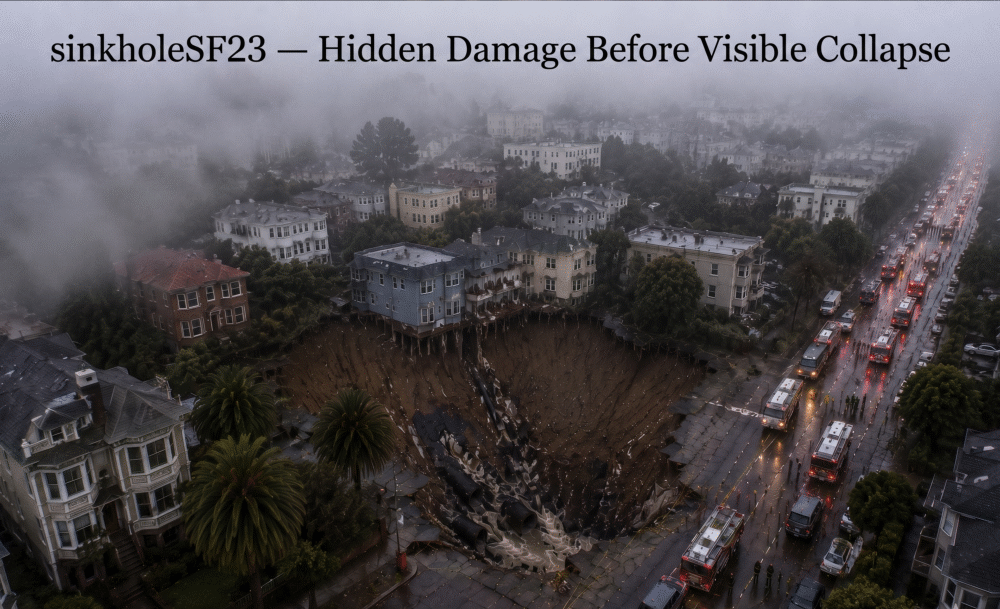
SYSTEM VS SYMPTOM BREAKDOWN
Visible collapse is a late-stage condition.
It is not the problem.
It is the outcome.
What shows up:
- Ground failure
- Structural shifting
- Sudden loss of stability
- Emergency response
What existed long before:
- Pipe wall degradation
- Micro-fractures at joints
- Continuous low-volume leakage
- Soil erosion beneath load-bearing areas
The system didn’t fail suddenly.
It failed slowly.
Then all at once.
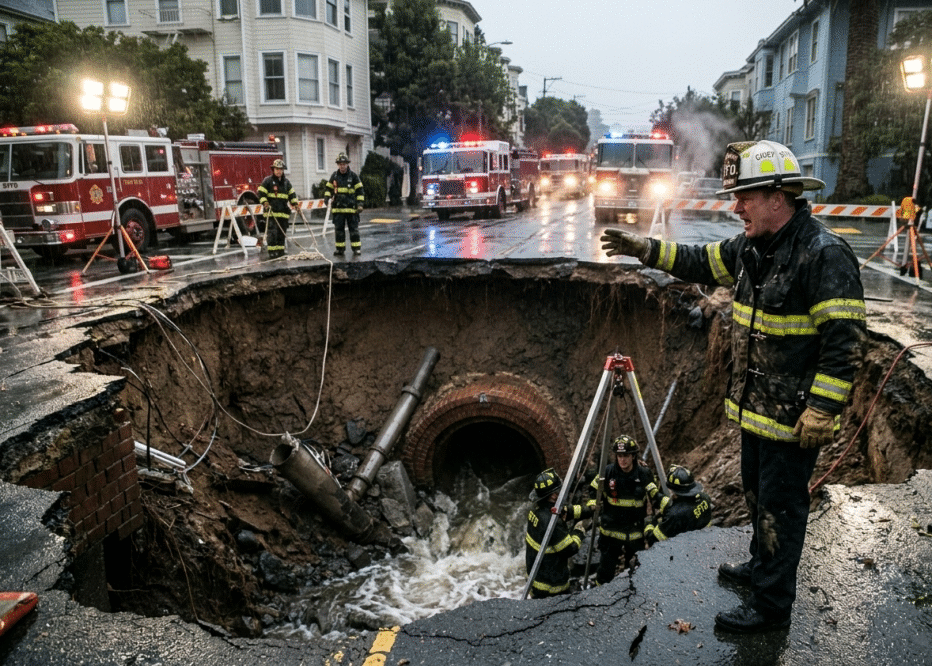
FAILURE ORIGIN (NOT VISIBLE DAMAGE)
Hidden damage is the starting point.
Always.
Pipes don’t go from intact to broken instantly.
They degrade under constant conditions.
In the San Francisco Bay Area:
- Soil is active
- Moisture cycles are constant
- Infrastructure is aging beyond design life
That environment creates internal damage patterns:
- Corrosion from inside out
- Stress fractures from ground movement
- Joint separation from shifting soil
- Pressure imbalance across weakened sections
None of this is visible.
But all of it is measurable in system performance:
- Minor pressure inconsistencies
- Slow drainage changes
- Intermittent leaks
These are early-stage signals.
Most get ignored.
WHY REPAIRS DON’T SOLVE UNDERLYING CONDITIONS
Repairs respond to visible failure.
They don’t address hidden damage.
Fixing a leak:
- Stops water at that point
- Does not restore material integrity elsewhere
- Does not correct system-wide stress
The surrounding pipe network remains:
- The same age
- Under the same pressure
- Inside the same environment
So the next compromised section fails.
Then the next.
This is why repairs repeat.
Not because the fix was done wrong.
Because the system itself is degraded.

SYSTEM ALIGNMENT VS PATCHWORK
Systems fail when they lose consistency.
Aligned system:
- Uniform materials across all lines
- Balanced internal pressure
- Predictable flow behavior
- Structural compatibility with soil conditions
Patched system:
- Different materials reacting differently to pressure
- Uneven internal stress distribution
- Flow disruptions at repair points
- Increased strain at connections
Every patch creates a transition point.
Every transition point becomes a future risk.
Especially in movement-heavy environments.
INFRASTRUCTURE → HOME (PATTERN TRANSLATION)
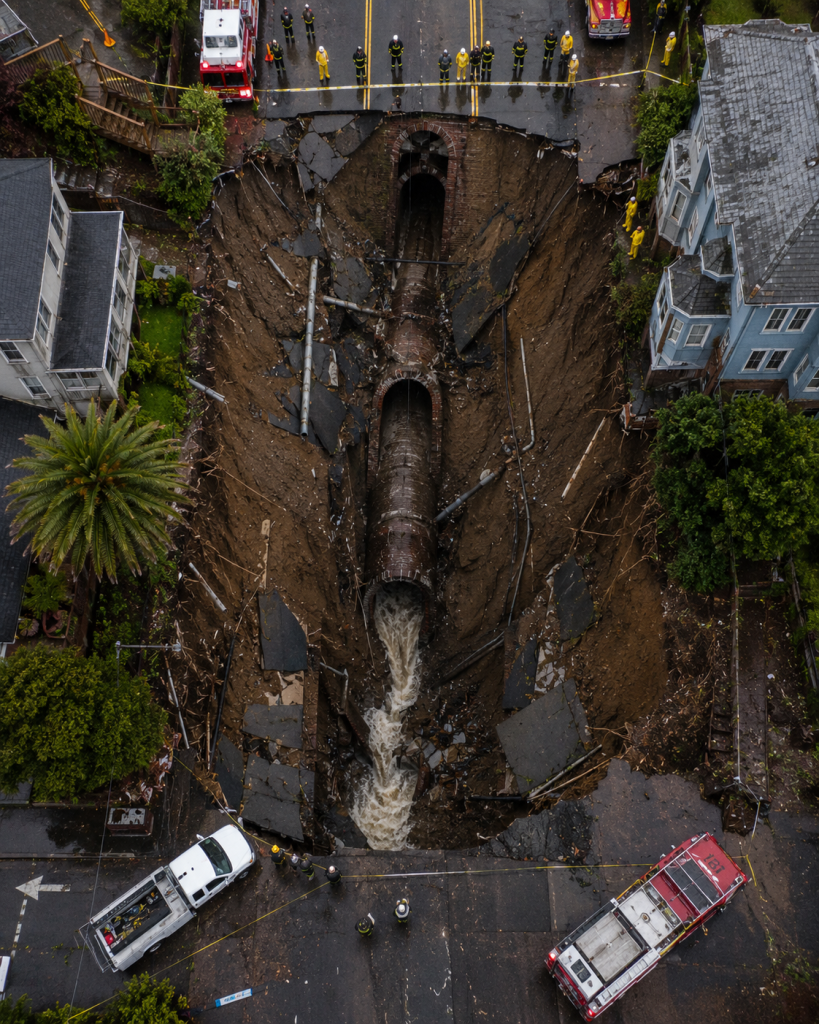
The Sea Cliff collapse is not unique.
It’s scaled.
Infrastructure failure → Residential system failure
- Sewer line breakdown → Main line deterioration
- Underground leakage → Soil destabilization under the home
- Void formation → Slab or foundation movement
- Structural collapse → Interior damage and instability
Same pattern.
Different size.
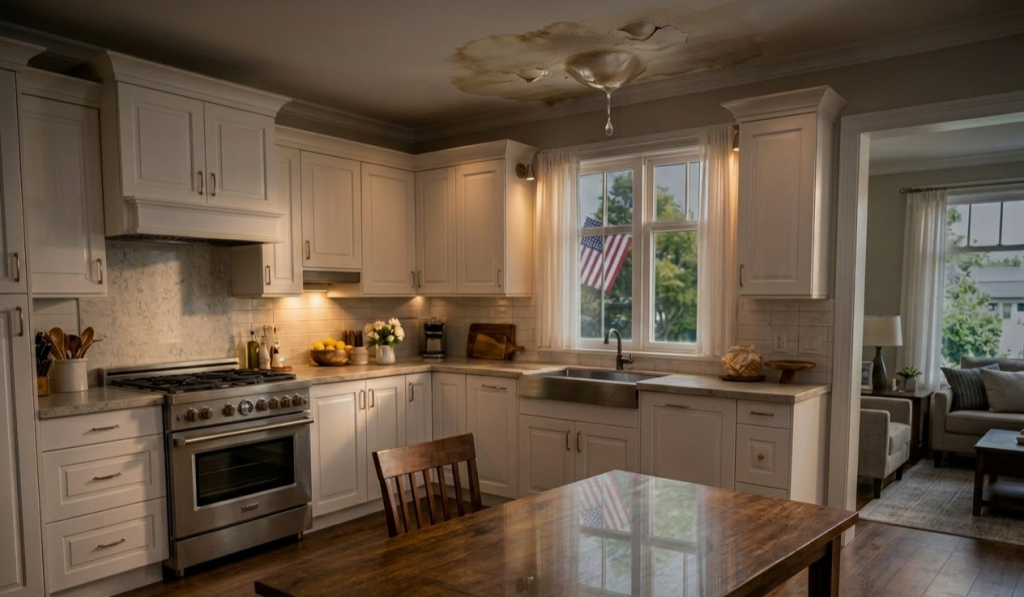
THE HIDDEN DAMAGE PROBLEM IN HOMES
Most homes never see the failure forming.
Because it’s below the surface.
Common indicators:
- One leak becomes multiple over time
- Repairs occur in different areas of the home
- Water pressure fluctuates without clear reason
- Moisture appears where it shouldn’t
These are not isolated issues.
They are signs of system-wide degradation.
THE DECISION POINT
You can manage visible damage.
Or you can eliminate hidden damage.
One is reactive.
The other is structural.
REMOVE HIDDEN DAMAGE AT THE SYSTEM LEVEL
A full repipe addresses the system—not the symptom.
- Replaces aging materials across the entire network
- Restores pressure consistency from entry to exit
- Removes compromised sections before they fail
- Aligns the system with environmental conditions
It eliminates hidden damage before it becomes visible collapse.
Because once the failure shows itself—
the system has already been unstable for years.