



San Francisco Sinkhole That Swallowed a Mansion — Full Breakdown Report
📍 Geographic + Structural Context (Pre-Event Environment)
Event Type
Residential Ground Collapse / Sinkhole Formation
Primary Pattern
WATER MOVEMENT
Secondary Pattern
SATURATION
Modifiers
EXTERIOR / SUDDEN / RESIDENTIAL
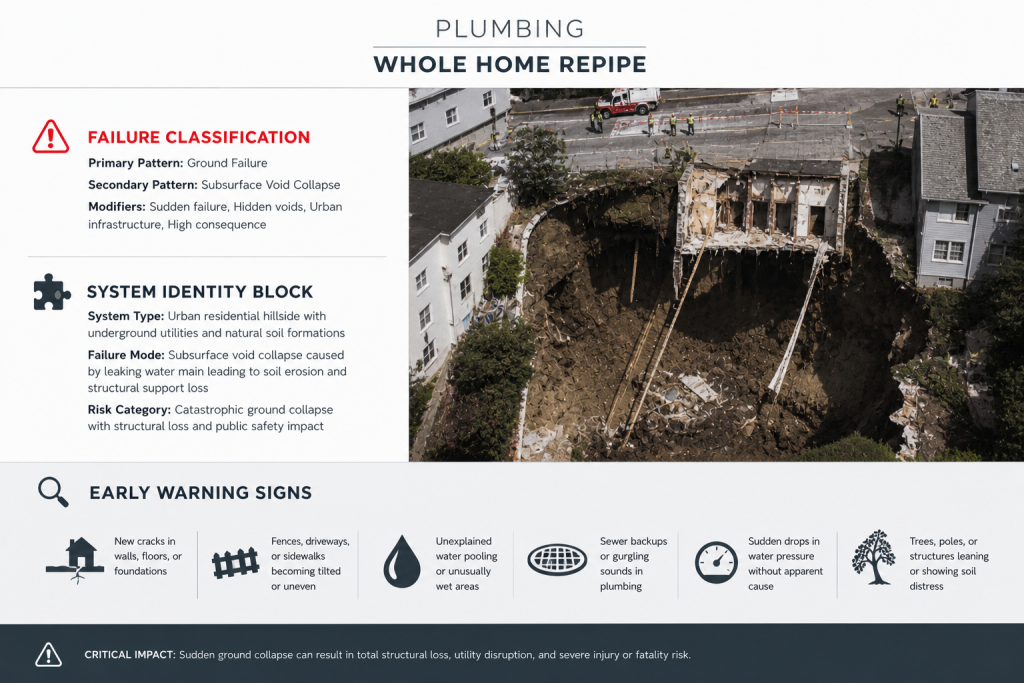
What Happened
Water moved beneath the surface where it was not controlled.
Over time, soil was displaced.
Voids formed underground.
The ground supporting the home weakened slowly and invisibly.
Then the structure lost support.
The home collapsed into the void below, with little warning at the moment of failure.
What appeared sudden was the final stage of a long, hidden process.
Pattern Translation™
Infrastructure → Residential Mapping
Ground stability system → Home foundation and plumbing system
Underground water flow → hidden plumbing leaks or drainage issues
Soil displacement → erosion beneath slab or foundation
Void formation → empty space under concrete or footings
Surface stability loss → cracking in foundation or flooring
Ground collapse → slab drop or structural failure
Full sinkhole event → catastrophic foundation or home collapse
Pattern Compression
This is water movement causing saturation and structural loss.
This didn’t start with the house.
It started underground.
A sewer line failed.
Soil washed away.
A void formed.
By the time it was visible…
the damage was already done.
The failure occurred in a residential hillside zone within San Francisco, where older infrastructure intersected with high-value housing development.
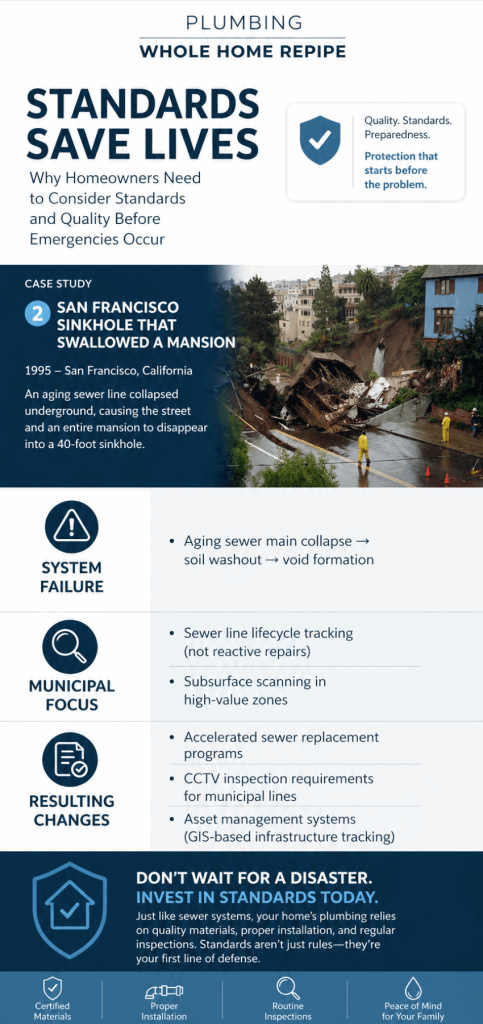
Critical preconditions:
- Topography: Sloped terrain with homes built on cut-and-fill hillside lots
- Subsurface complexity: Dense network of aging sewer and drainage systems beneath residential streets
- Soil conditions: Mixed fill soils + clay layers prone to erosion when saturated
- Infrastructure age: Sewer system included decades-old brick-lined pipes, not designed for modern load or flow rates
- Nearby activity: Ongoing construction + ground disturbance contributed to stress on underground systems
11 Plumbing/Pipe/Dam Disasters in California
1. Baldwin Hills Dam Collapse — Los Angeles, California (1963)
A hillside dam failed without warning, sending millions of gallons into a residential neighborhood in minutes.
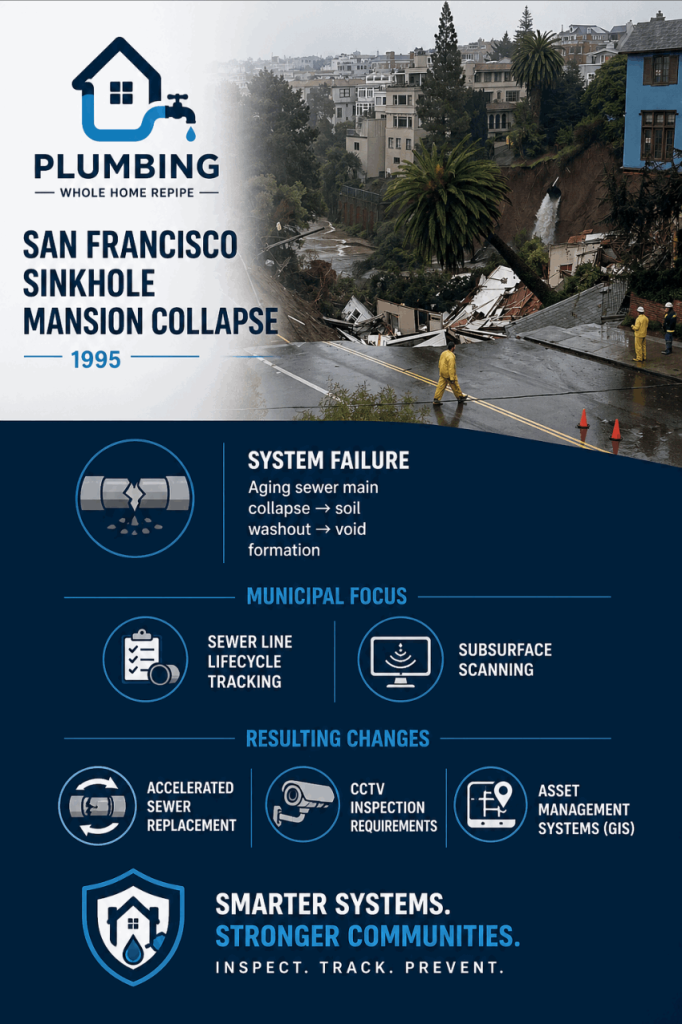
2. San Francisco Sinkhole That Swallowed a Mansion — San Francisco, California (1995)
An aging sewer line collapsed underground, causing the street and an entire mansion to disappear into a 40-foot sinkhole.
3. Fresno Toxic Water Crisis From Corroded Pipes — Fresno, California (2016)
Internal pipe corrosion contaminated residential water supplies, exposing thousands of homes to unsafe drinking conditions.
4. Oroville Dam Spillway Failure Threatens Homes — Oroville, California (2017)
Structural failure at a major dam triggered mass evacuations as downstream residential areas faced catastrophic flood risk.
5. Yuba County High-Pressure Pipe Rupture Floods Area — Yuba County, California (2026)
A massive pressurized pipe burst released uncontrolled water, causing rapid flooding and structural damage.
6. Yuba–Sutter Levee Break Flood Disaster — Yuba City, California (1955)
A levee failure redirected floodwaters into residential zones, destroying homes and overwhelming entire communities.
7. Hillside Home Collapse From Hidden Water Line Leak — Studio City, Los Angeles (2000s)
A slow underground leak saturated the soil beneath a home, eventually causing the foundation to shift and collapse.
8. Slab Leak Erupts Beneath Home and Destroys Interior — San Jose, California (2010s)
A ruptured pipe under the slab forced water upward, buckling floors and flooding the entire interior.
9. Toilet Supply Line Burst Floods Entire Home During Vacation — Anaheim, California (2010s)
A small supply line failure ran unchecked for days, filling the home with water and causing total interior loss.
10. Sewer Backup Floods Coastal Home With Wastewater — Pacifica, California (2010s)
Storm overload forced sewage back through residential drains, contaminating the home from the inside out.
11. Attic Pipe Burst Sends Water Through Ceilings — Sacramento, California (Cold Snap Event)
A frozen pipe burst above the ceiling, sending water cascading down and destroying multiple rooms below.
🌧️ Weather + Environmental Conditions
Unlike dry-condition failures, this event was weather-amplified.
- Period of heavy rainfall leading up to the collapse
- Saturated soil conditions → reduced structural cohesion
- Increased stormwater flow into the sewer system
👉 Key dynamic:
Water volume + soil saturation accelerated an already failing system

⚙️ Failure Mechanics (What Actually Broke)
Step-by-Step Breakdown
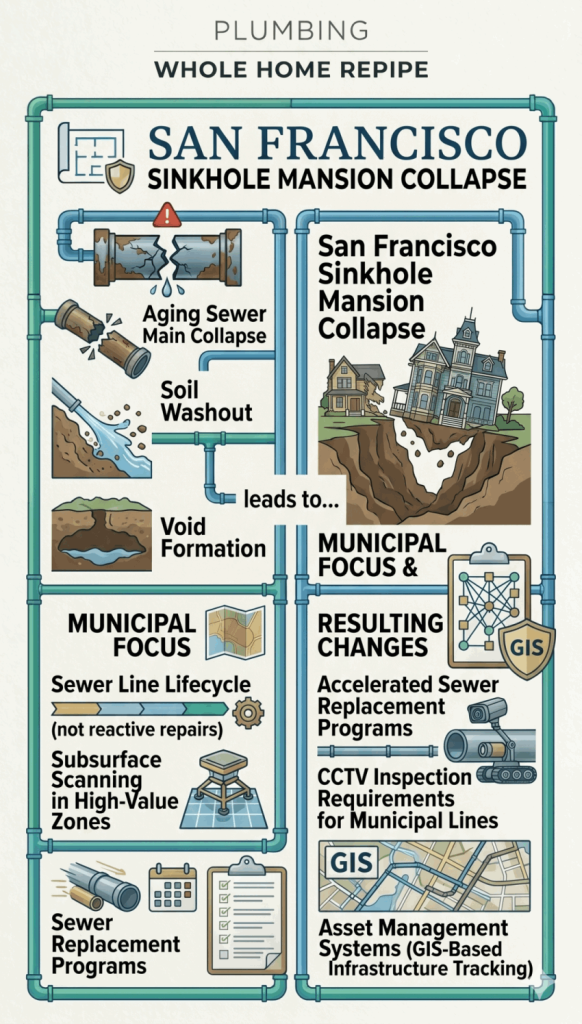
- Aging Infrastructure Weakness (Long-Term Setup)
- The brick sewer line experienced internal degradation over time
- Mortar joints weakened → small infiltration/exfiltration points
- Storm Surge Overload
- Heavy rain increased the flow rate and internal pressure
- System pushed beyond original design capacity
- Soil Erosion (Subsurface Washout)
- The leaking pipe allowed water to escape into the surrounding soil
- Soil carried away gradually → void formation around pipe
- External Disruption (Construction Factor)
- Nearby construction activity contributed to vibration + load changes
- Further destabilized the already weakened soil structure
- Sudden Structural Collapse
- Void reached critical size
- Ground above could no longer support the load → surface collapse (sinkhole)
💥 The Event (1995)
- Time: During/after intense storm conditions
- Initial warning signs: Subtle ground movement, possible minor depressions or cracking (often unnoticed)
This wasn’t a rare disaster—it’s what happens when systems overload faster than they’re designed to handle. The same failure pattern exists at a smaller scale inside residential plumbing.
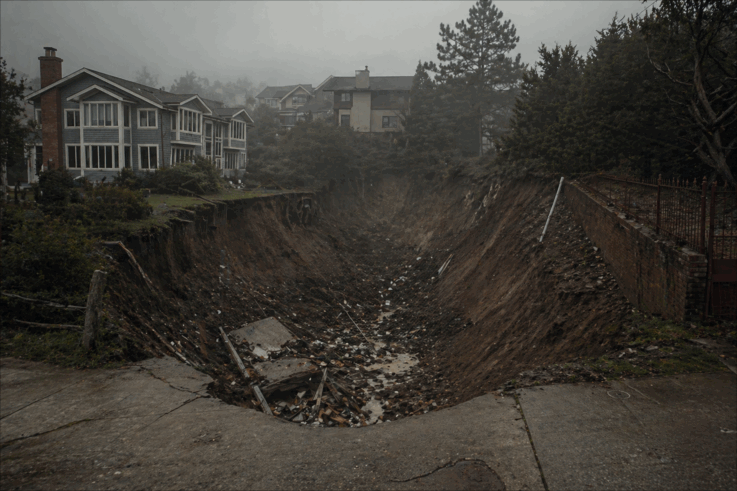
Collapse Dynamics
- Sewer pipe failure triggered rapid subsurface soil migration
- The ground surface gave way abruptly
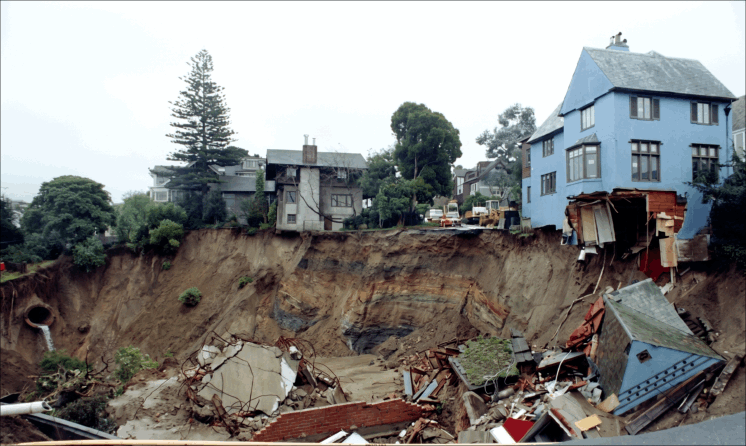
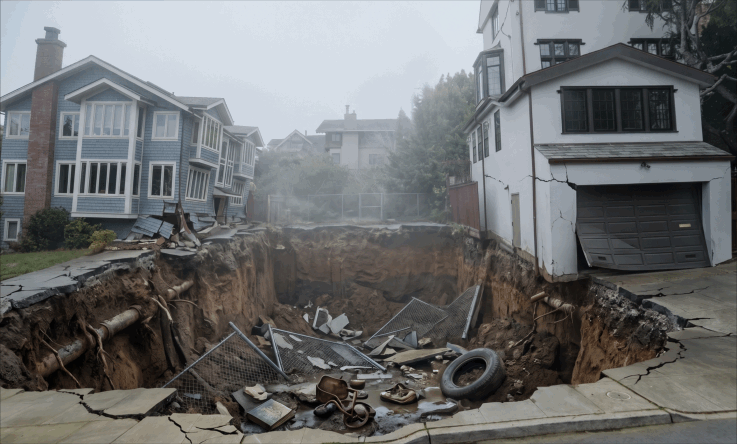
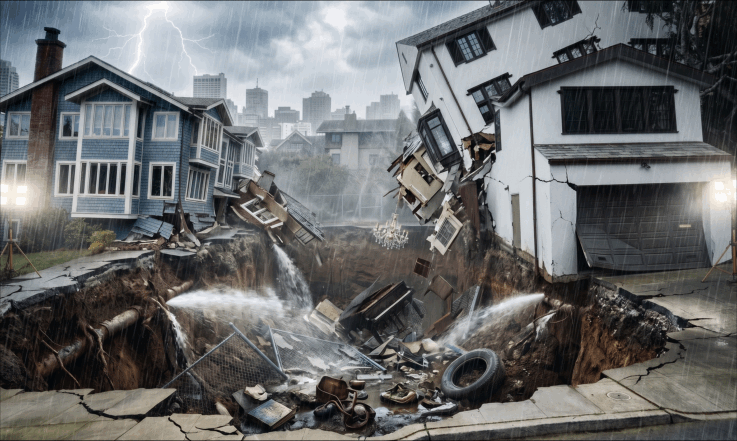
- A massive sinkhole opened beneath the property

Physical Outcome
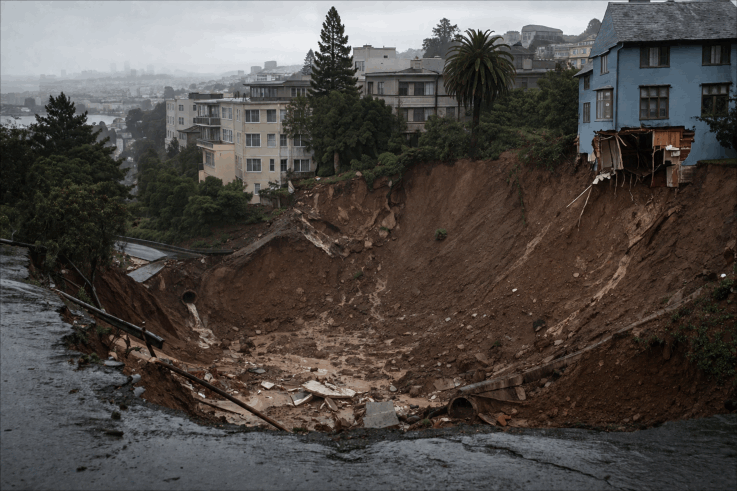
- ~40-foot-deep sinkhole formed
- The entire mansion is structurally compromised and effectively swallowed into the void

🏚️ Immediate Damage Profile
- One large residential structure was lost
- Surrounding properties destabilized
- Multiple homes evacuated due to risk of further collapse

Secondary risks:
- Additional underground void expansion
- Potential utility line damage (gas, water, sewer)
- Ongoing soil instability in the surrounding area

🧠 System-Level Failure Analysis
1. Hidden Infrastructure Failure
- Critical system (sewer line) failed out of sight
- No visible warning until surface collapse
2. Aging System + Modern Load Mismatch
- Old brick infrastructure subjected to:
- Increased flow
- Increased development load
- The system exceeded its long-term capacity
3. Compound Failure Factors
- Not just one cause:
- Aging pipe
- Heavy rain
- Soil saturation
- Construction vibration
👉 This is a multi-variable failure cascade
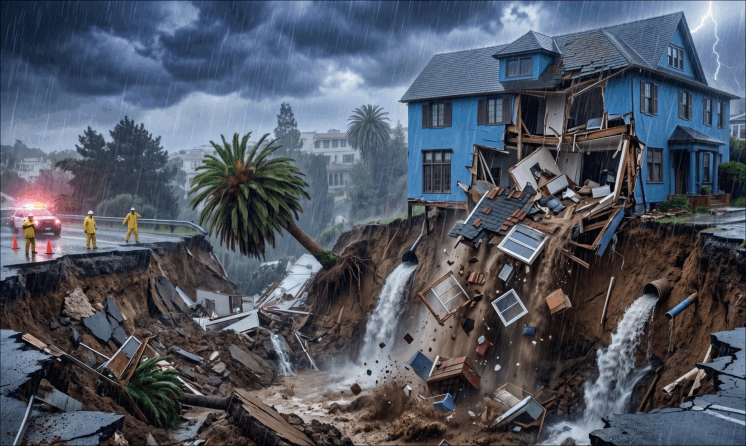
🔁 Direct Aftermath (Short-Term)
- Emergency evacuation of nearby homes
- Area cordoned off for safety
- Geotechnical investigation initiated
- Sewer system inspection + emergency repairs
🧱 Indirect Effects (Long-Term Changes)
🏗️ 1. Infrastructure Inspection Upgrades
- Increased emphasis on:
- Sewer camera inspections
- Leak detection in older systems
🌧️ 2. Stormwater Management Awareness
- Recognition that combined sewer loads can:
- Overwhelm aging systems
- Accelerate hidden failures
🏘️ 3. Development Risk Consideration
- Greater scrutiny on:
- Building over aging infrastructure
- Soil stability in hillside developments
📡 4. Subsurface Monitoring
- Adoption of:
- Ground-penetrating radar (in some cases)
- Soil stability analysis before construction
🧩 Hidden Insights (What Most People Miss)
⚠️ 1. “The Void Forms First”
The collapse didn’t start at the surface.
- Underground erosion created a hidden cavity
- Surface remained intact—until it didn’t
👉 By the time you see it, failure is already complete
⚠️ 2. Water Is the Transport Mechanism
Water didn’t just add pressure.
- It moved soil out of place
- Turned solid ground into a hollow shell
⚠️ 3. Infrastructure Failure Can Mimic Soil Failure
To the homeowner, it looks like:
- “The ground gave out”
In reality:
- The pipe failed → soil followed → surface collapsed
🧠 Contractor / System Thinking Translation
This event maps directly to residential failure patterns:
| Underground System | Residential Equivalent |
| Sewer line erosion | Slab leak undermining the foundation |
| Soil washout | Void under the concrete slab |
| Sinkhole collapse | Floor/foundation drop |
| Storm overload | High-demand plumbing stress |
👉 Same equation:
Hidden leak + moving water + time = structural loss
🎯 Final Takeaways (Mechanical Framing)
- Root Cause: Aging sewer infrastructure + soil erosion
- Trigger: Storm-induced flow + external disturbance
- Failure Type: Subsurface void → sudden collapse
- Impact Multiplier: Water movement + soil type + load above
- Lesson:
The system fails underground first — long before you see it