

Drain Venting Disruption and Sewer Gas Backflow Condition
Across neighborhoods like San Mateo and Orinda, multi-bathroom homes often undergo drainage modifications during repipe work.
At the same time, venting systems are frequently misunderstood because they are not visible or directly tied to water flow.
Because of this, air balance within the plumbing system is often unintentionally disrupted.
In cities such as Philadelphia and Boston, older homes show similar venting failures after partial remodels.
Unlike supply-side issues, these failures do not leak water.
Instead, they alter pressure conditions inside the drainage system.
No contractor was involved in this installation.
All work was performed by the homeowner.
Initial Conditions
Inside a two-story, four-bathroom home, drainage lines were modified during a repipe effort.
The system previously relied on a continuous vent stack to maintain air balance.
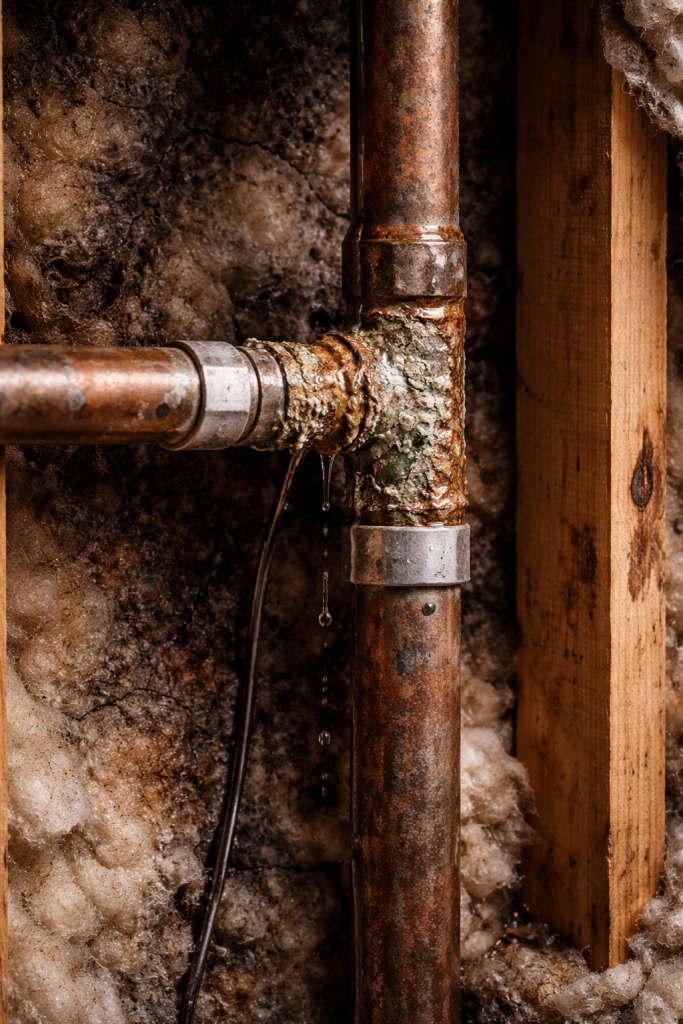
Early indicators included slow draining sinks, occasional gurgling sounds, and fluctuating water levels in toilets.
Additionally, intermittent sewer odor and noisy pipes were observed.
Water hammer and low water pressure were also present due to broader system instability.
Trap seals initially remained intact.
However, venting continuity had already been compromised.
What the Homeowner Thought
From the homeowner’s perspective, vent lines appeared secondary to drain routing.
The focus remained on moving waste water efficiently.
Certain vent sections were viewed as unnecessary or redundant.
Simplifying the layout appeared to reduce complexity.
The decision centered on pipe placement.
Airflow within the system was not considered critical.
What Was Actually Happening
Plumbing systems rely on venting to equalize pressure.
Air must enter the system as water flows through drains.
By altering or removing vent lines, pressure balance was disrupted.
Negative pressure formed within drain lines during use.
This pressure siphoned water out of trap seals.
Trap seals normally prevent sewer gases from entering living spaces.
Once seals were compromised, gases moved freely into the home.
The system transitioned from functional drainage to air contamination.
11. Unregulated System Pressure Spike Multi-Point Fixture Failure
12. Dead-Leg Water Stagnation Bacterial Growth Risk Condition
13. Unsupported Piping Expansion and Water Hammer Stress Failure
14. Mixed PEX System Compatibility and Connection Degradation Failure
15. Undersized Distribution Line Flow Restriction System Collapse
16. Sub-Slab Buried Fitting Access and Structural Failure Event
17. Closed-System Thermal Expansion Pressure Accumulation Failure
18. Drain Venting Disruption and Sewer Gas Backflow Condition
19. Plumbing Distribution Mapping and Hot-Cold Cross-Connection Failure
20. Vertical Load-Induced Pipe Support and Base Connection Failure
Homeowner Action (DIY – No Contractor Involved)
No licensed plumber participated in this modification.
The homeowner independently rerouted and eliminated portions of the vent system.
No evaluation of vent stack continuity was performed.
No testing confirmed proper air balance after changes.
Drain lines were connected based on routing convenience.
Venting requirements were not maintained.
Failure Trigger
During normal fixture use, multiple drains operated simultaneously.
Water movement created pressure imbalance in the system.
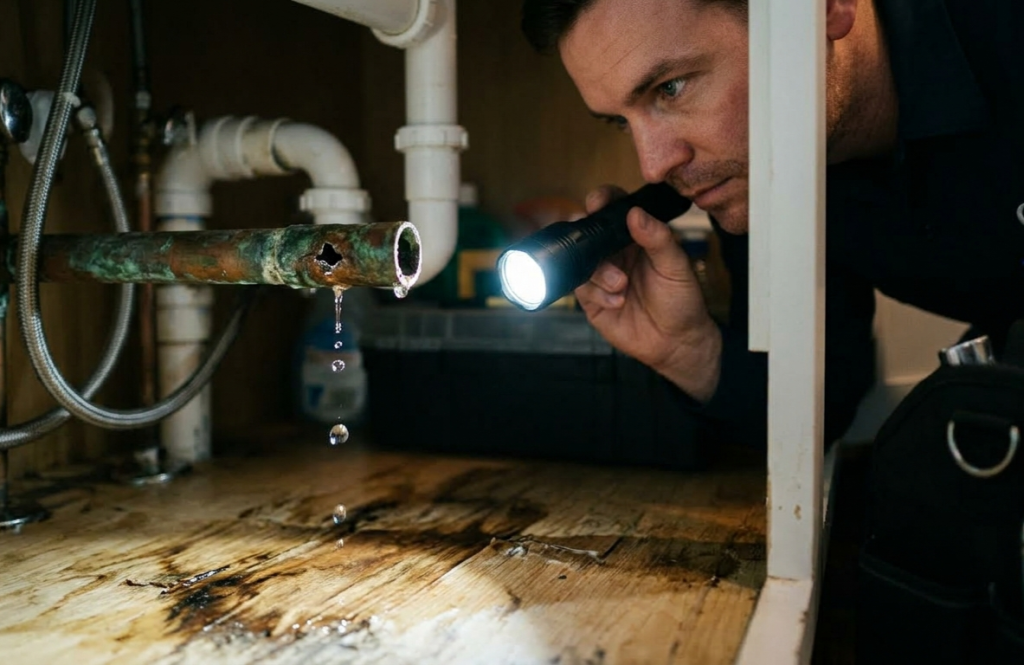
Negative pressure pulled water from traps beneath sinks and fixtures.
Once trap seals were broken, sewer gas entered the home.
The failure was not mechanical.
It was driven by airflow disruption.
Why It Was Not Visible at Install
Immediately after installation, drains appeared functional.
Water flowed through the system without obstruction.
Venting issues do not appear during short-term testing.
Pressure imbalance only develops during sustained or simultaneous use.
In homes like those in San Mateo, concealed vent lines hide airflow behavior.
Homeowners are not expected to evaluate air balance without system knowledge.
Execution & Escalation
Over time, sewer odors became persistent throughout the home.
Odor intensity increased during peak usage periods.
Occupants reported discomfort and air quality concerns.
Symptoms included irritation and respiratory sensitivity.
The issue spread across multiple rooms.
The entire drainage system became affected.
Extent of Damage
No water damage occurred.
Structural components remained intact.
However, indoor air quality was compromised.
Living conditions were affected across the home.
Trap seals required restoration.
Vent system reconfiguration became necessary.
What Professionals Verify
Professionals maintain continuous vent stack integrity.
They ensure proper air balance across all drainage lines.
Vent sizing and routing are calculated based on fixture demand.
Airflow is tested under real operating conditions.
Trunk and branch plumbing systems are designed with venting in mind.
Verification ensures traps remain sealed during use.

Decision Distortion
The homeowner believed the decision involved simplifying drain routing.
The actual decision involved maintaining pressure balance within the system.
Visible drainage suggested success.
Hidden airflow disruption determined outcome.
This mismatch created a non-visible but persistent failure.
Broader Pattern
In areas like Walnut Creek and across national markets such as Philadelphia, improper venting produces similar conditions.
Remodel-driven changes often disrupt airflow unintentionally.
Contractor standards data shows symptoms may appear immediately or develop over weeks.
Usage patterns influence severity.
The system appears functional initially.
Failure emerges through air imbalance.
Process Context
A whole-house repipe or drainage modification is executed as a controlled system design.
Both water flow and air movement are considered equally.
Vent stacks are preserved or properly rerouted.
Horizontal vs vertical repiping layouts are planned to maintain airflow.
Drywall access is strategic and limited.
Water bypass systems maintain service during installation.
Same-day water restoration is balanced with full system verification.
Permitting & Compliance
City plumbing permits require proper venting configuration.
Building code inspections verify air balance within drainage systems.
Improper venting may affect homeowners insurance coverage.
Resale value ROI can be impacted by unresolved odor issues.
Licensed, bonded, and insured professionals ensure compliance with code standards.
Outcome Shift
The failure did not result from drain blockage.
It resulted from disrupted venting and pressure imbalance.
If vent continuity had been maintained, trap seals would have remained intact.
No sewer gas would have entered the home.
Instead, airflow disruption created a persistent indoor contamination issue.
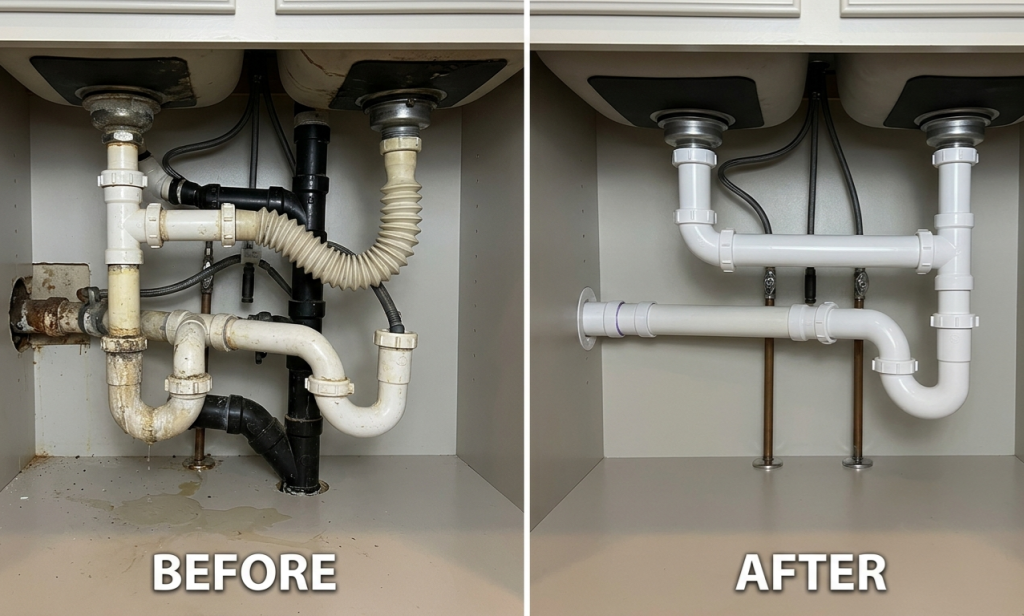
Cost & Decision Considerations
Costs extended into vent system reconstruction.
Drywall patching and texture matching were required to access concealed lines.
Air quality remediation added additional scope.
Project timelines expanded due to system correction.
Financial exposure exceeded initial expectations.
Venting decisions determined total impact.
Key Takeaway
No contractor was involved in this installation.
All work was performed by the homeowner.
The decision was not about simplifying drain routing.
The decision was about maintaining proper system airflow.
Air balance protects system integrity.
Venting prevents contamination.
Assumption creates invisible risk.