
Karst / Sinkhole / Subsurface Void Failure
Definition
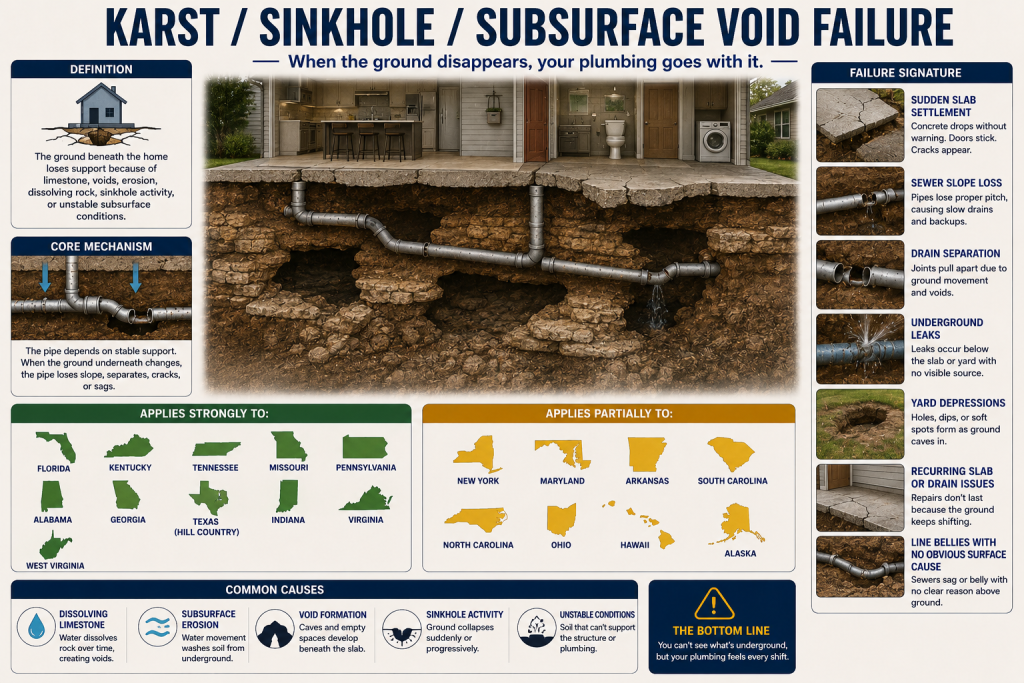
Karst / Sinkhole / Subsurface Void Failure occurs when the ground underneath the plumbing system loses stable support because of underground voids, limestone dissolution, erosion, sinkhole activity, lava tube environments, or unstable subsurface terrain.
The plumbing system depends on consistent underground support.
When the ground underneath the pipe shifts, dissolves, weakens, or disappears, the plumbing system begins losing alignment, slope, and structural stability.
The pipe itself may initially remain intact.
The support underneath the pipe changes first.
How Subsurface Void Conditions Attack Plumbing
Underground plumbing systems rely on stable soil pressure and consistent support conditions.
Karst and void environments create uneven underground movement.
As the terrain shifts, buried plumbing systems begin experiencing:
- support loss
- slope variation
- bending stress
- joint separation
- underground sagging
- differential settlement
Subsurface Void Failure conditions include:
- limestone dissolution
- sinkhole environments
- karst terrain
- underground erosion
- unstable underground drainage
- lava tube environments
- groundwater movement
- void migration
- saturation-related washout
- sandy instability
- slope erosion
- underground cavity formation
The plumbing system may continue functioning while hidden underground instability slowly increases.
Why This Failure Family Matters
Most homeowners think recurring sewer or underground plumbing problems are isolated repair issues.
Many recurring underground plumbing failures are actually terrain-stability problems.
This is why some homes repeatedly experience:
- sewer bellies
- drain separation
- recurring backups
- underground settlement
- recurring slab movement
- unexplained underground leaks
The repair may temporarily restore the plumbing.
The underground instability often remains active.
This is also why entire neighborhoods in karst regions can develop similar underground plumbing patterns over time.
The homes share the same unstable support environment.
Strong Karst / Subsurface Void States
Florida
Tennessee
Kentucky
Missouri
Pennsylvania
Alabama
Georgia
Texas Hill Country
Indiana
Virginia
West Virginia
Hawaii
Florida Version
Florida combines limestone terrain, high groundwater conditions, saturation, sand instability, and sinkhole environments.
Many plumbing systems operate above terrain that naturally shifts over time.
Subsurface erosion and support instability frequently affect slab foundations and underground drains.
Florida plumbing failures often combine:
- saturation
- slab systems
- sinkhole exposure
- underground washout
- humidity
- coastal corrosion
Tennessee / Kentucky Version
Large portions of Tennessee and Kentucky operate inside classic karst terrain.
Underground caves, limestone dissolution, irregular drainage paths, and unstable support conditions create long-term underground movement.
Drain slope instability and recurring sewer issues are common symptoms.
Texas Hill Country Version
Texas Hill Country combines rocky terrain, limestone conditions, drought/flood cycles, trench instability, and rapid environmental loading changes.
Underground plumbing systems often experience uneven support conditions over time.
Pennsylvania / Appalachian Version
Mountain terrain, aging infrastructure, saturation cycles, and irregular underground geology create hidden subsurface movement conditions across many Appalachian regions.
Older sewer systems frequently experience long-term support instability.
Hawaii Version
Hawaii combines volcanic terrain, lava tube environments, steep slopes, saturation exposure, and erosion-related movement.
Long underground plumbing runs often experience uneven support conditions across changing terrain.
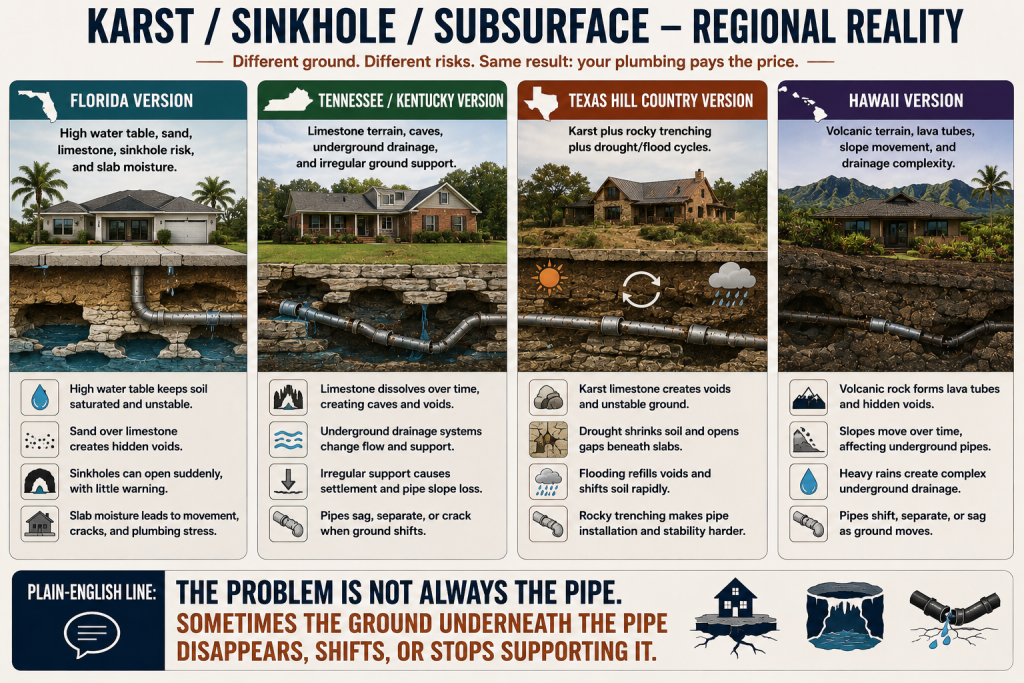
Failure Signature
Common Karst / Sinkhole / Subsurface Void symptoms include:
- sewer bellies
- recurring drain backups
- underground pipe separation
- drain slope loss
- recurring slab leaks
- unexplained settlement
- yard depressions
- foundation-adjacent plumbing damage
- underground leaks
- recurring sewer instability
- shifting drain behavior
- isolated underground pipe stress
- recurring repairs in the same area
Failure Timeline
Stage 1 — Underground Support Change
The terrain underneath the plumbing system begins changing.
Examples:
- limestone dissolution
- groundwater movement
- erosion
- saturation washout
- void development
No visible plumbing failure exists yet.
Stage 2 — Structural Instability
The plumbing system begins losing stable support.
Examples:
- drain sagging
- pipe bending
- slope variation
- underground stress loading
- joint instability
Stage 3 — Symptom Phase
The homeowner notices recurring plumbing behavior changes.
Examples:
- intermittent sewer backups
- slow drains
- sewer odor
- isolated settlement
- recurring underground leaks
- inconsistent drain performance
Stage 4 — Recurring Failure
Repairs occur.
The underground instability remains active.
Examples:
“The sewer problem came back.”
“Another underground leak appeared.”
“The drain keeps losing slope.”
Stage 5 — Damage Event
The underground instability becomes visible plumbing failure.
Examples:
- major sewer separation
- underground collapse
- recurring slab leaks
- severe drain instability
- foundation-adjacent plumbing damage
- major excavation conditions
- full sewer replacement
Foundation Interaction
Subsurface instability affects different foundation systems differently.
Slab-on-Grade Homes
Most vulnerable to:
- slab movement
- hidden underground instability
- under-slab separation
- recurring slab leaks
Crawlspace Homes
Most vulnerable to:
- support shifting
- sagging drains
- pier instability
- uneven settlement
Basement Homes
Most vulnerable to:
- settlement interaction
- sewer slope loss
- underground support movement
Hillside Homes
Most vulnerable to:
- erosion movement
- slope instability
- drainage interaction
- uneven underground loading
Pipe Material Interaction
Subsurface movement affects plumbing materials differently.
Cast Iron
Most vulnerable to:
- cracking
- separation
- slope loss
- joint instability
Clay Sewer
Most vulnerable to:
- offset joints
- settlement
- collapse
- root intrusion after movement
PVC / ABS
Most vulnerable to:
- unsupported stress
- bedding failure
- sagging
Copper
Most vulnerable to:
- underground flex stress
- repeated movement fatigue
Detection Difficulty Score
Karst / Subsurface Void failures are often difficult to detect because the underground instability may remain invisible long before plumbing symptoms appear.
Easy to Detect:
- visible sinkhole activity
- severe settlement
- major sewer collapse
Medium Detection:
- recurring sewer bellies
- isolated underground movement
- recurring drain instability
Hard to Detect:
- slow underground erosion
- hidden void development
- gradual support loss
- long-term subsurface instability
Most Vulnerable Homes
- slab-on-grade homes
- homes in limestone regions
- older sewer systems
- homes with long underground runs
- hillside properties
- homes near drainage corridors
- production subdivisions
- saturated-ground environments
- homes built on unstable fill
Failure Visibility
Karst / Subsurface Void failures often remain hidden because the terrain changes slowly underneath the structure.
The plumbing system may continue operating while underground support conditions gradually weaken.
The visible plumbing failure is often the final stage of long-term underground instability.
Homeowner Translation
The plumbing system may not be failing because the pipe itself was defective.
The ground underneath the plumbing system may be slowly losing stable support over time.
Contractor Translation
Karst / Sinkhole / Subsurface Void failures occur when underground instability alters support conditions, pipe alignment, drain slope, or stress distribution across buried plumbing systems.
The visible plumbing problem is often the final stage of long-term subsurface movement.
Final Positioning Line
Karst and subsurface void plumbing failures usually begin underneath the home long before visible damage appears. The plumbing system often reacts to changing underground support conditions years before the homeowner sees the final failure event.