sinkholeSF19 — Why Cities Miss Subsurface Failure
Urban systems are managed from the surface.
Budgets are allocated. Streets are maintained. Utilities are mapped.
But the most critical failures develop outside direct visibility.
In 1995, a Sea Cliff property in San Francisco collapsed after a ~100-year-old sewer line failed during heavy rain. The event exposed a structural limitation in city-scale management: subsurface conditions can degrade for years without triggering intervention.
This is not a detection failure at a single point.
It is a structural limitation of how cities observe infrastructure.
Infrastructure Age vs Load Demand
Most urban systems in legacy cities were not designed for current conditions.
They were built for earlier demand profiles:
- Lower population density
- Reduced wastewater output per structure
- Simpler stormwater assumptions
Today, those systems carry expanded and more volatile loads.
- Higher peak flow rates during storms
- Increased daily usage per property
- Greater runoff from paved surfaces
At the same time, infrastructure continues to age.
Material strength declines. Joint integrity weakens. Internal surfaces degrade.
This creates a widening gap:
- System capacity defined in the past
- System demand defined in the present
The system continues to function within that gap.
Until it cannot.
Subsurface Monitoring Limitations
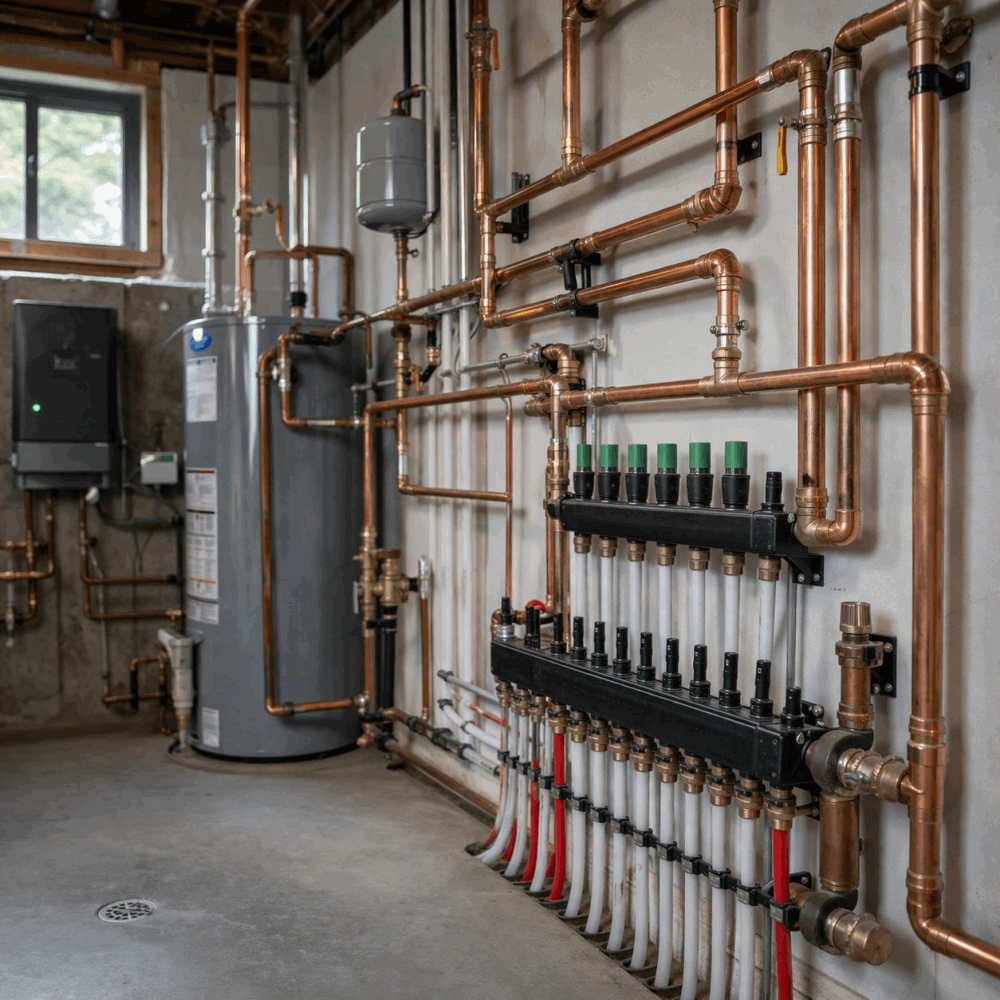
Cities do not operate with continuous underground visibility.
Infrastructure is monitored through indirect and periodic methods:
- Scheduled CCTV inspections
- Maintenance and repair records
- Surface-level indicators such as sinkage or backup events
These methods are constrained by access and timing.
They provide partial coverage.
They do not capture continuous change.
Key limitations include:
- Inability to inspect every segment regularly
- Limited visibility in deformed or obstructed pipes
- Incomplete historical records for older installations
- No real-time feedback on soil conditions surrounding infrastructure
The system is observed in intervals.
Failure develops in between.
Why Failures Remain Undetected
Subsurface failure is a slow process.
It begins with internal changes that do not disrupt function.
- Minor leaks at joints
- Gradual material thinning
- Small shifts in pipe alignment
These changes allow water to escape into surrounding soil.
Soil absorbs that water.
Structural conditions begin to change.
- Soil density decreases
- Load distribution shifts
- Micro-voids form around the pipe
At this stage, nothing is visible.
The system still performs.
No alarms are triggered.
Over time, these conditions compound.
Water movement accelerates soil erosion. Ground movement increases stress on weakened sections. Internal pressure fluctuates with demand cycles.
Eventually, the system crosses a threshold.
The ground can no longer support surface load.
Collapse occurs.
The event appears immediate.
The failure process was not.

Pressure, Water Movement, and Time
Subsurface systems operate under continuous stress.
In the Bay Area, that stress is intensified by environmental conditions.
- Moisture levels fluctuate with coastal weather patterns
- Soil movement occurs due to geological activity
- Aging infrastructure introduces internal weaknesses
During heavy rain, multiple forces align:
- Increased flow raises internal pressure
- Saturated soil reduces external support
- Existing defects become active failure points
Time is the multiplier.
Each year of operation under these conditions increases cumulative risk.
The system does not reset.
It degrades.
Why Mapping Does Not Equal Visibility
Cities maintain infrastructure maps.
These maps show location, routing, and in some cases material type.
They do not show condition in real time.
Mapping answers where infrastructure is.
It does not answer how it is performing.
In older cities, this distinction becomes critical.
- Multiple generations of installation create variability
- Repairs and modifications may not be fully documented
- Environmental conditions change faster than mapping updates
Risk mapping becomes probabilistic.
Planners identify higher-risk zones based on age, history, and environment.
They cannot fully identify where failure is forming.
This is the core constraint.
Post-Event Planning and Code Implications
After a failure event, cities respond with localized action.
- Damaged infrastructure is replaced
- Surrounding soil is stabilized
- Immediate safety concerns are addressed
Analysis follows.
Contributing factors are reviewed. Similar zones are evaluated.
Policy responses typically include:
- Increased inspection frequency in comparable areas
- Updated material and installation standards
- Prioritized capital improvement planning
- Adjustments to stormwater management strategies
These changes improve system resilience incrementally.
They do not eliminate underlying exposure across the entire network.
Infrastructure replacement occurs in phases.
Aging segments remain in operation.

System Translation: City Failure → Residential Risk
The same mechanisms that drive infrastructure failure apply at the residential level.
The scale is smaller.
The pattern is identical.
- Sewer line degradation → internal pipe wear and leakage
- Soil erosion → crawlspace or slab instability
- Pressure fluctuation → pipe stress and rupture
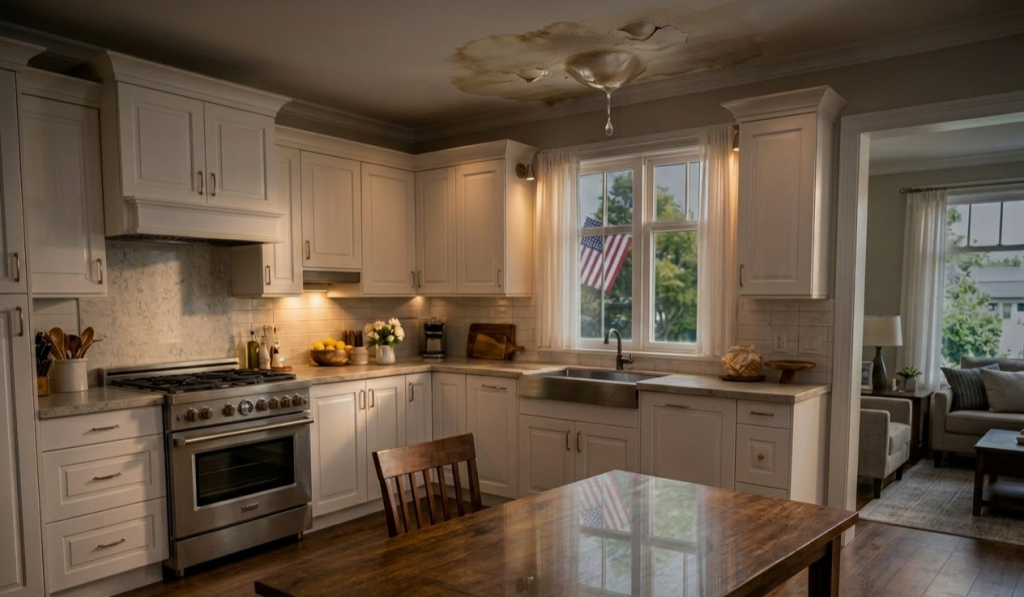
- Sudden collapse → interior water damage
Homes connected to aging infrastructure inherit these dynamics.
Internal systems may be affected even without visible warning signs.
Long-Horizon Constraint
Cities operate within practical limits.
Full system replacement is not immediate.
Infrastructure is upgraded over decades.
This creates a mixed-condition network:
- New installations adjacent to aging systems
- Variable performance across short distances
- Uneven distribution of risk
Surface stability is not a reliable indicator of subsurface health.
Failure potential is determined below ground.
Direction Forward
Subsurface failure cannot be eliminated through reactive repair alone.
It requires a shift in approach:
- From periodic inspection to risk-based evaluation
- From mapping infrastructure to understanding condition
- From isolated fixes to coordinated system upgrades
At the city level, this informs long-term capital planning.
At the property level, it emphasizes proactive system assessment.
System-level audits provide a structured way to identify hidden risk.
They evaluate infrastructure based on age, pressure conditions, environmental exposure, and historical performance.
This is how failure is addressed before it becomes visible.
Learn how system-level plumbing evaluations uncover hidden risks and prevent underground failure before it surfaces: