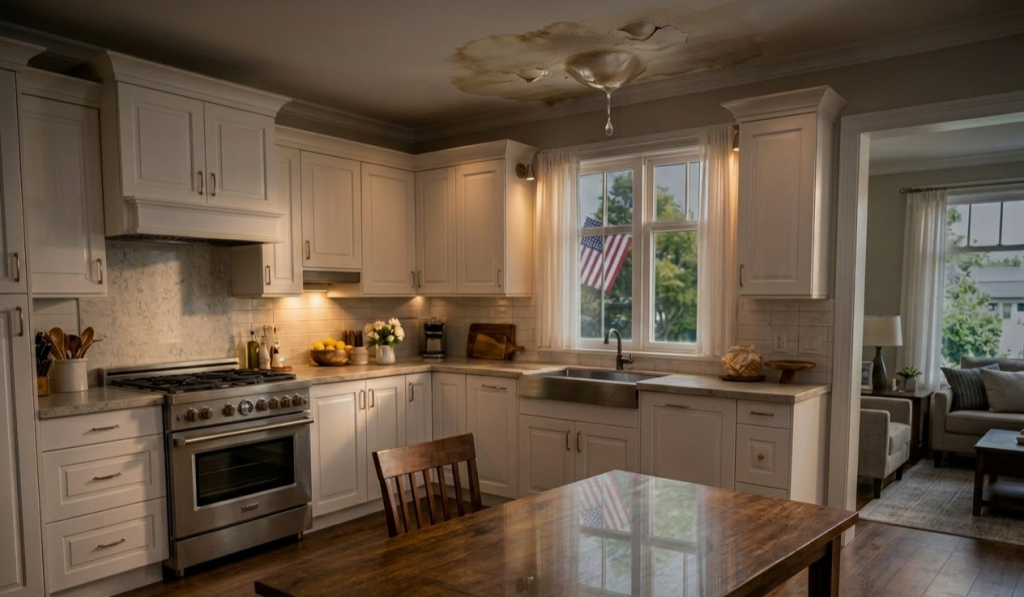
SinkholeSF34 — Pressure + Corrosion: Hidden System Stress
Water pressure feels normal.
Fixtures still work.
No visible leak.
But inside the system, two forces are working against each other:
pressure and corrosion.
That’s where failure builds.
In the 1995 Sea Cliff event in San Francisco, the sewer system didn’t collapse from one moment of stress.
It failed because long-term material degradation met active system pressure.
The pipe weakened over time.
Pressure never stopped.
The system crossed its limit.

System vs Symptom Breakdown
What gets interpreted as “normal”:
- stable water flow
- no active leaks
- consistent usage patterns
What’s actually occurring:
- internal pipe wall loss from corrosion
- reduced structural tolerance under pressure
- micro-fractures forming along weakened sections
- pressure cycling expanding those fractures over time
Contractor Insight:
Pressure doesn’t create failure by itself. Corrosion doesn’t either. Failure happens when pressure continues acting on a system that can no longer handle it.
Failure Origin (Not Visible Damage)
The Failure begins inside the pipe.
Not outside it.
Corrosion develops:
- from water chemistry interacting with pipe material
- along internal walls where flow is constant
- at joints and fittings where turbulence increases wear
At the same time:
- pressure cycles expand and contract the pipe
- weak areas flex more than stable sections
- material fatigue accelerates in those zones
Advanced Thinking:
Corrosion reduces thickness.
Pressure increases stress per unit area.
That combination creates failure conditions long before a leak appears.
Why Repairs Don’t Solve Underlying Conditions
A repair addresses the break point.
It does not address:
- the remaining wall thickness across the system
- the uniformity of material degradation
- the pressure behavior acting on every section
Contractor Insight:
If corrosion caused one failure, it exists elsewhere. Replacing one section doesn’t reset the system—it isolates the weakest visible point and leaves the rest unchanged.
Advanced Pattern:
- corroded pipe fails → repair installed
- pressure redistributes → next thinned section takes load
- failure repeats at a different location
This is not random.
It’s predictable system behavior.
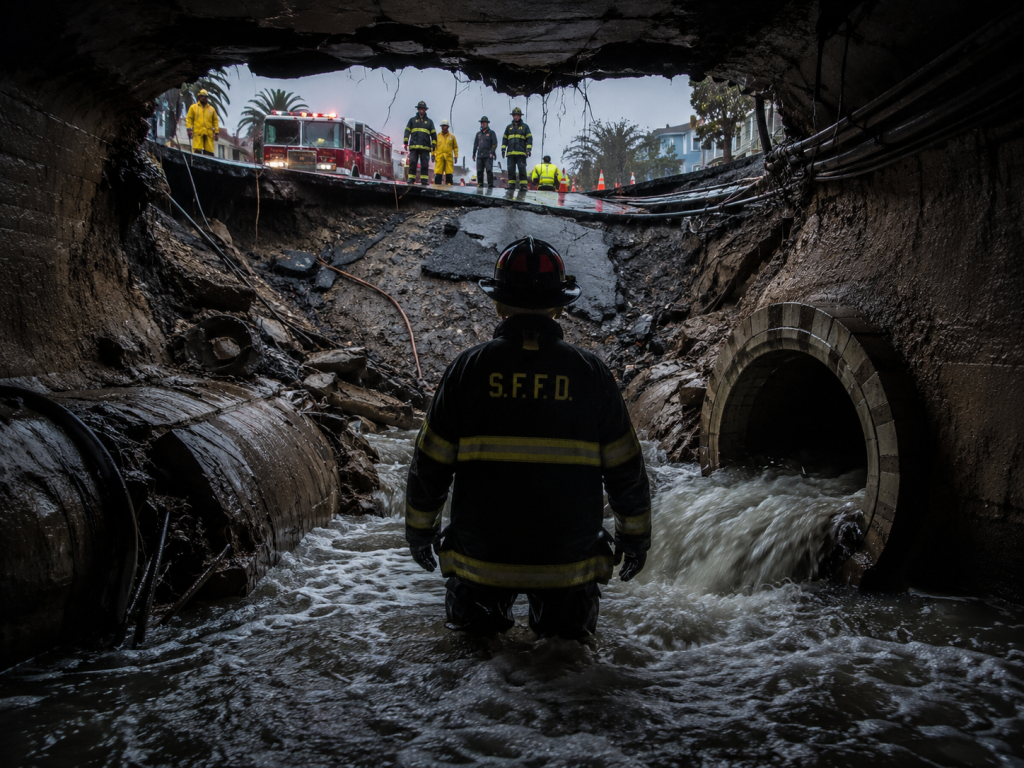
System Alignment vs Patchwork
A system under pressure must have consistent strength throughout.
Aligned system:
- uniform wall thickness
- predictable response to pressure cycles
- no hidden weak zones
- stable performance under load
Patched system:
- new material connected to degraded pipe
- inconsistent internal diameters
- uneven stress distribution
- multiple corrosion stages across the system
Contractor Insight:
Transitions between new and old pipe create stress concentration points. The stronger material doesn’t fail—the weaker adjacent material does.
Advanced Thinking:
Pressure doesn’t “seek out” weak points.
It exposes them.
Patchwork increases the number of exposure points.
The Translation: Infrastructure → Home
The Sea Cliff failure followed the same pattern:
Infrastructure:
- aging sewer line (corrosion)
- continuous flow under load (pressure)
- structural weakening
- eventual rupture and soil loss
Residential:
- corroded supply or drain lines
- daily pressure cycles from usage
- thinning pipe walls
- sudden leak or rupture
Same drivers:
- Pressure
- Water Movement
- Time
- Material Degradation
Contractor Insight:
Most pipe failures labeled as “sudden” are not sudden. They are the final release point after long-term internal weakening.
Why This Intensifies in Bay Area Systems
In San Francisco:
- many systems are decades old
- water chemistry varies by zone
- pressure fluctuations are common in older infrastructure
Advanced Thinking:
When corrosion reduces system strength and pressure remains constant, the margin for error disappears. The system operates closer to failure with every cycle.
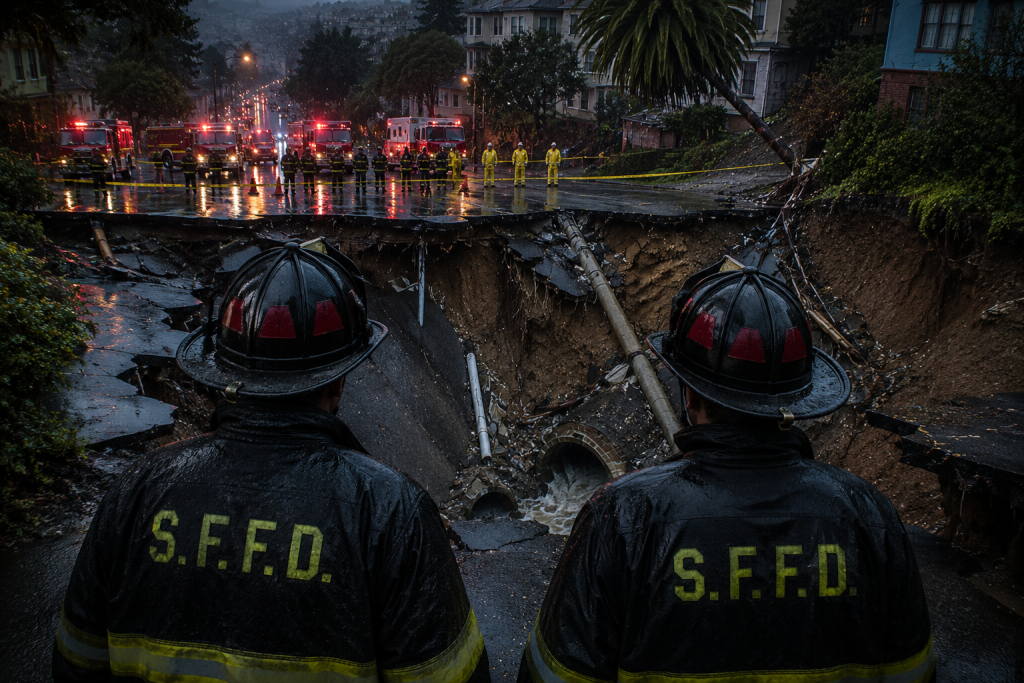
System Progression: Corrosion + Pressure → Failure
The sequence is consistent:
- Internal corrosion begins
- Pipe wall thickness decreases
- Pressure cycles stress weakened areas
- Micro-fractures form and expand
- Leak or rupture occurs
The visible failure is the final stage.
Structural Prevention, Not Repair
If pressure is constant and corrosion is system-wide, localized repair cannot solve the problem.
A repipe:
- removes degraded material across the entire system
- restores uniform strength under pressure
- eliminates hidden weak zones
It changes:
- unpredictable failure patterns → controlled performance
- reactive repairs → proactive stability
Contractor Insight:
You don’t manage corrosion with repairs. You outpace it with replacement.
Advanced Positioning:
Pressure is always present.
Corrosion is always progressing.
The only decision is whether the system fails incrementally—or gets reset before it does.