

Failure Progression Stages
Understanding How Residential Failures Escalate Over Time
Most residential plumbing and infrastructure failures do not begin as emergencies.
The visible event usually appears late in the progression.
Long before the homeowner sees water damage, foundation movement, pressure loss, drain backups, or pipe rupture, the system has often been absorbing stress silently for months or years.
That stress may come from:
- soil movement
- water chemistry
- pressure instability
- freeze/thaw cycling
- saturation
- heat expansion
- corrosion
- material aging
- environmental exposure
- demand overload
- human-system weaknesses
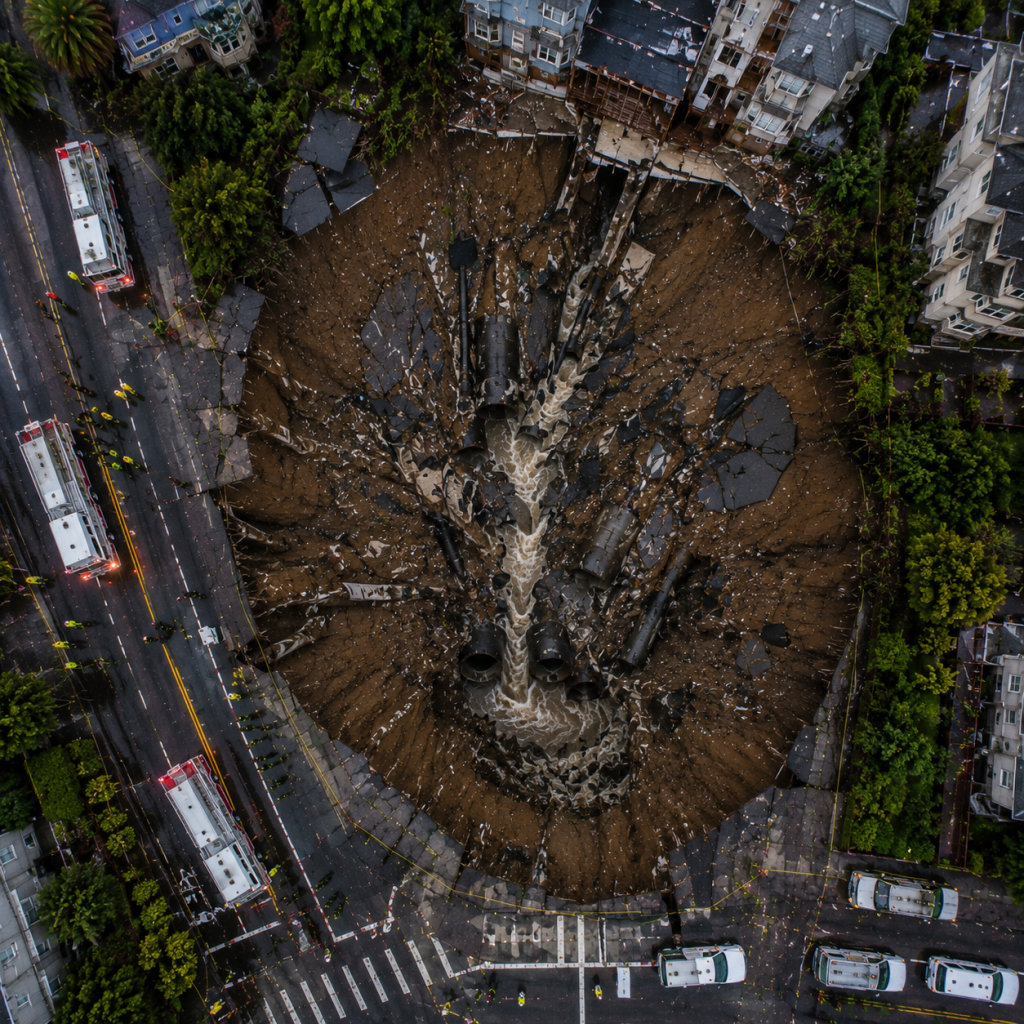
The final leak is often the last stage of a much larger process.
This is why Home Failure Intelligence focuses on:
- pattern reconstruction
- failure progression modeling
- environmental stress mapping
- escalation-stage analysis
- hidden system movement
- regional degradation signatures
- structural instability indicators
- infrastructure stress accumulation
Because homes do not fail instantly.
They usually fail in stages.
Stage 1 — Invisible Stress Accumulation
The System Begins Absorbing Pressure Before Symptoms Appear
Most failures begin in ways the homeowner cannot see.
Pressure builds quietly.
Movement develops slowly.
Materials weaken internally.
Environmental stress accumulates beneath slabs, behind walls, inside crawlspaces, underground, or inside the pipe itself.
At this stage:
- pipes may still function normally
- fixtures may still operate correctly
- drains may still appear clear
- pressure may still feel acceptable
The system looks stable.
But hidden forces are already acting on weak points.
Stress accumulation may include:
- expansive soil movement
- underground erosion
- hard water scaling
- acidic water corrosion
- thermal expansion
- freeze pressure
- saturation loading
- root intrusion
- pressure fluctuation
- vibration stress
- aging material fatigue
In many homes, invisible accumulation lasts longer than every other stage combined.
This is why environmental failures are frequently misread.
The visible symptom arrives much later than the actual beginning of the problem.
Stage 2 — Early System Imbalance
Small Irregularities Begin Appearing Across Connected Systems
As stress continues building, the plumbing system begins losing balance.
The changes are often subtle.
Water pressure fluctuates slightly.
Fixtures behave inconsistently.
Drains slow intermittently.
A small stain appears.
One bathroom behaves differently than the others.
The homeowner may dismiss these conditions individually.
But infrastructure systems rarely communicate through one large warning.
They communicate through small irregularities spreading across connected areas.
Early imbalance indicators may include:
- intermittent drain backups
- inconsistent fixture pressure
- isolated pinhole leaks
- recurring stoppages
- minor slab warmth
- isolated moisture staining
- water heater stress
- expansion noises
- pipe vibration
- unexplained water bill increases
- recurring repair areas
- pressure regulator instability
At this stage, many failures are still repairable without major structural escalation.
Unfortunately, this is also the stage most commonly ignored.
Stage 3 — Concealed Damage Expansion
Hidden Moisture and Structural Stress Begin Spreading
Once imbalance continues long enough, damage begins migrating into surrounding systems.
This stage is dangerous because the visible symptom still appears smaller than the actual damage environment.
Water migrates.
Soil destabilizes.
Moisture spreads into framing, insulation, slab material, crawlspaces, or underground support zones.
Pressure conditions worsen.
Structural stress compounds.
Concealed expansion may include:
- hidden slab moisture
- underground void formation
- crawlspace saturation
- insulation contamination
- corrosion acceleration
- mold-adjacent moisture environments
- subsurface erosion
- pipe separation
- drain slope loss
- hidden wall cavity moisture
- structural softening
- pressure escalation behavior
This is where many “small leaks” become system-level failures.
The visible leak may remain localized.
The actual damage environment often does not.
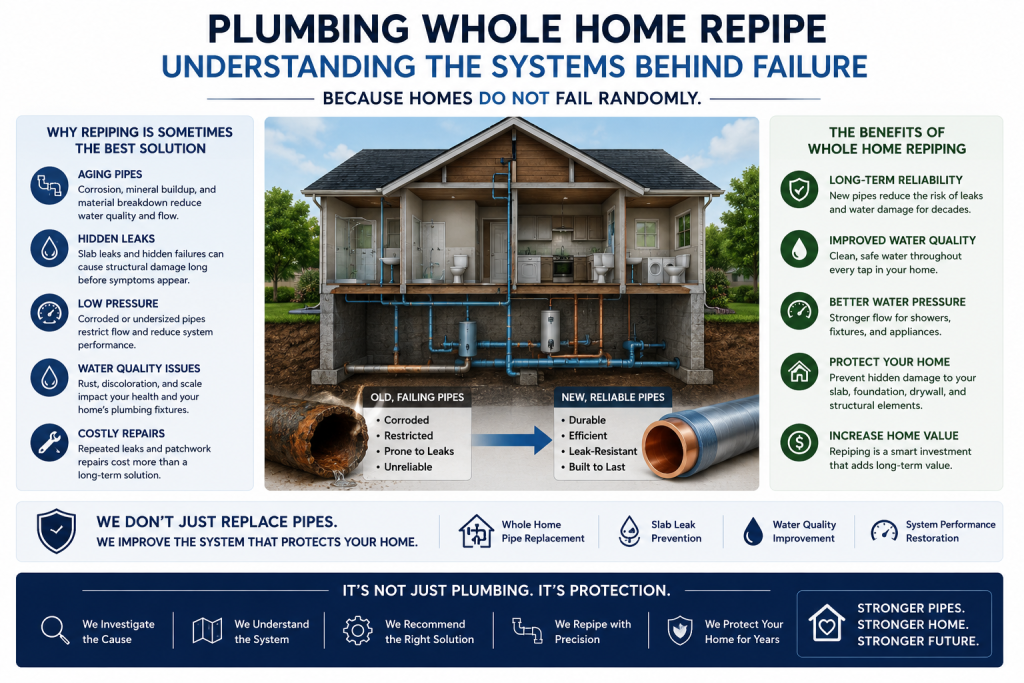
Stage 4 — Structural / System Destabilization
The Home Begins Responding To Long-Term Infrastructure Stress
By this stage, surrounding systems begin reacting to the plumbing failure environment.
The problem is no longer isolated to the pipe itself.
Movement affects:
- foundations
- framing
- flooring
- wall systems
- underground support
- drainage behavior
- moisture balance
- pressure regulation
- connected plumbing branches
Structural destabilization often appears through:
- foundation cracking
- slab movement
- recurring sewer bellies
- floor separation
- wall cracking
- recurring drain offsets
- shifting pipe penetrations
- pressure instability across zones
- widespread corrosion
- repeated fixture failures
- system-wide imbalance
At this point, homeowners frequently believe multiple unrelated problems are occurring simultaneously.
In reality, the home is often reacting to one expanding infrastructure condition.
The failure has moved beyond isolated plumbing behavior.
Now the structure itself is participating in the escalation.
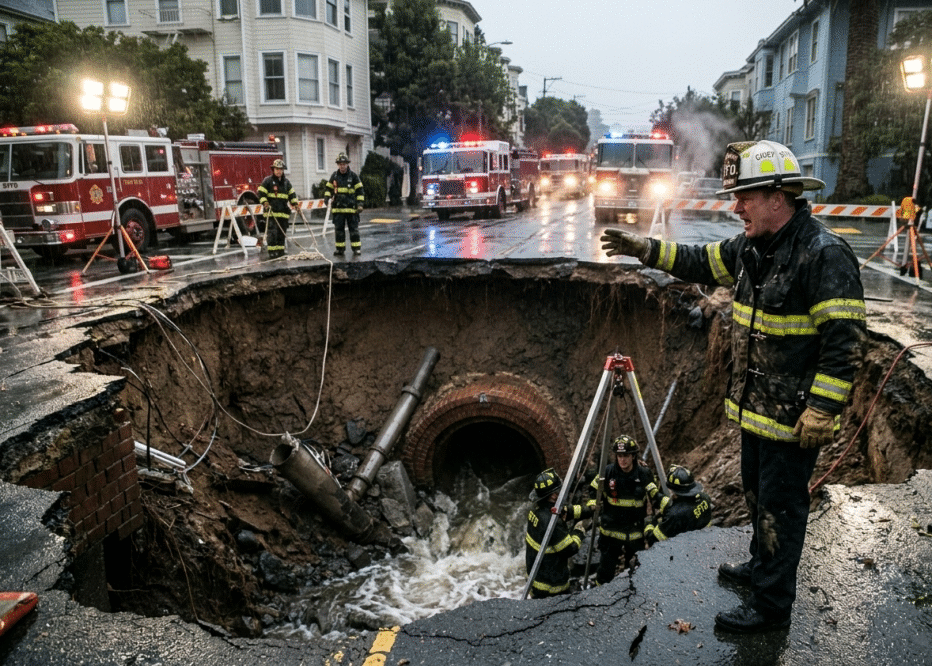
Stage 5 — Visible Failure Event
The System Finally Produces An Obvious Breakdown
This is the stage most homeowners recognize.
The visible event may appear sudden:
- pipe burst
- slab leak
- sewer backup
- foundation crack
- ceiling collapse
- flooding
- fixture blowout
- catastrophic pressure release
But visible failure rarely begins at the moment of rupture.
The event is usually the final release point of accumulated stress.
This is why two homes can experience:
- the same leak
- the same crack
- the same backup
- the same pipe rupture
Yet the underlying causes may be completely different.
In:
- Texas, the driver may be expansive clay movement
- Florida, saturation and subsurface instability
- Arizona, heat and mineral accumulation
- Colorado, freeze-thaw expansion
- California, hillside movement and aging infrastructure
- New York, legacy materials and winter stress
Same symptom.
Different failure system.
Stage 6 — Escalation And Secondary Damage
The Original Failure Begins Creating Additional Failures
Once visible failure occurs, secondary systems often begin degrading rapidly.
This is where repair costs accelerate.
The plumbing failure now interacts with:
- moisture environments
- structural movement
- microbial growth
- electrical exposure
- flooring systems
- cabinetry
- framing
- insulation
- HVAC systems
- underground stability
- adjacent plumbing branches
Secondary escalation may include:
- mold growth
- flooring separation
- framing deterioration
- electrical hazards
- recurring slab movement
- expanding corrosion environments
- sewer gas exposure
- foundation destabilization
- crawlspace decay
- repeated pressure failures
- progressive material fatigue
Many homeowners mistakenly believe the visible repair ends the event.
In reality, secondary escalation can continue long after the original pipe is repaired if the surrounding conditions remain unresolved.
Why Failure Progression Matters
Understanding progression stages changes how homeowners interpret risk.
A leak is not always:
- isolated
- recent
- surface-level
- random
Visible damage often represents accumulated environmental pressure interacting with hidden system vulnerabilities over time.
This is why Home Failure Intelligence focuses on:
- escalation-stage analysis
- hidden system movement
- infrastructure condition analysis
- regional failure behavior
- environmental stress accumulation
- structural instability indicators
- concealed moisture migration
- system degradation sequencing
Because the visible event is usually not the beginning of the story.
It is the moment the system can no longer conceal the pressure underneath it.