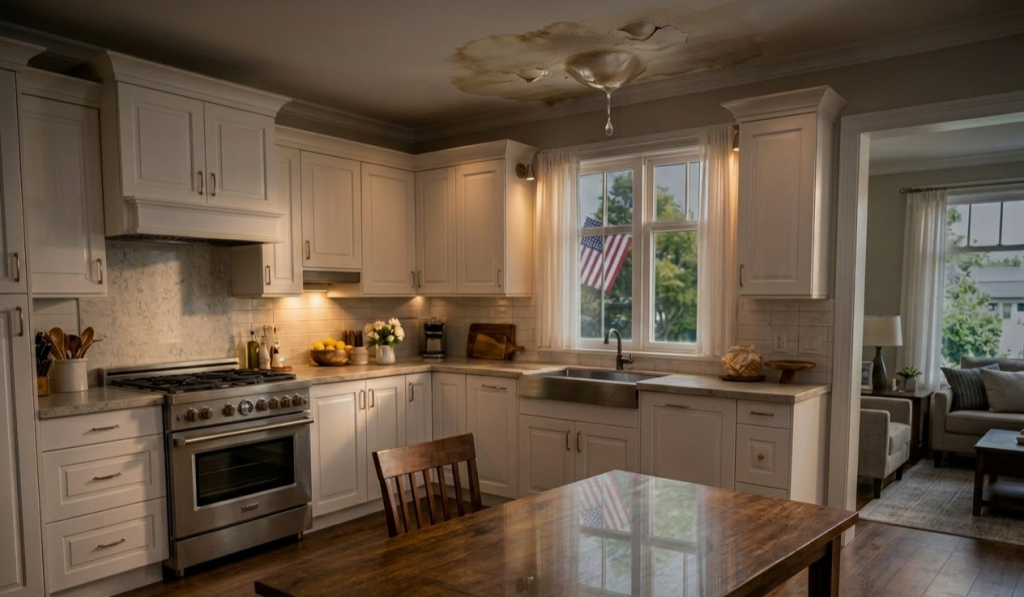
sinkholeSF01 —Home Looked Fine. Ground Was Failing
False Stability
Everything appeared normal.
The structure was intact.
The exterior showed no distress.
The ground looked stable.
No visible warning suggested failure.
Hidden Failure Trigger
Below the surface, the system had already started to break down.
In 1995, a home in Sea Cliff, San Francisco sat above aging infrastructure that could no longer hold under pressure.
A sewer line—nearly a century old—failed during heavy rainfall.
Water moved where it was not designed to go.
Soil began to shift.
A void formed beneath the home.
The surface remained unchanged—until it didn’t.

What Actually Happened
The failure was not sudden.
It was the result of time, pressure, and water movement acting on an aging system.
As the pipe failed, water escaped into surrounding soil.
That movement displaced structural support below the foundation.
The ground did not collapse instantly.
It eroded.
Then the structure lost support.
Then the ground gave way.
Early Warning Signs Most Homeowners Miss
Most failures begin quietly.
Look for small signals that indicate system instability:
- Unexplained dampness in crawlspaces or lower levels
- Minor soil settlement or uneven ground near the foundation
- Hairline cracks in walls, floors, or exterior hardscape
- Persistent musty odors without a clear source
- Slight drops in water pressure or inconsistent flow behavior
These signals often appear unrelated.
They are not.

Pattern Translation — Infrastructure → Home
Large-scale failures follow the same patterns as residential ones.
Sewer Line Failure → Hidden Leak Inside the Home
Water escapes into areas not designed to handle it
Underground Soil Erosion → Foundation or Slab Movement
Support systems weaken gradually
Void Formation Beneath Structure → Loss of Structural Stability
The surface remains intact until failure threshold is reached
Heavy Rain Pressure Event → Internal Plumbing Pressure Stress
Systems fail under load when already compromised
The scale changes.
The pattern does not.
Where Residential Failures Begin
Most homeowners look at surfaces.
Failures begin below them.
In residential systems, this often shows up as:
- Slow leaks behind walls or under floors
- Saturated soil beneath slab foundations
- Long-term corrosion inside aging pipes
- Pressure fluctuations stressing weak connections
- Drainage systems that cannot handle water volume
Each condition reduces system stability over time.
None are immediately visible.

The Real Risk
The problem is not the event.
The problem is the delay between system failure and visible damage.
By the time the issue reaches the surface:
- Structural support may already be compromised
- Repair scope expands beyond the original problem
- Costs increase due to secondary damage
This is how small system failures become large structural events.
What This Means for Your Home
If your home is in the Bay Area, the risk profile is consistent:
Movement.
Moisture.
Aging systems.
These conditions increase the likelihood of hidden failure developing below the surface.
Especially in older homes with original plumbing infrastructure.
System Evaluation vs. Reactive Repair
Most repairs happen after visible damage.
That is already late in the failure cycle.
A system-level evaluation looks at:
- Pipe condition and material lifespan
- Pressure behavior across the system
- Signs of hidden moisture or soil impact
- Early-stage structural stress indicators
This approach identifies risk before failure expands.
Learn What’s Happening Below the Surface
Small issues rarely stay small when they involve water, pressure, and time.
Understand how your system behaves before visible damage appears.
See how whole-home repipe systems are evaluated to prevent hidden failure:
👉 https://plumbingwholehomerepipe.com/ca/san-francisco-sinkhole-that-swallowed-a-mansion-san-francisco-california-1995/