
sinkholeSF24 — Structural Illusion: Stability Misread
Stability can be misleading.
Flat ground.
Straight walls.
No visible cracks.
That doesn’t mean the system is stable.
It means the failure hasn’t surfaced yet.
In 1995, a property in San Francisco sat on what looked like solid ground.
Underneath, a ~100-year-old sewer line had already lost integrity.
Water moved outside the pipe.
Soil began to shift.
Support started to disappear.
Nothing above showed it.
Until it did.
SYSTEM VS SYMPTOM BREAKDOWN
The mistake is trusting what you can see.
Visible condition:
- Level surfaces
- Intact finishes
- No immediate signs of damage
Actual condition:
- Subsurface water displacement
- Pipe wall failure under pressure
- Soil compaction loss
- Load transfer instability
The structure can look correct while the system underneath is failing.
That’s the illusion.
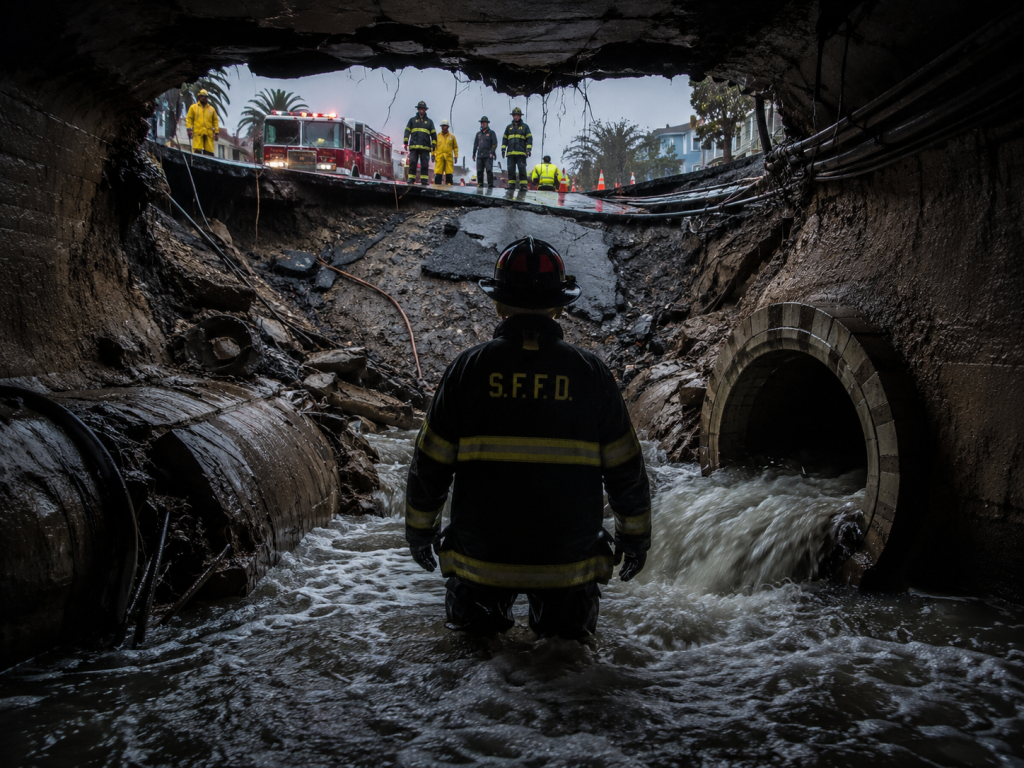
FAILURE ORIGIN (NOT VISIBLE DAMAGE)
Failure starts where systems interact.
Not where surfaces are observed.
In the San Francisco Bay Area environment:
- Soil is dynamic
- Moisture is variable
- Infrastructure is aging
That creates invisible stress conditions:
- Water escaping from compromised pipes
- Soil losing density as it becomes saturated
- Ground shifting under uneven load
- Pipe materials weakening under time and pressure
The system is changing constantly.
But those changes are below visibility.
No crack appears at first.
No warning is obvious.
Just gradual loss of stability.

WHY REPAIRS DON’T SOLVE UNDERLYING CONDITIONS
Repairs are based on visible triggers.
They fix what shows up.
But the system isn’t failing at the surface.
Fixing a section of pipe:
- Stops one leak
- Leaves surrounding material unchanged
- Does not address soil instability
- Does not correct system-wide pressure
So the underlying condition remains:
- Movement continues
- Moisture continues to interact with soil
- Aged materials continue to degrade
The next failure is already forming.
Repairs don’t eliminate the condition.
They pause one expression of it.
SYSTEM ALIGNMENT VS PATCHWORK
A stable system is predictable.
Everything works together:
- Materials behave consistently
- Pressure distributes evenly
- Flow remains uninterrupted
- Soil interaction is accounted for
Patchwork systems introduce inconsistency:
- Different materials expand and contract differently
- Pressure builds unevenly
- Flow encounters resistance at transition points
- Stress concentrates at connections
Each repair adds complexity.
Each connection adds risk.
Especially in an environment driven by movement and moisture.
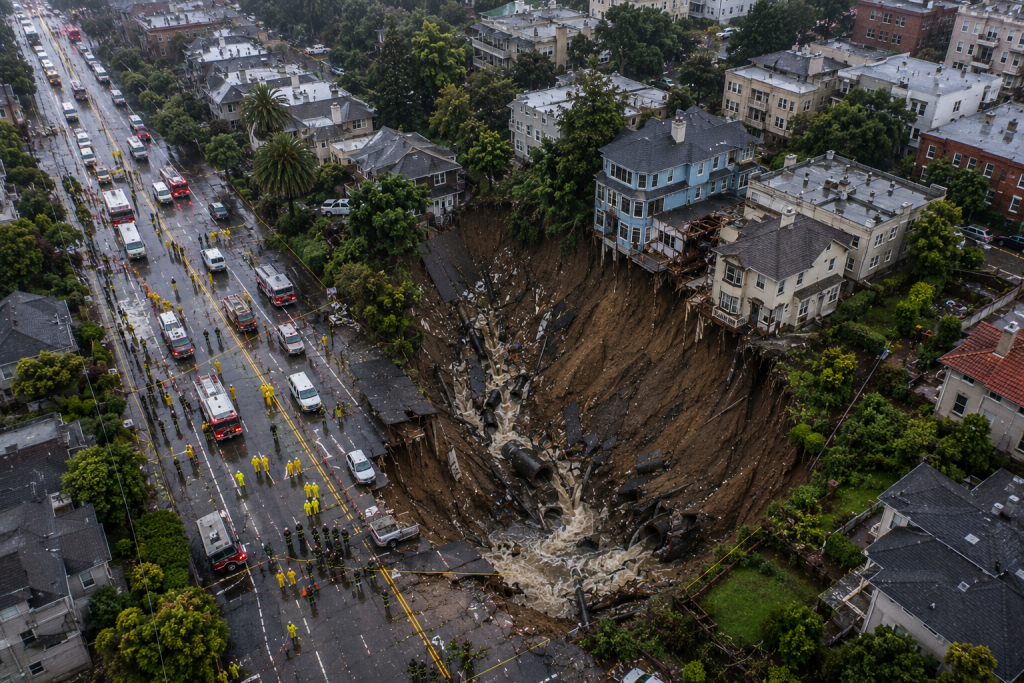
INFRASTRUCTURE → HOME (PATTERN TRANSLATION)
What happened at infrastructure scale follows the same sequence in residential systems.
Sea Cliff event → Home system
- Sewer line failure → Main line degradation
- Underground leakage → Soil softening beneath the home
- Void formation → Loss of structural support
- Collapse → Foundation or slab movement
The system fails below.
The structure reacts above.
THE MISREAD STABILITY PROBLEM
Most homeowners evaluate stability visually.
That’s the flaw.
Early-stage system failure looks like:
- Normal operation
- No immediate damage
- No visible structural change
Meanwhile:
- Pipes are weakening
- Soil is shifting
- Load distribution is changing
By the time visual indicators appear:
- The system has already lost integrity
- Multiple failure points exist
The structure didn’t suddenly become unstable.
It slowly lost support.
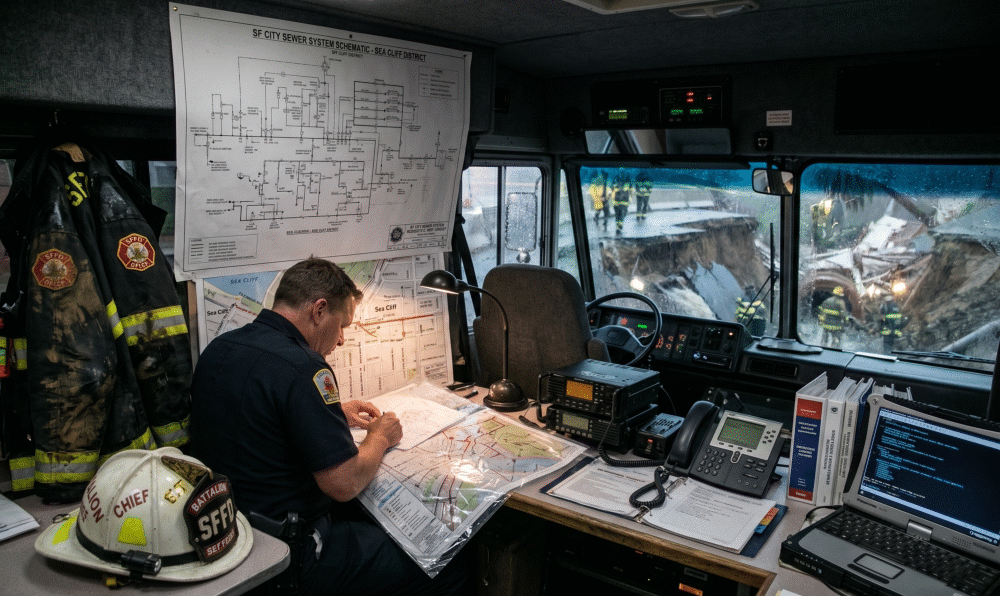
THE DECISION POINT
You can trust surface conditions.
Or you can evaluate system conditions.
One is visual.
The other is structural.
CORRECT THE SYSTEM, NOT THE ILLUSION
A full repipe removes the illusion of stability.
It addresses the system directly:
- Replaces aging, compromised materials
- Restores consistent pressure across all lines
- Eliminates hidden leak points
- Aligns the plumbing system with environmental conditions
This is not a repair.
It’s a system reset.
Because when stability is misread—
failure is already in progress.