



How Accountability Actually Works
Most homeowners assume accountability begins after something goes wrong.
In reality, accountability starts much earlier.
It begins with visibility.
Clear standards.
Defined responsibility.
Documented evaluation.
Consistent decision logic.
Without those elements, residential service work often becomes difficult to interpret after failures occur.
Multiple repairs happen across multiple years.
Different contractors touch different sections of the system.
Materials change over time.
Documentation becomes fragmented.
Responsibility becomes increasingly unclear.
Meanwhile, the plumbing system continues aging beneath the surface.
Accountability Is Not A Marketing Claim
Many companies talk about trust.
Far fewer explain how accountability functions structurally.
True accountability usually requires:
- documented system evaluation
- visible repair history
- identifiable decision pathways
- consistent workmanship standards
- regional infrastructure understanding
- long-term responsibility visibility
Otherwise, homeowners are often left interpreting complex infrastructure conditions with incomplete information.
That uncertainty increases after repeated repairs begin accumulating.
Residential Plumbing Systems Are Layered Over Time
Most homes are not serviced by a single contractor forever.
Different ownership periods create different repair histories.
One contractor repairs a slab leak.
Another replaces a water heater.
A third upgrades isolated supply lines years later.
Meanwhile, older materials may remain active behind walls or beneath the property.
Eventually, the system becomes layered across decades of independent decisions.
Accountability becomes harder to track once infrastructure history fragments.

The Visibility Problem
Many residential plumbing failures develop quietly.
Pressure instability may exist for years before visible leaks emerge.
Corrosion progression often remains hidden inside walls.
Underground movement gradually affects buried lines long before rupture occurs.
By the time major damage appears, homeowners may already have:
- multiple repair invoices
- repeated service calls
- undocumented modifications
- inconsistent materials
- recurring leak history
- partial system upgrades
At that stage, determining what actually caused the broader deterioration becomes increasingly difficult.
Accountability Requires System Context
A single repair rarely explains an entire infrastructure condition.
Regional environment matters.
Housing era matters.
Material history matters.
Pressure behavior matters.
Previous repair strategy matters.
For example:
A contractor evaluating slab movement conditions in Texas operates inside a different infrastructure environment than a specialist evaluating freeze-related pipe fatigue in Minnesota or corrosion exposure in coastal Florida.
Those regional conditions influence how accountability should be interpreted.
Infrastructure behavior is not uniform nationally.
Why Repeated Repairs Complicate Responsibility
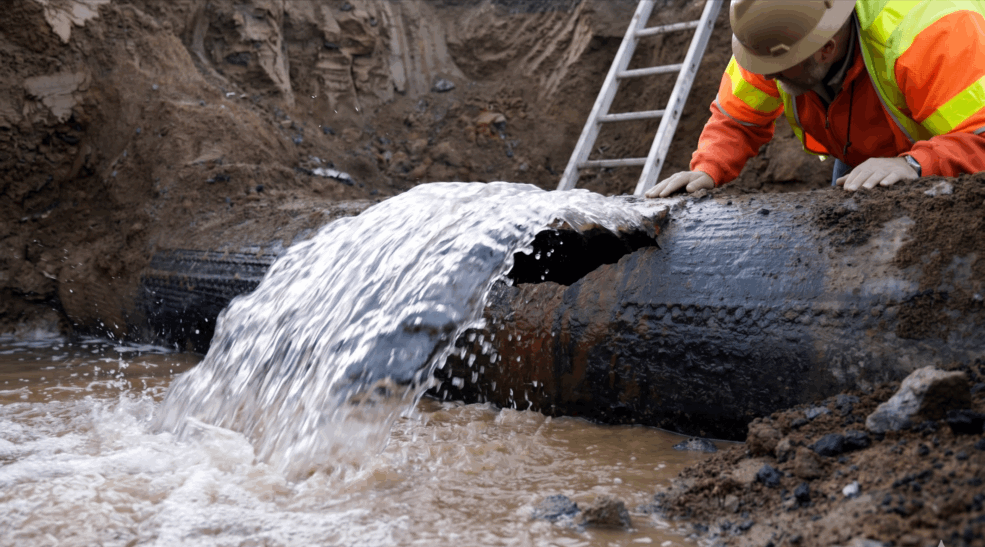
Repeated service calls often create overlapping infrastructure timelines.
A leak repaired today may connect to environmental stress that began years earlier.
Meanwhile:
- older fittings remain active
- hidden corrosion continues developing
- underground movement persists
- pressure imbalance remains unresolved
- adjacent materials continue aging differently
Eventually, homeowners may experience recurring failures across multiple areas of the home while struggling to identify whether the problem involves:
- workmanship
- material lifespan
- environmental conditions
- system age
- pressure stress
- prior repair strategy
- regional infrastructure exposure
In many cases, the answer involves several factors simultaneously.
Documentation Changes Everything
Infrastructure systems become easier to evaluate when decision history remains visible.
Clear documentation helps establish:
- what was repaired
- why specific decisions were made
- what conditions were identified
- what risks remained active
- what materials were used
- what portions of the system remained unchanged
Without that visibility, homeowners often inherit fragmented infrastructure conditions without understanding the broader pattern already developing.
Documentation creates continuity between service events.
That continuity improves long-term decision quality.
Accountability And Specialist Alignment
Not every contractor evaluates plumbing systems through the same framework.
Certain specialists focus heavily on:
- whole-system deterioration
- slab movement behavior
- corrosion progression
- pressure instability
- environmental exposure
- infrastructure aging
- freeze expansion stress
- long-cycle failure patterns
Others may focus primarily on immediate restoration and localized repair.
Neither approach exists in isolation.
However, the evaluation process changes substantially depending on whether the goal is:
- short-term restoration
- repeated service response
- infrastructure stabilization
- long-term system planning
Accountability becomes clearer when the evaluation objective itself is clearly defined.
Why Homeowners Often Feel Uncertain
Most homeowners are not plumbing specialists.
Many are trying to interpret:
- conflicting recommendations
- repeated repair events
- rising costs
- visible damage escalation
- insurance concerns
- long-term renovation decisions
At the same time, infrastructure conditions remain largely hidden behind walls, beneath slabs, or underground.
That visibility gap creates uncertainty.
Without clear documentation and structured evaluation, homeowners may struggle to understand whether:
- the system is stabilizing
- deterioration is accelerating
- repairs are becoming repetitive
- broader infrastructure planning is necessary
Accountability Is Easier Before Escalation
The most effective infrastructure evaluation often happens before catastrophic failure occurs.
Early recognition matters.
Recurring leaks.
Pressure inconsistency.
Repeated drywall openings.
Visible corrosion.
Underground moisture migration.
Long repair histories.
Those patterns frequently indicate broader system stress already developing beneath the surface.
Waiting until major rupture occurs usually reduces available decision clarity.
Infrastructure Accountability Is Structural
True accountability does not rely entirely on promises.
It depends on systems.
Clear evaluation pathways improve visibility.
Regional specialization improves interpretation.
Documentation improves continuity.
Defined standards improve consistency.
Over time, those structures make residential infrastructure decisions easier to understand.
That is how accountability actually works.