

California
Plumbing Systems Under Seismic, Pressure, and Aging Infrastructure Stress
California plumbing systems operate inside one of the most complex environmental infrastructure environments in the United States.
Seismic movement remains active underneath large portions of the state.
Aging water infrastructure continues operating under expanding population demand.
Groundwater instability affects foundations and underground utility systems.
Drought cycles, pressure fluctuation, land subsidence, coastal corrosion, wildfire exposure, and rapid urban expansion all overlap continuously.
In California, many plumbing failures begin quietly long before visible damage appears inside the home.
Underground systems slowly shift beneath the structure.
Pressure conditions fluctuate across aging infrastructure.
Ground movement stresses buried sewer and water systems.
Drainage systems absorb repeated environmental instability.
Then one condition changes.
The system responds.
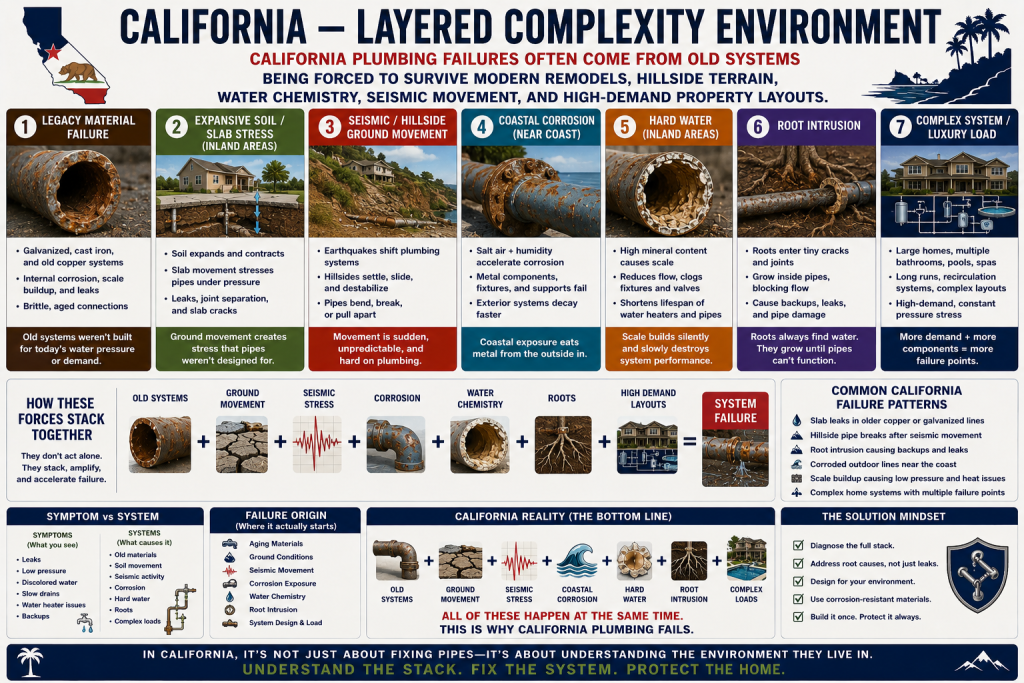
Across California, homeowners commonly experience:
- slab leaks
- sewer backups
- underground pipe shifting
- pressure fluctuation
- drainage imbalance
- hydrostatic pressure buildup
- hidden plumbing leaks
- cast iron drain deterioration
- foundation-related plumbing movement
- earthquake-related pipe stress
- corrosion tied to aging infrastructure
- recurring moisture-related plumbing instability
Most California plumbing failures are not isolated plumbing events.
They are environmental infrastructure failures tied to seismic instability, pressure variation, aging systems, groundwater stress, and long-term structural fatigue.
California Seismic Activity Creates Continuous Underground Stress
California sits on one of the most seismically active infrastructure environments in the country.
Fault movement affects underground systems continuously.
Even minor seismic activity creates gradual stress against buried infrastructure over time.
This affects:
- sewer laterals
- underground water services
- slab plumbing
- foundation-adjacent utilities
- municipal distribution systems
As ground movement accumulates:
- underground alignment changes
- joints weaken
- fittings absorb stress
- buried supports destabilize
- pressure consistency changes
California water agencies continue investing heavily in seismic-resistant infrastructure because earthquakes can cause major water system failures, flooding, contamination, and prolonged outages.
Many visible plumbing failures begin years earlier through gradual underground movement that remains hidden underneath the structure.
Aging Infrastructure Increases California Plumbing Vulnerability
Much of California’s water and plumbing infrastructure was built decades ago.
Many systems continue operating well beyond their intended service life.
Especially across:
- Los Angeles
- San Francisco Bay Area
- San Diego
- Sacramento
- older suburban corridors
- historic urban neighborhoods
Common aging infrastructure conditions include:
- cast iron drain systems
- aging copper supply lines
- galvanized piping
- older sewer laterals
- outdated underground utility connections
California infrastructure organizations continue identifying aging pipelines, water systems, and underground utilities as major long-term risk factors statewide.
As infrastructure ages:
- corrosion accumulates
- pipe walls weaken
- wastewater flow slows
- underground systems destabilize
- pressure systems lose consistency
Many isolated plumbing repairs fail because the larger infrastructure environment remains unstable across the full system.
Groundwater Depletion and Subsidence Shift Underground Systems
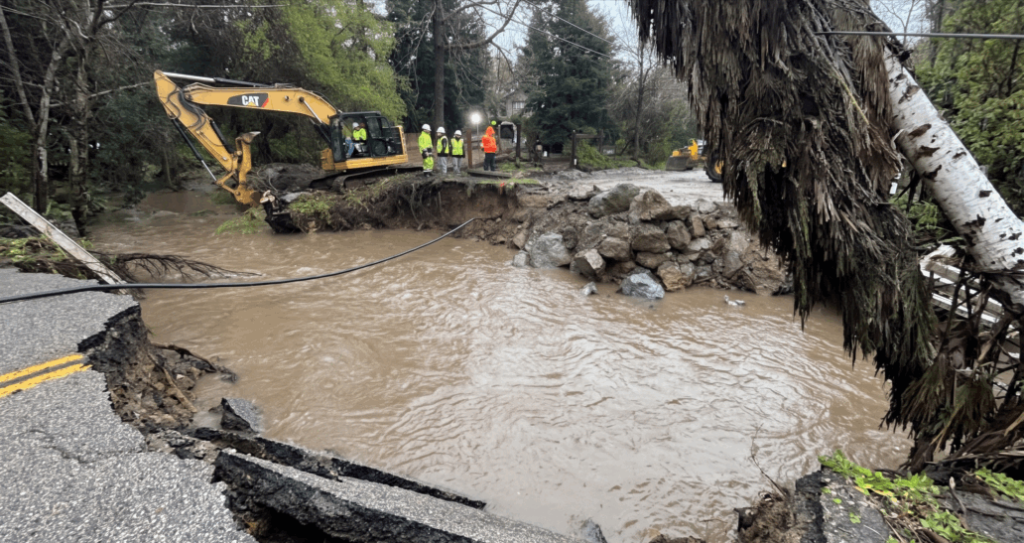
California groundwater conditions directly affect underground plumbing infrastructure.
Especially during drought periods.
As groundwater is pumped aggressively:
- soil structure weakens
- land subsidence develops
- underground supports shift
- foundations absorb movement stress
California continues experiencing land subsidence tied to groundwater pumping, causing damage to buildings, infrastructure, and underground systems.
This affects:
- slab foundations
- sewer laterals
- underground water services
- drainage systems
- foundation-adjacent plumbing
Many California slab leaks and underground plumbing failures originate from years of gradual subsidence and underground movement rather than one isolated event.
The visible leak often appears much later than the original infrastructure instability.
Pressure Variation Creates System-Wide Plumbing Stress
California’s water systems operate under complex pressure environments.
Especially across:
- hillside communities
- high-density urban corridors
- drought-sensitive regions
- long-distance municipal delivery systems
Pressure conditions fluctuate because of:
- elevation changes
- aging infrastructure
- drought conditions
- expanding demand
- emergency water redistribution
- seismic resilience planning
As pressure varies:
- fittings absorb repeated stress
- pipe walls weaken
- seals lose stability
- slab plumbing absorbs friction pressure
- underground joints destabilize
Pipeline replacement and pressure stabilization projects continue expanding across California because increased demand, infrastructure age, and pressure inconsistency contribute to leaks, breaks, and service instability.
Many plumbing systems gradually weaken internally before visible leakage finally appears.
Drought Cycles Increase Infrastructure Fatigue
California’s drought conditions affect more than water supply.
They also change how underground infrastructure behaves.
During prolonged drought periods:
- soils contract
- groundwater levels fall
- underground supports destabilize
- foundations settle unevenly
Then heavy rain returns.
The soil rapidly expands again.
That repeated environmental cycling places continuous stress against:
- sewer laterals
- slab plumbing
- underground utility systems
- drainage infrastructure
- foundation systems
California continues facing severe long-term drought and groundwater instability challenges affecting infrastructure reliability statewide.
The plumbing system absorbs every environmental transition continuously.
Slab Leaks Become Seismic and Pressure Failures
Many California homes operate on slab foundations directly exposed to environmental movement pressure.
As soils shift underneath the structure:
- copper piping absorbs friction stress
- underground abrasion increases
- pipe supports weaken
- fittings absorb pressure variation
At the same time:
- seismic activity redistributes stress
- drought cycles alter soil stability
- groundwater changes shift underground support conditions
Eventually the infrastructure loses stability.
Then a leak develops underneath the slab.
But the visible leak is often only the final stage of years of environmental pressure accumulation.
Many homeowners first notice:
- warm flooring
- rising water bills
- flooring separation
- unexplained moisture
- foundation cracking
- fluctuating fixture pressure
The visible symptom often appears much later than the original underground instability.
Coastal and Humidity Environments Accelerate Corrosion
California coastal environments place additional stress on plumbing infrastructure.
Especially across:
- San Francisco Bay Area
- Monterey Bay
- Orange County
- Los Angeles coastal regions
- San Diego
Salt air accelerates oxidation around exposed plumbing materials.
Humidity increases corrosion exposure around vulnerable systems.
This affects:
- copper piping
- cast iron drains
- water heater systems
- plumbing supports
- exterior utility components
Over time:
- corrosion accelerates
- pipe walls weaken
- fittings deteriorate
- drainage systems lose structural integrity
The plumbing system gradually loses stability underneath constant environmental exposure.
Wildfire and Emergency Conditions Create Infrastructure Pressure
California wildfire environments create additional plumbing instability.
Emergency shutdowns.
Rapid pressure redistribution.
Water demand surges.
Heat exposure around infrastructure systems.
All place additional stress against plumbing environments.
Especially during:
- wildfire response
- emergency water rerouting
- power outages
- extreme heat events
The plumbing environment becomes connected to larger statewide infrastructure resilience conditions.
California Sewer Systems Absorb Movement and Root Pressure
California’s mature urban tree environments create additional underground plumbing stress.
Roots naturally seek moisture sources underground.
Small cracks inside aging sewer systems attract intrusion over time.
At the same time:
- ground movement shifts buried systems
- drought cycles destabilize soil supports
- seismic activity alters underground alignment
This creates:
- recurring backups
- underground cracking
- standing wastewater
- sewer gas release
- partial sewer collapse
Many California sewer failures involve overlapping environmental forces acting simultaneously underneath the structure.
The visible sewer backup often represents the final stage of years of underground instability.
Drainage and Venting Imbalance Across California Homes
Drainage systems rely on stable airflow and consistent wastewater movement.
Environmental instability disrupts that balance.
Underground shifting changes drainage pitch.
Vent systems absorb corrosion and structural stress.
Pressure fluctuations develop across the plumbing network.
Many California homeowners experience:
- gurgling drains
- sewer odors
- intermittent backups
- fluctuating toilet performance
- slow drainage
- inconsistent fixture behavior
The visible issue often appears at one fixture.
The larger issue usually exists across the broader environmental plumbing system underneath and around the structure.
California Plumbing Failures Are Environmental Infrastructure Failures
Most California plumbing failures involve overlapping environmental forces.
Seismic activity.
Pressure variation.
Groundwater instability.
Infrastructure aging.
Drought cycling.
Land subsidence.
Corrosion.
Time.
These forces gradually weaken plumbing systems underneath homes while remaining mostly hidden during early stages.
Then one condition changes.
The ground shifts.
Pressure fluctuates.
Drought conditions intensify.
A weakened connection separates.
The system responds.
That is why California plumbing environments increasingly require full-system evaluation instead of isolated repair thinking.
The visible slab leak, sewer backup, or hidden underground pipe failure is often only the final stage of a much larger seismic, pressure, and aging infrastructure stress failure pattern.