
Heat / Thermal Expansion Failure
Definition
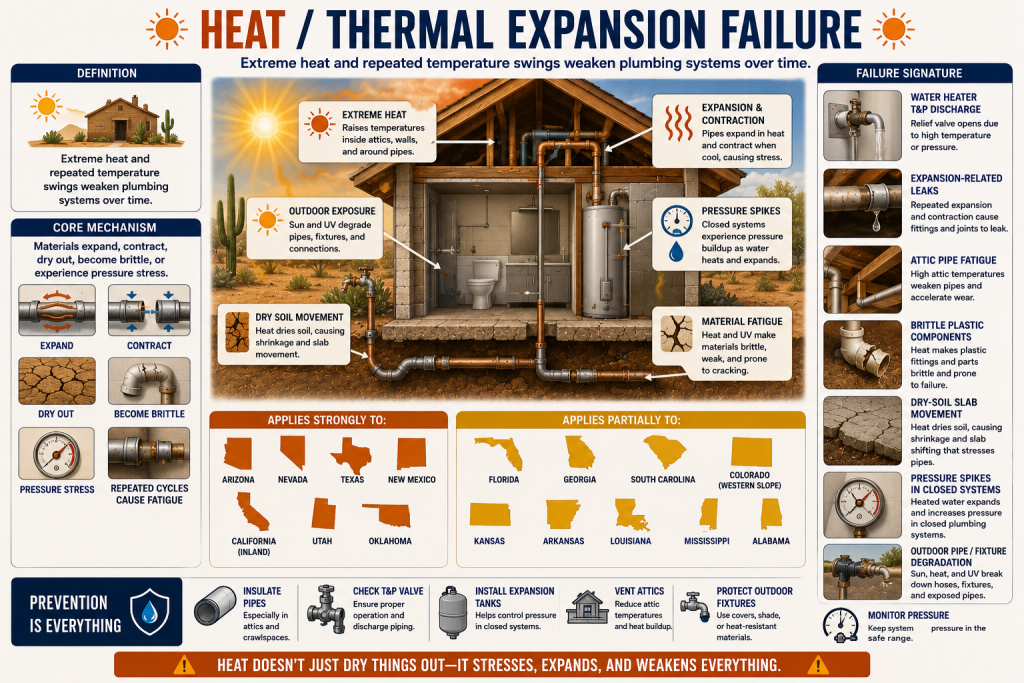
Heat / Thermal Expansion Failure occurs when high temperatures and repeated temperature swings create pressure, expansion, contraction, and material stress throughout the plumbing system.
Plumbing materials constantly react to heat.
As temperatures rise, materials expand.
As temperatures cool, materials contract.
Repeated thermal cycling gradually weakens vulnerable areas of the system over time.
Heat also changes how water behaves inside the system.
Pressure increases.
Expansion loading increases.
Water heaters work harder.
Mineral accumulation accelerates.
Plastic components age faster.
The visible plumbing failure is often the final stage of long-term thermal stress.
How Heat Attacks Plumbing
Heat-related plumbing stress develops slowly through repeated environmental exposure.
The plumbing system may continue operating normally for years while thermal loading quietly accumulates.
Heat / Thermal Expansion conditions include:
- attic heat exposure
- thermal expansion
- desert heat
- UV exposure
- pressure spikes
- dry-soil movement
- extreme summer temperatures
- repeated expansion/contraction cycles
- closed-system pressure loading
- outdoor fixture exposure
- water heater overheating stress
- long-duration heat exposure
- slab drying cycles
- recirculation heat loading
Heat affects:
- pipe movement
- pressure regulation
- fitting stability
- water heater performance
- expansion tanks
- plastic durability
- support systems
- slab movement
- fixture longevity
The plumbing system may remain visually normal while internal stress steadily increases.
Why This Failure Family Matters
Most homeowners think plumbing systems fail because something suddenly breaks.
Heat-related failures usually develop gradually.
This is why plumbing systems in hot-weather regions frequently experience:
- recurring expansion leaks
- water heater problems
- pressure instability
- brittle plastic failures
- attic pipe stress
- slab movement
- outdoor fixture deterioration
The environmental heat exposure remains active every season.
Even small daily temperature changes create repeated stress cycles inside the plumbing system.
Over time, those cycles accumulate into visible plumbing failure.
Strong Heat / Thermal Expansion States
Arizona
Nevada
Texas
New Mexico
California inland
Utah
Oklahoma
Florida
Georgia
South Carolina
Louisiana
Mississippi
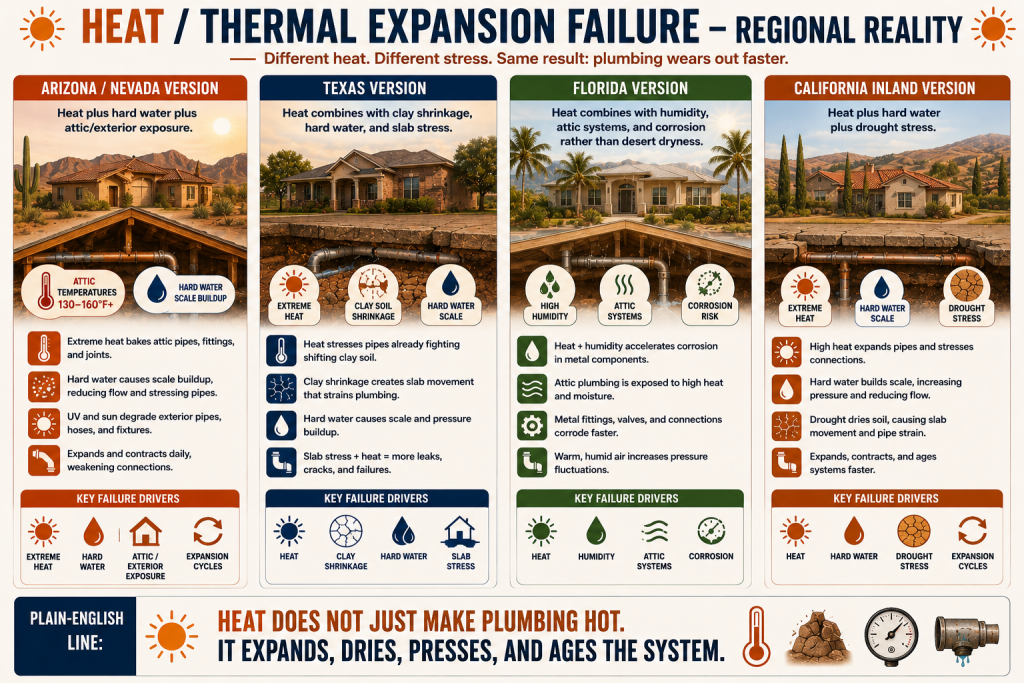
Arizona / Nevada Version
Arizona and Nevada experience some of the strongest thermal plumbing stress environments in the country.
Extreme desert heat combines with:
- hard water
- attic-installed systems
- slab foundations
- outdoor exposure
- long summer heat cycles
Water heaters, plastic systems, expansion devices, and outdoor fixtures often experience accelerated deterioration.
Texas Version
Texas combines heat exposure with expansive clay movement, slab-on-grade construction, hard water, and rapid suburban growth.
Thermal expansion frequently layers onto already stressed slab plumbing systems.
Florida Version
Florida heat-related plumbing stress is shaped by humidity, attic heat, coastal exposure, and high-demand systems rather than desert dryness.
The plumbing system often operates continuously inside warm, moisture-heavy conditions.
California Inland Version
California inland regions combine heat exposure, drought cycles, slab movement, hard water, and remodel layering.
Large temperature swings frequently increase plumbing stress inside older systems.
Mountain West Version
Utah, Colorado western regions, and surrounding high-desert areas frequently experience large daytime-to-nighttime temperature swings.
Repeated expansion and contraction cycles create long-term stress loading throughout the plumbing system.
Failure Signature
Common Heat / Thermal Expansion symptoms include:
- expansion-related leaks
- pressure spikes
- T&P valve discharge
- water heater stress
- attic pipe fatigue
- brittle plastic components
- cracked fittings
- outdoor fixture deterioration
- recurring hot-water instability
- recirculation-system stress
- slab movement after drought
- expansion-tank overload
- noisy pipes
- pressure-regulator strain
Failure Timeline
Stage 1 — Environmental Heat Exposure
The plumbing system begins experiencing repeated thermal loading.
Examples:
- attic heat
- desert temperatures
- UV exposure
- drought conditions
- hot-water cycling
No visible plumbing failure exists yet.
Stage 2 — Thermal Stress
The plumbing materials begin absorbing repeated expansion pressure.
Examples:
- pipe expansion
- pressure buildup
- fitting stress
- plastic aging
- water heater loading
- support movement
Stage 3 — Symptom Phase
The homeowner notices recurring plumbing behavior changes.
Examples:
- noisy pipes
- pressure fluctuation
- recurring leaks
- hot-water inconsistency
- outdoor fixture cracking
- T&P discharge
Stage 4 — Recurring Failure
Repairs occur.
The thermal exposure remains active.
Examples:
“The leak came back during summer.”
“The water heater keeps having problems.”
“Another fitting cracked.”
Stage 5 — Damage Event
The thermal stress becomes visible plumbing failure.
Examples:
- water heater failure
- pipe rupture
- slab leak
- expansion-related flooding
- brittle-system cracking
- major pressure failure
- recurring system-wide leaks
Foundation Interaction
Heat-related plumbing stress affects different foundation systems differently.
Slab-on-Grade Homes
Most vulnerable to:
- drought-related slab movement
- thermal pipe expansion
- hidden under-slab stress
Attic-Routed Systems
Most vulnerable to:
- extreme heat loading
- pipe fatigue
- expansion cycling
- brittle plastic failure
Outdoor Plumbing Systems
Most vulnerable to:
- UV degradation
- thermal cracking
- pressure fluctuation
- fixture deterioration
Large Homes / Long Runs
Most vulnerable to:
- recirculation heat loading
- long expansion movement
- pressure imbalance
Pipe Material Interaction
Heat exposure affects plumbing materials differently.
CPVC
Most vulnerable to:
- brittleness
- thermal cracking
- attic heat exposure
PVC / ABS
Most vulnerable to:
- UV degradation
- expansion movement
- support instability
Copper
Most vulnerable to:
- expansion fatigue
- repeated stress loading
- fitting movement
PEX
Most vulnerable to:
- poor support
- UV exposure
- thermal movement stress
Detection Difficulty Score
Heat-related failures are often difficult to detect because the stress develops gradually through repeated temperature exposure.
Easy to Detect:
- outdoor fixture cracking
- visible expansion leaks
- T&P discharge
Medium Detection:
- recurring hot-water instability
- attic-system stress
- pressure fluctuation
Hard to Detect:
- long-term thermal fatigue
- hidden expansion loading
- early-stage plastic brittleness
- underground heat-related movement
Most Vulnerable Homes
- attic-plumbed homes
- slab-on-grade homes
- desert-region homes
- large suburban homes
- recirculation-heavy systems
- homes with outdoor plumbing exposure
- production subdivision construction
- hard-water environments
- remodel-heavy homes
Failure Visibility
Heat / Thermal Expansion failures often remain hidden because the plumbing system gradually adapts while internal thermal stress increases over time.
The homeowner usually notices the system after recurring leaks, pressure instability, or water heater stress already exist.
The visible plumbing failure is often the final stage of long-term thermal loading.
Homeowner Translation
The plumbing system may not be failing because one pipe suddenly became defective.
The entire system may be slowly expanding, pressurizing, and aging under repeated heat exposure every season.
Contractor Translation
Heat / Thermal Expansion failures occur when repeated thermal cycling alters pressure behavior, material stability, support conditions, fitting integrity, and system expansion movement across the plumbing network.
The visible plumbing problem is often the final stage of long-term thermal loading.
Final Positioning Line
Heat-related plumbing failures usually begin long before visible leaks appear. Thermal expansion quietly stresses the plumbing system season after season until repeated pressure and material fatigue finally become visible damage.