

Construction Era Force
Definition
Construction Era Force is the environmental pressure created by the building generation, plumbing material era, construction standards, infrastructure age, and housing-growth conditions surrounding the home.
Every construction generation leaves behind predictable plumbing patterns.
Different eras used different:
- plumbing materials
- installation methods
- municipal standards
- subdivision designs
- drain layouts
- fixture expectations
- pressure assumptions
- building speeds
- inspection environments
As homes age, those original decisions continue shaping plumbing performance decades later.
How Construction Era Attacks Plumbing
Construction-related plumbing failures usually develop slowly over long periods of time.
The system may initially function normally.
But age, outdated materials, repeated repairs, remodel layering, and evolving water demand gradually create instability.
Construction Era Force includes:
- galvanized systems
- cast iron drains
- clay sewer laterals
- Orangeburg-era sewer systems where present
- early copper generations
- polybutylene-era systems
- CPVC boom-build installations
- slab-on-grade expansion
- production subdivision shortcuts
- aging municipal service lines
- partial remodel layering
- mixed-generation plumbing systems
- old-to-new material transitions
- aging crawlspace systems
- older drain stack configurations
The visible plumbing problem often appears decades after the original installation.

Why Construction Era Force Matters
Most homeowners think plumbing systems fail because pipes become “old.”
Age alone is not the full issue.
The construction generation itself determines:
- what materials were used
- how the system was routed
- how the drains were supported
- how the slab was designed
- how the plumbing was sized
- how the subdivision was built
- what code standards existed at the time
This is why homes built during certain decades repeatedly develop similar plumbing problems across entire neighborhoods.
The plumbing system often reflects the construction priorities of its era.
Strong Construction Era States
New York
Pennsylvania
Ohio
Illinois
Michigan
Massachusetts
New Jersey
California
Florida
Texas
Georgia
North Carolina
Arizona
Nevada
Tennessee
Northeast / Legacy Infrastructure Version
Older Northeast housing often combines:
- galvanized systems
- cast iron drains
- clay sewer laterals
- aging municipal service lines
- basement exposure
- multiple remodel generations
Many systems now operate far beyond their original intended lifespan.
Midwest Version
Ohio, Illinois, Michigan, Wisconsin, and surrounding Midwest states frequently combine aging plumbing infrastructure with freeze exposure, mature trees, hard water, and older sewer systems.
Original drain systems often experience decades of accumulated stress before visible failure appears.
California Version
California plumbing systems frequently experience remodel layering.
Old plumbing is repeatedly modified during:
- additions
- ADUs
- hillside renovations
- kitchen remodels
- bathroom expansions
- high-value property upgrades
The plumbing system may contain multiple generations of materials operating together inside the same home.
Florida Version
Florida combines slab-on-grade construction, cast iron drain aging, humidity exposure, high water tables, and rapid subdivision growth.
Many older systems now operate inside continuously saturated environments.
Texas / Southwest Boom-Build Version
Texas, Arizona, Nevada, and other high-growth states frequently combine rapid subdivision construction with slab foundations, hard water, heat exposure, and production-speed installation.
Many systems inherit installation weaknesses during original construction.
Southeast Growth Belt Version
Georgia, North Carolina, Tennessee, and South Carolina frequently combine crawlspaces, clay soil, rapid suburban expansion, mixed old/new neighborhoods, and remodel layering.
The plumbing system often reflects decades of uneven growth patterns.
Construction Era Failure Signature
Common Construction Era symptoms include:
- galvanized restriction
- cast iron drain collapse
- recurring sewer backups
- clay sewer root intrusion
- brittle transitions
- recurring slab leaks
- partial repair stacking
- aging drain systems
- low water pressure
- sewer lateral deterioration
- fixture mismatch problems
- recurring leak locations
- old-to-new material incompatibility
- undersized plumbing branches
- recurring remodel-related stress
Construction Era Timeline
Stage 1 — Original Installation
The plumbing system is installed according to the standards of its era.
Examples:
- galvanized supply systems
- cast iron drains
- slab-on-grade subdivision layouts
- clay sewer laterals
- production subdivision construction
No visible plumbing failure exists yet.
Stage 2 — Material Aging
The original materials begin deteriorating over time.
Examples:
- galvanized restriction
- cast iron scaling
- copper thinning
- sewer joint weakening
- pressure imbalance
- aging supports
Stage 3 — Symptom Phase
The homeowner notices recurring system problems.
Examples:
- low water pressure
- slow drains
- recurring clogs
- discolored water
- fixture inconsistency
- sewer odor
- repeated leaks
Stage 4 — Remodel / Repair Layering
Repairs and upgrades are added onto the aging system.
Examples:
- mixed materials
- partial repipes
- disconnected pressure behavior
- old-to-new transitions
- uneven system performance
The plumbing system stops behaving like one consistent installation.
Stage 5 — Damage Event
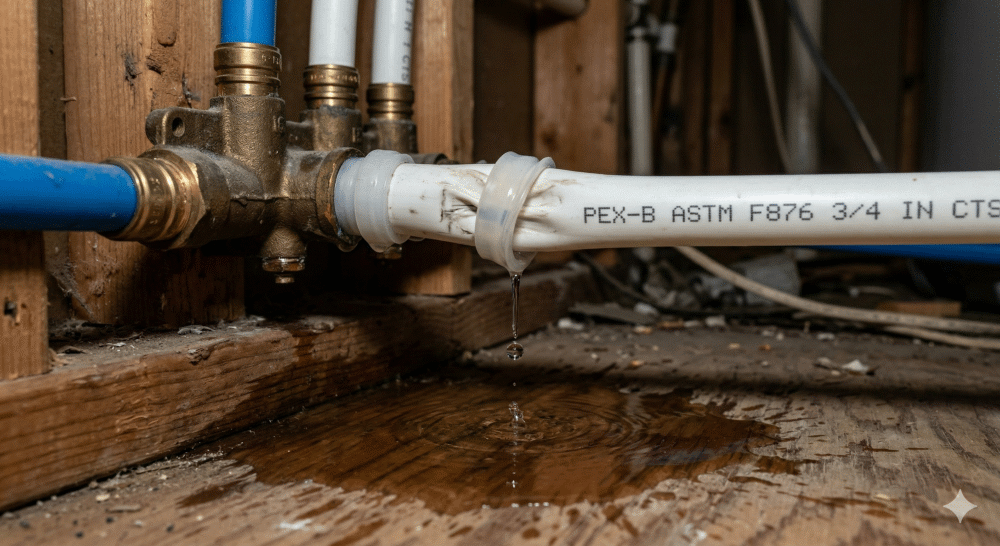
The aging construction generation becomes visible plumbing failure.
Examples:
- cast iron collapse
- sewer replacement
- slab leak escalation
- major repipe
- recurring drain backups
- foundation-adjacent plumbing damage
- full-system replacement conditions
Home Age Interaction
Different construction periods produce different plumbing risks.
Pre-1940 Homes
Most vulnerable to:
- galvanized aging
- cast iron deterioration
- clay sewer problems
- lead service concerns
- basement exposure
1940–1975 Homes
Most vulnerable to:
- aging galvanized systems
- cast iron drain stress
- early copper issues
- old sewer laterals
- slab/crawlspace transitions
1975–1995 Homes
Most vulnerable to:
- polybutylene concerns
- copper pinholes
- subdivision-speed installation
- remodel layering
- slab stress
1995–2010 Homes
Most vulnerable to:
- boom-build shortcuts
- CPVC brittleness
- weak slab penetrations
- undersized branches
- poor support systems
2010–Present Homes
Most vulnerable to:
- complex demand load
- pressure regulation issues
- recirculation stress
- high fixture demand
- installation inconsistency
Foundation Interaction
Construction-era plumbing behaves differently depending on foundation design.
Slab-on-Grade Homes
Most vulnerable to:
- slab leaks
- hidden under-slab deterioration
- cast iron decay
- expansion stress
Crawlspace Homes
Most vulnerable to:
- support sagging
- exposed pipe deterioration
- humidity interaction
- drain instability
Basement Homes
Most vulnerable to:
- old stack failures
- sewer backups
- freeze interaction
- aging infrastructure exposure
Detection Difficulty Score
Construction-era failures are often difficult to detect because systems may continue functioning long after deterioration begins.
Easy to Detect:
- low water pressure
- visible corrosion
- recurring drain clogs
Medium Detection:
- aging sewer systems
- hidden cast iron scaling
- partial restriction
- mixed-material instability
Hard to Detect:
- under-slab deterioration
- hidden sewer aging
- layered remodel stress
- aging underground transitions
- long-term system fatigue
Most Vulnerable Homes
- older urban homes
- subdivision boom construction
- heavily remodeled homes
- slab-on-grade homes
- homes with partial repipes
- homes with original drains
- mixed-generation plumbing systems
- investor-flip properties
- aging municipal infrastructure areas
Failure Visibility
Construction-era failures often remain hidden because the system slowly adapts while materials deteriorate internally over decades.
Many homeowners only notice the system after multiple plumbing problems begin appearing simultaneously.
The visible plumbing issue is often the final stage of long-term material and infrastructure aging.
Homeowner Translation
The plumbing system may not be failing because of one isolated plumbing problem.
The home may simply belong to a construction generation with predictable plumbing weaknesses.
Contractor Translation
Construction Era Force failures occur when aging material generations, outdated installation methods, remodel layering, infrastructure fatigue, and mixed-system transitions gradually destabilize long-term plumbing performance.
The visible plumbing problem is often the final stage of decades of accumulated system aging.
Final Positioning Line
Plumbing systems often fail according to the decade they were built. The construction era shapes the materials, installation methods, and infrastructure weaknesses that continue affecting the home decades later.