


Acidic / Aggressive Water Corrosion Failure
Definition
Acidic / Aggressive Water Corrosion Failure occurs when chemically corrosive water gradually dissolves or destabilizes plumbing materials from inside the system.
Some water slowly restricts plumbing systems.
Aggressive water slowly dissolves them.
Low-pH water, chemically imbalanced water, low-alkalinity conditions, dissolved contaminants, and unstable mineral chemistry can prevent protective internal pipe layers from forming correctly.
Without those protective layers, plumbing materials become vulnerable to long-term internal corrosion.
The visible plumbing leak is often the final stage of years of internal material deterioration.
How Aggressive Water Attacks Plumbing
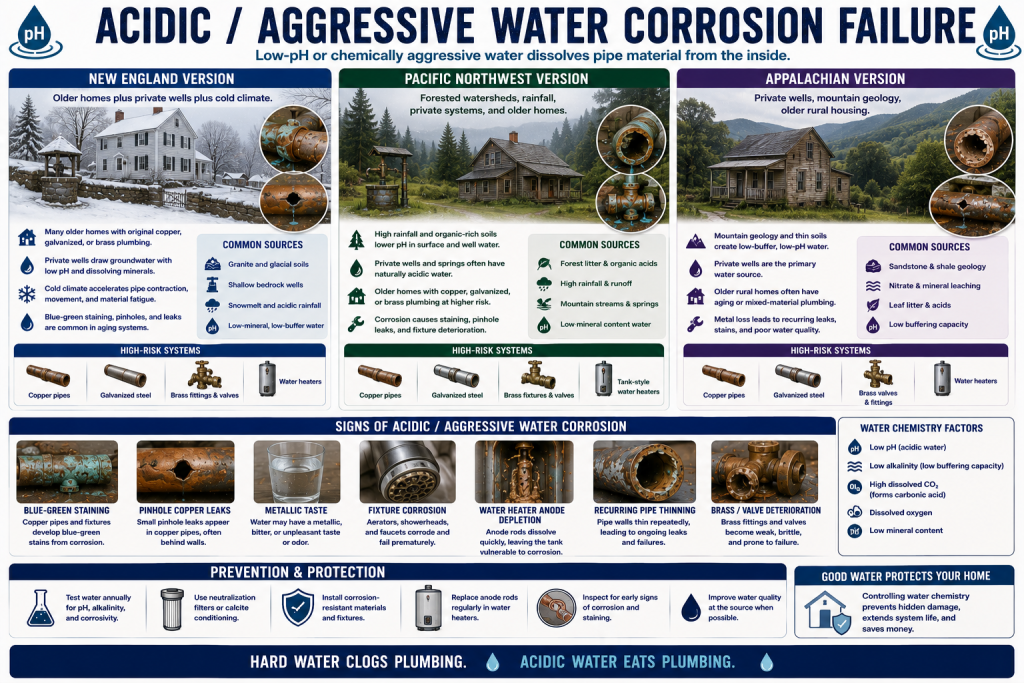
Aggressive-water corrosion develops slowly through continuous chemical interaction inside the plumbing system.
Water continuously contacts:
- copper piping
- brass fittings
- valves
- solder joints
- water heaters
- fixtures
- recirculation systems
- appliances
Acidic / Aggressive Water conditions include:
- low pH
- low alkalinity
- corrosive groundwater
- aggressive private well water
- dissolved oxygen imbalance
- chloride exposure
- sulfate interaction
- unstable mineral chemistry
- soft-water corrosion
- copper pitting environments
- high salinity
- chemically unstable source water
Corrosion affects:
- copper pipe walls
- fittings
- solder joints
- valves
- brass components
- water heaters
- fixture interiors
- recirculation systems
The plumbing system may appear visually normal while internal wall thinning quietly progresses.
Why This Failure Family Matters
Most homeowners think copper plumbing failures happen randomly.
Aggressive water chemistry often creates predictable long-term corrosion patterns inside entire neighborhoods and regional water systems.
This is why some regions repeatedly experience:
- pinhole copper leaks
- blue-green staining
- recurring copper failures
- metallic-tasting water
- fixture deterioration
- accelerated valve wear
The plumbing system may continue operating while the pipe walls gradually become thinner over time.
Many homeowners only recognize the pattern after multiple leaks begin appearing across different areas of the home.
Research and water-quality guidance repeatedly link low-pH and corrosive water conditions with copper corrosion, staining, pitting, and long-term plumbing deterioration.
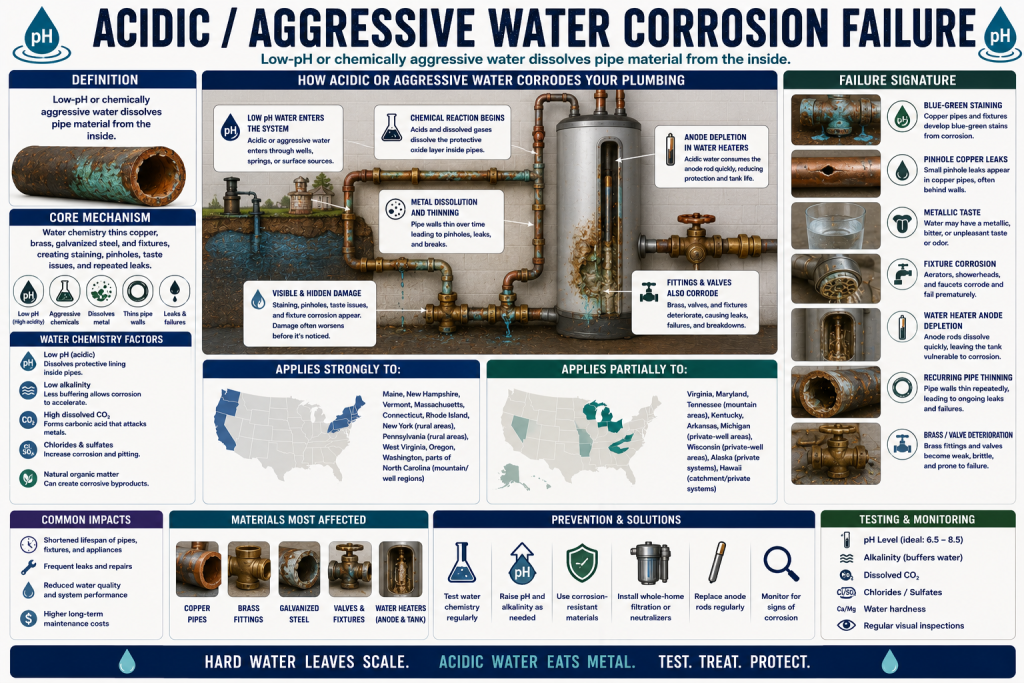
Strong Acidic / Aggressive Water States
Maine
New Hampshire
Vermont
Massachusetts
Rhode Island
Connecticut
Pennsylvania rural regions
Oregon
Washington
West Virginia
Virginia mountain regions
North Carolina mountain regions
New England Version
Large portions of New England contain naturally acidic groundwater and private well systems.
Older copper plumbing systems frequently experience:
- pinhole leaks
- blue-green staining
- metallic taste
- recurring corrosion-related failures
Aggressive water often attacks copper systems slowly for years before visible failure appears.
Pacific Northwest Version
Oregon and Washington frequently combine soft water, rainfall-heavy environments, older copper systems, and variable groundwater chemistry.
Internal copper deterioration often develops quietly underneath otherwise normal plumbing performance.
Appalachian / Mountain Region Version
Pennsylvania, West Virginia, Virginia mountain regions, and North Carolina mountain areas frequently combine private wells, mineral imbalance, older infrastructure, and naturally corrosive groundwater conditions.
Water chemistry variability often accelerates internal plumbing deterioration.
Private Well Environment
Private well systems are especially vulnerable because water chemistry can vary significantly between neighboring properties.
Many homeowners remain unaware of corrosive conditions until:
- staining appears
- leaks begin
- metallic taste develops
- multiple plumbing failures occur
Corrosive water often requires active water treatment or pH correction to reduce long-term plumbing deterioration.
Failure Signature
Common Acidic / Aggressive Water symptoms include:
- pinhole copper leaks
- blue-green staining
- metallic taste
- recurring valve failure
- copper pipe thinning
- fixture corrosion
- recurring water heater deterioration
- solder-joint degradation
- elevated copper levels
- internal pipe pitting
- unexplained recurring leaks
- fixture discoloration
- premature plumbing aging
Failure Timeline
Stage 1 — Chemical Exposure
The plumbing system begins interacting with corrosive water conditions.
Examples:
- low pH
- low alkalinity
- aggressive well water
- unstable mineral chemistry
- corrosive groundwater
No visible plumbing failure exists yet.
Stage 2 — Internal Corrosion
The plumbing materials begin deteriorating internally.
Examples:
- copper thinning
- pitting corrosion
- valve wear
- fitting instability
- protective-layer breakdown
Stage 3 — Symptom Phase
The homeowner notices recurring plumbing behavior changes.
Examples:
- metallic taste
- blue-green staining
- isolated pinhole leaks
- fixture corrosion
- recurring valve issues
Stage 4 — Recurring Failure
Repairs occur.
The aggressive water chemistry remains active.
Examples:
“Another copper leak appeared.”
“The same plumbing keeps corroding.”
“The pipes keep developing pinholes.”
Stage 5 — Damage Event
The internal corrosion becomes visible plumbing failure.
Examples:
- multiple pinhole leaks
- widespread copper deterioration
- major repipe conditions
- water heater failure
- recurring hidden-wall leaks
- fixture-system corrosion
Pipe Material Interaction
Aggressive water affects plumbing materials differently.
Copper
Most vulnerable to:
- pitting corrosion
- wall thinning
- pinhole leaks
- blue-green oxidation
Brass Components
Most vulnerable to:
- chemical corrosion
- fitting deterioration
- valve instability
Water Heaters
Most vulnerable to:
- accelerated corrosion
- sediment interaction
- shortened lifespan
Galvanized Steel
Most vulnerable to:
- internal corrosion
- rust instability
- restriction layering
Detection Difficulty Score
Aggressive-water failures are often difficult to detect because the corrosion develops internally before visible plumbing damage appears.
Easy to Detect:
- blue-green staining
- metallic taste
- visible pinhole leaks
Medium Detection:
- recurring valve deterioration
- fixture corrosion
- elevated copper levels
Hard to Detect:
- hidden wall thinning
- internal pitting progression
- early-stage copper instability
- concealed corrosion loading
Most Vulnerable Homes
- homes with private wells
- older copper plumbing systems
- homes with untreated groundwater
- older rural homes
- homes without water treatment
- mountain-region properties
- soft-water environments
- older plumbing generations
- long-run copper systems
Failure Visibility
Acidic / Aggressive Water Corrosion failures often remain hidden because the corrosion develops internally before visible plumbing symptoms appear.
The plumbing system may continue functioning while pipe walls quietly thin over many years.
The visible plumbing leak is often the final stage of long-term chemical deterioration.
Homeowner Translation
The plumbing system may not be failing because the pipe itself was defective.
The water moving through the plumbing system may be slowly dissolving the materials from the inside out.
Contractor Translation
Acidic / Aggressive Water Corrosion failures occur when low-pH or chemically unstable water conditions destabilize protective internal pipe layers and accelerate long-term corrosion across copper, brass, and plumbing-system components.
The visible plumbing failure is often the final stage of prolonged internal chemical deterioration.
Final Positioning Line
Aggressive-water plumbing failures usually begin long before the first visible leak appears. Corrosive water quietly thins and destabilizes plumbing materials from the inside until years of hidden chemical deterioration finally become visible damage.