sinkholeSF37 — Public vs Private Infrastructure Risk
Everyone assumes the failure came from “the city.”
That’s the default reaction when ground collapses.
But systems don’t care about ownership boundaries.
They respond to condition.
In the 1995 Sea Cliff event in San Francisco, the trigger was a failed sewer line.
Public infrastructure initiated the event.
But the damage didn’t stop at the system boundary.
Water moved.
Soil shifted.
Load failed.
The structure above it had no separation from the system below it.
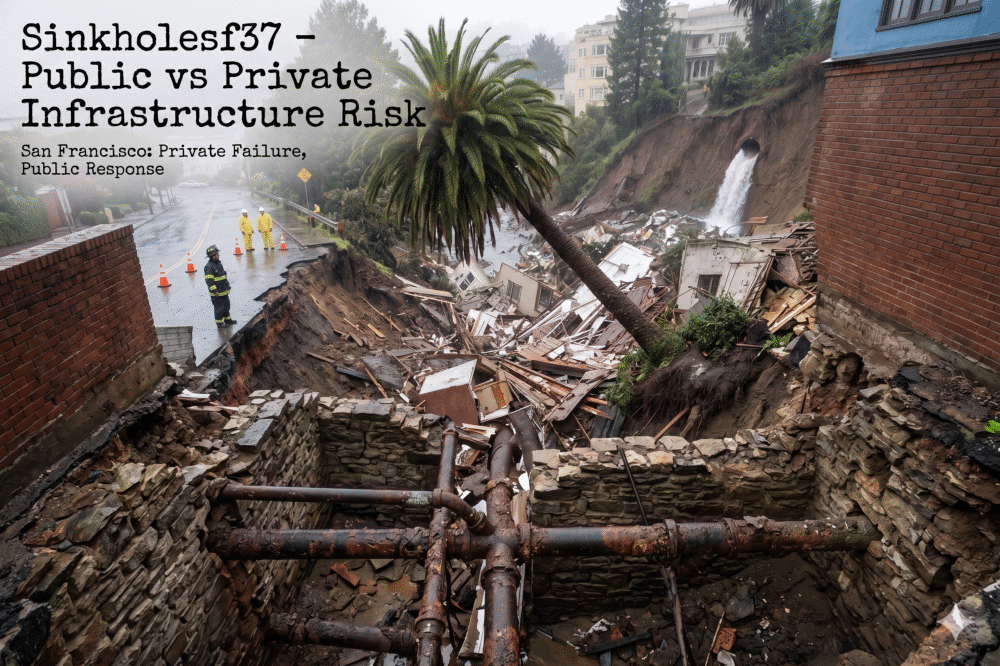
System vs Symptom Breakdown
What people focus on:
- public sewer failure
- city responsibility
- infrastructure breakdown
What actually drives the outcome:
- continuous water escape into surrounding soil
- shared ground conditions between public and private systems
- cumulative weakening of load-bearing soil
- structural dependence on stable subsurface conditions
Contractor Insight:
Public vs private is a legal distinction. Not a physical one. Once water leaves a system, it affects everything connected to that environment—regardless of ownership.
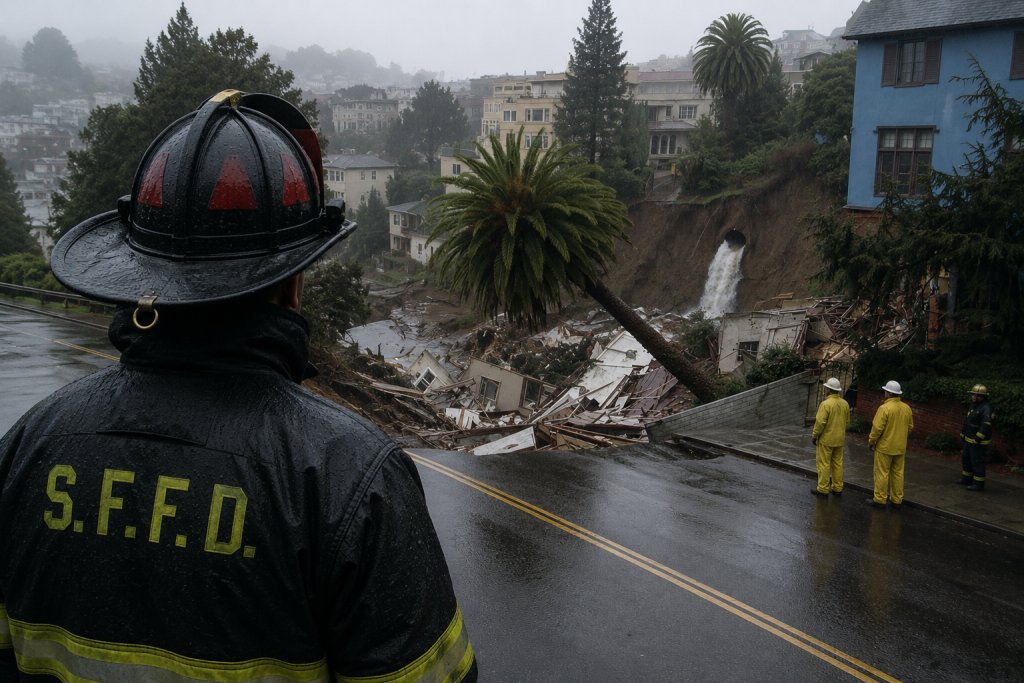
Failure Origin (Not Visible Damage)
Failure doesn’t start at the property line.
It starts where containment is lost.
That can happen:
- in public sewer lines
- in private lateral lines
- inside the home’s plumbing system
Once containment fails:
- water enters the soil
- soil structure changes
- support conditions degrade
Advanced Thinking:
The ground beneath a home is a shared system. Public infrastructure, private lines, and structural load all interact within the same soil environment.
There is no isolation once failure begins.
Why Repairs Don’t Solve Underlying Conditions
Repairs are typically segmented by responsibility:
- city fixes public line
- homeowner fixes private line
- contractor addresses visible damage
But the failure environment remains continuous.
Contractor Insight:
You can have a repaired public line and still experience private-side failure. Or fix a private leak while the surrounding soil is already compromised from external sources.
Advanced Pattern:
- system A fails (public or private)
- soil conditions change
- system B operates in altered environment
- secondary failure occurs
The systems are independent in ownership—but dependent in performance.
System Alignment vs Patchwork
System alignment requires consistency across all connected elements.
Aligned environment:
- contained water systems (public + private)
- stable soil conditions
- predictable load-bearing capacity
- minimal interaction risk
Fragmented environment:
- mixed system conditions
- unknown leak histories
- varying material ages
- unstable soil response
Contractor Insight:
You don’t control public infrastructure. But you do control how your system performs within that environment. A compromised private system increases risk even if the public system is stable—and vice versa.
Advanced Thinking:
Risk compounds when multiple systems degrade at different rates within the same soil structure.
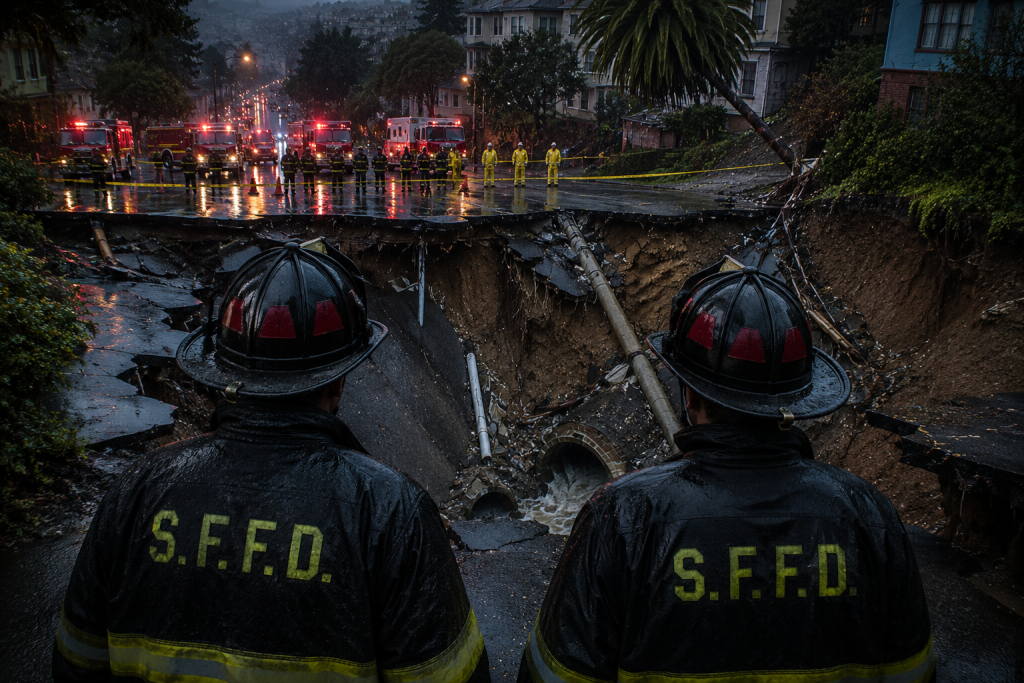
The Translation: Infrastructure → Home
Sea Cliff showed a large-scale interaction:
Public system failure:
- sewer leak → soil erosion → collapse
Residential impact:
- structure loses support → property damage
At the home level:
- public line instability → affects soil conditions
- private plumbing leak → accelerates soil degradation
- combined effect → structural movement
Same drivers:
- Pressure
- Water Movement
- Time
- Movement
Contractor Insight:
Most homeowners treat plumbing as an isolated system. In reality, it operates inside a shared environment influenced by external infrastructure.
Where Risk Actually Builds
Risk is highest when:
- public systems are aging
- private systems are also degraded
- soil conditions are reactive
- moisture levels fluctuate
In San Francisco:
- all four conditions often exist simultaneously
Advanced Thinking:
When multiple systems interact in a changing environment, failure doesn’t need a single cause. It emerges from combined instability.
Why This Matters for Homeowners
You can’t control:
- city infrastructure age
- external line failures
- regional soil movement
You can control:
- your system’s integrity
- your contribution to soil conditions
- your internal pressure and containment
Contractor Insight:
A strong private system reduces total risk exposure—even when external variables exist. A weak private system amplifies risk from both directions.
System Boundary Illusion
The idea of separation is misleading.
There is no true boundary between:
- public infrastructure
- private plumbing
- structural support
They all connect through the same ground.
Advanced Thinking:
Once water leaves any part of the system, it becomes an environmental problem—not just a plumbing problem.
Structural Prevention, Not Repair
You can’t stabilize public infrastructure.
But you can eliminate your system as a failure variable.
A repipe:
- ensures full containment under pressure
- removes internal degradation
- prevents additional water introduction into soil
- stabilizes your side of the system
Contractor Insight:
The goal isn’t to control everything. It’s to eliminate controllable risk.
Advanced Positioning:
Public vs private doesn’t matter when the ground fails.
System integrity does.
Repipe isn’t just about your pipes.
It’s about how your system interacts with everything around it.