
Vertical Load-Induced Pipe Support and Base Connection Failure
Across neighborhoods like Millbrae and Sunnyvale, multi-story townhomes increasingly rely on vertical plumbing runs that span multiple floors.
As building height increases, gravitational load on piping becomes a structural factor rather than a simple routing detail.
Because of this, vertical support design plays a critical role in long-term system stability.
In cities such as New York City and Boston, similar vertical stacking conditions reveal failures when pipe weight is not properly distributed.
Unlike horizontal systems, vertical runs concentrate stress at the lowest connection points.
No contractor was involved in this installation.
All work was performed by the homeowner.
Initial Conditions
Inside a 3-story townhouse of approximately 2,800 sq ft, a full repipe had been completed across all levels.
Vertical potable water lines extended from the top floor down to the first-floor distribution points.
Early indicators included fluctuating water temperature, occasional banging sounds, and noticeable water hammer.
Additionally, low water pressure at upper fixtures and slow hot water delivery were present.
Sediment in faucet aerators and intermittent noisy pipes suggested system inconsistency.
The system required vertical load distribution across multiple anchor points.
However, support placement was minimal.
What the Homeowner Thought
From the homeowner’s perspective, vertical piping required less support than horizontal runs.
Gravity was assumed to stabilize the system naturally.
Connections at each floor appeared secure.
The system seemed complete once water flow was restored.
Focus remained on routing pipes efficiently between floors.
Load distribution was not considered a critical factor.
What Was Actually Happening
Water-filled pipes create significant weight over vertical distance.
Each section adds cumulative load to lower connections.
Without proper anchoring, this weight transfers downward continuously.
The lowest fittings absorb the majority of the stress.
Thermal expansion and pressure fluctuations add dynamic movement.
Water hammer events increase force on already stressed connections.
Over time, the base connection weakens under sustained load.
The system enters a progressive stress failure condition.
11. Unregulated System Pressure Spike Multi-Point Fixture Failure
12. Dead-Leg Water Stagnation Bacterial Growth Risk Condition
13. Unsupported Piping Expansion and Water Hammer Stress Failure
14. Mixed PEX System Compatibility and Connection Degradation Failure
15. Undersized Distribution Line Flow Restriction System Collapse
16. Sub-Slab Buried Fitting Access and Structural Failure Event
17. Closed-System Thermal Expansion Pressure Accumulation Failure
18. Drain Venting Disruption and Sewer Gas Backflow Condition
19. Plumbing Distribution Mapping and Hot-Cold Cross-Connection Failure
20. Vertical Load-Induced Pipe Support and Base Connection Failure
Homeowner Action (DIY – No Contractor Involved)
No licensed plumber participated in this installation.
The homeowner independently installed vertical PEX piping across all floors.
PEX-A vs PEX-B selection was not evaluated in relation to vertical load behavior.
Minimal anchoring points were installed along the vertical runs.
No load distribution strategy was implemented.
The installation proceeded without structural support planning.
Failure Trigger
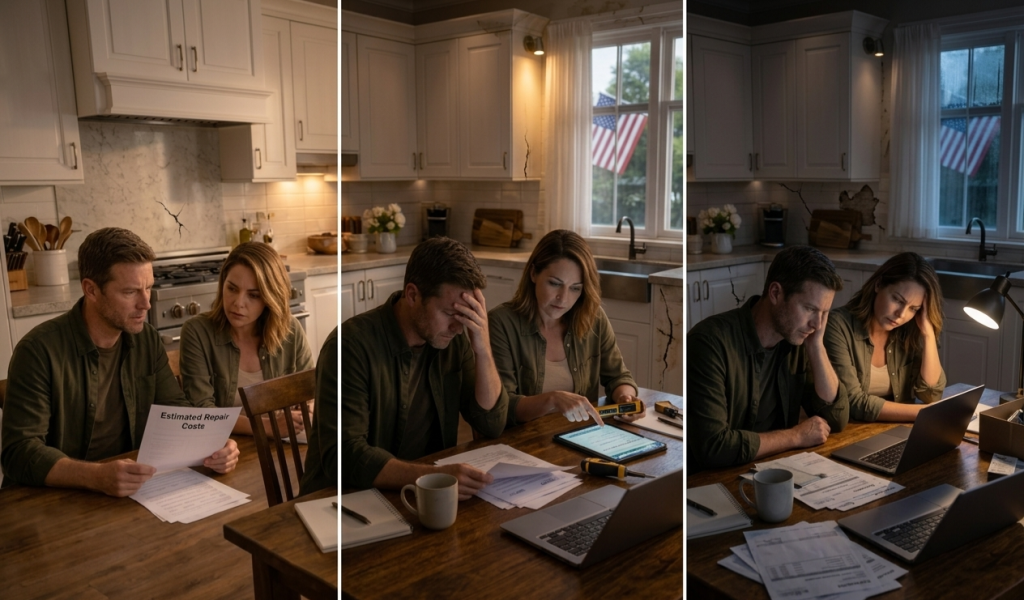
After several weeks of normal operation, the lowest connection experienced continuous stress.
Thermal expansion and pressure cycling compounded the load.
Eventually, the base fitting failed under accumulated force.
A rupture occurred at the lowest level of the vertical run.
Failure was not sudden in origin.
It developed through sustained downward pressure.
Why It Was Not Visible at Install
Immediately after installation, the system appeared stable.
Water flow and pressure were functional across all floors.
Load-related stress develops gradually over time.
Initial conditions do not reveal cumulative force effects.
In homes like those in Millbrae, concealed vertical runs hide load transfer behavior.
Homeowners are not expected to evaluate structural load without system knowledge.
Execution & Escalation
Following the base connection failure, water discharged rapidly into the first-floor area.
Flow continued under full system pressure.
Water spread across flooring and adjacent rooms.
Ceiling structures below the affected run began to absorb moisture.
Structural materials weakened under saturation.
The ceiling below collapsed due to accumulated damage.
Extent of Damage
First-floor flooding affected a large portion of the home.
Ceiling collapse occurred beneath the failed vertical run.
Drywall, insulation, and framing required removal.
Structural drying was necessary to prevent mold development.
Damage extended beyond plumbing into building integrity.
Repair scope included both plumbing and structural restoration.
What Professionals Verify
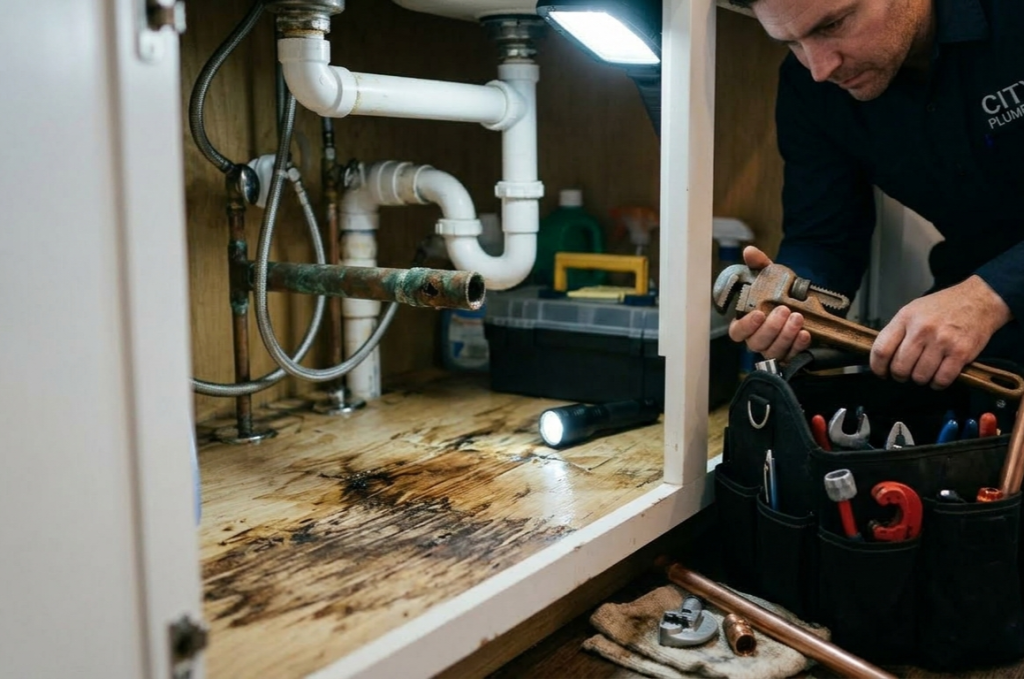
Professionals install supports at defined intervals along vertical runs.
They distribute load across multiple anchor points.
Base connections are reinforced to handle cumulative weight.
Thermal expansion and pressure dynamics are considered in design.
PEX or copper repipe systems are installed with structural awareness.
Verification ensures long-term stability under real operating conditions.
Decision Distortion
The homeowner believed the decision involved routing pipes between floors.
The actual decision involved managing vertical load and stress distribution.
Visible installation suggested completeness.
Hidden load concentration determined outcome.
This mismatch created a delayed structural failure.
Broader Pattern
In areas like San Bruno and across national markets such as New York City, vertical load failures follow similar patterns.
Multi-story systems amplify stress at lower connections.
Contractor standards data shows failures often occur within 30 to 60 days.
Cumulative load and pressure cycles drive breakdown.
The system appears functional initially.
Failure develops through sustained stress.
Process Context
A whole-house repipe is executed as a controlled, structural system installation.
Vertical load distribution is integrated into design.
PEX-A or Type L copper systems are supported with proper anchoring.
Horizontal vs vertical repiping strategies are planned to reduce stress.
Drywall access is strategic and limited.
Water bypass systems maintain service during installation.
Same-day water restoration is balanced with full system verification.
Permitting & Compliance
City plumbing permits require adherence to support and installation standards.
Building code inspections verify proper anchoring and load management.
Improper installations may affect homeowners insurance coverage.
Resale value ROI can be impacted by structural damage history.
Licensed, bonded, and insured professionals ensure compliance with system requirements.
Outcome Shift
The failure did not result from material selection alone.
It resulted from unaddressed vertical load on the system.
If proper support had been installed, the load would have been distributed safely.
The system would have remained stable over time.
Instead, cumulative stress caused a failure at the lowest connection point.
Cost & Decision Considerations
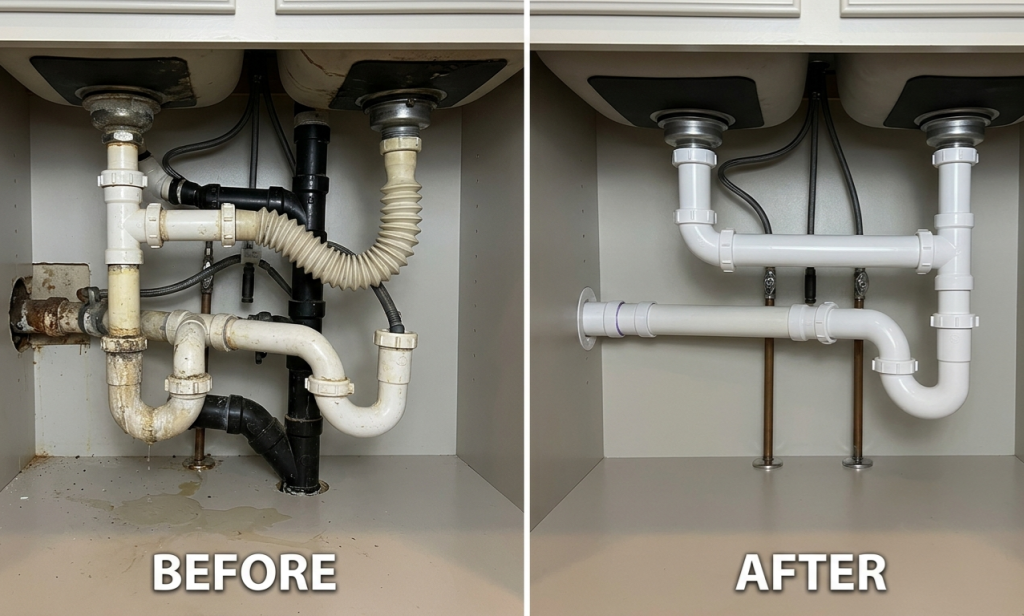
Costs extended into structural repair and ceiling reconstruction.
Drywall patching and texture matching increased scope significantly.
Flood damage required extensive remediation.
Project timelines expanded due to structural drying.
Financial exposure exceeded initial expectations.
Support decisions determined total impact.
Key Takeaway
No contractor was involved in this installation.
All work was performed by the homeowner.
The decision was not about routing vertical piping.
The decision was about managing load across the system.
Weight creates stress.
Support distributes force.
Assumption leads to structural failure.