
Unsupported Piping Expansion and Water Hammer Stress Failure
Context
Across communities like Saratoga and Novato, crawlspace repipes often introduce long horizontal runs that are not always fully supported.
At the same time, flexible materials such as PEX are frequently assumed to self-manage movement.
Because of this, anchoring requirements are sometimes underestimated.
In cities such as Indianapolis and Milwaukee, similar crawlspace installations reveal stress failures tied to expansion and pressure fluctuation.
Unlike immediate leaks, these failures develop through repeated motion over time.
No contractor was involved in this installation.
All work was performed by the homeowner.
Initial Conditions
Inside a 1,800 sq ft single-story ranch home, a crawlspace repipe had been completed.
PEX lines were routed horizontally across spans exceeding 12 to 16 feet.
Initial symptoms included noisy pipes, frequent banging sounds, and noticeable water hammer during fixture shutoff.
Additionally, fluctuating water temperature and intermittent low water pressure were present.
Sediment in faucet aerators and slow hot water delivery suggested broader system inconsistency.
Piping lacked adequate support between joists.
Anchoring points were minimal or absent.
What the Homeowner Thought
From the homeowner’s perspective, PEX flexibility reduced the need for rigid support.
The material appeared capable of adapting to movement.
Loose routing was assumed to be acceptable within a crawlspace.
The system appeared functional after installation.
Focus remained on completing the repipe efficiently.
Long-term movement behavior was not considered.
11. Unregulated System Pressure Spike Multi-Point Fixture Failure
12. Dead-Leg Water Stagnation Bacterial Growth Risk Condition
13. Unsupported Piping Expansion and Water Hammer Stress Failure
14. Mixed PEX System Compatibility and Connection Degradation Failure
15. Undersized Distribution Line Flow Restriction System Collapse
16. Sub-Slab Buried Fitting Access and Structural Failure Event
17. Closed-System Thermal Expansion Pressure Accumulation Failure
18. Drain Venting Disruption and Sewer Gas Backflow Condition
19. Plumbing Distribution Mapping and Hot-Cold Cross-Connection Failure
20. Vertical Load-Induced Pipe Support and Base Connection Failure
What Was Actually Happening
PEX expands and contracts with temperature changes.
Additionally, pressure fluctuations create dynamic movement within the pipe.
Rapid valve closures generated water hammer events.
These events introduced sudden force into the system.
Without proper support, pipes began to move freely.
Lines whipped and contacted framing members repeatedly.
Each impact introduced stress at fittings and connections.
Over time, cumulative fatigue weakened the system.
Homeowner Action (DIY – No Contractor Involved)
No licensed plumber participated in this installation.
The homeowner independently installed PEX piping across crawlspace spans.
PEX-A vs PEX-B selection was not evaluated in relation to support requirements.
No consideration was given to spacing of pipe supports.
Lines were draped between joists without consistent anchoring.
Connection points were not reinforced against movement.
Failure Trigger
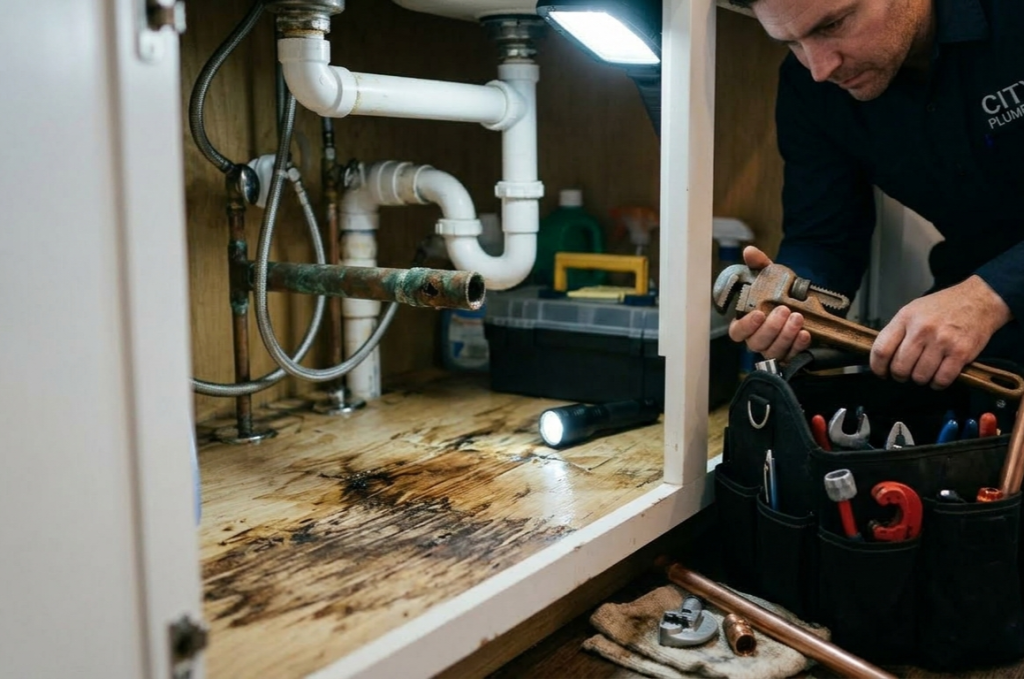
After approximately six weeks, repeated stress weakened a mid-span coupling.
Thermal expansion and water hammer continued to apply force.
Eventually, the fitting failed under pressure.
A rupture occurred at the connection point.
Failure was not sudden in origin.
It resulted from accumulated mechanical stress.
Why It Was Not Visible at Install
Immediately after installation, the system appeared stable.
Water flow and pressure were functional.
Movement under pressure was minimal during initial use.
Stress developed gradually through repeated cycles.
In homes like those in Saratoga, crawlspace concealment hides pipe motion entirely.
Homeowners are not expected to observe dynamic movement without inspection.
Execution & Escalation
Following the coupling failure, water discharged into the crawlspace.
Flow continued under system pressure without interruption.
Approximately 3,500 gallons of water accumulated beneath the home.
Insulation absorbed significant moisture.
Subfloor materials began to saturate.
Conditions for mold growth developed quickly.
Extent of Damage
Crawlspace flooding affected a large portion of the home footprint.
Insulation required full replacement due to saturation.
Subfloor moisture intrusion introduced structural risk.
Mold initiation began in enclosed areas.
Remediation required drying, removal, and reconstruction.
Damage extended beyond plumbing into structural systems.
What Professionals Verify
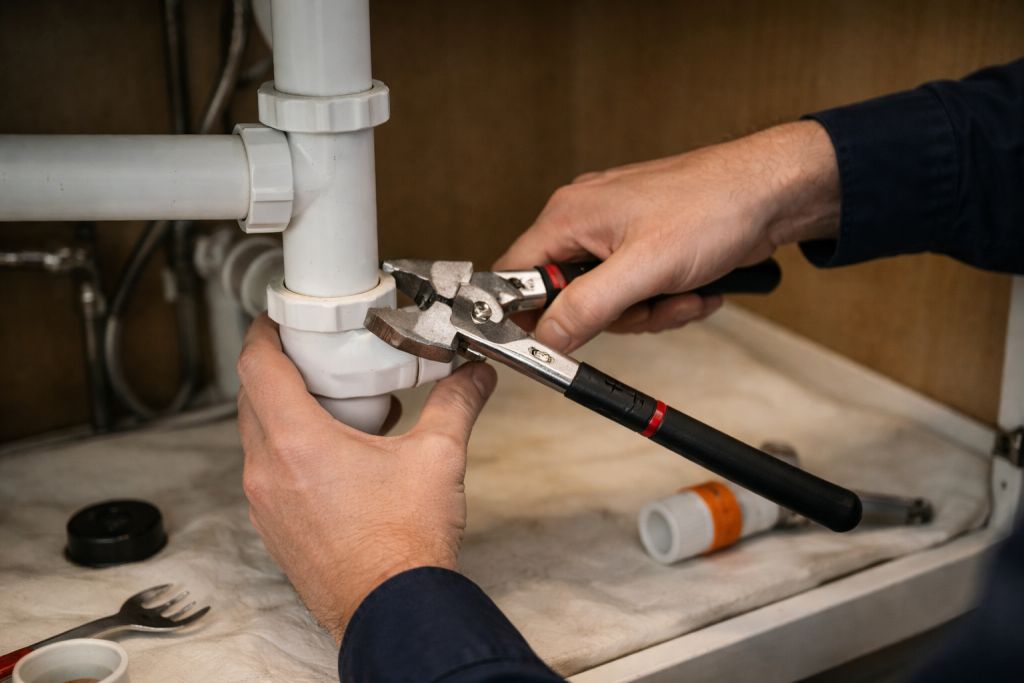
Professionals install supports at defined intervals for PEX piping.
They secure lines to prevent excessive movement.
Thermal expansion is accounted for in system design.
Water hammer arrestors may be installed where pressure fluctuations occur.
PEX systems are configured with proper anchoring and spacing.
Manifold systems or trunk and branch layouts are designed to minimize stress.
Verification includes both static installation and dynamic performance.
Decision Distortion
The homeowner believed the decision involved routing flexible piping through a crawlspace.
The actual decision involved controlling movement under pressure and temperature changes.
Visible flexibility suggested durability.
Hidden motion introduced failure risk.
This mismatch created delayed system instability.
Broader Pattern
In areas like San Rafael and across national markets such as Indianapolis, unsupported piping failures follow similar timelines.
Dynamic stress accumulates over weeks of normal use.
Contractor standards data shows failures commonly occur within 30 to 60 days.
Repetition of movement drives eventual breakdown.
The system appears functional initially.
Failure develops through ongoing stress cycles.
Process Context
A whole-house repipe is executed as a controlled system installation.
Support spacing and anchoring are defined during planning.
PEX-A or copper repipe systems are installed with full consideration of movement.
Horizontal vs vertical repiping layouts are optimized to reduce stress.
Drywall access is strategic and limited.
Water bypass systems maintain service during installation.
Same-day water restoration is balanced with full system verification.
Permitting & Compliance
City plumbing permits require adherence to support and installation standards.
Building code inspections verify proper pipe anchoring.
Improper support may affect homeowners insurance coverage.
Resale value ROI can be impacted by structural damage from leaks.
Licensed, bonded, and insured professionals ensure compliance with system requirements.
Outcome Shift
The failure did not result from material selection alone.
It resulted from lack of support and uncontrolled movement.
If proper anchoring had been installed, the system would have remained stable.
Stress would have been distributed safely.
Instead, repeated motion caused a delayed mechanical failure.

Cost & Decision Considerations
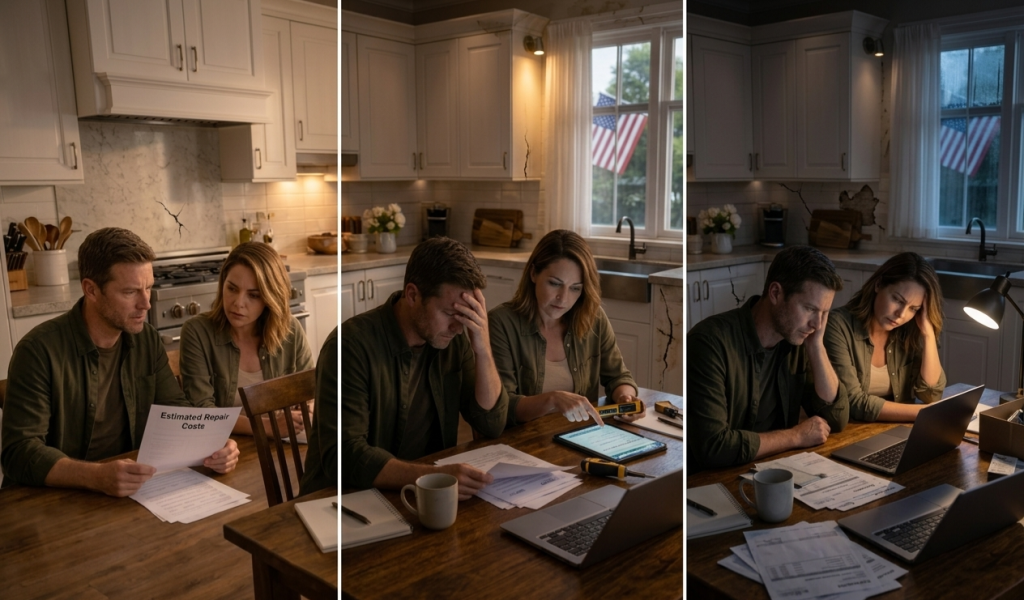
Costs extended into crawlspace remediation and structural repair.
Insulation replacement and mold treatment increased scope.
Subfloor drying added time and complexity.
Project timelines expanded significantly.
Financial exposure exceeded expectations.
Installation decisions determined total impact.
Key Takeaway
No contractor was involved in this installation.
All work was performed by the homeowner.
The decision was not about routing flexible piping.
The decision was about controlling movement under real operating conditions.
Motion creates stress.
Support prevents failure.
Assumption leads to delayed damage.