

Sub-Slab Buried Fitting Access and Structural Failure Event
Across areas like Cupertino and Walnut Creek, slab-on-grade homes frequently require repiping when leaks develop beneath finished flooring.
As these projects increase, routing decisions often prioritize path convenience over long-term accessibility.
Because of this, fittings sometimes end up placed in locations where inspection and repair are not possible.
In markets such as Phoenix and Dallas, slab construction amplifies this risk due to limited access below grade.
Unlike exposed systems, sub-slab conditions conceal failures until structural impact occurs.
No contractor was involved in this installation.
All work was performed by the homeowner.
Initial Conditions
Inside a 1,900 sq ft slab-on-grade home, a leak had been identified beneath the foundation.
Symptoms included rising water bills, damp flooring, and early slab leak symptoms.
Additional indicators included fluctuating water temperature, low water pressure, and sediment in faucet aerators.
Noisy pipes and occasional banging sounds suggested pressure instability.
Localized warm spots on the floor indicated possible hot water line leakage.
The system required rerouting of potable water lines.
However, sub-slab routing decisions were made without full risk evaluation.
What the Homeowner Thought
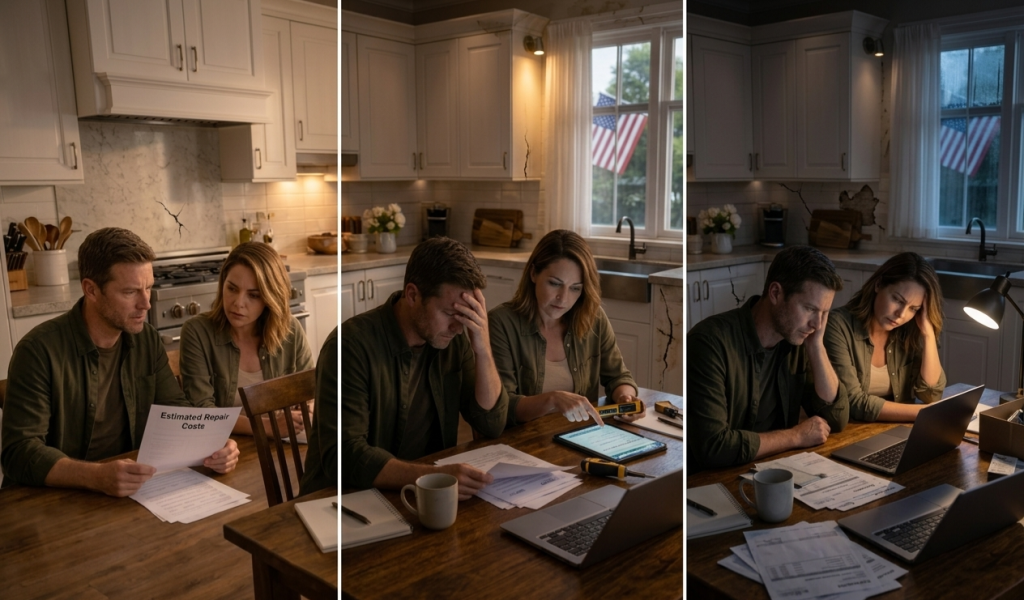
From the homeowner’s perspective, placing fittings beneath the slab simplified routing.
Obstacles could be navigated without extensive rerouting.
Connections appeared secure during installation.
The system seemed complete once water flow was restored.
The decision focused on minimizing disruption.
Future access requirements were not considered.
What Was Actually Happening
PEX fittings represent the highest probability failure points in a system.
Each connection introduces potential for mechanical or installation-related defects.
By placing fittings beneath the slab, failure risk became inaccessible.
Stress from soil movement and thermal expansion affected these connections.
Minor installation imperfections at a fitting created a weak point.
Over time, pressure and movement caused the connection to degrade.
A continuous leak developed beneath the slab.
The system entered a hidden structural failure state.
11. Unregulated System Pressure Spike Multi-Point Fixture Failure
12. Dead-Leg Water Stagnation Bacterial Growth Risk Condition
13. Unsupported Piping Expansion and Water Hammer Stress Failure
14. Mixed PEX System Compatibility and Connection Degradation Failure
15. Undersized Distribution Line Flow Restriction System Collapse
16. Sub-Slab Buried Fitting Access and Structural Failure Event
17. Closed-System Thermal Expansion Pressure Accumulation Failure
18. Drain Venting Disruption and Sewer Gas Backflow Condition
19. Plumbing Distribution Mapping and Hot-Cold Cross-Connection Failure
20. Vertical Load-Induced Pipe Support and Base Connection Failure
Homeowner Action (DIY – No Contractor Involved)
No licensed plumber participated in this repipe.
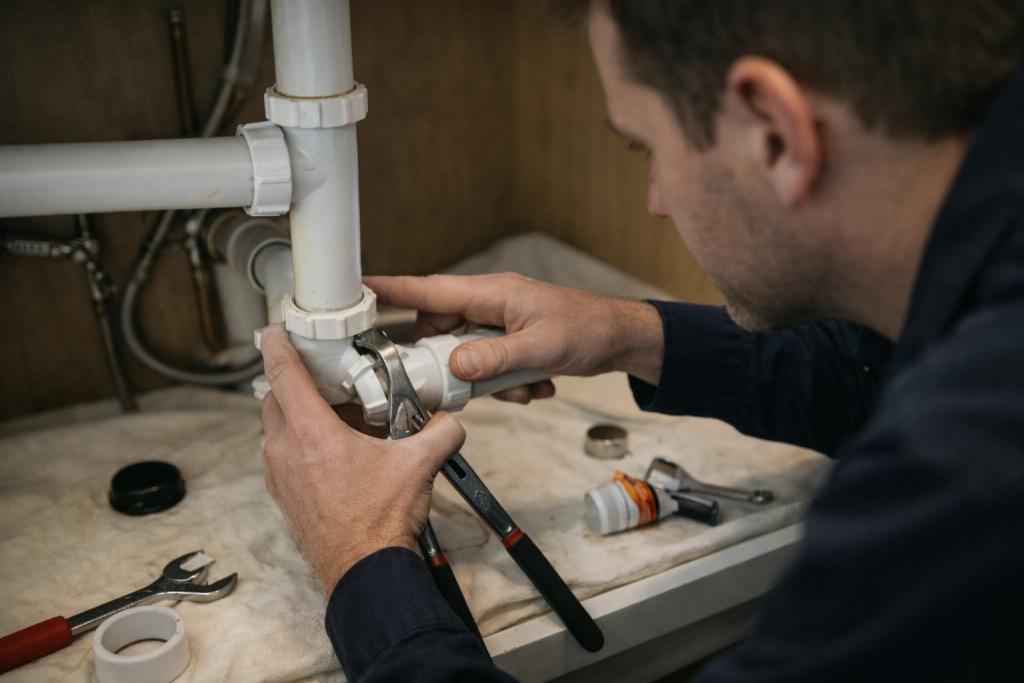
The homeowner independently installed PEX piping beneath the slab.
PEX-A vs PEX-B selection was not evaluated in relation to sub-slab conditions.
Multiple fittings were used to navigate around structural obstacles.
No effort was made to eliminate fittings in inaccessible areas.
The installation prioritized routing convenience over long-term reliability.
Failure Trigger
A single fitting failed due to combined stress and installation imperfection.
Pressurized water began leaking continuously beneath the slab.
The leak persisted for several weeks without detection.
Water migrated into surrounding soil.
Failure was not immediate in visibility.
It developed gradually beneath the foundation.
Why It Was Not Visible at Install
Immediately after installation, the system functioned normally.
Water flow and pressure appeared restored.
Sub-slab conditions conceal early-stage leaks.
Water disperses into soil without immediate surface indicators.
In homes like those in Cupertino, slab construction delays visible symptoms.
Homeowners are not expected to detect subsurface leaks without specialized tools.
Execution & Escalation
As leakage continued, soil beneath the slab began to erode.
Void spaces developed under the foundation.
Structural support weakened over time.
The slab began to settle unevenly.
Tile surfaces above the affected area started cracking.
Damage escalated from plumbing to structural integrity.
Extent of Damage
Soil erosion compromised foundation stability.
Slab settlement caused widespread tile cracking.
Over 300 square feet of flooring required removal.
Jackhammering was necessary to access the failed fitting.
Repair extended beyond plumbing into structural restoration.
Damage impacted both foundation and interior finishes.
What Professionals Verify
Professionals avoid placing fittings in inaccessible locations.
Continuous runs are used beneath slabs whenever possible.
Routing is designed to eliminate underground connections.
Alternative paths are selected to maintain accessibility.
PEX systems are installed with full consideration of stress and movement.
Manifold systems or trunk and branch plumbing layouts are configured to reduce fitting count.
Verification ensures that failure points remain serviceable.
Decision Distortion
The homeowner believed the decision involved simplifying pipe routing.
The actual decision involved managing failure risk in inaccessible areas.
Hidden placement suggested efficiency.
Lack of access created long-term exposure.
This mismatch allowed a minor defect to become a structural failure.
Broader Pattern
In areas like San Ramon and across national markets such as Phoenix, buried fitting failures follow similar timelines.
Leaks often develop over weeks before detection.
Contractor standards data shows structural impact can appear within 30 to 60 days.
Soil erosion progresses silently until visible damage occurs.
The system appears stable initially.
Failure develops beneath the surface.
Process Context
A whole-house repipe is executed as a controlled, surgical system replacement.
Fittings are minimized in inaccessible areas.
PEX-A or Type L copper transitions are planned to maintain system integrity.
Horizontal vs vertical repiping strategies are used to avoid sub-slab connections.
Drywall access is strategic and limited.
Water bypass systems maintain service during installation.
Same-day water restoration is balanced with full system verification.
Permitting & Compliance
City plumbing permits often require adherence to installation standards for accessibility.
Building code inspections verify proper routing and connection practices.
Improper installations may affect homeowners insurance coverage.
Resale value ROI can be impacted by structural damage history.
Licensed, bonded, and insured professionals ensure compliance with system requirements.
Outcome Shift
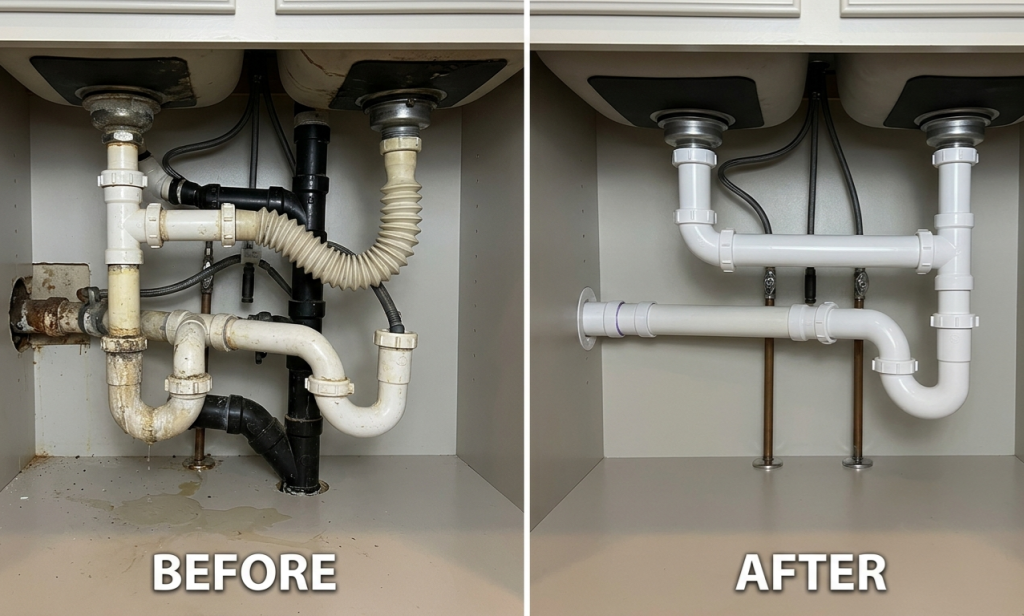
The failure did not originate from the repipe itself.
It resulted from placing a high-risk connection in an inaccessible location.
If fittings had been eliminated beneath the slab, the system would have remained stable.
Any future issue would have been accessible and repairable.
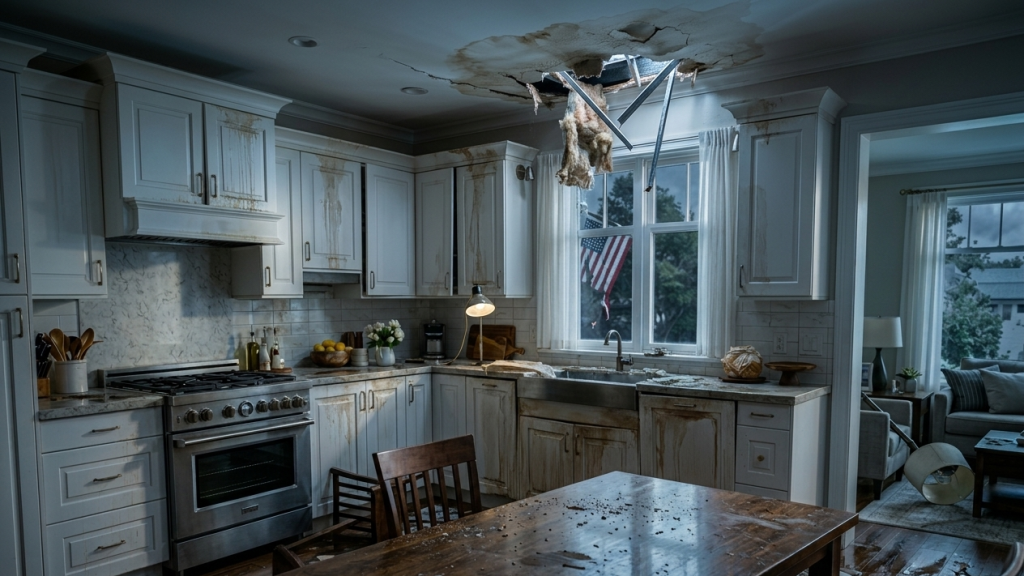
Instead, a concealed failure caused structural damage to the home.
Cost & Decision Considerations
Costs extended into foundation repair and flooring replacement.
Drywall patching and texture matching were secondary to slab work.
Jackhammering increased labor and disruption significantly.
Project timelines expanded due to structural remediation.
Financial exposure exceeded expectations.
Routing decisions determined total impact.
Key Takeaway
No contractor was involved in this installation.
All work was performed by the homeowner.
The decision was not about routing pipes beneath the slab.
The decision was about controlling failure risk in inaccessible areas.
Access determines repairability.
Placement determines risk.
Assumption creates structural consequences.