
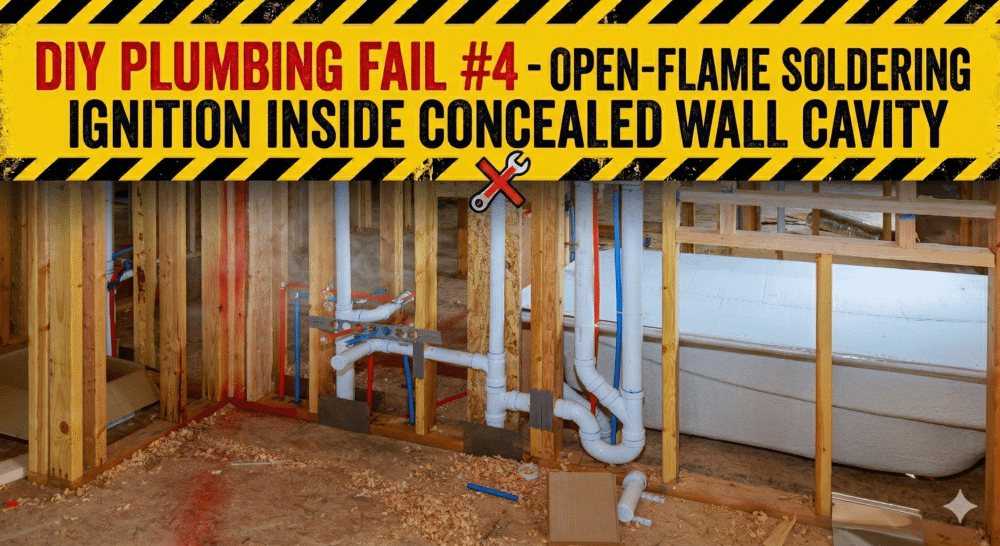
Open-Flame Soldering Ignition Inside Concealed Wall Cavity
Within markets like San Rafael and San Jose, increased renovation activity has placed more work inside enclosed framing systems without proportional increases in verification discipline.
At the same time, copper repipe work often occurs inside tight attic and wall cavities where visibility is limited.
Because of this, heat-based installation methods introduce risks that are not immediately observable.
In regions such as Phoenix and Denver, dry environmental conditions further increase ignition sensitivity inside wood-framed assemblies.
Meanwhile, older housing in cities like St. Louis often contains accumulated dust and aged materials that elevate fire risk.
No contractor was involved in this case.
All work was performed by the homeowner.
Initial Conditions
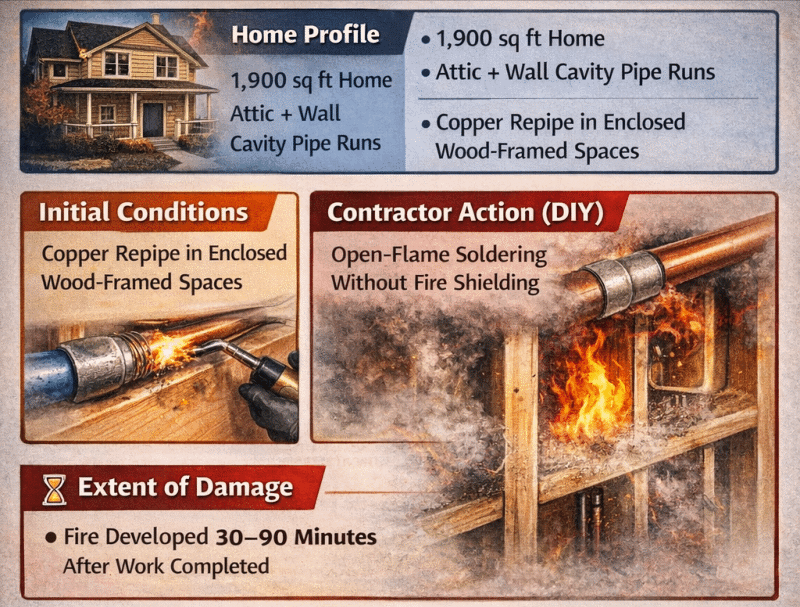
Inside a 1,900 sq ft home, copper repipe work was underway within enclosed wall and attic spaces.
Potable water lines were being replaced using traditional soldering methods.
Existing conditions included noisy pipes, intermittent water hammer, and fluctuating water temperature.
Additionally, minor pinhole leaks in copper and slow hot water delivery had been observed.
Sediment in faucet aerators and occasional metallic tasting water suggested system aging.
Dry wood framing and dust accumulation were present within the cavities.
No heat shielding or thermal protection measures had been installed.
1. Finger-in-the-Dike Emergency Water Line Breach Control Failure
2. Refrigerant Line Misidentification During Plumbing Routing Failure
3. Copper-to-Galvanized Direct Connection Electrolysis Failure
4. Open-Flame Soldering Ignition Inside Concealed Wall Cavity
5. Improvised Hose-Based Main Supply Line Structural Failure
6. Water-to-Gas System Cross-Connection Infrastructure Contamination Event
7. Thermal Exposure-Induced PEX Deformation and Rupture Failure
8. Improper Push-Fitting Installation Seal Integrity Failure
9. Back-Pitched Drain Line Waste Accumulation and Pressure Failure
10. Plumbing System Grounding Interruption Electrical Shock Event
What the Homeowner Thought
From the homeowner’s perspective, soldering copper joints was a routine step.
The focus remained on completing watertight connections.
The process appeared controlled at the visible work area.
Heat was assumed to be localized to the joint itself.
Once the flame was removed, the task was considered complete.
No further risk was anticipated.

What Was Actually Happening
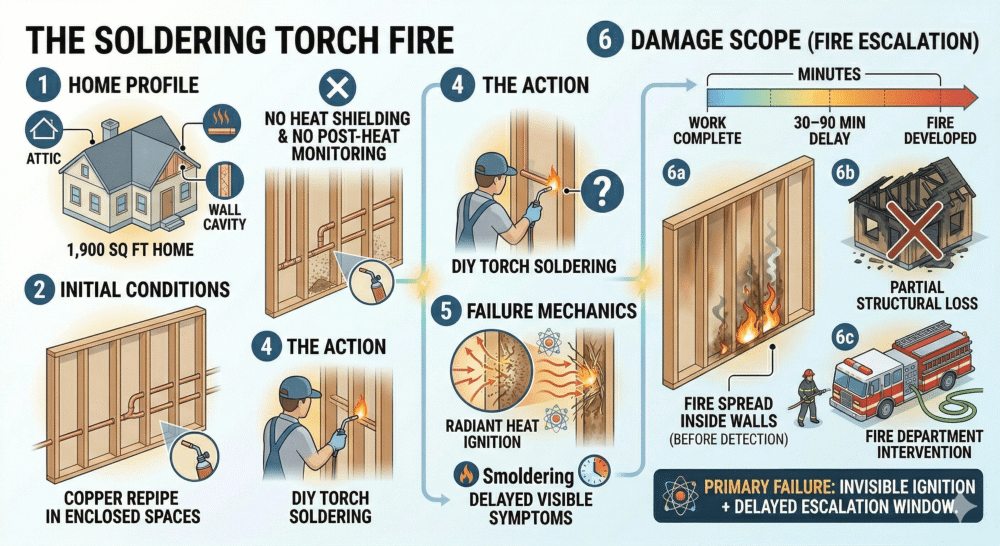
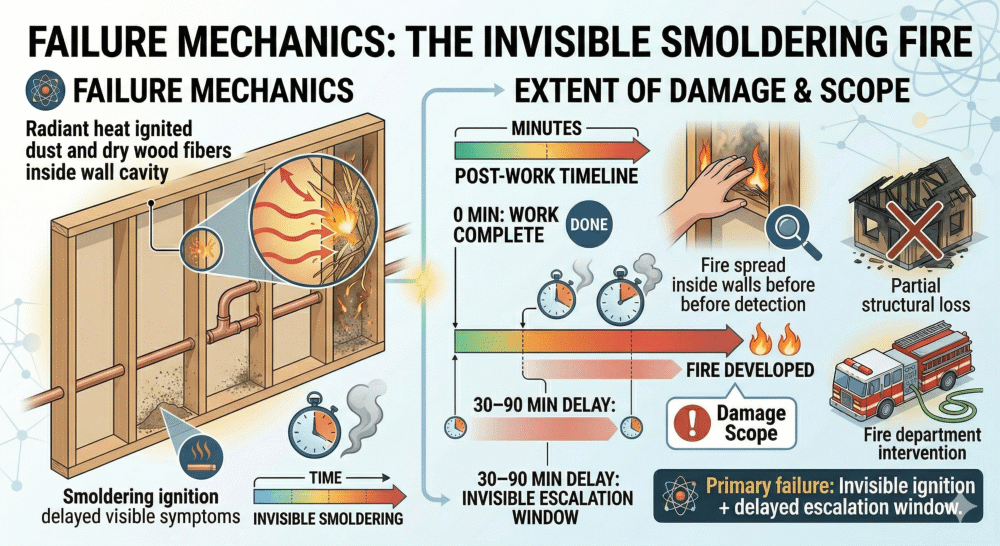
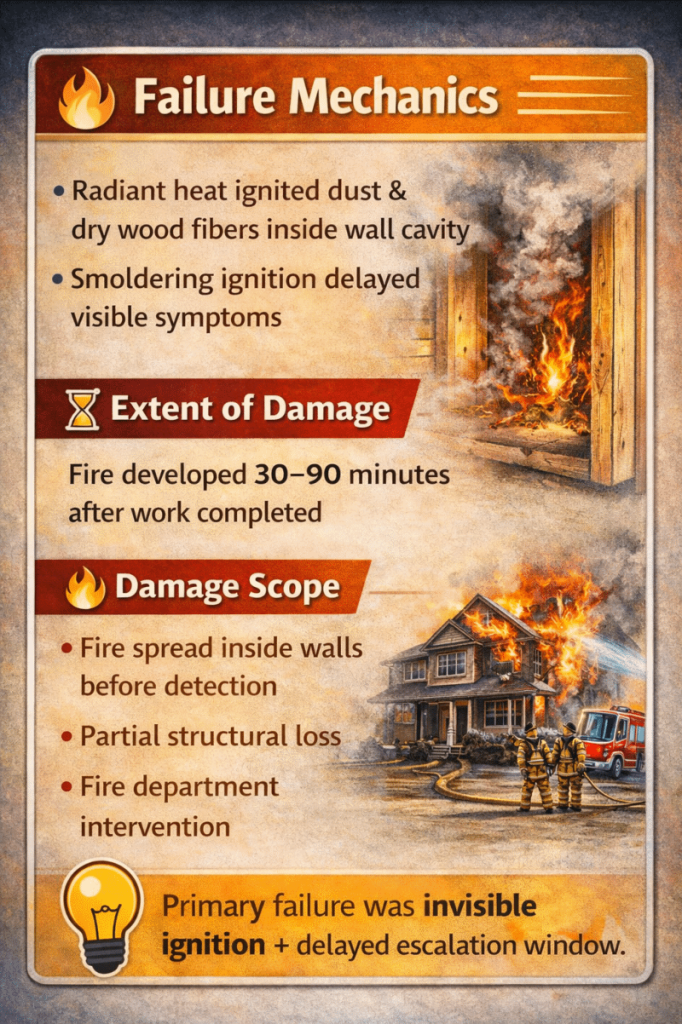
During soldering, radiant heat extended beyond the immediate joint.
Heat transferred into surrounding wood framing and accumulated debris.
Combustible dust and dry wood fibers absorbed heat gradually.
Smoldering ignition began within concealed sections of the wall cavity.
Unlike open flame ignition, this process developed without visible fire.
Temperature buildup continued after the torch was removed.
The system entered a delayed ignition phase.
Homeowner Action (DIY – No Contractor Involved)
No licensed plumber or contractor participated in this work.
The homeowner performed open-flame soldering independently.
No heat shields were used to protect surrounding materials.
No fire-resistant barriers were installed within the cavity.
Critically, no post-heat monitoring or fire watch was conducted.
Work concluded immediately after soldering was completed.
Failure Trigger
Residual heat within the wall cavity initiated smoldering combustion.
Combustible materials reached ignition temperature over time.
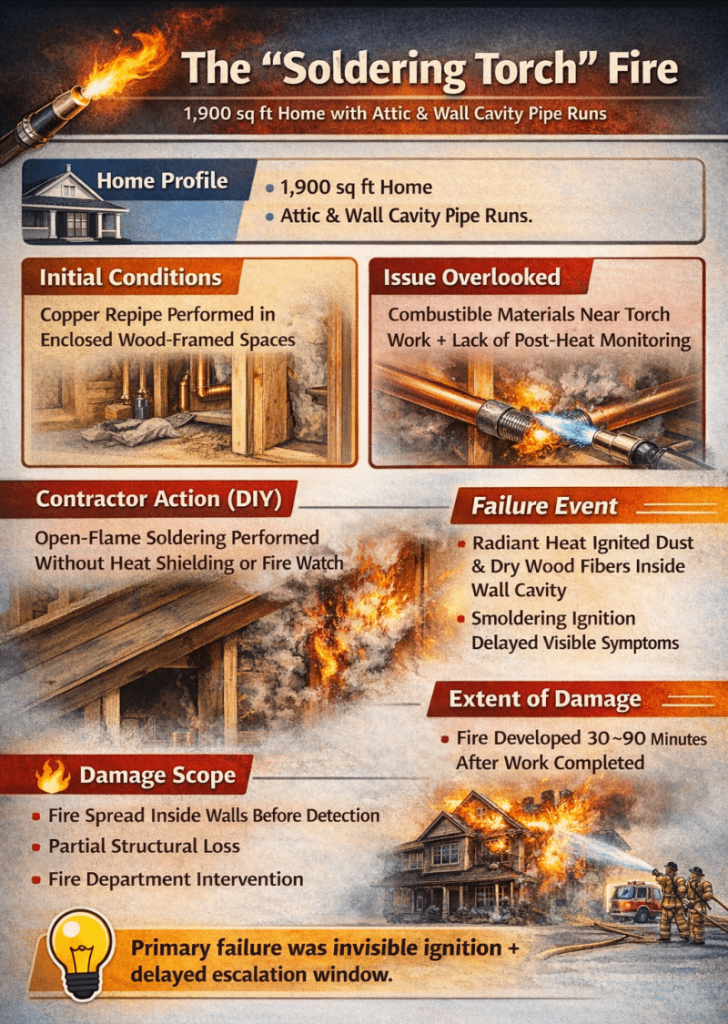
Fire development occurred approximately 30 to 90 minutes after work ended.
At that point, flames emerged within enclosed structural spaces.
The delay removed any opportunity for immediate intervention.
Why It Was Not Visible at Install
Smoldering ignition does not produce immediate visible flames.
Heat accumulation occurs inside concealed areas beyond direct observation.
Wall cavities and attic spaces restrict airflow and visibility.
Early-stage combustion remains hidden until escalation occurs.
In climates like Phoenix, low humidity accelerates ignition potential.
Homeowners are not expected to detect internal thermal buildup without monitoring protocols.
Execution & Escalation
Fire spread within wall cavities before detection.
Flames traveled vertically through framing channels.
Structural components became involved before visible signs appeared externally.
Smoke development eventually reached occupied spaces.
Emergency response was required to control the fire.
Fire department intervention prevented total structural loss.
Extent of Damage
Partial structural loss occurred within affected wall sections.
Framing members required replacement due to fire damage.
Drywall, insulation, and electrical systems were compromised.
Smoke damage extended beyond the origin area.
Repair required reconstruction and system restoration.
The event exceeded the scope of the original plumbing work.
What Professionals Verify
Professionals use heat shields during soldering operations.
They protect combustible materials from radiant heat exposure.
Fire watch protocols are implemented after open-flame work.
Monitoring continues for a defined period following heat application.
Alternative methods such as PEX-A using an Uponor expansion system reduce open-flame exposure.
System design considers copper repipe vs PEX transitions to minimize risk.
Verification includes both installation and post-install conditions.
Decision Distortion
The homeowner believed the decision involved completing a solder joint.
The actual decision involved managing heat transfer beyond the visible work area.
Visible completion suggested safety.
Hidden heat accumulation determined outcome.
This gap created delayed risk that was not apparent during the task.
Broader Pattern
Across San Francisco and other dense housing markets, concealed cavity work increases fire exposure risk.
In dry regions like Denver, ignition thresholds are reached more easily.
Contractor standards data shows that fire events often occur after work is completed.
Delays of 30 minutes to several hours are common.
The ignition source is not the visible flame.
The failure is uncontrolled heat transfer.
Process Context
A whole-house repipe is executed as a controlled process.
Material selection may eliminate the need for open flame.
PEX-A systems reduce ignition risk by removing soldering requirements.
Copper installations include strict heat management protocols.
Drywall access is controlled and limited.
Water bypass systems maintain service without accelerating work pace.
Same-day water restoration is balanced with safety verification.
Permitting & Compliance
City plumbing permits often include inspection of installation methods.
Building code inspections may address fire safety during construction.
Improper heat application can affect homeowners insurance coverage.
Fire-related claims may require documentation of compliant work practices.
Licensed, bonded, and insured professionals follow established safety protocols.
Outcome Shift
The failure did not originate from soldering itself.
It resulted from unmanaged heat after the visible work was complete.
If heat shielding and fire watch had been implemented, ignition would have been prevented.
The installation would have remained controlled.
Instead, delayed ignition converted a routine task into a structural fire event.
Cost & Decision Considerations
Costs extended into structural repair and reconstruction.
Drywall patching and texture matching expanded significantly.
Electrical system repairs added complexity.
Fire damage introduced additional remediation requirements.
Project timelines increased due to reconstruction phases.
Initial safety decisions influenced total cost more than installation effort.
Key Takeaway
No contractor was involved in this event.
All work was performed by the homeowner.
The decision was not about completing a solder connection.
The decision was about managing heat within concealed spaces.
Heat transfer determines risk.
Monitoring prevents escalation.
Assumption creates delayed failure.