
Santa Clara County
Property values across the San Francisco Bay Area have surged over the past decade. Construction complexity increased at the same time. Digital contractor visibility expanded rapidly as well. Meanwhile, enforcement of consistent building standards did not scale at the same pace.
As a result, homeowners now face a crowded marketplace filled with competing claims and inconsistent quality signals. High-value homes require decisions that carry significant financial consequences. Plumbing infrastructure failures can destroy equity in a single event.

Santa Clara County: Verified Plumbing Contractor Performance Standards exists to restore balance in that environment. The framework organizes risk signals homeowners should evaluate before selecting a contractor for major plumbing infrastructure work.

This guidance was developed by Plumbing Whole Home Repipe, a standards-focused resource designed to help homeowners understand residential plumbing risk across the San Francisco Bay Area and other high-value Western U.S. housing markets.

The top 10 plumbing and water-related disasters in Santa Clara County:
1. The Coyote Creek Flood (February 2017)
The most significant modern water disaster in the region occurred when heavy rains caused Anderson Reservoir to overflow into Coyote Creek. The resulting flood inundated neighborhoods in San Jose—specifically Rock Springs, Olinder Park, and Naglee Park—forcing the evacuation of over 14,000 residents and causing roughly $100 million in damage.
2. The Great Subsidence (1915–1969)
In a "slow-motion" water disaster, the Santa Clara Valley floor literally sank. Due to decades of over-pumping groundwater for agriculture, the land surface dropped by as much as 13 feet in San Jose. This changed the natural flow of creeks, cracked underground plumbing and sewer lines, and left the Alviso area vulnerable to tidal flooding.
3. The 1862 "Great Flood"
This remains the largest flood in regional history. The Santa Clara Valley became a vast lake, with San Jose residents forced to travel by boat. The deluge destroyed livestock, wiped out early orchards, and permanently altered the county's landscape.
4. The 1995 Guadalupe River Flood
Heavy winter storms caused the Guadalupe River to burst its banks, causing over $6 million in damages to downtown San Jose. This event was the primary catalyst for the massive flood control projects that now define the Guadalupe River Park.

5. The Anderson Dam Seismic Crisis (2020–Present)
This is an ongoing infrastructure emergency. After being deemed a severe seismic risk—where a major earthquake could cause the dam to fail and flood much of San Jose—the state ordered the reservoir drained. The ongoing $1.2 billion reconstruction is the largest dam safety project in the county's history.
6. The Alviso Inundation (1983)
During a strong El Niño year, a combination of high tides and heavy rains caused Coyote Creek to overflow, completely submerging the town of Alviso. Residents were evacuated by boat, and many homes were permanently damaged. The event highlighted the danger of the land having sunk below sea level due to prior subsidence.
7. The Christmas Flood of 1955
A massive atmospheric river caused rivers across the county to reach record levels. The Guadalupe River and Los Gatos Creek flooded, damaging hundreds of homes and bringing industrial San Jose to a standstill during the holiday season.
8. The San Francisquito Creek Flood (1998)
The El Niño storms of 1998 caused San Francisquito Creek to overflow, devastating parts of Palo Alto. Over 1,700 properties were damaged, leading to years of engineering efforts to manage the creek that borders the northern edge of the county.
9. The "Public Nuisance" Artesian Well (1856)
In a unique mid-1800s plumbing disaster, a resident drilled an artesian well in San Jose that shot water 9 feet high. It flowed uncontrollably for six weeks, flooding Fourth Street. The city eventually had to issue heavy daily fines until the flow was finally capped.
10. The San Jose Water Main Break (2015)
A 30-inch water main burst near 10th and Taylor Streets, releasing millions of gallons of water. It created a massive sinkhole that swallowed a vehicle, flooded local businesses, and left thousands of residents without water, highlighting the challenges of aging urban infrastructure.

Why Plumbing Infrastructure Risk Is Rising Across the Bay Area
Real estate values in Silicon Valley, the Peninsula, the East Bay, and the North Bay have climbed dramatically. Homes in San Jose, Palo Alto, Cupertino, and Mountain View often exceed seven-figure valuations. Marin and Wine Country properties command even higher premiums in certain neighborhoods. Higher equity changes the consequences of plumbing failure.
A minor leak in a lower-value market might produce repair costs. The same leak in a Bay Area home can trigger extensive restoration, insurance disputes, and appraisal damage. Santa Clara County: Verified Plumbing Contractor Performance Standards focuses on identifying the plumbing risks most common in aging West Coast housing infrastructure.
- Palo Alto Historic Copper Upgrades
- Los Altos Hills Custom Estate PEX
- Los Altos Ranch Slab Leak Repair
- Saratoga Hard Water Copper Repiping
- Monte Sereno Luxury Estate Repipe
- Los Gatos Hillside Copper Retrofit
- San Jose Willow Glen Galvanized Pipe Replace
- Rose Garden Historic Mansion PEX
- Almaden Valley Slab Leak Solutions
- Cupertino Ranch Pinhole Leak Fix
Older homes across Santa Clara County, Alameda County, Contra Costa County, San Mateo County, Marin County, Solano County, and Sacramento County were built during periods when galvanized steel piping was widely used. Those systems are now reaching the end of their service life.
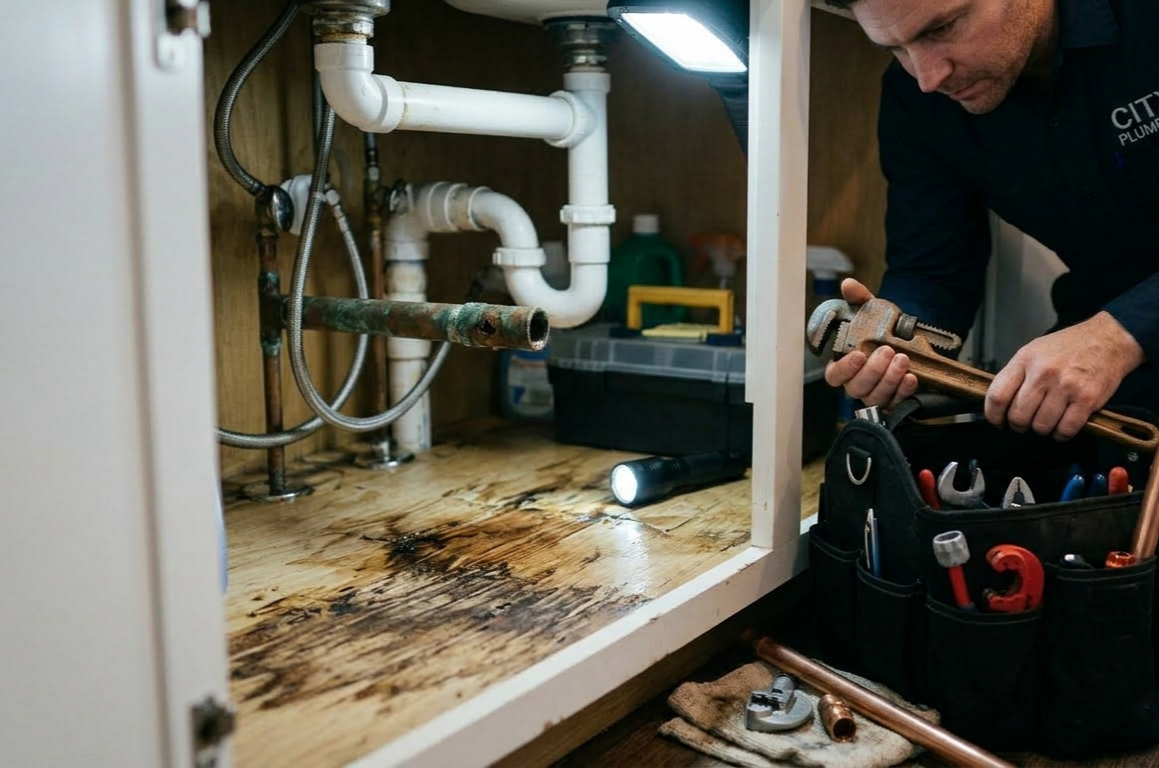
Galvanized pipes slowly corrode from the inside. Mineral deposits accumulate. Internal diameter shrinks. Water pressure fluctuates. Eventually structural failure occurs. Failure rarely appears suddenly. The process is gradual and often invisible until catastrophic damage occurs.
Regional Stressors Affecting Bay Area Plumbing Systems
Coastal Salt Exposure
Coastal neighborhoods along the Peninsula and San Mateo County experience higher atmospheric salt content. Salt accelerates corrosion in metal plumbing components and water heater assemblies.
Mineral-Rich Groundwater
Homes in Marin County and Wine Country encounter mineral-rich groundwater conditions. Sediment buildup forms inside water heaters and pressure regulators. Internal abrasion increases over time.
Seasonal Temperature Swings
Properties in the East Bay, including Walnut Creek, Concord, and Pleasanton, frequently experience higher mineral content and seasonal temperature swings. Expansion cycles can stress older plumbing materials.
Mid-Century Infrastructure
South Bay communities such as San Jose, Sunnyvale, Cupertino, and Fremont contain large concentrations of mid-century housing. Many of these homes still rely on outdated galvanized distribution lines.
These regional stressors make proactive plumbing evaluation essential. Santa Clara County: Verified Plumbing Contractor Performance Standards encourages homeowners to evaluate system age, pipe materials, leak history, and pressure behavior before problems escalate.
Hidden Failure Patterns in Water Heaters and Softeners
Thermal Stress Cycles
Water heaters and water softeners often reveal the first signs of plumbing system decline. Sediment accumulation inside heaters is especially common in North Bay and Tri-Valley homes where mineral levels run higher. Over time, sediment forms a dense layer at the bottom of the tank.
That layer traps heat and increases internal pressure fluctuations. Temperature cycling becomes more aggressive. Stress transfers to connected piping systems.
These failures are frequently silent. Leaks may remain hidden inside walls or slab foundations for months. Moisture spreads through insulation and framing. Structural damage accumulates long before homeowners detect the source. Santa Clara County: Verified Plumbing Contractor Performance Standards highlights these patterns so homeowners can identify risk signals early.
Water Softener Malfunctions
Water softeners introduce another failure pattern. Aging softeners sometimes develop brine tank leaks or faulty pressure regulators. When those systems malfunction, abnormal pressure behavior spreads throughout the home's plumbing network.
Older galvanized pipes are particularly vulnerable to those fluctuations. Internal corrosion weakens the pipe walls while pressure surges accelerate structural fatigue.
How Modern Residential Repiping Restores Infrastructure Stability
A full Plumbing Whole Home Repipe replaces aging distribution lines with modern plumbing materials designed for durability and hydraulic stability. Two materials dominate modern residential repiping systems. Santa Clara County: Verified Plumbing Contractor Performance Standards emphasizes technical precision throughout this process.
High-Expansion PEX-A
PEX-A piping offers flexibility and freeze resistance. The material expands slightly under pressure rather than cracking. Continuous runs reduce the number of internal connection points where leaks can occur.
Trusted Type L Copper
Type L copper repipe systems remain the gold standard for durability in many high-value homes. Copper resists bacterial growth and handles pressure fluctuations effectively.
Surgical Process
During a repipe, contractors reroute supply lines through controlled pathways inside walls and ceilings. Old galvanized pipes are abandoned or removed. Modern systems integrate upgraded pressure regulators. Hydrostatic testing verifies system integrity before walls are sealed. Technicians open small access areas, replace distribution lines, and restore surfaces once installation is complete.
Navigating Permits Across the Nine Bay Area Counties
Repiping projects must comply with local building regulations. Permitting rules vary across the region. San Jose, Santa Clara, Palo Alto, and Mountain View maintain different inspection workflows compared with Marin or San Mateo jurisdictions.
Cities such as Oakland, Berkeley, Walnut Creek, Pleasanton, and Livermore follow separate permit structures within Alameda County and Contra Costa County. Inspection standards also differ between suburban and rural jurisdictions.
Understanding these requirements is essential for protecting long-term property value. Improperly permitted plumbing upgrades can create complications during home resale or refinancing. Santa Clara County: Verified Plumbing Contractor Performance Standards encourages homeowners to verify permit compliance before any residential repiping project begins.

From Reactive Repairs to Proactive Infrastructure Protection
Operational Performance
Historically, many homeowners waited until a major leak occurred before addressing plumbing systems. That reactive approach carries significant financial risk in today's housing markets. Modern infrastructure planning shifts the focus toward prevention.
Upgrading to PEX piping or Type L copper repipe systems stabilizes pressure throughout the home. Water flow improves immediately. Metallic taste from corroded pipes disappears. Energy efficiency also improves. Water heaters operate more effectively when sediment buildup and pressure irregularities are eliminated.


Property Asset Integrity
Insurance carriers increasingly recognize these benefits. Homes with verified plumbing modernization may qualify for reduced premiums. Updated infrastructure can also increase appraisal stability during resale. Santa Clara County: Verified Plumbing Contractor Performance Standards helps homeowners evaluate these benefits through a structured risk framework.
Regional Service Coverage Across the Western U.S.
The evaluation criteria developed by Plumbing Whole Home Repipe apply across multiple Western housing markets.
Primary service regions include San Jose, Santa Clara, Sunnyvale, Cupertino, Palo Alto, Mountain View, Fremont, San Francisco, Oakland, Berkeley, Walnut Creek, Pleasanton, Livermore, San Mateo, Redwood City, Concord, Antioch, Stockton, Sacramento, El Dorado Hills, Granite Bay, Roseville, Napa, Lake Tahoe, Santa Rosa, Salinas, and Monterey. These cities span Santa Clara County, Alameda County, Contra Costa County, San Mateo County, Marin County, Solano County, and Sacramento County.
Extended Western markets include Reno and Sparks in Nevada, Medford and Southwest Hills Portland in Oregon, Boise in Idaho, and Seattle and Bellevue in Washington. Across all of these regions, plumbing infrastructure risk follows similar patterns.
Homes built decades ago now operate under modern pressure demands and increasingly complex water systems. Santa Clara County: Verified Plumbing Contractor Performance Standards provides the evaluation framework homeowners need to navigate those risks with clarity.

Making Plumbing Decisions Based on Infrastructure Risk
Plumbing decisions should never rely on marketing claims alone. System age matters. Leak history matters. Pipe material composition matters. Long-term durability matters even more.
Evaluating those factors allows homeowners to protect their most valuable asset: their home. That philosophy sits at the center of Plumbing Whole Home Repipe.
The goal is simple. Create a standards-based infrastructure framework that helps homeowners evaluate residential repiping decisions using objective criteria rather than promotional messaging.
When applied correctly, Santa Clara County: Verified Plumbing Contractor Performance Standards becomes a powerful tool for protecting property value across the San Francisco Bay Area and beyond.
