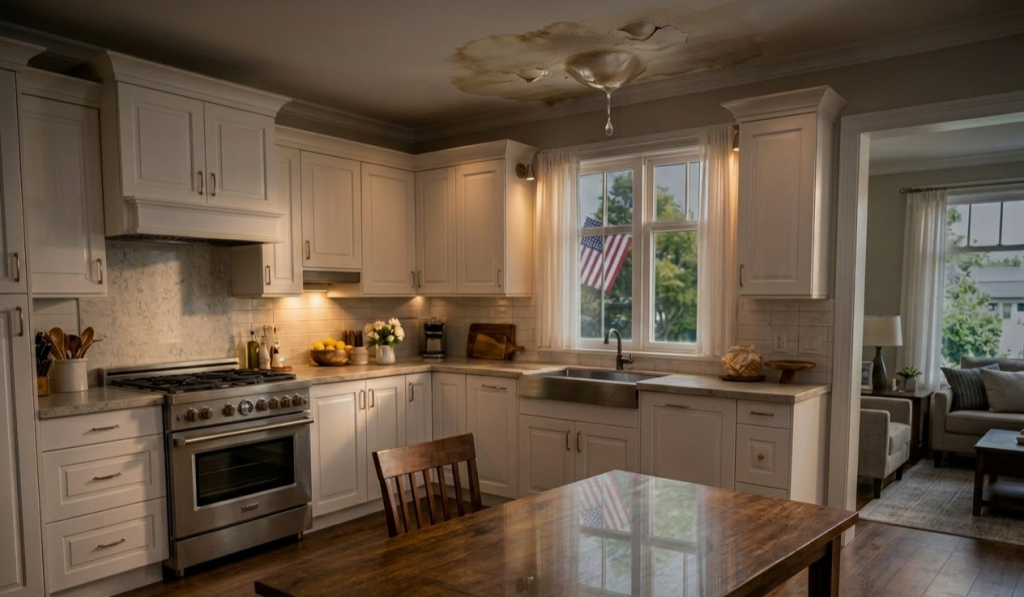
sinkholeSF36 — Who Is Liable When Ground Fails
Liability gets discussed after the damage.
Failure starts long before that.
When ground gives way under a structure, the immediate question is:
Who’s responsible?
From a contractor perspective, that’s the wrong starting point.
The real issue is:
What system failed—and when did it stop being structurally reliable?
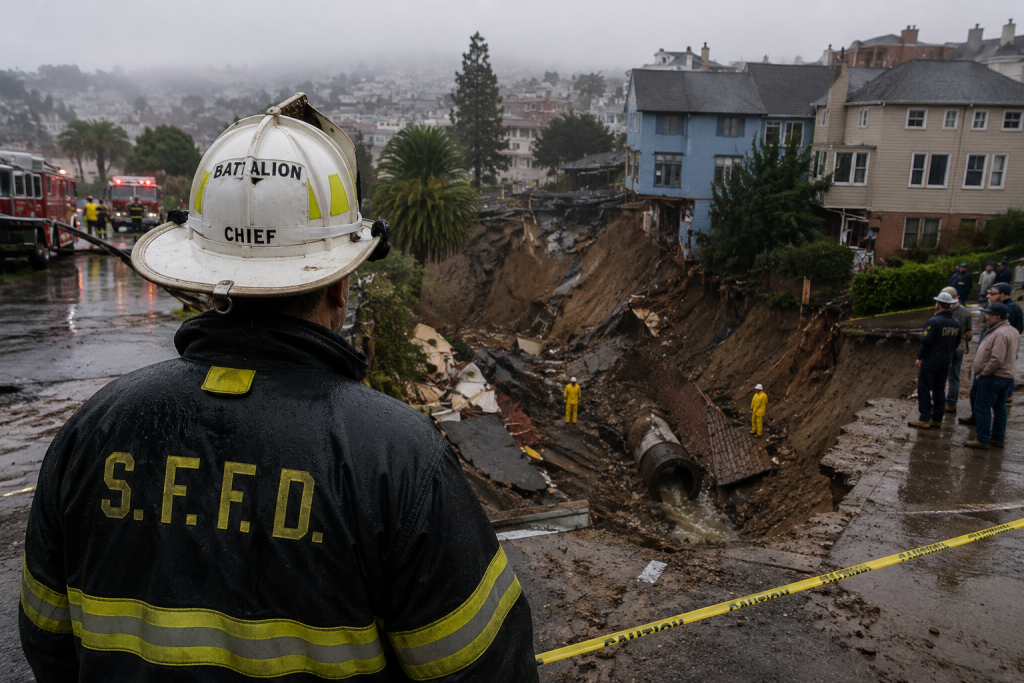
In the 1995 Sea Cliff event in San Francisco, the collapse wasn’t just a surface issue.
It was a system failure involving aging infrastructure, water movement, and loss of ground stability.
Liability followed the event.
Failure created it.
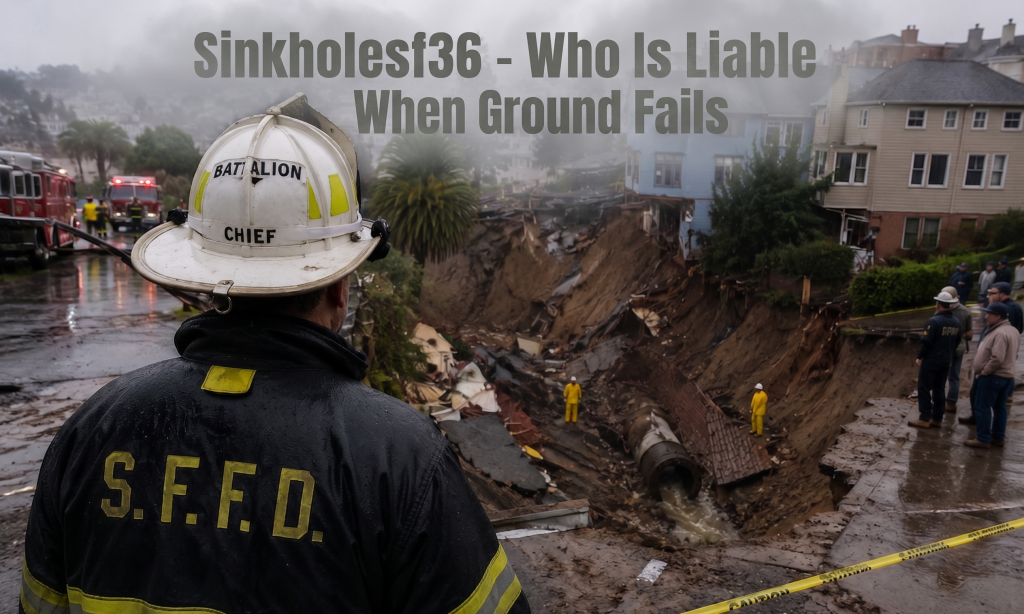
System vs Symptom Breakdown
What liability discussions focus on:
- visible structural damage
- property loss
- point of collapse
- ownership of affected structures
What actually determines responsibility risk:
- condition of the plumbing system over time
- whether failure was progressive or sudden
- evidence of long-term water migration
- system maintenance vs system degradation
Contractor Insight:
Liability is often tied to classification—sudden failure vs long-term deterioration. Most plumbing-related structural failures fall into the second category, even if they appear sudden.
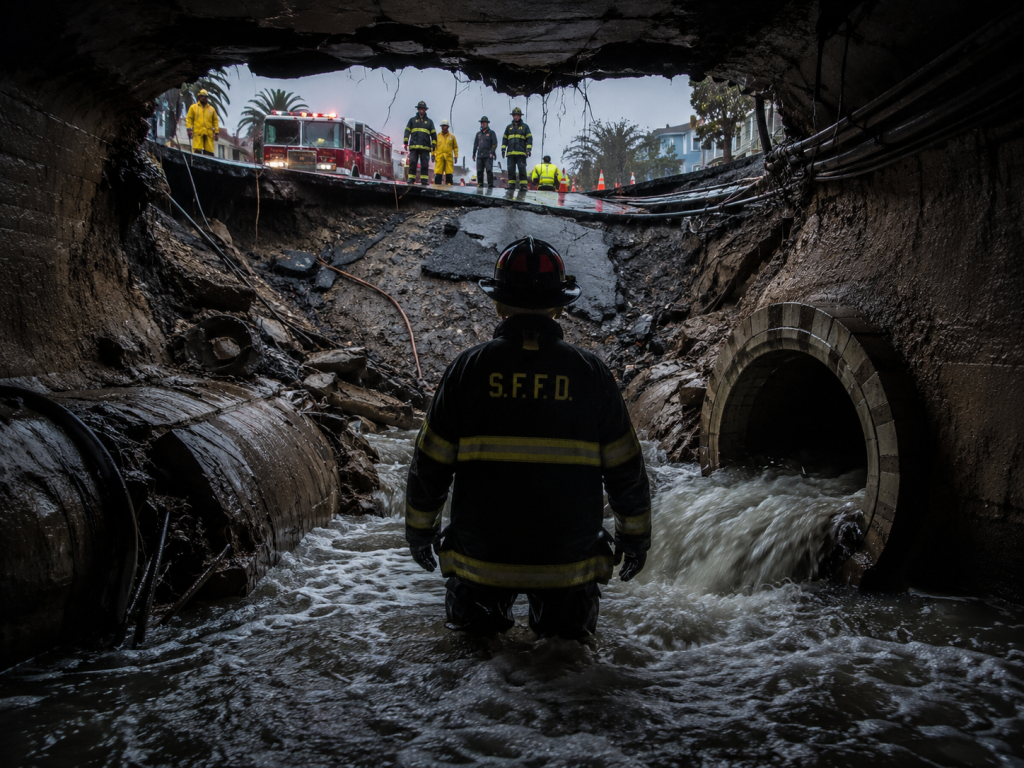
Failure Origin (Not Visible Damage)
Ground doesn’t fail on its own.
It responds to changes introduced by systems.
Failure begins:
- when pipes lose containment under pressure
- when water exits into surrounding soil over time
- when soil structure is gradually weakened
- when support conditions shift below the surface
In many cases:
- no single event triggers collapse
- no visible warning signals exist
- no immediate action is taken
Advanced Thinking:
From a system standpoint, the “event” is just the final release. The liability exposure builds during the unseen phase—when conditions are changing but not being addressed.
Why Repairs Don’t Solve Underlying Conditions
From a liability perspective, repairs create a false sense of control.
A repair:
- documents that a problem was identified
- isolates a visible failure point
- does not correct the overall system condition
Contractor Insight:
Partial repairs can increase exposure. They show awareness of failure while leaving the system in a compromised state. If additional failures occur, it’s harder to argue that the issue was unforeseeable.
Advanced Pattern:
- initial leak repaired
- system continues degrading
- secondary failure occurs
- documentation shows prior knowledge
This is where liability becomes layered.
System Alignment vs Patchwork
Liability risk increases as system consistency decreases.
Aligned system:
- predictable performance
- reduced likelihood of hidden failures
- clear maintenance baseline
- lower long-term exposure
Patched system:
- inconsistent materials and ages
- multiple potential failure points
- unclear system condition
- increased probability of progressive damage
Contractor Insight:
When systems are patched repeatedly, it becomes difficult to define where responsibility begins and ends. The system itself is no longer a controlled environment.
Advanced Thinking:
Liability follows uncertainty.
Patchwork creates uncertainty.
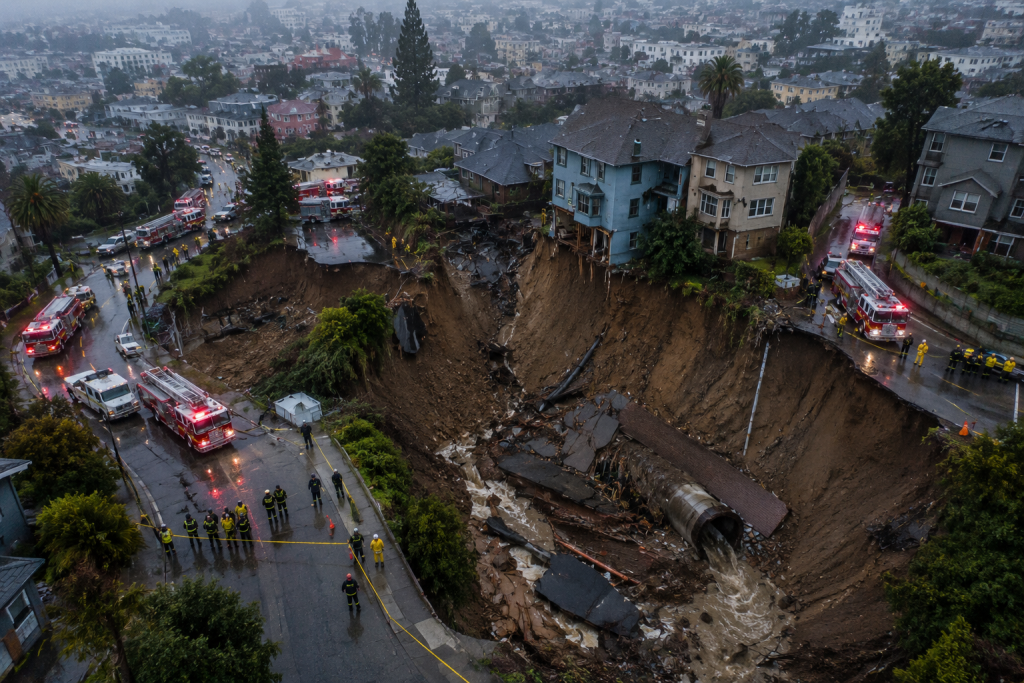
The Translation: Infrastructure → Home
At the infrastructure level:
- sewer failure → soil destabilization → collapse → multi-party liability
At the residential level:
- plumbing failure → soil movement → foundation impact → insurance and ownership disputes
Same drivers:
- Pressure
- Water Movement
- Time
- Movement
Contractor Insight:
Most homeowners assume liability is tied to the moment of damage. In reality, it’s tied to the condition of the system leading up to it.
Where Liability Gets Complicated
Ground failure introduces overlapping responsibility:
- plumbing system condition (inside the property)
- soil conditions (environmental response)
- structural integrity (above the system)
- external infrastructure influence (in some cases)
Advanced Thinking:
Once water leaves the plumbing system and enters the soil, the failure is no longer isolated. It becomes a system interaction problem—making liability harder to define and easier to dispute.
Why This Matters in Bay Area Conditions
In San Francisco:
- aging infrastructure is common
- soil movement is active
- moisture variability is high
Contractor Insight:
These conditions increase the likelihood of progressive failure—where damage develops over time rather than from a single event. That distinction directly affects how liability is assigned.
Prevention vs Exposure
Two system states:
Reactive system:
- multiple repairs over time
- inconsistent documentation
- increasing uncertainty
- higher liability exposure
Controlled system:
- full-system evaluation
- uniform material condition
- predictable performance
- reduced ambiguity in failure scenarios
Advanced Thinking:
The more predictable a system is, the easier it is to manage both performance and responsibility. Unpredictable systems create both operational and legal risk.
Structural Prevention, Not Repair
Repipe is not just a performance upgrade.
It’s a risk control strategy.
It:
- resets system condition
- removes unknown variables
- eliminates hidden leak pathways
- restores full containment
Contractor Insight:
A fully replaced system provides clarity. It defines a new baseline. That matters for performance—and for reducing long-term exposure.
Advanced Positioning:
You don’t wait for liability questions after failure.
You eliminate the conditions that create them.
Repipe isn’t just prevention of damage.
It’s prevention of uncertainty.