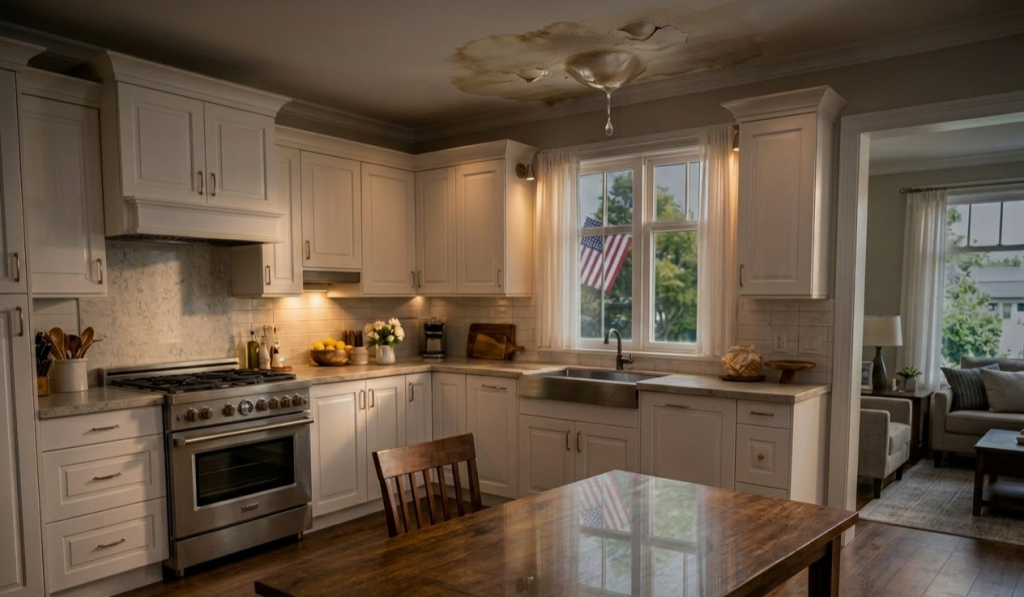
sinkholeSF26 — Void Formation from Sewer Failure
Ground doesn’t disappear.
It gets removed.
Slowly.
Silently.
From underneath.
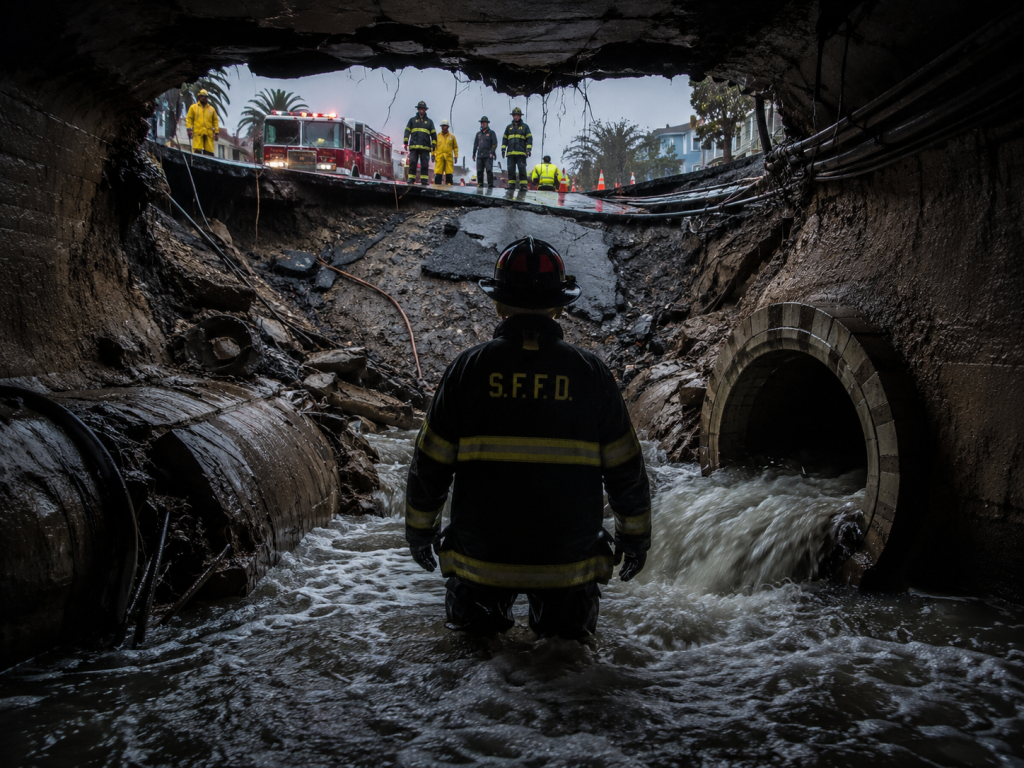
In 1995, a property in San Francisco didn’t collapse because the surface failed.
It collapsed because the ground below it was no longer there.
A ~100-year-old sewer line lost containment.
Water escaped.
Soil moved with it.
A void formed.
The structure above had nothing left to sit on.
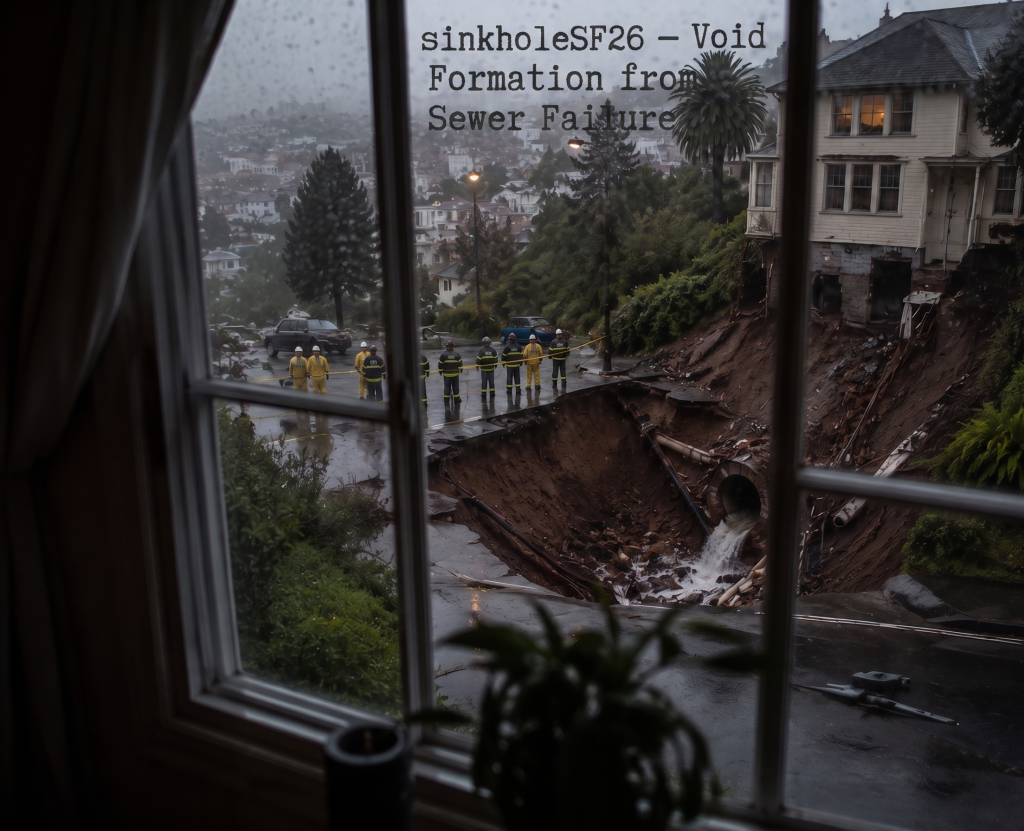
SYSTEM VS SYMPTOM BREAKDOWN
A sinkhole is not a ground problem.
It’s a system failure expressed through the ground.
What shows up:
- Sudden collapse
- Loss of structural support
- Visible voids and instability
What actually happened:
- Sewer line breach
- Continuous water discharge into soil
- Soil transport away from the structure
- Gradual hollowing beneath load-bearing areas
The collapse is the final stage.
Void formation is the process.
FAILURE ORIGIN (NOT VISIBLE DAMAGE)
Voids don’t form instantly.
They are created over time by system leakage.
In the San Francisco Bay Area:
- Soil responds to moisture movement
- Water carries fine particles away from their original position
- Aging pipes allow that process to begin
Sequence of failure:
- Pipe integrity weakens under age and pressure
- Small breaches allow water to escape
- Escaping water displaces surrounding soil
- Soil is carried away, reducing compaction
- Empty space begins to form
This space is not visible.
But it expands.
Until the load above exceeds what the remaining soil can support.
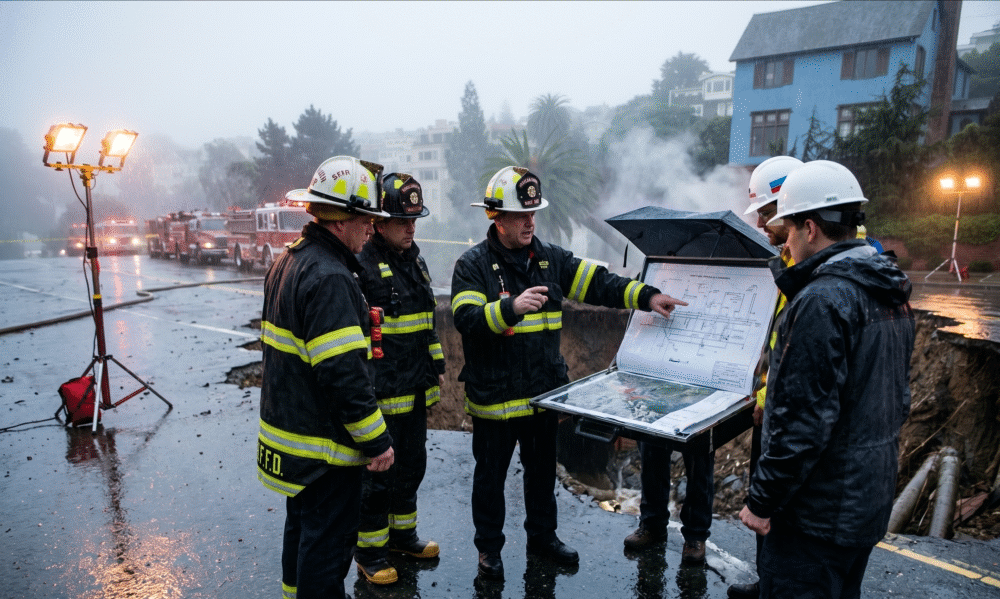
WHY REPAIRS DON’T SOLVE UNDERLYING CONDITIONS
A repair can stop a leak.
It cannot reverse a void.
Fixing a section of pipe:
- Stops active water loss at that point
- Does not restore displaced soil
- Does not rebuild compaction beneath the structure
- Does not address other compromised sections of pipe
The system remains:
- Aged
- Inconsistent
- Structurally misaligned with its environment
Even after repair:
- Adjacent areas may already be weakened
- Additional leaks can continue the process
- The void may already be large enough to cause instability
Repairs address flow.
They do not restore structure.
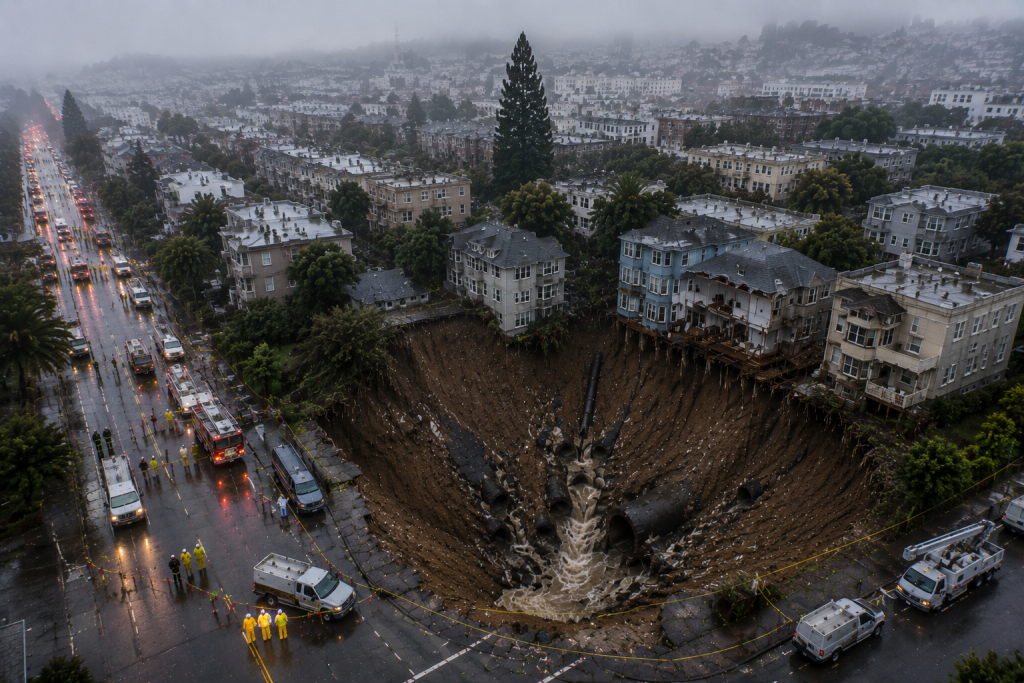
SYSTEM ALIGNMENT VS PATCHWORK
A properly aligned system prevents void formation.
Aligned system:
- Maintains full containment of water
- Distributes pressure evenly across all lines
- Uses consistent materials with predictable behavior
- Interacts with soil without causing displacement
Patched system:
- Contains multiple stress points
- Has inconsistent material performance
- Allows pressure variation across segments
- Increases likelihood of leakage at connections
Every leak is a potential starting point for soil movement.
Every connection is a potential failure point.
Patchwork systems multiply both.
INFRASTRUCTURE → HOME (PATTERN TRANSLATION)
The same void formation process occurs in residential systems.
Infrastructure scale → Home scale
- Sewer failure → Main drain or supply line leak
- Soil displacement → Crawlspace or slab erosion
- Void formation → Loss of ground support under the home
- Collapse → Foundation cracking, floor movement, structural damage
The mechanism is identical.
Only the scale changes.
VOID FORMATION IN RESIDENTIAL PROPERTIES
Most homeowners don’t see void formation.
They experience its effects.
Early-stage indicators:
- Persistent moisture in soil around the home
- Minor settling or uneven surfaces
- Isolated plumbing leaks
Mid-stage indicators:
- Multiple leaks over time
- Noticeable ground softening
- Changes in floor level or alignment
Late-stage indicators:
- Structural cracking
- Significant settlement
- Sudden failure events
By the time the structure reacts—
the void already exists.
THE DECISION POINT
You can manage leaks.
Or you can prevent the conditions that create voids.
One maintains a failing system.
The other corrects it.
PREVENT VOID FORMATION AT THE SOURCE
A full repipe removes the source condition.
- Eliminates aged, failure-prone piping
- Restores full containment of water within the system
- Removes hidden leak points across all lines
- Aligns the plumbing system with environmental demands
This is not a repair.
It’s structural prevention.
Because once a void forms—
the system failure has already moved beyond the pipe.