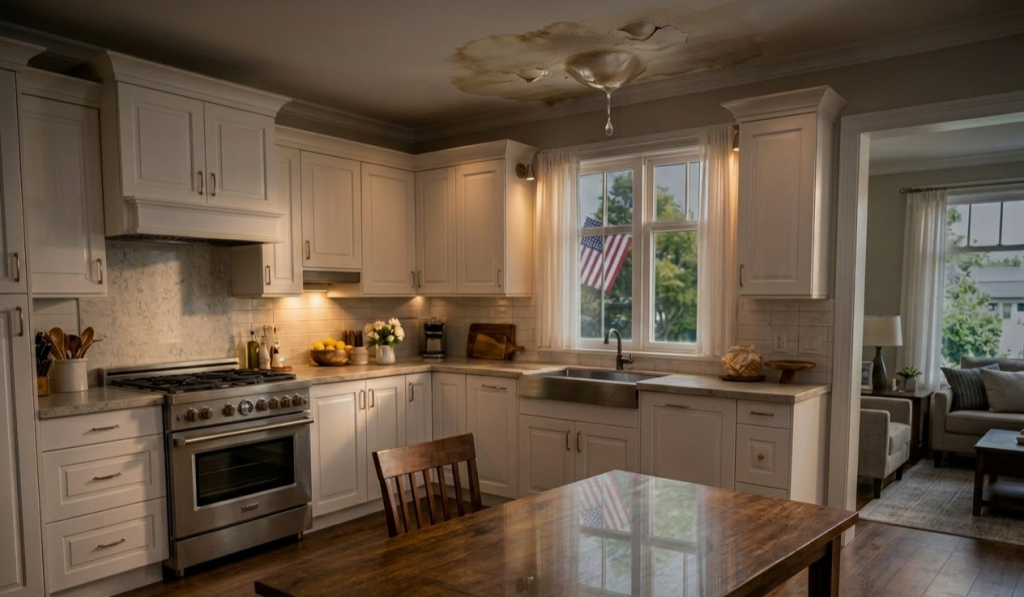
sinkholeSF38 — Luxury Homes on Failing Systems
High-end finish.
Custom build.
Premium everything.
But the system underneath?
Often unchanged.
That’s the disconnect.
In the 1995 Sea Cliff event in San Francisco, the structure above ground didn’t match the condition below it.
A mansion sat on a system that had already lost integrity.
The collapse wasn’t about the quality of the home.
It was about the failure of the system supporting it.

System vs Symptom Breakdown
What defines a “luxury home”:
- architectural design
- high-value materials
- upgraded interiors
- visible structural quality
What actually defines risk:
- condition of underground systems
- age of plumbing infrastructure
- soil stability under load
- water containment integrity
Contractor Insight:
You can have a $5M structure sitting on a $50K system that’s past its lifespan. The value above ground does not upgrade the system below it.

Failure Origin (Not Visible Damage)
Failure starts where upgrades rarely happen.
Behind walls.
Below slabs.
Under the structure.
Inside the system:
- original piping remains in place
- materials degrade over decades
- pressure cycles continue daily
- weak points expand under load
Below the system:
- water escapes unnoticed
- soil conditions shift
- support capacity changes
Advanced Thinking:
Renovations focus on what’s visible. Systems fail where visibility doesn’t exist. That’s why high-end homes can carry low-end risk.
Why Repairs Don’t Solve Underlying Conditions
In luxury homes, repairs are often done with high precision.
But precision doesn’t equal system correction.
A repair:
- replaces a visible failure point
- restores function locally
- leaves the rest of the system unchanged
Contractor Insight:
In upgraded homes, repairs can actually increase mismatch. New, high-performance components are connected to aging infrastructure. That difference creates stress concentration.
Advanced Pattern:
- upgraded fixture or line installed
- increased demand or pressure variation
- older sections take on new load
- failure shifts to the next weakest point
The system wasn’t upgraded.
Only parts of it were.
System Alignment vs Patchwork
Luxury construction demands consistency.
But plumbing systems often don’t match that standard.
Aligned system:
- uniform material quality
- consistent performance across all lines
- predictable behavior under load
- no hidden degradation
Patched system:
- original infrastructure mixed with new components
- uneven pressure distribution
- multiple aging zones
- hidden failure risk
Contractor Insight:
You can’t build a high-performance structure on a low-performance system. The weakest layer determines the outcome.
Advanced Thinking:
Luxury amplifies consequences.
>>Higher load. Higher expectations. Higher cost of failure.
The Translation: Infrastructure → Home
Sea Cliff showed the mismatch clearly:
Infrastructure reality:
- aging sewer system → loss of containment → soil failure
Luxury structure above:
- high-value home → dependent on stable ground → total loss
At the residential level:
- upgraded home → original plumbing system
- increased usage → stress on aging materials
- hidden leaks → soil movement → structural impact
Same drivers:
- Pressure
- Water Movement
- Time
- Movement
Contractor Insight:
The more valuable the structure, the more critical the system integrity beneath it. Risk scales with value.

Why This Is Common in the Bay Area
In San Francisco:
- older homes are frequently renovated, not rebuilt
- infrastructure often remains original
- soil movement adds external stress
Advanced Thinking:
You end up with modern structures operating on legacy systems inside dynamic environments. That combination compresses the failure timeline.
The Upgrade Gap
There’s a consistent gap in high-end homes:
- visible systems → upgraded
- hidden systems → deferred
This creates:
- performance mismatch
- uneven stress distribution
- increased probability of hidden failure
Contractor Insight:
Most high-end failures don’t come from what was upgraded. They come from what wasn’t.

System Progression: Value Above, Risk Below
The pattern looks like this:
- Home is upgraded or renovated
- Original plumbing system remains
- Usage and demand increase
- Aging system operates under higher stress
- Hidden leaks or failures begin
- Structural impact follows
The failure doesn’t match the appearance of the home.
Structural Prevention, Not Repair
If the system beneath the home is outdated, the structure above is exposed.
Repipe is not a cosmetic upgrade.
It’s a structural alignment decision.
Repipe:
- brings the system up to the level of the structure
- removes hidden degradation
- restores full containment under pressure
- stabilizes environmental conditions below the home
Contractor Insight:
You don’t match the system to the budget.
You match it to the risk.
Advanced Positioning:
Luxury doesn’t eliminate failure.
It raises the cost of ignoring it.
Repipe ensures the system underneath matches the standard above.