Colorado Plumbing Systems Under Soil Movement and Freeze Pressure
How This Helps Homeowners
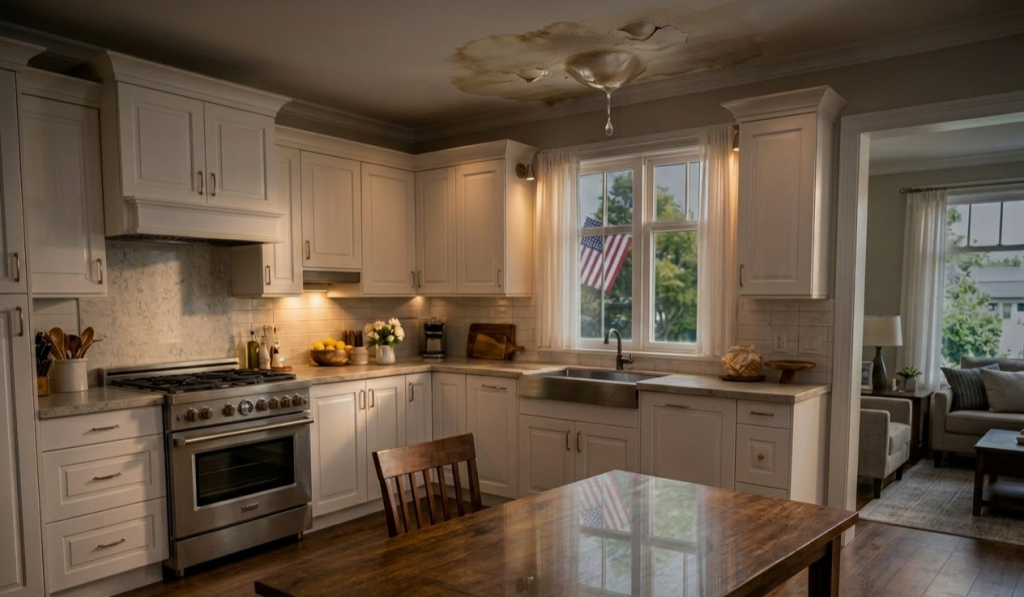
Most plumbing failures in Colorado do not begin with a visible leak.
They begin with movement and pressure.
The slab leak that appears without warning.
Pipe that bursts after a cold snap.
Recurring crack in the same underground line.
Shifting sewer connection.
The seasonal plumbing issue that keeps returning.
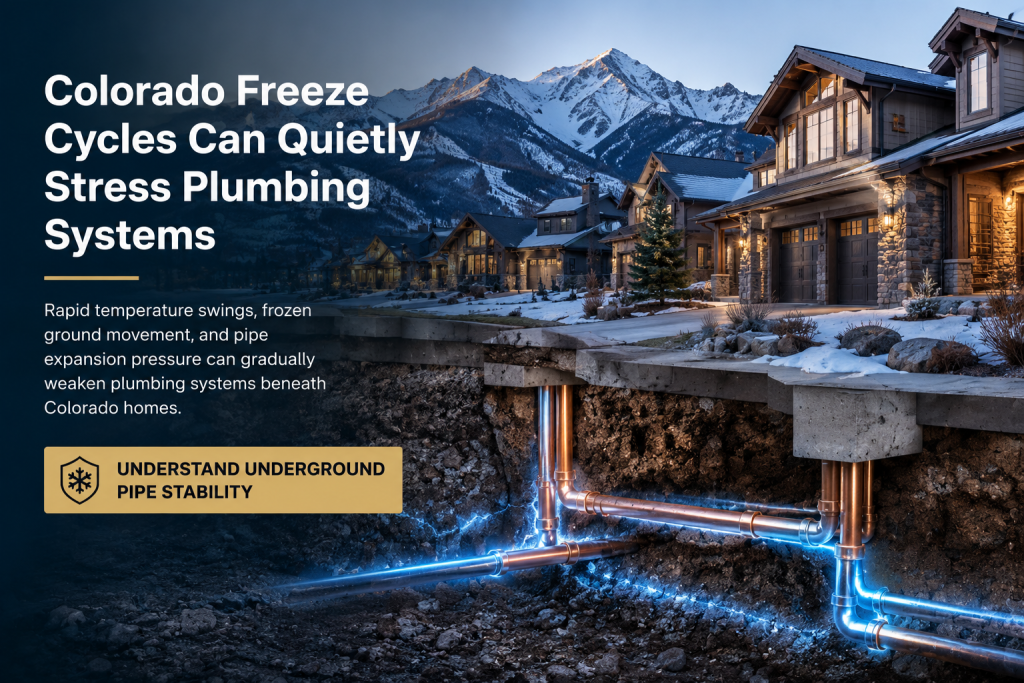
These are not isolated problems.
They are environmental patterns.
This matters because most homeowners fix the damage they can see without understanding the forces causing it.
A repair may stop the immediate issue.
But it does not stop:
- soil expansion and contraction beneath the home
- freeze-driven internal pipe pressure
- ground movement stressing buried lines
- repeated seasonal loading cycles
- structural shifting transferring into plumbing
- long-term material fatigue
Colorado plumbing systems are constantly being pushed from the outside and the inside at the same time.
Understanding that changes how you evaluate risk, repairs, and long-term system decisions.
The goal is not urgency.
The goal is awareness of how failure actually develops.
Modeled from the national framework at Home Failure Intelligence.
Colorado Is A Movement And Pressure State
Colorado combines two dominant plumbing stress forces:
Ground movement.
Freeze pressure.
Many regions experience one.
Colorado experiences both — repeatedly.
This creates a compounding effect.
The ground moves.
And, the pipe moves with it.
Then pressure builds inside the pipe.
And the system is forced to absorb both stresses at once.
Over time, this reduces the system’s ability to tolerate normal operation.
The Colorado Failure Stack
Homes across Colorado commonly experience:
- Expansive Soil / Slab Stress Failure
- Frost Heave / Deep Freeze Pressure
- Underground Pipe Movement and Misalignment
- Hard Water / Internal Restriction
- Elevation-Driven Pressure Variation
- Construction-Era Installation Limitations
These forces interact continuously.
And failure often occurs when multiple stresses align at the same time.
Soil Movement Starts Below The Surface
Colorado contains large areas of expansive soil.
This soil reacts to moisture changes.
Wet conditions cause expansion.
Dry conditions cause contraction.
Winter adds freeze-driven ground movement.
This creates constant shifting beneath the home.
That movement transfers into:
- foundations
- slab structures
- underground plumbing
- sewer laterals
- water service lines
The pipe is not fixed in place.
It is moving with the ground.
Over time, this creates:
- pipe misalignment
- joint stress
- cracking at fittings
- recurring leak zones
- gradual structural damage
The failure often begins below the surface long before it becomes visible.
Freeze Pressure Builds Inside The Pipe
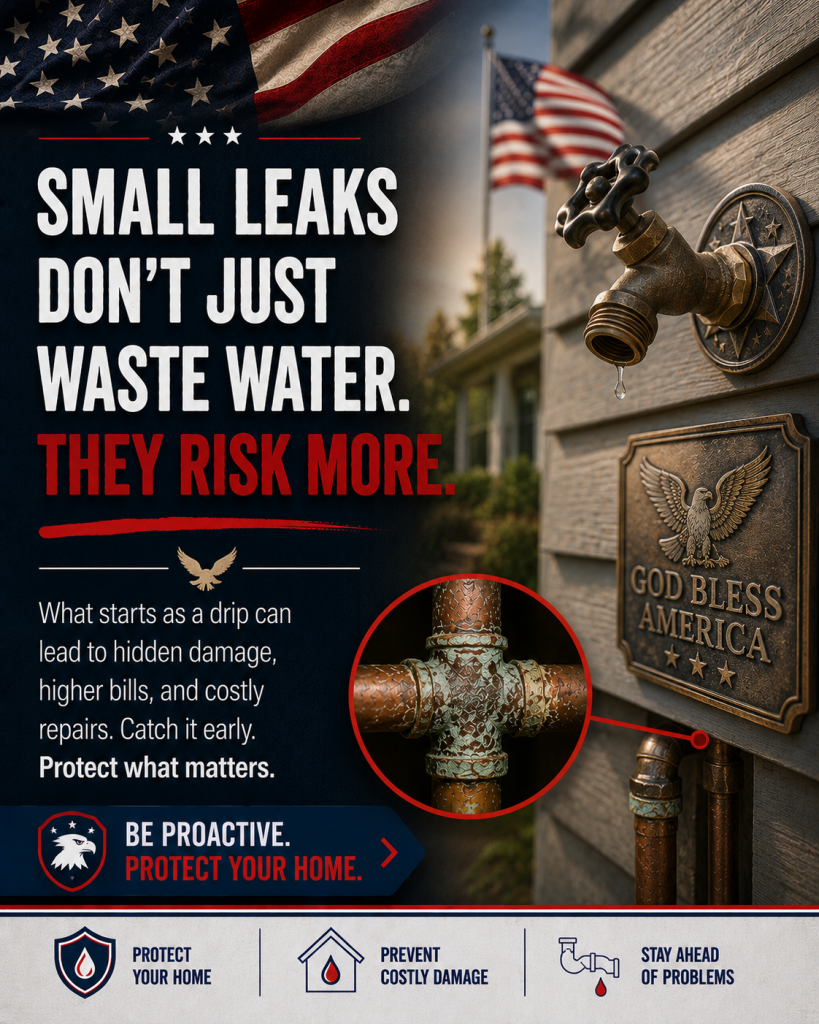
At the same time, Colorado plumbing systems face internal stress from freezing temperatures.
Water expands when it freezes.
That expansion creates pressure inside the pipe.
But the larger issue is repetition.
Freeze.
Thaw.
Repeat.
Each cycle loads the system.
Then releases it.
Then loads it again.
This creates:
- micro-fractures in piping
- weakened joints
- stressed fittings
- delayed failure after winter
- increased sensitivity to normal pressure
Many failures occur after the freeze ends.
Because the system has already been weakened.
External Movement And Internal Pressure Combine
Soil movement and freeze pressure do not act independently.
They overlap.
A pipe may be slightly misaligned due to ground movement.
Then internal pressure increases during a freeze.
That combination creates a failure point.
This leads to:
- slab leaks
- underground pipe breaks
- cracked sewer lines
- shifting connections
- sudden visible leaks after seasonal change
The system is not failing from one force.
It is failing from interaction between forces.
Underground Systems Carry The Highest Risk
Most of this stress occurs where homeowners cannot see it.
Underground plumbing absorbs:
- soil expansion and contraction
- freeze-driven ground movement
- pressure changes from temperature
- long-term material fatigue
This includes:
- water supply lines
- sewer laterals
- slab-embedded piping
- irrigation systems
Failures in these areas often go undetected until damage becomes visible.
By that point, the issue has been developing for an extended period.
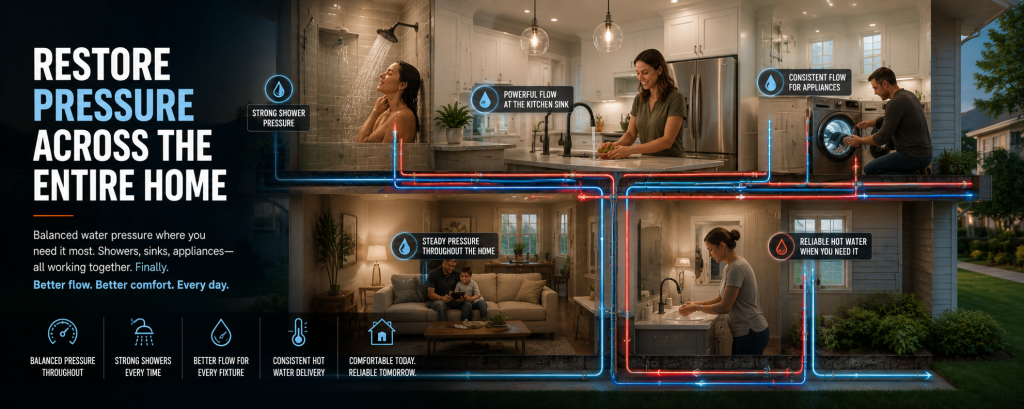
Elevation And Pressure Variation Add Complexity
Colorado elevation introduces another variable.
Pressure behaves differently across vertical distance.
Homes with:
- multiple levels
- hillside positioning
- long vertical runs
experience uneven pressure distribution.
This adds additional stress to a system already dealing with movement and freeze conditions.
Variation increases wear.
Wear increases failure risk.
Hard Water Reduces System Tolerance
Colorado water conditions often include mineral content.
Over time, this creates scale inside pipes.
Scale reduces internal diameter.
Flow becomes restricted.
Pressure becomes less stable.
When a system is already under stress from:
- movement
- freeze pressure
reduced internal tolerance increases failure likelihood.
The system has less capacity to absorb additional stress.
Repeated Failures Follow The Same Pattern
Many Colorado homeowners experience recurring plumbing issues.
The same area.
The same type of failure.
And, the same seasonal timing.
This is not coincidence.
It is pattern repetition.
The underlying environmental conditions remain active.
Repairing the symptom does not remove the stress.
Colorado Plumbing Failures Are System-Based
A homeowner may think:
“The pipe froze and broke.”
But the full system condition may include:
- soil movement shifting alignment
- freeze expansion increasing pressure
- mineral buildup restricting flow
- elevation variation affecting distribution
- prior installation limitations reducing tolerance
The visible failure is the final stage.
Not the origin.
The Real Colorado Plumbing Pattern
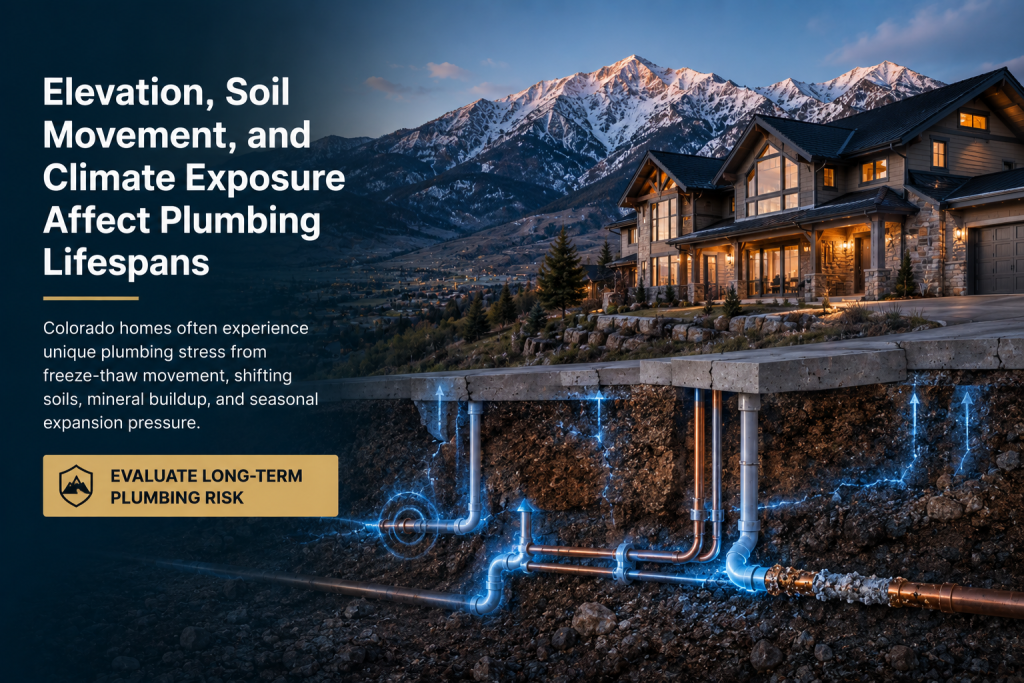
Colorado plumbing systems operate under continuous dual stress:
External movement from soil.
Internal pressure from freeze cycles.
Layer in:
- elevation variation
- mineral buildup
- construction-era decisions
- modern demand load
And the result is a high-frequency failure environment.
Not constant failure.
But constant stress accumulation.
Understanding this changes how homeowners approach:
- leak evaluation
- underground system inspection
- repair vs replacement decisions
- pressure management
- long-term system planning
Because in Colorado, plumbing systems are not just aging.
They are being actively stressed every season.
And that stress determines whether a repair holds — or fails again.