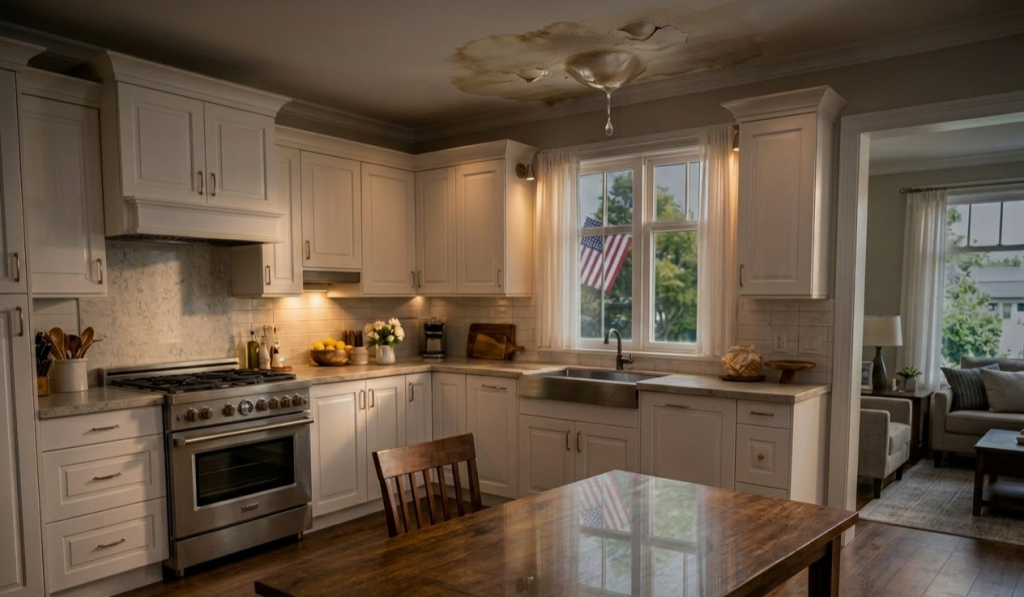
sinkholeSF39 — Legacy Infrastructure Risk Pricing Gap
The price of the home is visible.
The price of the system is not.
That gap is where risk lives.
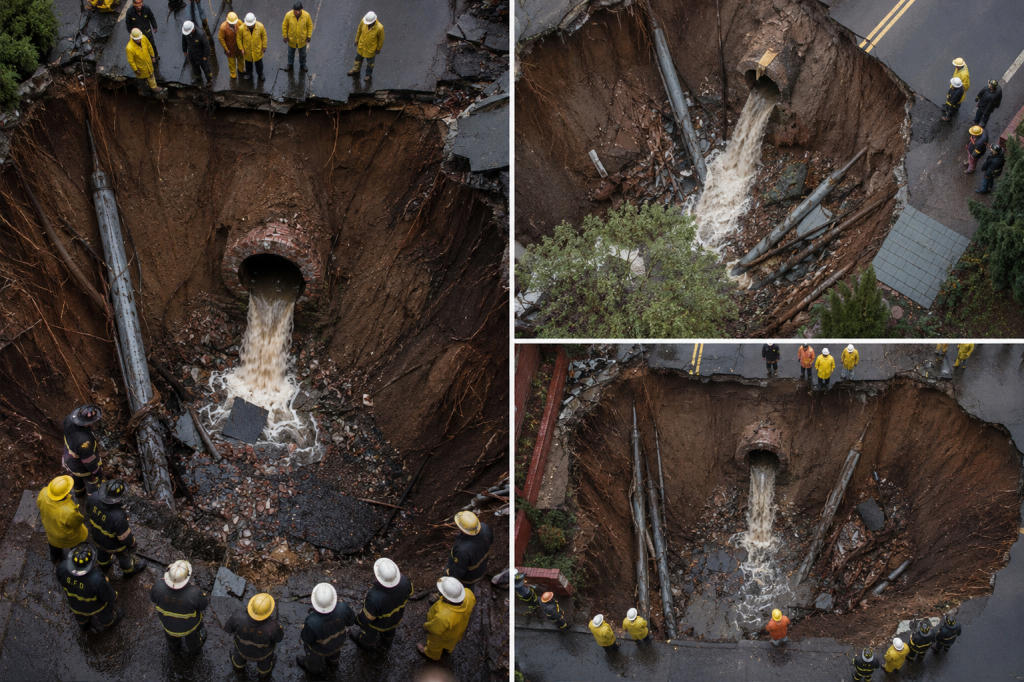
In the 1995 Sea Cliff event in San Francisco, a high-value property sat on infrastructure that had already depreciated to failure.
The market valued the structure.
The system underneath was functionally written off.
When it failed, the correction cost wasn’t incremental.
It was total.
System vs Symptom Breakdown
What gets priced into a home:
- location
- structure quality
- finishes and upgrades
- comparable sales
What rarely gets priced accurately:
- age and condition of plumbing systems
- remaining functional lifespan
- probability of system-wide failure
- cost of structural impact from water movement
Contractor Insight:
Real estate pricing assumes systems are “working.” It does not account for how close they are to failure. That creates a blind spot between value and risk.
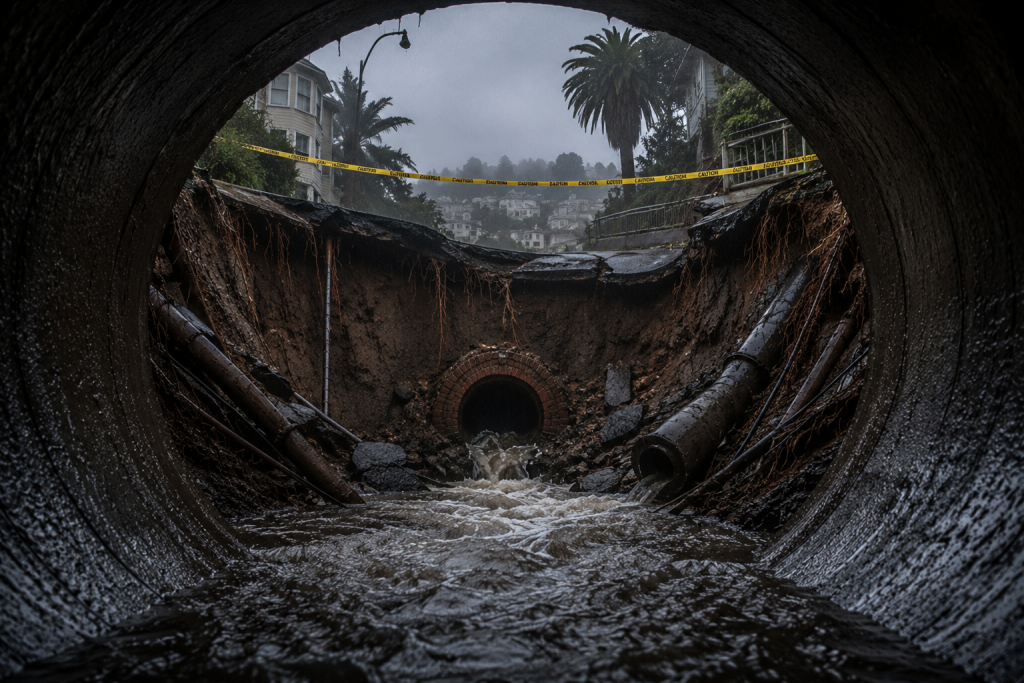
Failure Origin (Not Visible Damage)
Legacy systems don’t fail based on appearance.
They fail based on condition.
Inside aging plumbing:
- materials operate past intended lifespan
- corrosion reduces structural integrity
- joints weaken under long-term movement
- pressure continues regardless of condition
Outside the system:
- water escapes incrementally
- soil conditions change without detection
- load-bearing capacity degrades
Advanced Thinking:
A system can be fully operational and already failed from a risk standpoint. Function does not equal integrity.
Why Repairs Don’t Solve Underlying Conditions
Repairs are often factored into ownership as manageable costs.
But that assumption breaks down with legacy systems.
A repair:
- addresses a single failure point
- maintains short-term function
- does not change overall system condition
Contractor Insight:
On legacy infrastructure, repairs are not maintenance—they’re deferral. You’re postponing the system reset while risk continues accumulating.
Advanced Pattern:
- system ages → isolated failure appears
- repair applied → system continues aging
- failure frequency increases
- cumulative cost approaches replacement
But with added risk exposure along the way.
System Alignment vs Patchwork
Pricing assumes consistency.
Legacy systems don’t have it.
Aligned system:
- known material condition
- predictable performance
- stable pressure behavior
- low uncertainty
Legacy patched system:
- mixed materials across decades
- uneven degradation levels
- unknown internal condition
- high uncertainty under load
Contractor Insight:
Uncertainty is the real cost driver. The less predictable a system is, the more expensive its failures become when they occur.
Advanced Thinking:
Markets price certainty.
Legacy systems introduce uncertainty.
That gap is where underpricing happens.
The Translation: Infrastructure → Home
Sea Cliff exposed the mismatch:
Infrastructure reality:
- 100-year-old system → degraded beyond reliable performance
Market reality:
- high-value property → assumed structural stability
At the residential level:
- older plumbing system → still functioning
- home value remains high
- risk of failure increases silently
- cost of correction not reflected in price
Same drivers:
- Pressure
- Water Movement
- Time
- Movement
Contractor Insight:
The system doesn’t fail based on market value. It fails based on condition. Pricing doesn’t change physics.
The Risk Pricing Gap
The gap forms when:
- system age exceeds design life
- no full-system evaluation is performed
- only visible issues are addressed
- repairs are mistaken for stability
This creates:
- undervalued risk
- delayed decision-making
- higher impact when failure occurs
Advanced Thinking:
The longer the gap exists, the more compressed the outcome becomes. Instead of gradual cost, you get sudden consequence.
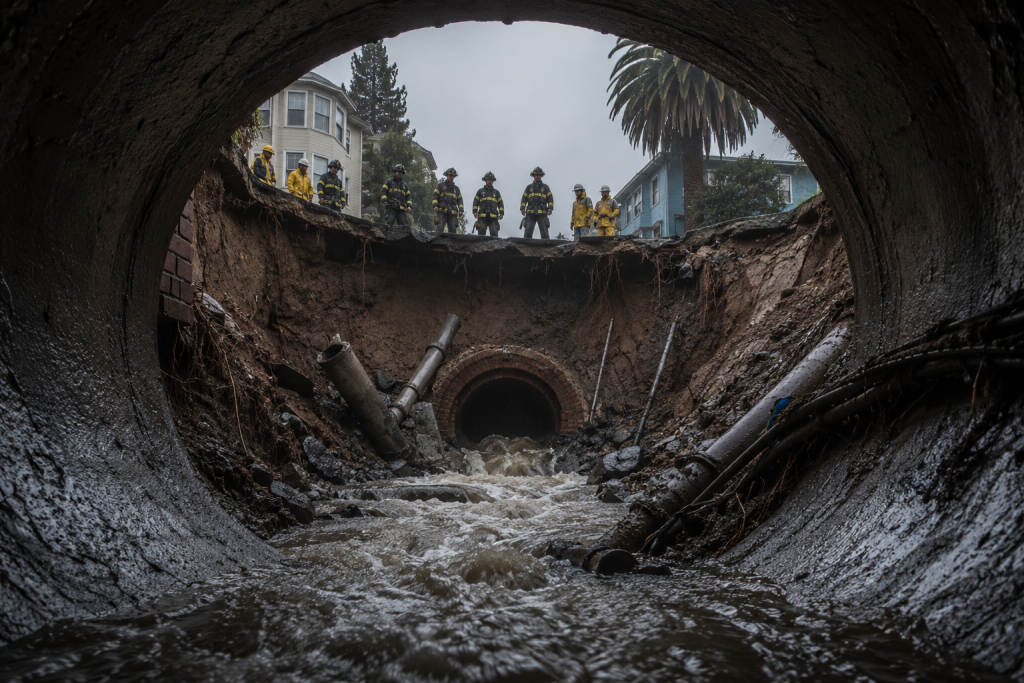
Why This Is Amplified in the Bay Area
In San Francisco:
- many homes operate on legacy systems
- property values are high
- soil and moisture conditions increase system stress
Contractor Insight:
High property values mask infrastructure risk. The higher the value, the less attention is often given to what’s below it.
System Progression: Underpriced Risk → Structural Cost
The pattern is consistent:
- Legacy system remains in service
- Home value increases independently
- Repairs address visible issues only
- System condition continues degrading
- Failure reaches structural impact level
- Cost resets to full-system + structural correction
The gap closes all at once.
Structural Prevention, Not Repair
Repipe is not just a plumbing decision.
It’s a correction of the pricing gap.
It:
- aligns system condition with property value
- removes uncertainty from the infrastructure layer
- prevents structural-level consequences
- converts unknown risk into controlled performance
Contractor Insight:
The most expensive systems are the ones that fail without being accounted for. Repipe brings that cost forward—before it multiplies.
Advanced Positioning:
You can ignore system condition in pricing.
You can’t ignore it in performance.
Repipe closes the gap between what the home is worth and what the system can actually support.