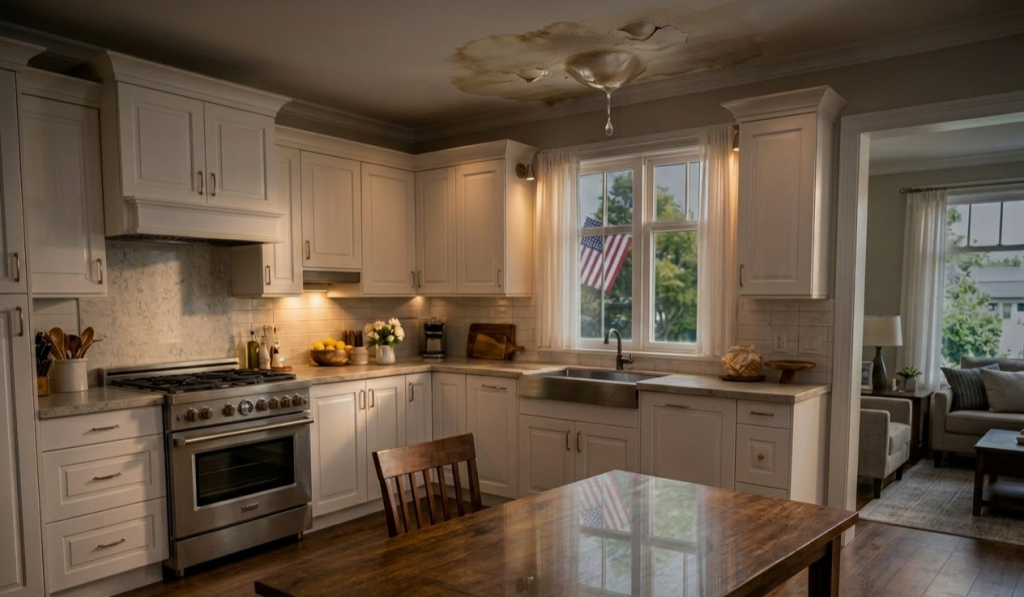
sinkholeSF32 — Slow Leaks Create Structural Risk
Nothing breaks all at once.
No explosion.
There is no obvious failure.
No emergency—yet.
Just a slow leak.
That’s how most structural problems begin.
In the 1995 Sea Cliff sinkhole event in San Francisco, the collapse wasn’t caused by a sudden rupture.
It was the result of continuous system failure under load.
A sewer line degraded.
Water escaped gradually.
Soil conditions changed over time.
The system failed long before the collapse.
System vs Symptom Breakdown
What gets noticed:
- damp areas
- minor leaks
- small cracks
- occasional pressure issues
What’s actually happening:
- continuous water discharge into surrounding soil
- soil density reduction beneath load-bearing structures
- shifting support conditions under foundations
- pressure instability across the plumbing system
Contractor Insight:
Slow leaks don’t stay small. They change the environment around the system. Once soil conditions shift, the structure above becomes part of the failure chain.
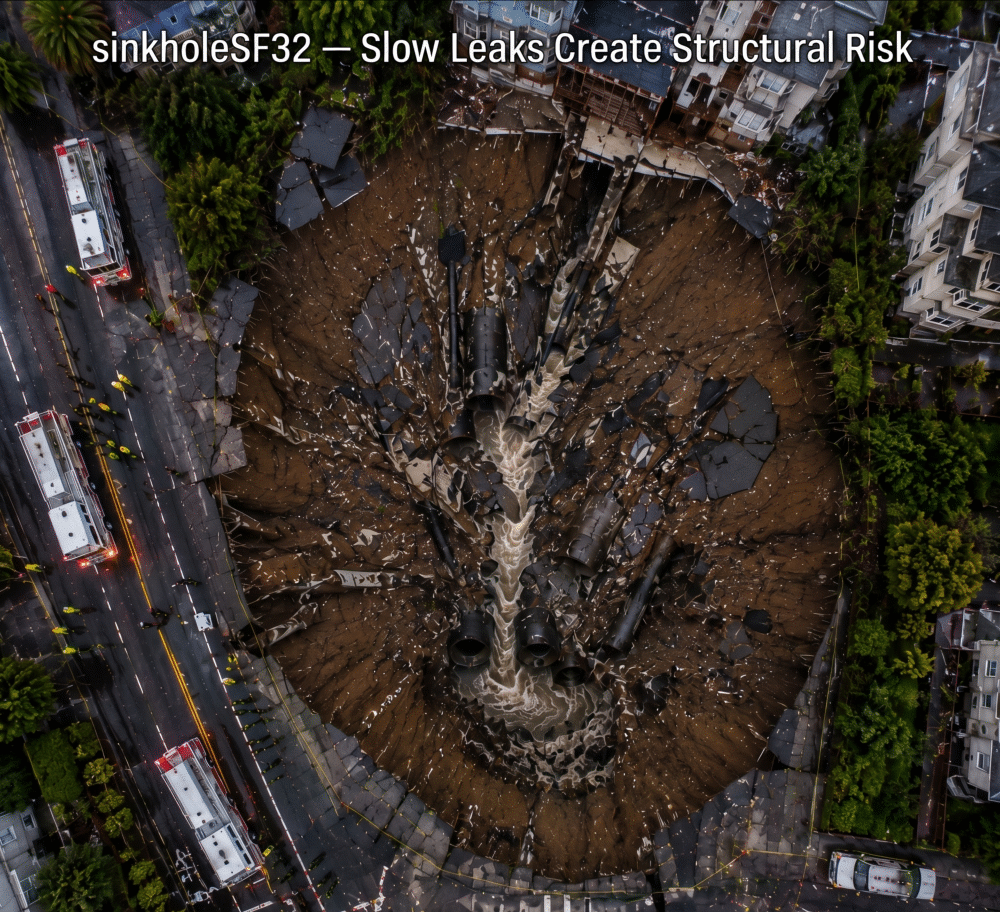
Failure Origin (Not Visible Damage)
Failure starts in places that don’t trigger urgency.
Inside the system:
- micro-leaks develop at fittings and joints
- pipe walls thin from corrosion or wear
- pressure fluctuations expand weak points
- water exits in small, consistent volumes
Outside the system:
- soil absorbs water unevenly
- compaction decreases
- load distribution changes under the structure
Advanced Thinking:
A slow leak is not just a plumbing issue. It’s a geotechnical event at a small scale. You are altering the soil’s ability to support weight—without seeing it.
Why Repairs Don’t Solve Underlying Conditions
Most repairs are reactive.
They address:
- the visible leak
- the accessible failure point
They ignore:
- the remaining system condition
- the extent of water migration already in place
- the pressure imbalances that caused the leak
Contractor Insight:
Fixing a slow leak doesn’t reset the system. It isolates one failure while the rest of the system continues degrading at the same rate.
Advanced Pattern:
- Leak repaired → system pressure stabilizes temporarily
- Adjacent weak points take on new load
- Secondary leaks form within the same system cycle
This is why “another leak” shows up weeks or months later.
Not coincidence.
System progression.
System Alignment vs Patchwork
A system under pressure must behave consistently across all components.
Aligned system:
- uniform pipe condition
- stable pressure throughout
- predictable performance under load
- no environmental impact outside the system
Patched system:
- mixed degradation levels
- inconsistent pressure zones
- repeated leak points
- ongoing water release into surrounding soil
Contractor Insight:
Every patch introduces a rigidity difference. New material meets old material. Pressure doesn’t distribute evenly. That transition point becomes the next failure location.
Advanced Thinking:
The system doesn’t recognize repairs as solutions.
It treats them as new stress variables.
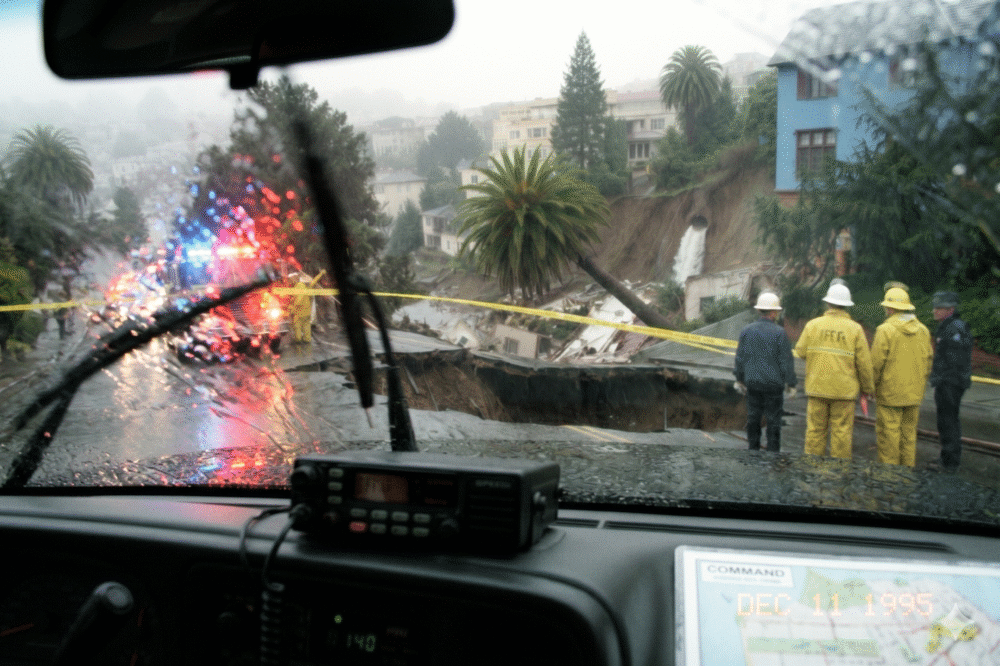
The Translation: Infrastructure → Home
What happened at scale in Sea Cliff is happening at a smaller scale in homes daily.
Infrastructure:
- sewer leak → soil destabilization → collapse
Residential:
- slow pipe leak → soil saturation → slab movement
- hidden water loss → crawlspace moisture → structural decay
- long-term seepage → foundation stress → visible cracking
Same drivers:
- Pressure
- Water Movement
- Time
- Movement
Contractor Insight:
The damage you see inside the home is often disconnected from where the failure started. The system and the structure are interacting below the surface.
Why This Escalates in Bay Area Conditions
In San Francisco and surrounding regions:
- soils expand and contract with moisture
- older systems are common
- pressure variability is frequent
Advanced Thinking:
When slow leaks meet reactive soils, the timeline to structural impact compresses. What might take years elsewhere can accelerate significantly in these conditions.
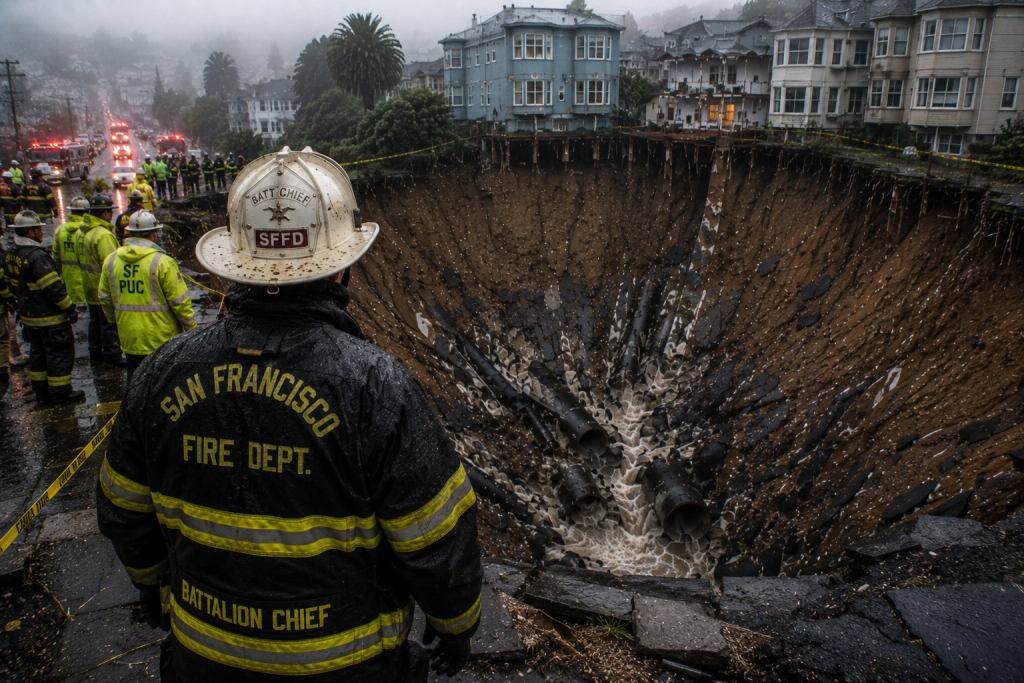
System Progression: Leak → Movement → Damage
Slow leaks follow a predictable path:
- Initial leak (often unnoticed)
- Soil saturation begins
- Compaction decreases
- Load distribution shifts
- Structural stress develops
- Visible damage appears
By step 6, the plumbing system has already failed.
Structural Prevention, Not Repair
If the issue is system-wide degradation, the solution cannot be isolated repair.
A repipe addresses:
- full system condition
- pressure consistency
- elimination of hidden leak pathways
It stops:
- ongoing water movement into soil
- progressive environmental damage
- repeated failure cycles
Contractor Insight:
You don’t wait for slow leaks to become structural problems. By the time you detect patterns, the system has already crossed the threshold.
Advanced Positioning:
A slow leak is not a minor issue.
It’s the early stage of system failure.
Repipe isn’t a reaction.
It’s a structural decision.