sinkholeSF17 — Victorian Pipes Under Modern Load
Cities inherit systems they did not design.
San Francisco operates on layers of infrastructure installed across more than a century. Much of it was built during an era of lower density, simpler plumbing demand, and different environmental assumptions.
Those systems still carry today’s load.
In 1995, a Sea Cliff property collapsed when a century-old sewer line failed during heavy rain. The event exposed a structural reality: legacy systems are still in active service, but they are operating outside their original design envelope.
This is not a failure of a single pipe.
It is a condition of the system.
Infrastructure Age vs Load Demand
Victorian-era infrastructure was engineered for a different city.
Lower occupancy. Fewer fixtures. Reduced wastewater discharge. Less paved surface area directing runoff into drainage systems.
Modern San Francisco operates at higher intensity.
More water moves through the system, more frequently, under greater pressure variability.
This creates a persistent imbalance:
- Older pipe materials under sustained modern flow rates
- Joints and connections exposed to pressure cycles they were not designed to handle
- Increased stormwater inflow entering combined systems during rain events
The system has not remained static.
It has been extended, patched, and adapted.
Each modification adds complexity without fully resetting system capacity.
The result is cumulative strain.

Subsurface Monitoring Limitations
Underground infrastructure is not continuously observable.
Cities rely on scheduled inspections, reactive maintenance, and partial system mapping.
This approach introduces structural gaps in awareness.
- CCTV inspections require access and clear pathways
- Historical records may not reflect current conditions or undocumented repairs
- Depth, soil conditions, and pipe deformation limit inspection accuracy
Monitoring provides snapshots.
Infrastructure condition evolves continuously between those intervals.
In older districts, the uncertainty is greater.
Records are fragmented. Materials vary. Installation methods differ block by block.
This reduces the reliability of predictive maintenance.
Why Failures Remain Undetected
Failure progression begins before detection is possible.
Small defects form internally.
Hairline cracks. Joint shifts. Material fatigue.
Water escapes in minor volumes. Soil begins to absorb moisture. Structural support gradually weakens.
At this stage, the system still functions.
There is no visible disruption.
Detection thresholds are not triggered.
Over time, these micro-failures interact:
- Escaped water alters soil density
- Soil movement increases stress on pipe alignment
- Internal pressure fluctuates during peak usage or storm events
The system moves toward instability without external indication.
Collapse occurs when accumulated conditions exceed tolerance.
The event appears sudden.
The process is not.
Pressure and Water Movement in a Constrained System
San Francisco’s environment intensifies these dynamics.
Topography creates variable flow conditions. Coastal moisture increases soil sensitivity. Aging infrastructure compounds material degradation.
During heavy rain, systems experience simultaneous stress:
- Elevated internal flow from combined sewer loads
- External soil saturation reducing ground stability
- Increased hydraulic pressure at weak points
- Lateral movement affecting pipe alignment
These forces converge.
Not uniformly.
At specific vulnerabilities within the network.
This is where failure initiates.

Mapping a Non-Uniform Network
Urban infrastructure in San Francisco is not a single system.
It is a network of overlapping installations.
Different eras introduced different materials and standards:
- Clay, cast iron, and early composite systems
- Varied jointing methods and sealing technologies
- Inconsistent depth and routing patterns
Mapping this network provides location data.
It does not provide condition certainty.
Risk mapping becomes interpretive.
Planners identify zones with elevated probability:
- Older neighborhoods with legacy pipe materials
- Areas with known soil movement or settlement history
- Districts with recurring maintenance interventions
These indicators guide prioritization.
They do not eliminate unknowns.
Post-Event Planning and Code Implications
When a failure occurs, response is immediate and localized.
The damaged segment is replaced. Surrounding soil is stabilized. Access is restored.
Afterward, the city evaluates contributing factors.
Policy adjustments typically include:
- Increased inspection frequency in similar zones
- Material upgrades for replacement standards
- Targeted capital improvement planning
- Stormwater management refinements
These measures improve resilience incrementally.
They do not address the full scope of legacy system exposure.
Comprehensive replacement is constrained by cost, disruption, and access limitations.
As a result, modernization occurs in segments.
Risk persists between those segments.
System Translation: Infrastructure to Residential
The mechanics of large-scale infrastructure failure apply at the residential level.
The difference is scale and visibility.
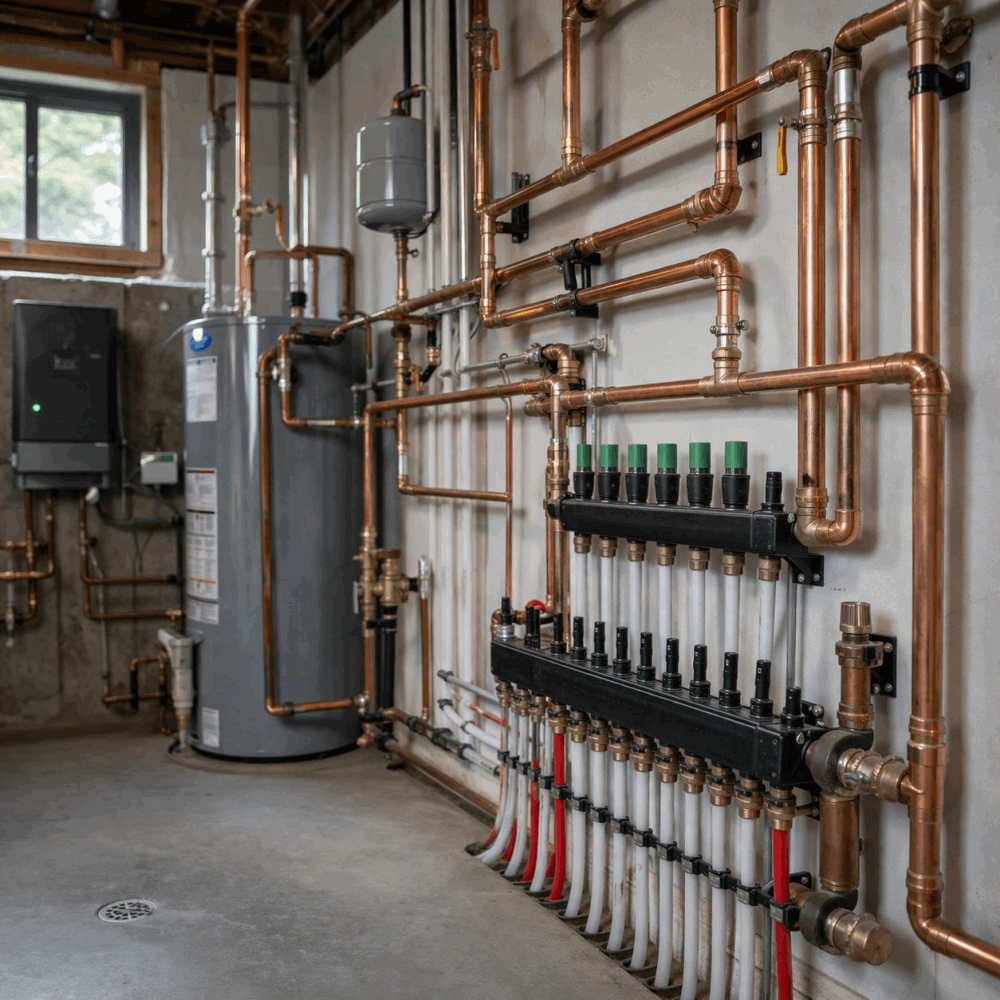
- Aging sewer line → aging interior plumbing
- Soil destabilization → foundation or slab movement
- Pressure fluctuation → pipe stress and eventual rupture
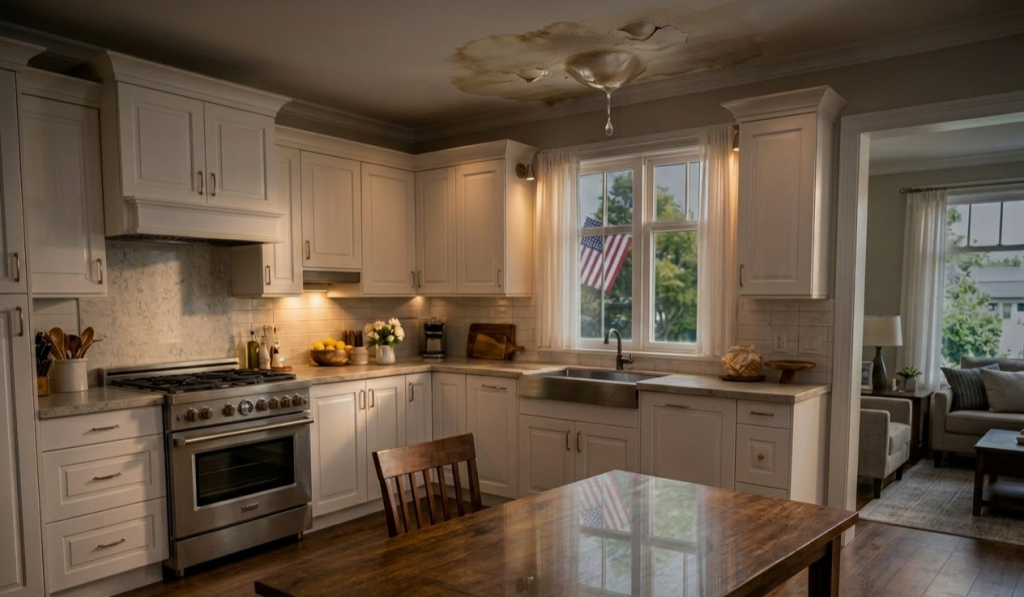
- Sudden collapse → interior flooding or structural damage
Homes connected to legacy infrastructure inherit part of that risk.
Internal systems may be subject to the same pressures, even if they are not visible.
Long-Horizon Infrastructure Reality
Cities cannot replace entire systems at once.
They operate through phased upgrades and prioritized interventions.
This creates a mixed-condition environment.
New segments coexist with aging ones.
Performance varies across short distances.
Planning must account for this variability.
Surface condition does not reflect subsurface integrity.
System reliability depends on the weakest segment within the network.
Direction Forward
Infrastructure stability requires a shift in evaluation.
From surface indicators to subsurface analysis.
From reactive repair to system-wide assessment.
From isolated upgrades to coordinated modernization strategies.
At the city level, this means long-term capital planning aligned with material lifespan and environmental stress.
At the property level, it means understanding how internal systems interact with broader infrastructure conditions.
System-level audits provide that visibility.
They identify risk before it becomes disruption.
Learn how system evaluations expose hidden plumbing vulnerabilities and prevent failure progression beneath the surface: