sinkholeSF31 — The Same Failure Happens in Your Home
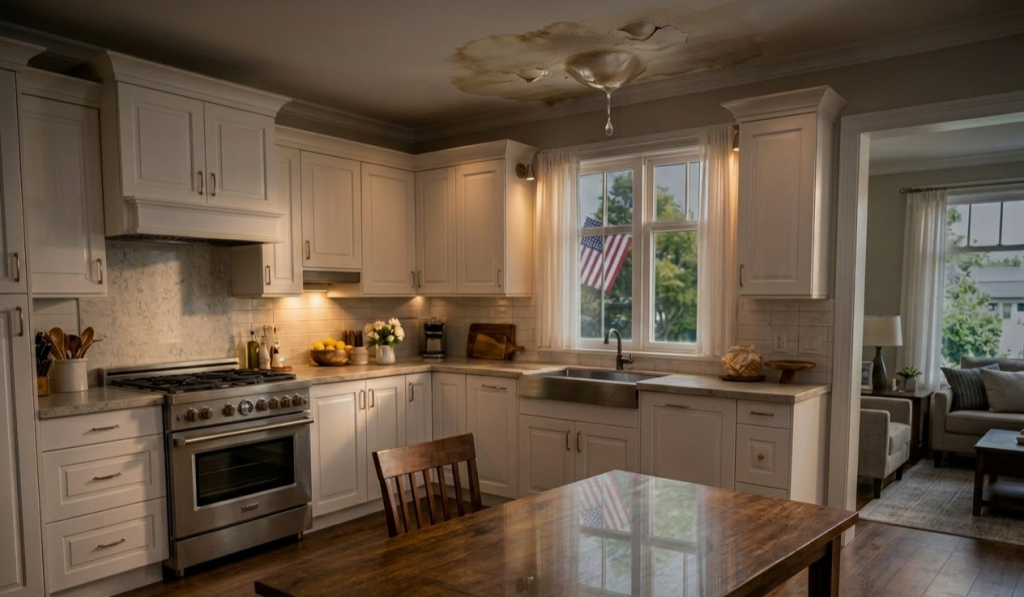
Everything looked stable.
Structure intact.
Ground holding.
No visible issue.
That’s how system failure presents right before it becomes visible.
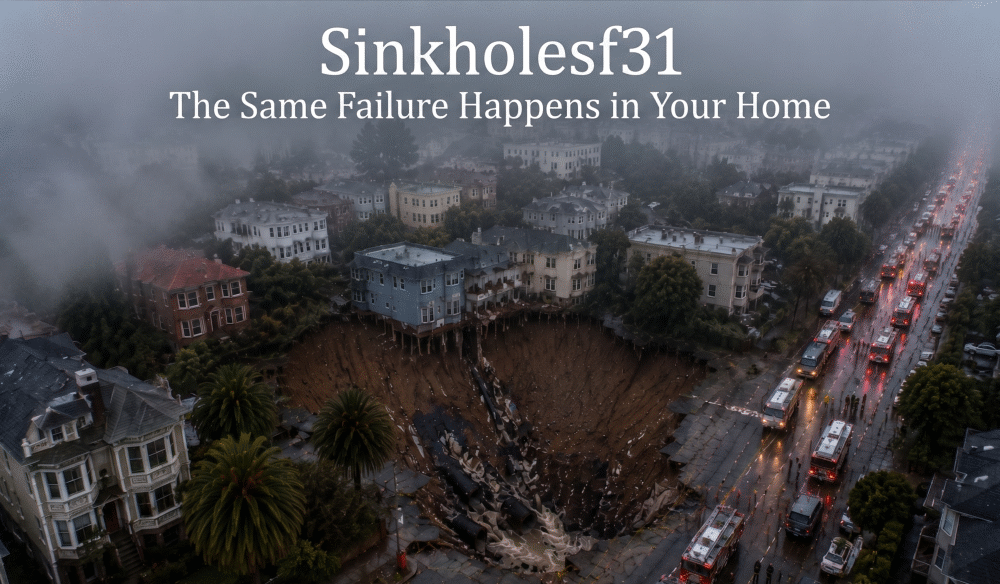
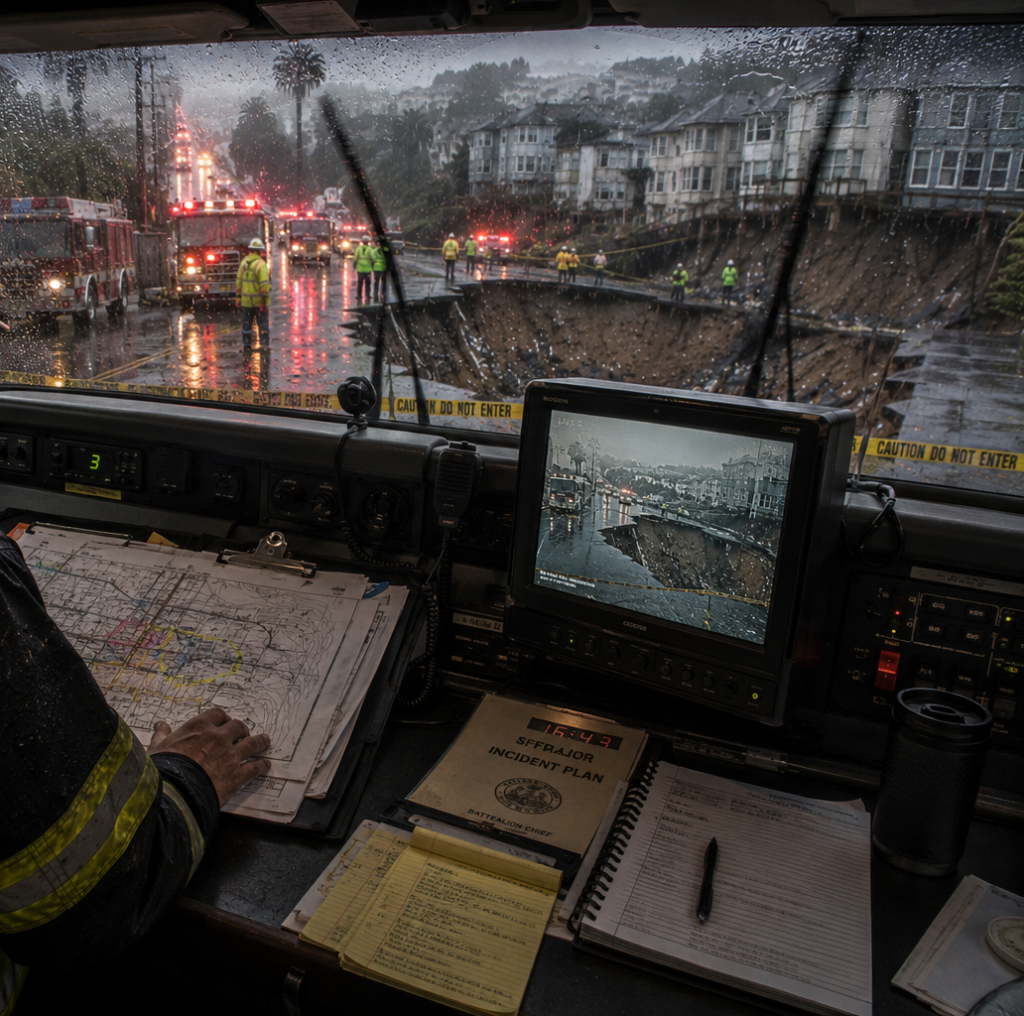
In the 1995 Sea Cliff massive sinkhole event in San Francisco, the collapse didn’t start at the surface.
It started inside the system.
A century-old sewer line failed under combined load:
- internal degradation
- external soil pressure
- water flow under stress conditions
Water exited the system.
Soil lost structure.
A void formed.
Then the structure above it followed.
System vs Symptom Breakdown
Surface-level interpretation (what homeowners react to):
- sudden collapse
- visible structural damage
- emergency condition
System-level reality (what actually caused it):
- long-term pipe wall degradation
- undetected leak pathways under pressure
- continuous soil displacement from water movement
- loss of compaction beneath load-bearing structures
Contractor Insight:
By the time you see structural damage, the system has already failed across multiple points. What looks like a single event is actually the final stage of distributed failure.
Failure Origin (Not Visible Damage)
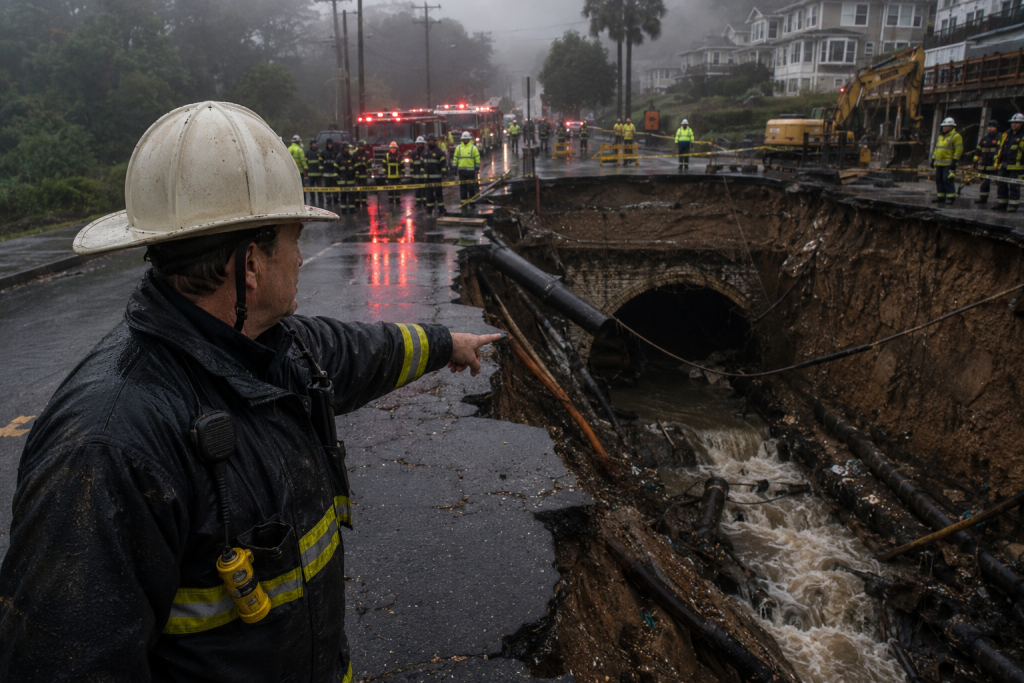
Failure begins where visibility ends.
Inside aging plumbing systems:
- pipe walls thin unevenly over time
- joints lose tolerance under movement
- pressure cycles expand micro-fractures
- water escapes before detection systems ever register it
In Bay Area conditions:
- expansive soils shift with moisture changes
- older infrastructure exceeds intended lifespan
- pressure variability increases stress on weak sections
Advanced Thinking:
Most failures are not caused by a single break. They are caused by a network that has lost uniform integrity. Once one section weakens, the system redistributes stress—accelerating failure elsewhere.
Why Repairs Don’t Solve Underlying Conditions
Repairs operate under a false assumption:
that failure is localized.
It isn’t.
A spot repair:
- restores one visible failure point
- leaves the remaining system in the same aged condition
- increases pressure on adjacent weak segments
- ignores water that has already migrated outside the system
Contractor Insight:
After a repair, the system often fails faster—not slower. You’ve reinforced one section and forced stress into the next weakest point. This is why callbacks cluster after initial fixes.
Advanced Pattern:
- Repair → Pressure shift → Secondary failure
- Patch → Redistribution → Escalation
You’re not eliminating risk.
You’re relocating it.
System Alignment vs Patchwork
A plumbing system behaves as a single network under load.
Aligned system:
- uniform material condition
- balanced pressure distribution
- predictable flow behavior
- no isolated stress concentrations
Patched system:
- mixed pipe ages and materials
- inconsistent internal diameters
- uneven pressure zones
- multiple latent failure points
Contractor Insight:
Mixed-material systems (old copper + new PEX + legacy galvanized) create invisible transition stress. Expansion rates differ. Pressure response differs. Failure probability increases at every transition point.
Advanced Thinking:
Infrastructure doesn’t fail where it’s weakest.
It fails where stress accumulates fastest.
Patchwork accelerates that accumulation.
The Translation: Infrastructure → Home
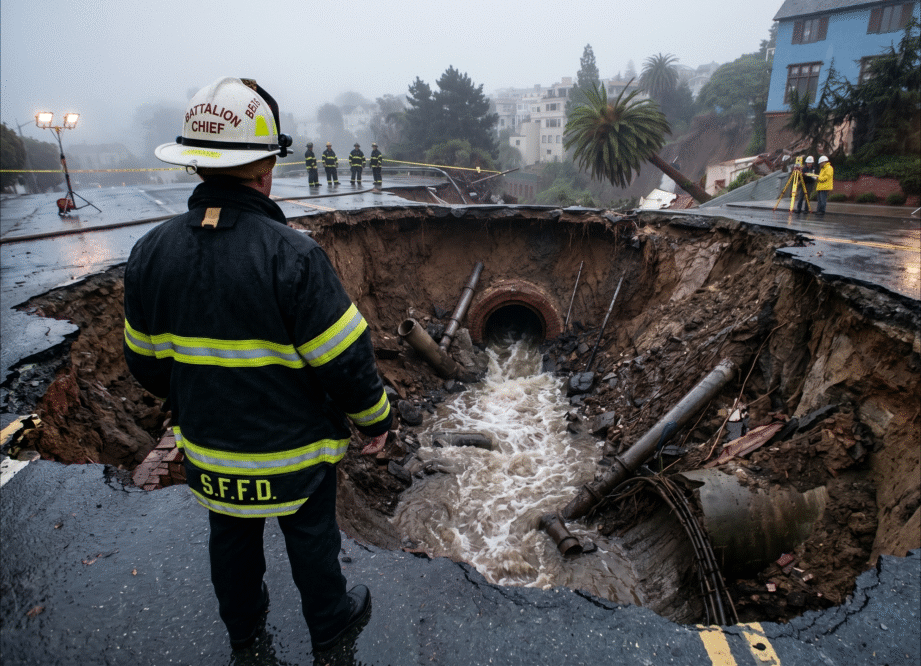
The Sea Cliff sinkhole is a large-scale version of a residential pattern.
Infrastructure scale:
- sewer failure → ground void → structural collapse
Residential scale:
- hidden leak → soil erosion → slab movement
- pressure inconsistency → pipe rupture → water damage
- crawlspace saturation → long-term structural instability
Same drivers:
- Pressure
- Water Movement
- Time
- Ground Movement
Contractor Insight:
Most slab leaks and foundation issues are not isolated plumbing problems. They are system failures interacting with soil behavior. Plumbing and structure are not separate systems—they are interdependent.
Why This Matters in the Bay Area
In San Francisco and surrounding regions:
- soil movement is constant
- moisture levels fluctuate seasonally
- many systems are 40–100+ years old
Advanced Thinking:
When aging systems operate inside moving soil environments, failure isn’t a possibility—it’s a timeline. The only variable is when the system crosses the threshold from hidden to visible.
System Alignment vs Failure Acceleration
Every system sits on a spectrum:
- Fully intact → stable performance
- Degrading → hidden instability
- Compromised → visible symptoms
- Failed → structural consequence
Repairs only act at the “visible symptoms” stage.
Repipe acts at the “degrading system” stage.
Contractor Insight:
The highest-cost failures happen when homeowners wait until the system crosses into structural consequence. At that point, plumbing is no longer the only problem.
Structural Prevention, Not Repair
If failure originates at the system level, the solution must match that level.
A repipe is not about fixing leaks.
It’s about removing the conditions that create them.
It eliminates:
- aging, inconsistent materials
- hidden weak points across the network
- pressure imbalances
It restores:
- full-system continuity
- controlled water movement
- predictable performance under load
Advanced Positioning:
You don’t repipe because something broke.
You repipe because the system has already crossed its functional lifespan.
That’s the difference between repair thinking and system thinking.