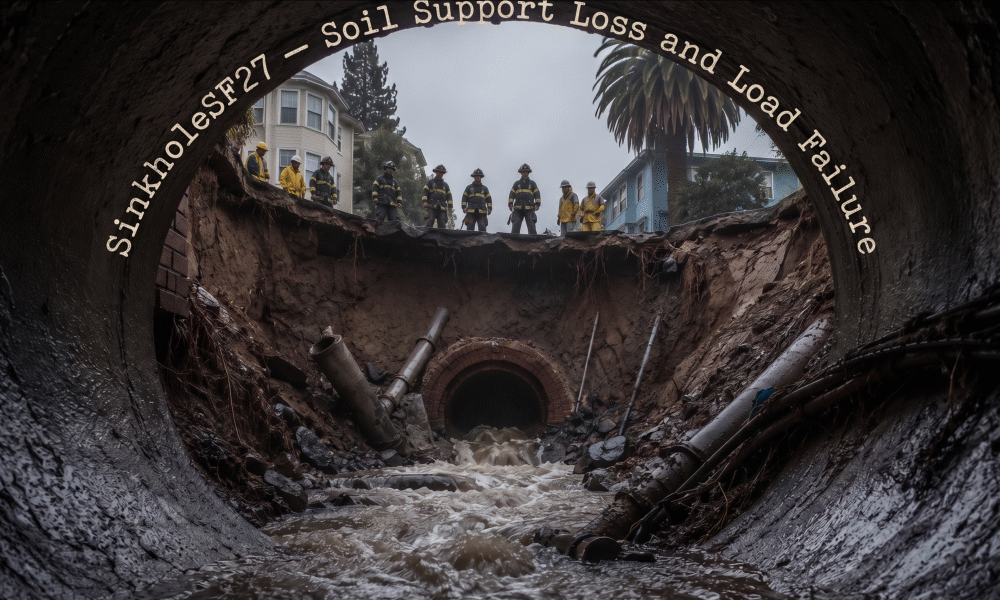
sinkholeSF27 — Soil Support Loss and Load Failure
Structures don’t fail first.
Then everything above follows.
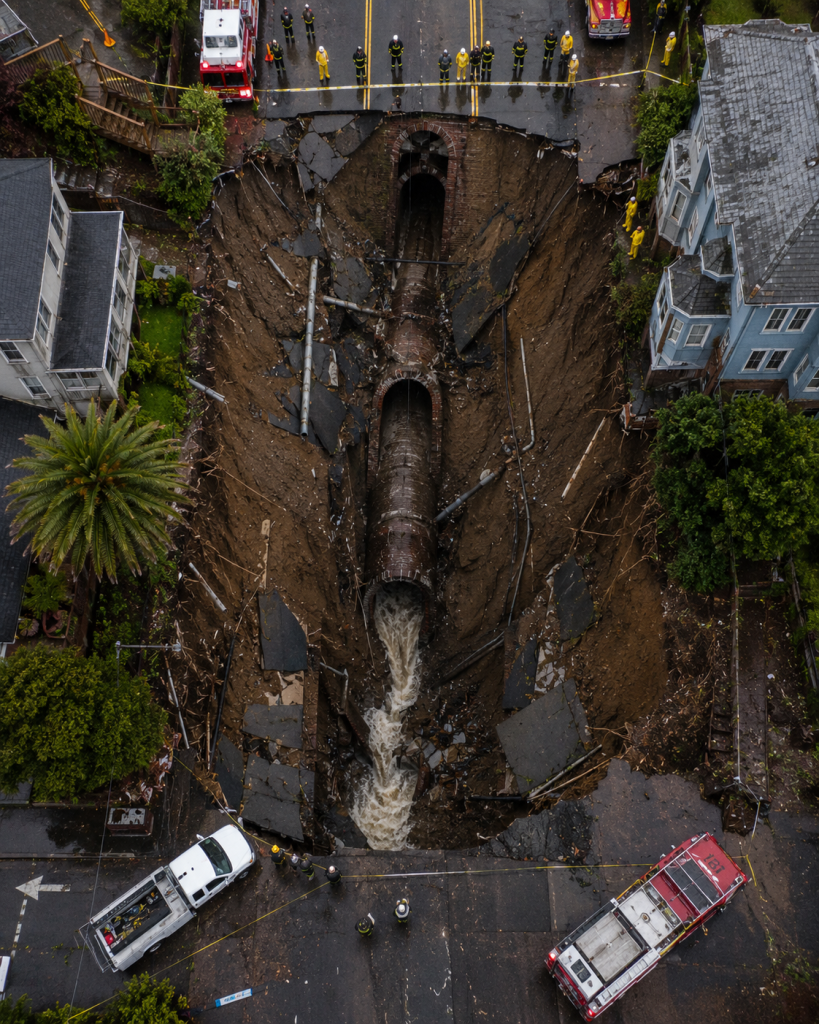
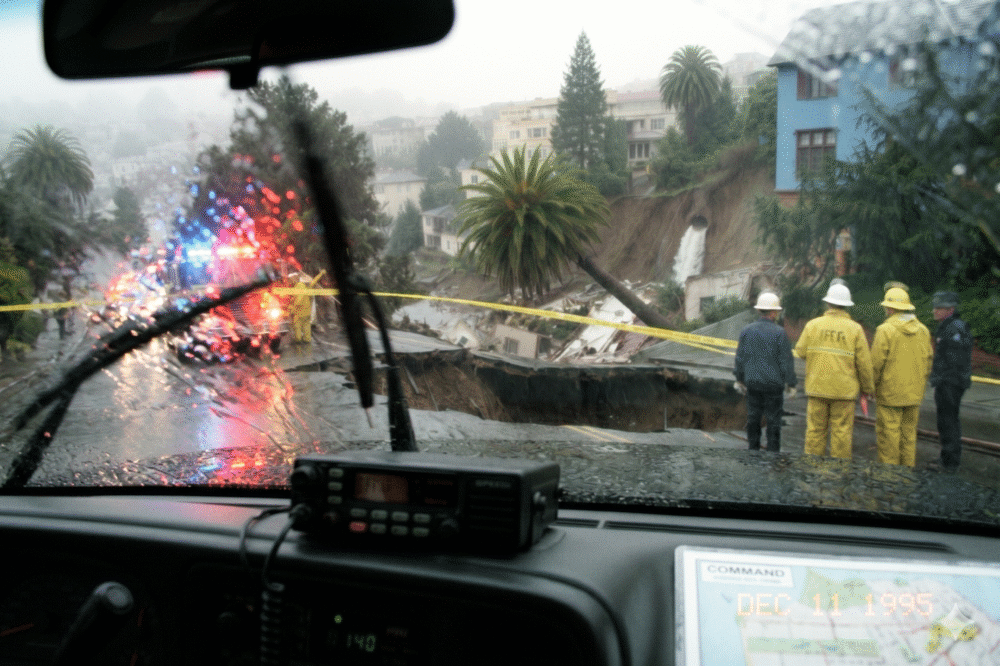
In 1995, a property in San Francisco didn’t collapse because the building was weak.
It collapsed because the soil beneath it stopped carrying the load.
A ~100-year-old sewer line failed under pressure during heavy rain.
Water escaped.
Soil lost density.
Load had nowhere to go.
SYSTEM VS SYMPTOM BREAKDOWN
Structural failure is the visible endpoint.
Load failure is the real issue.
What shows up:
- Foundation cracks
- Sudden settlement
- Structural instability
- Collapse events
What actually failed:
- Soil compaction beneath the structure
- Load-bearing continuity in the ground
- Pipe containment under pressure
- Water control within the system
The structure is only as stable as the soil supporting it.
When support degrades, failure is inevitable.
FAILURE ORIGIN (NOT VISIBLE DAMAGE)
Soil support doesn’t disappear randomly.
It is removed by system failure.
In the San Francisco Bay Area:
- Moisture changes soil behavior
- Movement shifts load distribution
- Aging systems lose containment
That creates a predictable chain:
- Pipe weakens under time and pressure
- Water escapes into surrounding soil
- Soil becomes saturated and loses strength
- Load-bearing capacity decreases
- Structural load exceeds soil support
The failure starts underground.
Where no one is looking.
WHY REPAIRS DON’T SOLVE UNDERLYING CONDITIONS
Repairs focus on restoring flow.
They don’t restore support.
- Stops water at that location
- Does not recompact saturated soil
- Does not restore original load-bearing capacity
- Does not address other compromised sections
The system remains unstable:
- Soil conditions are altered
- Load distribution is uneven
- Adjacent pipe sections are still aging
So the risk persists.
And often increases.
Repairs stabilize one point.
The system continues to degrade elsewhere.
SYSTEM ALIGNMENT VS PATCHWORK
Load stability depends on system consistency.
Aligned system:
- Maintains full containment of water
- Prevents soil saturation
- Distributes pressure evenly
- Supports stable interaction with surrounding ground
Patched system:
- Allows inconsistent water escape
- Creates uneven soil moisture conditions
- Introduces pressure variability
- Concentrates stress at repair points
Every inconsistency affects load distribution.
Every imbalance increases structural risk.
Especially in environments defined by movement and moisture.
INFRASTRUCTURE → HOME (PATTERN TRANSLATION)
The same load failure pattern applies at the residential level.
Infrastructure scale → Home scale
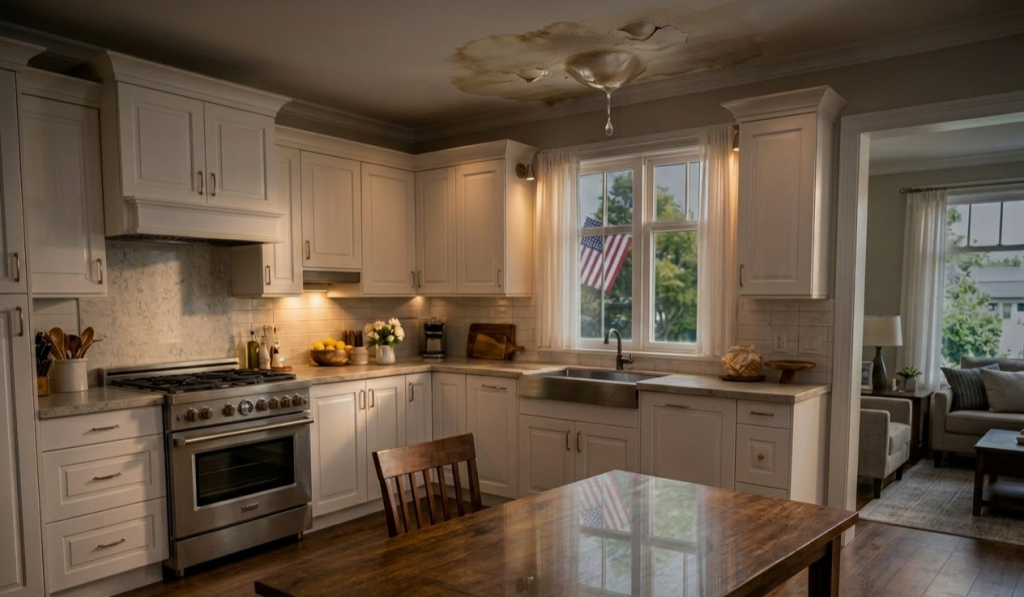
- Sewer failure → Plumbing system leak
- Soil saturation → Loss of ground stability under the home
- Reduced load capacity → Foundation stress
- Collapse → Structural damage inside the property
The physics doesn’t change.
Only the scale does.
LOAD FAILURE IN RESIDENTIAL SYSTEMS
Most homes don’t recognize support loss early.
Because it starts below the structure.
Early indicators:
- Minor leaks near foundation areas
- Subtle shifts in flooring
- Slight changes in door or window alignment
Mid-stage indicators:
- Repeated plumbing issues
- Noticeable settling or uneven floors
- Cracks forming in walls or slab
Late-stage indicators:
- Structural instability
- Significant foundation movement
- Major failure events
By the time visible damage appears—
load support has already been compromised.

THE DECISION POINT
You can repair pipes as they fail.
Or you can stabilize the system that supports the structure.
One treats symptoms.
The other addresses the cause.
STABILIZE THE SYSTEM BEFORE LOAD FAILURE
A full home repipe prevents soil support loss at the source.
- Eliminates aging, failure-prone piping
- Maintains water containment across the entire system
- Prevents soil saturation and compaction loss
- Aligns plumbing performance with environmental conditions
This is not about fixing a leak.
It’s about protecting structural support.
Because when the ground stops carrying the load—
the structure has no backup.