




Finger-in-the-Dike Emergency Water Line Breach Control Failure
Over the past decade, property values and plumbing system complexity have increased across markets like Fremont and San Jose, while enforcement and verification standards have not kept pace.
As a result, homeowners are often forced to make high-risk decisions without visibility into system behavior.
Comparable conditions appear in cities like Chicago and Philadelphia, where aging infrastructure and layered modifications increase uncertainty.
This case involves no contractor participation.
The homeowner performed all actions.
Initial Conditions
A 1,600 sq ft two-story rental property built in the early 1990s was being prepared for a future repipe.
The system showed mild symptoms, including fluctuating water temperature, sediment in faucet aerators, and occasional water hammer.
Additionally, slow hot water delivery and minor pressure inconsistency had been observed.
No pipe mapping had been completed.
No stud scanning or inspection had been performed.
The main shut-off valve was located in a locked shared mechanical room without immediate access.
1. Finger-in-the-Dike Emergency Water Line Breach Control Failure
2. Refrigerant Line Misidentification During Plumbing Routing Failure
3. Copper-to-Galvanized Direct Connection Electrolysis Failure
4. Open-Flame Soldering Ignition Inside Concealed Wall Cavity
5. Improvised Hose-Based Main Supply Line Structural Failure
6. Water-to-Gas System Cross-Connection Infrastructure Contamination Event
7. Thermal Exposure-Induced PEX Deformation and Rupture Failure
8. Improper Push-Fitting Installation Seal Integrity Failure
9. Back-Pitched Drain Line Waste Accumulation and Pressure Failure
10. Plumbing System Grounding Interruption Electrical Shock Event
What the Homeowner Thought
The homeowner believed they were performing a simple wall opening.
The task appeared isolated and low-risk.
Cutting framing was assumed to be unrelated to plumbing system behavior.
Control of the water system was not considered part of the decision.

What Was Actually Happening
Pressurized copper potable water lines were routed through the wall cavity.
System pressure remained at approximately 70 PSI, consistent with municipal supply in high-density regions like Los Angeles and Denver.
No local isolation valves existed within the unit.
Fixture shutoffs did not control upstream flow.
Any breach would result in continuous discharge until the full system was shut down.
Homeowner Action (DIY – No Contractor Involved)
No contractor was involved at any stage of this event.
The homeowner independently initiated wall cutting.
A reciprocating saw was used to cut into a wall cavity.
No scanning, inspection, or verification was performed prior to cutting.
No pressure reduction or isolation plan was established.
No access to the main shut-off was secured before starting.
Failure Trigger
The saw blade penetrated a 3/4-inch pressurized copper line.
Immediate high-volume discharge began under full system pressure.
Water entered the wall cavity without restriction.
No accessible shut-off was available to stop the flow.
The homeowner physically attempted to block the water.
This continued for approximately three hours.
Why It Was Not Visible at Install
Pipe routing inside walls is not visible without verification.
Horizontal and vertical repiping paths often intersect within framing cavities.
Legacy layouts and partial upgrades increase unpredictability.
Symptoms such as noise or pressure variation do not indicate pipe location.
Homeowners are not expected to identify these conditions without proper tools.
Execution & Escalation
Water spread vertically across multiple wall bays.
Moisture entered subfloor assemblies.
Electrical exposure risk increased inside the wall.
Baseboards began to warp.
Damp ceiling spots developed below.
Moisture accumulated behind drywall, creating mold risk.
Extent of Damage
An estimated 800 to 1,000 gallons of water were released.
Wall insulation became saturated.
Drywall integrity failed across multiple sections.
Subfloor swelling required removal and replacement.
Moisture remediation became necessary to prevent long-term damage.
What Professionals Verify
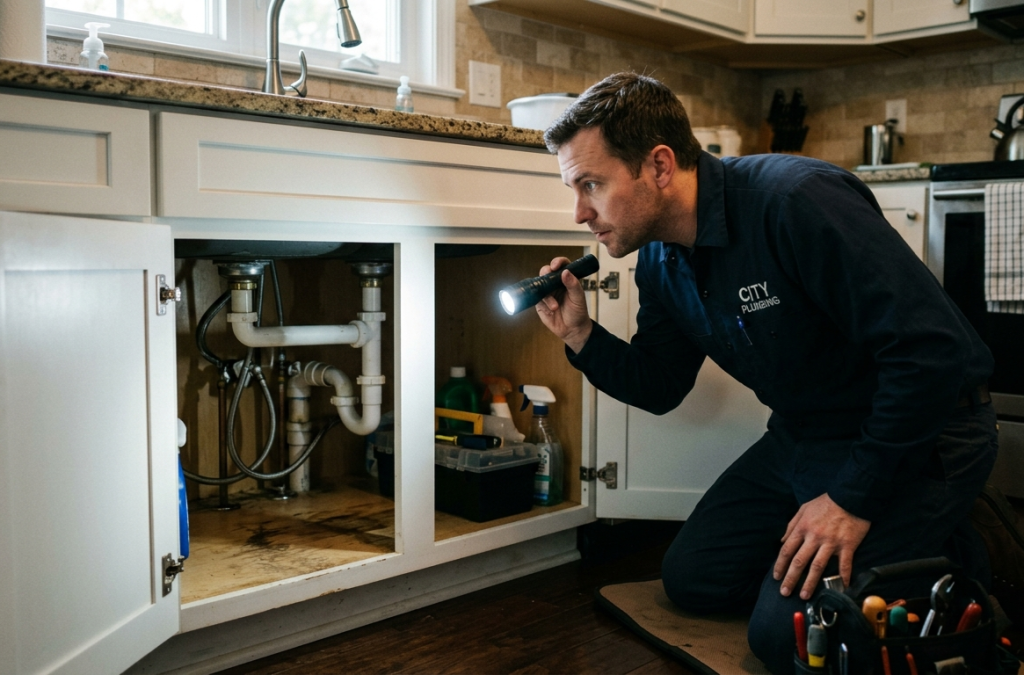
Professionals establish system control before any intrusion.
Main shut-off access is confirmed.
Temporary water bypass systems are installed when required.
Pipe routing is verified using non-invasive methods.
Material conditions such as Type L vs Type M copper or CPVC brittleness are evaluated.
Isolation strategy is defined before cutting begins.
Decision Distortion
The homeowner believed the decision was about where to cut.
The actual decision was whether the system was controlled.
Visible work suggested simplicity.
Hidden system pressure determined the outcome.
This gap creates risk that is not apparent during the decision moment.
Broader Pattern
This pattern appears across multiple regions.
In Boston, layered retrofits increase routing uncertainty.
In Minneapolis, system stress compounds under seasonal pressure changes.
Across markets, the initiating event is often minor.
The escalation is driven by lack of isolation control.
The breach is not the primary failure.
Loss of control is.
Process Context
A whole-house repipe is a controlled process.
Water systems are stabilized before any wall access occurs.
Routing is verified before intrusion begins.
PEX-A or Type L copper transitions are planned in advance.
Manifold or trunk-and-branch systems are evaluated based on structure.
Drywall access is strategic and limited.
Water service is restored in a controlled sequence.
Permitting & Compliance
City plumbing permits typically require inspection of system modifications.
Compliance affects insurance eligibility and resale value.
Uncontrolled events may complicate insurance claims.
Documentation of licensed, bonded, and insured work becomes critical.
DIY actions fall outside structured compliance frameworks.
Outcome Shift
The primary failure was not the pipe strike.
The failure was the absence of system isolation before cutting.
If shut-off access had been secured, the event would have remained contained.
Damage would have been limited to a localized repair.
Instead, full system pressure converted a minor mistake into a major loss.

Cost & Decision Considerations
Repair costs extended beyond plumbing.
Drywall patching and texture matching were required.
Electrical inspection added additional scope.
Moisture remediation increased total project cost.
Time delays impacted occupancy and rental income.
Financial exposure was driven by lack of preparation, not the initial cut.
Key Takeaway
No contractor was involved in this event.
All actions were performed by the homeowner.
The decision was not about cutting drywall.
The decision was about controlling a pressurized system.
System behavior determines outcome.
Control reduces damage.
Assumption increases risk.