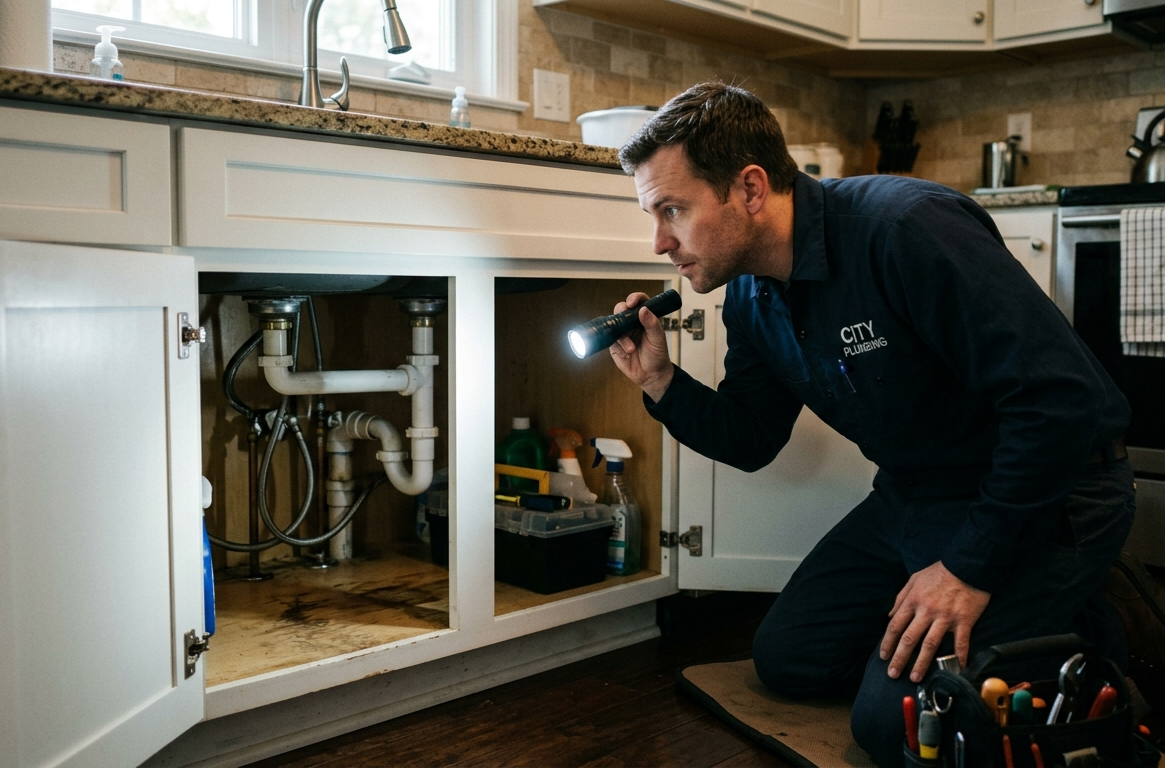
California

Property values across California have surged over the past decade. Construction systems have become more advanced. Digital contractor visibility expanded across search platforms and directories. Meanwhile, the number of plumbing contractors competing for attention increased dramatically.

However, standards enforcement has not expanded at the same pace. As a result, homeowners must navigate a high-noise environment when making infrastructure decisions. Plumbing failures can create substantial financial damage in high-equity housing markets.

California serves as a statewide framework explaining how homeowners evaluate plumbing infrastructure risk in regions such as the San Francisco Bay Area, Los Angeles, and surrounding Western markets.

This guidance is supported by Plumbing Whole Home Repipe, a standards-focused system designed to help homeowners make informed decisions through objective evaluation criteria rather than marketing claims.
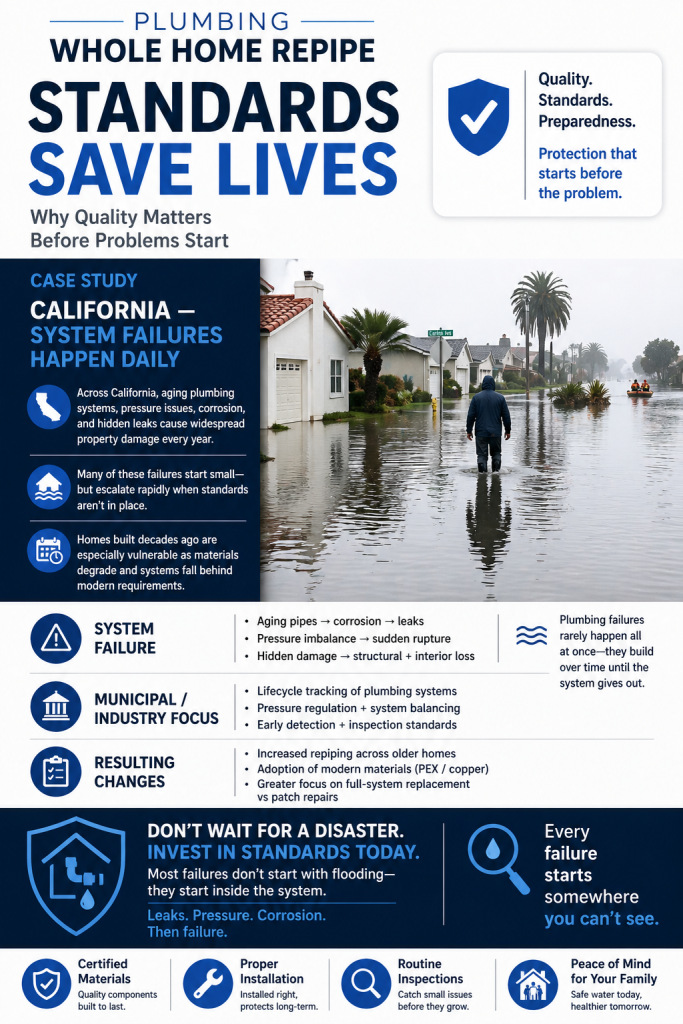
11 Plumbing/Pipe/Dam Disasters in California
1. Baldwin Hills Dam Collapse — Los Angeles, California (1963)
A hillside dam failed without warning, sending millions of gallons into a residential neighborhood in minutes.
2. San Francisco Sinkhole That Swallowed a Mansion — San Francisco, California (1995)
An aging sewer line collapsed underground, causing the street and an entire mansion to disappear into a 40-foot sinkhole.
3. Fresno Toxic Water Crisis From Corroded Pipes — Fresno, California (2016)
Internal pipe corrosion contaminated residential water supplies, exposing thousands of homes to unsafe drinking conditions.
4. Oroville Dam Spillway Failure Threatens Homes — Oroville, California (2017)
Structural failure at a major dam triggered mass evacuations as downstream residential areas faced catastrophic flood risk.
5. Yuba County High-Pressure Pipe Rupture Floods Area — Yuba County, California (2026)
A massive pressurized pipe burst released uncontrolled water, causing rapid flooding and structural damage.
6. Yuba–Sutter Levee Break Flood Disaster — Yuba City, California (1955)
A levee failure redirected floodwaters into residential zones, destroying homes and overwhelming entire communities.
7. Hillside Home Collapse From Hidden Water Line Leak — Studio City, Los Angeles (2000s)
A slow underground leak saturated the soil beneath a home, eventually causing the foundation to shift and collapse.
8. Slab Leak Erupts Beneath Home and Destroys Interior — San Jose, California (2010s)
A ruptured pipe under the slab forced water upward, buckling floors and flooding the entire interior.
9. Toilet Supply Line Burst Floods Entire Home During Vacation — Anaheim, California (2010s)
A small supply line failure ran unchecked for days, filling the home with water and causing total interior loss.
10. Sewer Backup Floods Coastal Home With Wastewater — Pacifica, California (2010s)
Storm overload forced sewage back through residential drains, contaminating the home from the inside out.
11. Attic Pipe Burst Sends Water Through Ceilings — Sacramento, California (Cold Snap Event)
A frozen pipe burst above the ceiling, sending water cascading down and destroying multiple rooms below.
Why Aging Plumbing Infrastructure Creates Risk in California Housing
Residential equity across California has increased dramatically. Homes throughout Silicon Valley, Wine Country, Los Angeles, and coastal markets now represent significant financial assets.
Higher property values increase the consequences of plumbing failure.
A hidden leak inside a multi-million-dollar home can cause structural damage that affects framing, insulation, cabinetry, and flooring. Repair costs escalate rapidly when moisture spreads through construction materials. California housing infrastructure includes millions of homes built during the mid-twentieth century when galvanized steel plumbing systems were standard.
Those systems are now approaching the end of their functional lifespan. Galvanized pipes corrode gradually from the inside. Mineral buildup accumulates along interior pipe walls. Internal diameter shrinks slowly. Pressure instability increases as corrosion progresses. Eventually structural failure occurs.
Regional Plumbing Stressors Across the San Francisco Bay Area
Peninsula Marine Exposure
Homes along the Peninsula experience constant marine exposure. Salt particles in coastal air accelerate corrosion in metal plumbing components and water heater fittings.
East Bay Mineral Accumulation
Communities in the East Bay encounter higher mineral content in groundwater. Mineral deposits accumulate inside pipes and appliances over decades, restricting flow capacity.
North Bay Sediment Density
Properties across the North Bay and Wine Country, including Napa and Santa Rosa, frequently experience heavy sediment buildup inside water heaters due to regional water chemistry.
South Bay Legacy Stocks
San Jose and Cupertino contain thousands of mid-century homes built during early expansion that still rely on aging plumbing infrastructure installed decades ago.
Santa Clara County
Verified Plumbing Contractor Performance Standards
Alameda County
Plumbing Contractor Standards & Reliability Audit
Contra Costa County
Verified Contractor Standards for Plumbing Services
San Mateo County
Plumbing Contractor Performance & Safety Standards
San Francisco
Urban Plumbing Contractor Standards & Compliance Audit
Marin County
Verified Plumbing Contractor Reliability Standards
Sonoma County
Plumbing Contractor Standards & Performance Data
Solano County
Verified Contractor Standards for Residential Plumbing
Napa County
Plumbing Contractor Performance & Quality Standards
Failures That Damage Statewide Plumbing
Thermal Stress Propagation
Water heaters in California homes accumulate sediment over decades of use. In mineral-rich regions, a dense layer forms at the base of the tank. That layer traps heat and amplifies pressure fluctuations during thermal cycles.
Temperature stress transfers directly to connected distribution lines. Galvanized pipes under thermal stress experience accelerated internal corrosion and eventual structural fatigue. Leaks that begin inside walls may remain undetected for months before visible damage appears.
Water Softener Regulation Gaps
California homes in hard-water regions commonly use water softener systems. When softener brine tanks develop leaks or pressure regulators malfunction, abnormal pressure conditions spread throughout the distribution network.
Older galvanized pipe walls are especially vulnerable to those pressure surges. Internal corrosion weakens structural integrity while hydraulic instability accelerates material fatigue across all connected supply lines.
Modern Residential Repiping and Infrastructure Restoration
High-Elasticity PEX-A
PEX-A provides flexibility and expansion tolerance. The material can absorb pressure fluctuations without cracking, providing an ideal solution for complex California home layouts.
Durable Type L Copper
Type L copper remains a trusted solution for high-value California homes, offering strong corrosion resistance and reliable long-term hydraulic performance.
Technical Precision Audit
Supply lines are rerouted through controlled pathways. Modern systems often include upgraded pressure regulators and optimized manifold layouts for safety.
Statewide Permits & Code Compliance
Repiping projects across California must comply with local and state building regulations. Permit requirements vary by jurisdiction. Cities such as San Jose, Los Angeles, San Francisco, and Sacramento maintain distinct inspection frameworks.
Communities in Alameda County, Contra Costa County, San Mateo County, and Marin County follow separate permit structures. Rural jurisdictions in Napa, Sonoma, and Solano Counties also enforce individual code standards.
Improperly permitted repiping projects can create complications during home resale, refinancing, or insurance renewal. California homeowners should verify that all residential plumbing upgrades comply with applicable municipal codes and obtain proper inspection records before project completion.

From Reactive Repair to Proactive Security
Operating Performance
Upgrading systems stabilizes water pressure throughout the home. Daily water flow improves immediately. Metallic taste caused by corrosion disappears entirely.
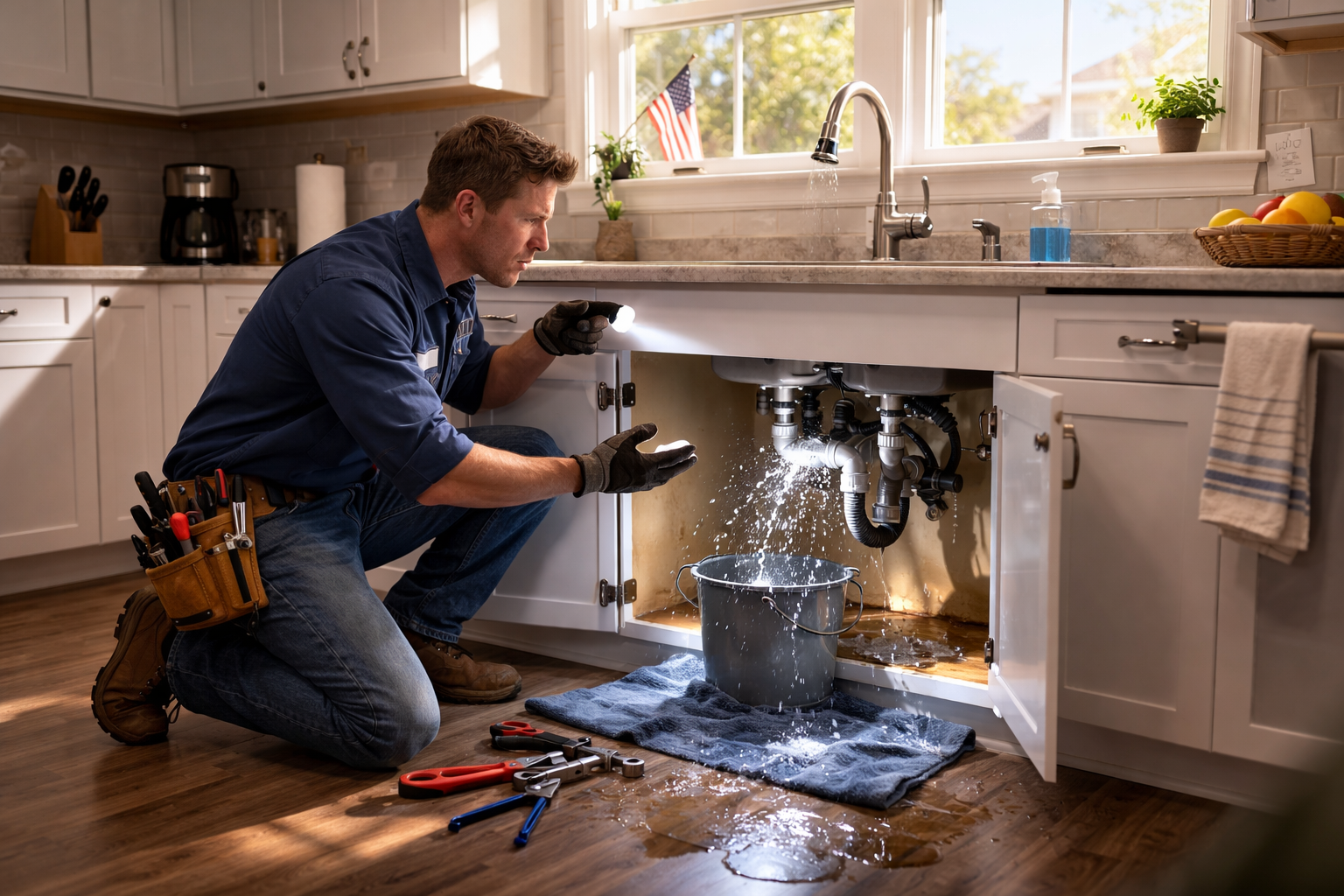

Equity Protection
Insurance providers recognize the value of modern plumbing infrastructure. Updated systems can qualify for reduced premiums and improve appraisal stability during resale.
Western Market Service Coverage
The infrastructure evaluation standards developed by Plumbing Whole Home Repipe apply across California and adjacent Western markets. Primary coverage spans San Francisco Bay Area counties including Santa Clara, Alameda, Contra Costa, San Mateo, Marin, Sonoma, Solano, and Napa. Southern California regions including Los Angeles, Orange County, San Diego, and the Inland Empire are also included.
Extended Western coverage includes Nevada markets such as Reno and Las Vegas, Oregon markets including Portland and Medford, Washington markets including Seattle and Bellevue, Idaho markets including Boise, and additional high-equity housing regions throughout the Western United States. Across all regions, plumbing infrastructure risk follows the same fundamental patterns driven by pipe age, material composition, and water chemistry.