
Uninsulated Cold Line Condensation and Structural Moisture Damage
In coastal pockets like Pacifica and Daly City, exterior wall cavities often experience temperature swings combined with marine-layer humidity.
Meanwhile, similar moisture-driven failures appear in places like Charleston and New Orleans where ambient humidity remains elevated year-round.
As construction complexity rises and enforcement lags, hidden moisture risks increase inside otherwise functional systems.
Consequently, homeowners are left making high-risk decisions without visibility into environmental interaction.
Within this environment, Plumbing Whole Home Repipe positions decisions around system behavior rather than surface symptoms.
Fewer variables reduce error.
More options increase risk.
No contractor was involved in this installation.
All work was performed by the homeowner.
Initial Conditions
Inside a 2,100 sq ft home, cold potable water lines were routed through exterior walls.
Those walls experienced daily temperature differentials between interior conditioned air and exterior exposure.
Early signals included fluctuating water temperature, slow hot water delivery, and occasional water hammer.
Additionally, low water pressure at certain fixtures and sediment in faucet aerators were observed.
At times, occupants noticed metallic tasting water and intermittent damp ceiling spots near exterior walls.
The system included PEX piping with no insulation barrier.
Environmental exposure was not evaluated during installation.
What the Homeowner Thought
At first glance, cold water lines appeared unaffected by temperature conditions.
Because water was not heated, insulation seemed unnecessary.
Routing through exterior walls appeared efficient.
The system functioned immediately after installation.
Attention stayed on restoring flow and resolving prior issues like pinhole leaks in copper.
Moisture behavior inside wall cavities was not considered.
What Was Actually Happening
When humid air contacts cold pipe surfaces, condensation forms.
That moisture accumulates continuously under stable conditions.
Over time, droplets formed along uninsulated PEX lines.
Water collected and saturated surrounding insulation and framing.
Unlike slab leak symptoms or visible failures, this process remained silent.
No burst or rupture occurred.
Instead, persistent moisture exposure drove wood decay.
Mold began developing behind drywall within weeks.
The system entered a slow, non-visible structural degradation phase.
21. Uninsulated Cold Line Condensation and Structural Moisture Damage
22. Chemical Exposure-Induced PEX Material Degradation Failure
23. Manifold Flow Imbalance and Uneven Pressure Distribution Failure
24. Improper Water Heater Transition Connection Thermal Failure
25. Shutoff Valve Non-Verification Isolation Failure Event
26. Unpermitted Plumbing System Installation Insurance Liability Failure
27. Improper Sewer Line Slope and Chronic Waste Blockage Failure
28. Air Entrapment Shockwave and System Pressure Surge Failure
29. Post-Repipe Fixture Load Expansion System Capacity Failure
Homeowner Action (DIY – No Contractor Involved)
At no point was a licensed plumber involved.
The homeowner installed cold lines without insulation.
PEX-A vs PEX-B selection was not evaluated in relation to condensation behavior.
No vapor barrier or thermal wrap was applied.
Exterior wall routing prioritized convenience.
Environmental interaction was not assessed.
Failure Trigger
Within approximately 30 to 60 days, condensation saturated insulation layers.
Moisture remained trapped inside sealed wall cavities.
Over several months, wood framing began to absorb water.
Structural components weakened gradually.
By the six-month mark, mold colonies expanded across multiple wall sections.
Failure emerged as a building condition, not a plumbing event.
Why It Was Not Visible at Install
Immediately after installation, the system delivered water normally.
No leaks or pressure issues appeared.
Condensation develops only under repeated environmental cycles.
Short-term testing does not reveal moisture accumulation.
In homes like those in Pacifica, coastal humidity accelerates this process.
Homeowners are not expected to evaluate vapor dynamics inside walls.
Execution & Escalation
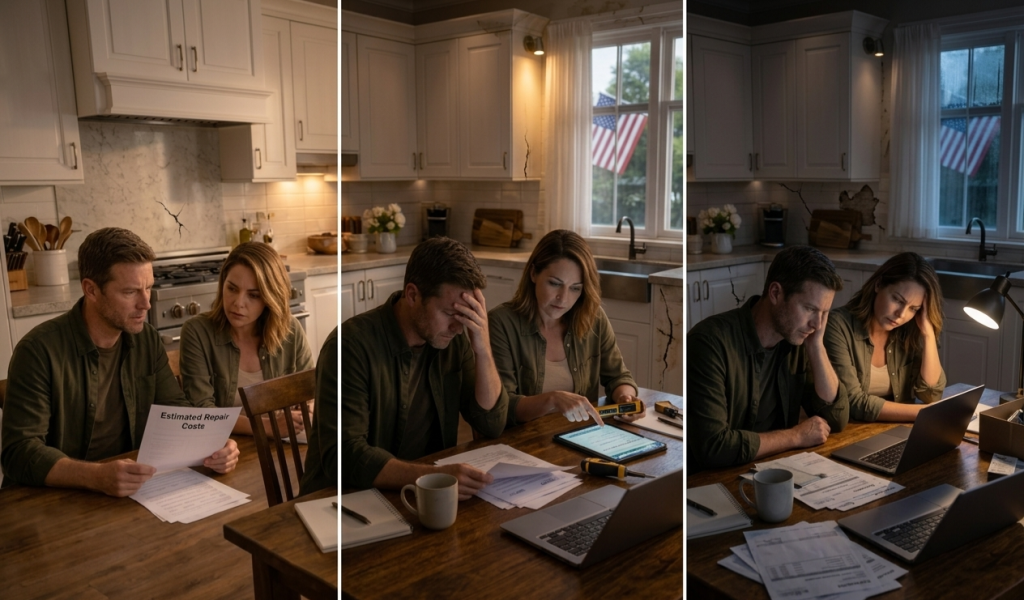
As moisture accumulated, drywall began to soften internally.
Exterior walls developed hidden saturation zones.
Eventually, visible signs appeared.
Paint bubbling and warped baseboards signaled deeper issues.
Mold spread behind drywall into adjacent framing.
Air quality declined over time.
Extent of Damage
No pipe rupture occurred.
Water delivery remained intact.
However, mold growth affected multiple wall cavities.
Wood rot developed along structural framing members.
Exterior wall sections required removal.
Reconstruction extended beyond plumbing into structural repair.
What Professionals Verify
Professionals evaluate environmental exposure before routing lines.
They insulate cold water pipes in humid or exterior-facing conditions.
Thermal barriers are installed to prevent condensation formation.
Vapor control strategies are integrated into system design.
Material choices such as copper repipe vs PEX are considered alongside placement.
Verification ensures long-term performance under real climate conditions.
Decision Distortion
The homeowner believed the decision involved routing cold water lines.
The actual decision involved managing condensation within enclosed spaces.
Visible functionality suggested success.
Hidden moisture interaction determined outcome.
This gap created delayed structural damage.
Broader Pattern
In San Francisco coastal zones, similar condensation failures appear in exterior walls.
Across New Orleans and Charleston, humidity-driven moisture damage is common.
Contractor standards data shows these failures often emerge within 30 days and expand over 6 months.
Longer timelines can extend to 2 years if undetected.
The system appears stable initially.
Damage develops through environmental interaction.
Process Context
A whole-house repipe is executed as a controlled and low-impact system upgrade.
Routing decisions consider both water delivery and environmental exposure.
PEX-A systems using an Uponor expansion system or Type L copper transitions are selected based on conditions.
Drywall access is surgical and minimized.
Water bypass systems maintain service during installation.
Same-day water restoration is balanced with full verification.
Non-invasive repiping strategies reduce unnecessary structural impact.
Permitting & Compliance
City plumbing permits often require adherence to insulation and placement standards.
Building code inspections may evaluate moisture control in exterior walls.
Improper installation can affect homeowners insurance coverage.
Resale value ROI may be impacted by documented mold and structural damage.
Licensed, bonded, and insured professionals ensure compliance across system and structure.
Outcome Shift
The failure did not originate from pipe material or pressure.
It resulted from unaddressed condensation in a humid environment.
If insulation had been applied, moisture would not have accumulated.
The system would have remained stable over time.
Instead, environmental exposure created a structural failure condition.
Cost & Decision Considerations
Costs extended into mold remediation and exterior wall reconstruction.
Drywall patching and texture matching expanded across multiple rooms.
Framing repair increased project scope significantly.
Timelines extended due to drying and rebuilding requirements.
Financial exposure exceeded initial expectations.
Placement decisions determined total impact.
Key Takeaway
No contractor was involved in this installation.
All work was performed by the homeowner.
The decision was not about routing cold water lines.
The decision was about managing moisture within the system environment.
Condensation creates hidden damage.
Insulation prevents structural loss.
Assumption leads to long-term failure.