



Improper Water Heater Transition Connection Thermal Failure
In established neighborhoods like San Rafael and Pleasant Hill, water heater replacements often occur alongside repipes without full system coordination.
At the same time, similar failures in Phoenix and Dallas highlight how heat exposure near gas appliances introduces risk when material transitions are ignored.
As systems modernize, thermal zones around heaters remain one of the most sensitive points in the entire plumbing network.
Within this environment, Plumbing Whole Home Repipe frames installation decisions around system behavior, not convenience.
Position determines outcome.
Exposure defines failure.
No contractor was involved in this installation.
All work was performed by the homeowner.
Initial Conditions
Inside a 2,000 sq ft home, a full repipe had been completed using PEX piping across all potable water lines.
A gas water heater remained the central hot water source.
Early signals included fluctuating water temperature, slow hot water delivery, and occasional water hammer.
Additionally, sediment in faucet aerators and intermittent low water pressure had been observed.
Noisy pipes and minor metallic tasting water suggested inconsistent system behavior.
PEX lines were routed directly to the heater connections.
No metallic transition section was installed at the heat source.
What the Homeowner Thought
From the homeowner’s perspective, PEX offered flexibility and ease of installation throughout the system.
Connecting directly to the heater appeared efficient and straightforward.
The assumption was that hot water systems operate within safe limits for all materials.
The connection seemed complete once fittings were secured.
Focus remained on completing the repipe quickly.
Thermal exposure at the heater interface was not considered.
What Was Actually Happening
Gas water heaters generate high localized heat at connection points.
Temperature at these zones exceeds the tolerance range for direct PEX exposure.
Without a metallic transition, radiant heat transfers directly into the pipe material.
Over time, the PEX begins to soften and lose structural integrity.
Thermal cycling from repeated heating expands and contracts the material.
Pressure rebalancing compounds stress at the connection.
Unlike CPVC brittleness or galvanized steel corrosion, this degradation occurs rapidly.
The system entered a short-cycle thermal failure condition.
21. Uninsulated Cold Line Condensation and Structural Moisture Damage
22. Chemical Exposure-Induced PEX Material Degradation Failure
23. Manifold Flow Imbalance and Uneven Pressure Distribution Failure
24. Improper Water Heater Transition Connection Thermal Failure
25. Shutoff Valve Non-Verification Isolation Failure Event
26. Unpermitted Plumbing System Installation Insurance Liability Failure
27. Improper Sewer Line Slope and Chronic Waste Blockage Failure
28. Air Entrapment Shockwave and System Pressure Surge Failure
29. Post-Repipe Fixture Load Expansion System Capacity Failure
Homeowner Action (DIY – No Contractor Involved)
No licensed plumber or repipe specialist participated in this installation.
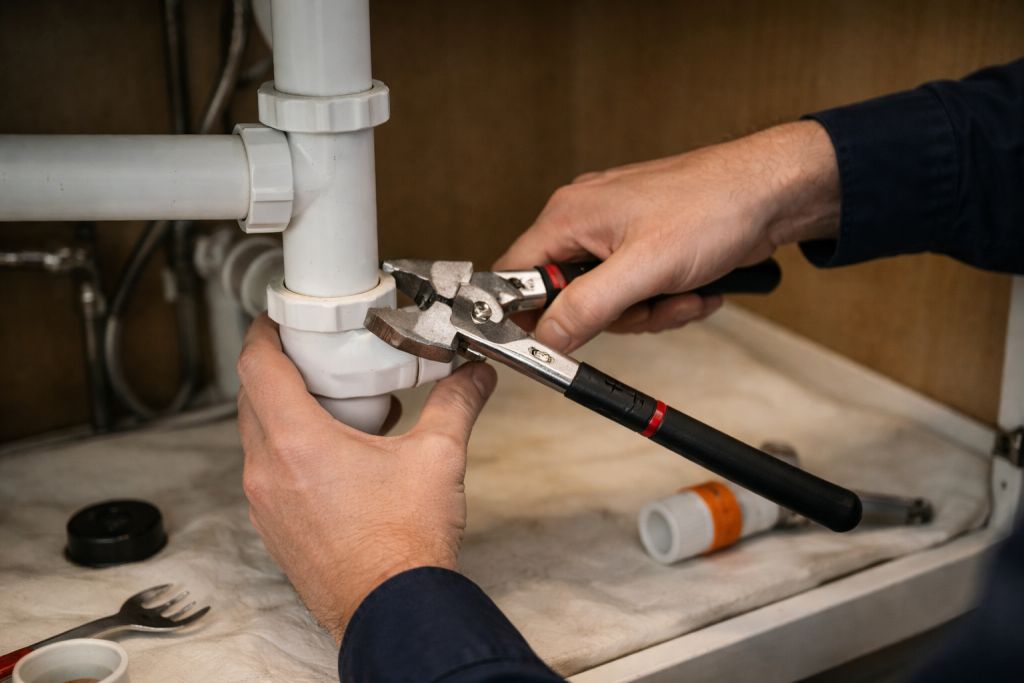
The homeowner independently connected PEX directly to the water heater.
PEX-A vs PEX-B selection was not evaluated in relation to heat exposure.
No copper or stainless steel transition lines were installed.
Main shut-off valves and angle stops were updated elsewhere in the system.
However, heater connection standards were not followed.
Failure Trigger
Within approximately two to three weeks, heat exposure weakened the PEX at the connection point.
Repeated thermal cycling accelerated material breakdown.
Eventually, the pipe deformed under pressure.
A rupture occurred at the heater connection.
Failure was sudden.
No gradual leak preceded the event.

Why It Was Not Visible at Install
Immediately after installation, the system delivered hot water normally.
Temperature and pressure appeared stable during initial use.
Thermal degradation develops under repeated heating cycles.
Short-term testing does not reveal material limits.
In homes like those in San Rafael, concealed mechanical areas hide early-stage deformation.
Homeowners are not expected to evaluate heat zones without system knowledge.
Execution & Escalation
Following rupture, high-temperature water discharged rapidly into the utility area.
Water temperature approached scalding levels.
Localized flooding developed within minutes.
Cabinet bases and surrounding materials absorbed heat and moisture.
Warped baseboards and damp ceiling spots appeared nearby.
Damage escalated quickly due to both pressure and temperature.
Extent of Damage
The rupture caused localized but severe damage.
Flooring and wall materials near the heater were affected.
Mold behind drywall became a risk due to retained moisture.
Insulation required removal in the affected zone.
The failure remained contained to the immediate area.
However, intensity of damage was high.
What Professionals Verify
Professionals install metallic transition lines at water heater connections.
They isolate heat exposure from flexible piping materials.
Type L copper or stainless connectors are used near heaters.
PEX systems are transitioned outside thermal zones.
Manifold systems or trunk and branch plumbing layouts are designed with heat awareness.
Verification ensures compatibility between materials and environment.
Decision Distortion
The homeowner believed the decision involved completing a connection.
The actual decision involved managing thermal exposure at a critical system point.
Visible simplicity suggested compatibility.
Hidden heat conditions determined failure.
This mismatch created a rapid and localized failure.
Broader Pattern
In Oakland remodels, similar heater connection failures appear after PEX repipes.
Across Phoenix and Dallas, elevated ambient temperatures amplify these risks.
Contractor standards data shows failures often occur within weeks.
Thermal stress accelerates degradation quickly.
The system appears functional initially.
Failure develops under normal heating cycles.
Process Context
A whole-house repipe is executed as a controlled and surgical system upgrade.
Material transitions are planned based on environmental exposure.
PEX-A systems using an Uponor expansion system or Type L copper transitions are selected intentionally.
Horizontal vs vertical repiping strategies consider heat zones.
Drywall access is strategic and minimal.
Water bypass systems maintain service during installation.
Same-day water restoration is balanced with full system verification.
Permitting & Compliance
City plumbing permits require proper installation near heat-producing appliances.
Building code inspections verify safe material transitions.
Improper connections may affect homeowners insurance coverage.
Resale value ROI can be impacted by documented failures.
Licensed, bonded, and insured professionals ensure compliance with safety standards.
Outcome Shift
The failure did not originate from system pressure or general installation.
It resulted from improper material transition at a high-heat location.
If a metallic transition had been installed, the connection would have remained stable.
The system would have operated safely under normal conditions.
Instead, direct exposure caused rapid material failure.
Cost & Decision Considerations
Costs extended into localized repair and material replacement.
Drywall patching and texture matching were required near the heater area.
Cleanup and drying increased project scope.
Timelines expanded due to remediation.
Financial exposure exceeded expectations for a single connection point.
Transition decisions determined total impact.
Key Takeaway
No contractor was involved in this installation.
All work was performed by the homeowner.
The decision was not about connecting PEX to a water heater.
The decision was about managing heat exposure at critical system transitions.
Heat defines material limits.
Proper transitions prevent failure.
Assumption creates immediate risk.