



Palo Alto Historic Copper Upgrades
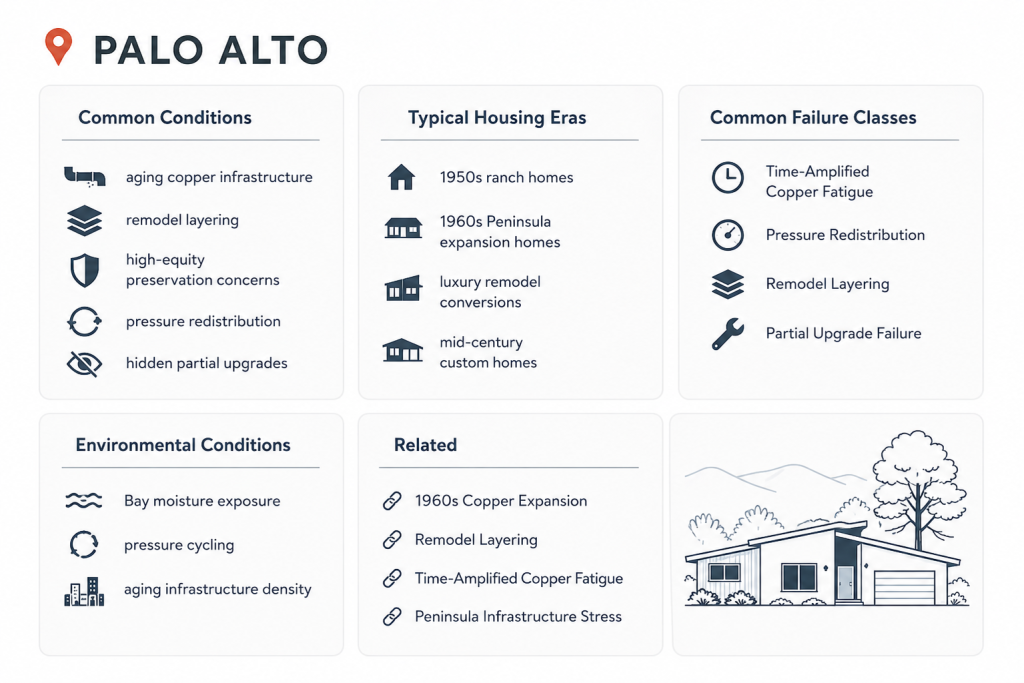
📍 PALO ALTO
Common Conditions
- aging copper infrastructure
- remodel layering
- high-equity preservation concerns
- pressure redistribution
- hidden partial upgrades
Typical Housing Eras
- 1950s ranch homes
- 1960s Peninsula expansion homes
- luxury remodel conversions
- mid-century custom homes
Common Failure Classes
- Time-Amplified Copper Fatigue
- Pressure Redistribution
- Remodel Layering
- Partial Upgrade Failure
Environmental Conditions
- Bay moisture exposure
- pressure cycling
- aging infrastructure density
Related Pages
- 1960s Copper Expansion
- Remodel Layering
- Time-Amplified Copper Fatigue
- Peninsula Infrastructure Stress
Perspective: Preservation + Structural Integrity
When This Becomes a Real Problem (Preservation Trigger)
- You’ve had more than one leak in the last 12–18 months
- You notice green/blue staining on exposed copper
- Crawlspace smells musty or feels damp year-round
- Water pressure has subtly declined over time
- Your home was built before ~1970 and hasn’t been fully repiped

👉 At this point, you’re not maintaining plumbing—you’re risking original structure.
- Palo Alto Historic Copper Upgrades
- Los Altos Hills Custom Estate PEX
- Los Altos Ranch Slab Leak Repair
- Saratoga Hard Water Copper Repiping
- Monte Sereno Luxury Estate Repipe
- Los Gatos Hillside Copper Retrofit
- San Jose Willow Glen Galvanized Pipe Replace
- Rose Garden Historic Mansion PEX
- Almaden Valley Slab Leak Solutions
- Cupertino Ranch Pinhole Leak Fix
THEN → A System Tested by Water
Homes near San Francisquito Creek have already been through decades of stress cycles—especially during the 1998 flood event when overflow pushed water into surrounding Palo Alto neighborhoods.
That wasn’t just a one-time disaster.
It introduced:
- Elevated soil moisture that lingered for years
- Subtle ground movement as saturation levels changed
- Long-term humidity exposure beneath older homes
Historic properties—especially pre-1960 builds—absorbed those conditions into their structure.
NOW → Hidden Degradation Inside the System
The issue today isn’t visible flooding.
It’s what that history did to the plumbing system over time.
Inside many Palo Alto homes:
- Copper lines show internal pitting from prolonged moisture exposure
- Crawlspaces trap humidity, accelerating oxidation
- Small soil shifts create micro-stress at joints and fittings
What looks like a “random leak” is often:
A system that has been slowly degrading for 20–30 years.
FAILURE MECHANICS (What’s Actually Happening)
Copper doesn’t fail all at once—it weakens gradually.
In Palo Alto conditions:
- Moisture + oxygen → oxidation (corrosion layer formation)
- Soil movement → stress concentration at rigid joints
- Pressure cycles → expansion/contraction fatigue
Result:
- Pinhole leaks
- Joint separation
- Sudden failures in previously “fine” lines
Cost of Inaction: Irreplaceable Structural & Architectural Loss
In Palo Alto, especially around older neighborhoods near San Francisquito Creek, the real risk isn’t just water—it’s what water touches.
When a pipe fails in a historic home:
Moisture doesn’t just damage drywall
It saturates original materials that cannot be replaced
That includes:
Hand-troweled lath-and-plaster walls
Old-growth hardwood flooring
Custom millwork from early 20th-century builds
Once those absorb water:
They warp, crack, or delaminate
Restoration becomes partial—not authentic
Insurance replaces materials—not history
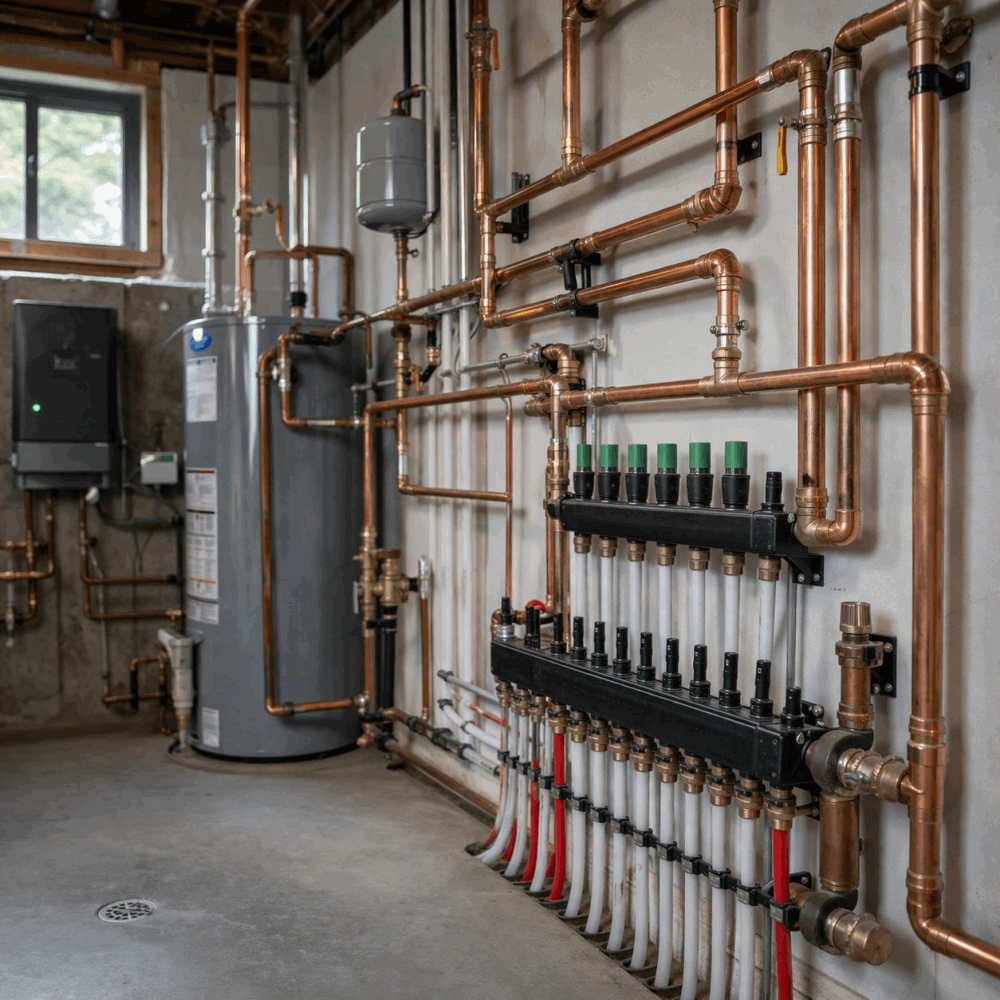
Escalation Path:
Leak → Moisture intrusion → Material loss → Permanent devaluation
👉 Waiting turns a manageable upgrade into irreversible loss of architectural identity
PATTERN RECOGNITION (What Homeowners Notice First)
Most homeowners don’t see the system—they feel it.
Early signs in Palo Alto homes:
- Drop in consistent water pressure
- Slight discoloration (blue/green tint)
- One leak… then another months later
- Longer hot water delivery times
These are not isolated issues.
They are system-level indicators.
THE PRESERVATION FRAME
In Palo Alto, this isn’t just plumbing.
It’s structural preservation.
Historic homes—Craftsman, Eichler-adjacent, mid-century—depend on maintaining internal system integrity without disrupting original construction.
That’s where modern copper upgrades come in.
WHY COPPER (FOR THIS SPECIFIC ENVIRONMENT)
Copper remains the preferred material here because:
- Handles temperature variation + pressure stability
- Resists long-term degradation better than aging lines
- Matches the material expectations of historic builds
- Provides rigid, predictable flow behavior
More importantly:
It restores system reliability without compromising structural authenticity.
PALO ALTO–SPECIFIC UPGRADE STRATEGY
A proper upgrade is not a swap—it’s a redesign.
- Targeted System Mapping
- Identify original routing paths
- Locate stress points from prior movement
- Controlled Access (Minimal Intrusion)
- Preserve walls, finishes, and framing
- Work within crawlspaces and attic pathways
- Pressure Stabilization
- Balance flow across fixtures
- Eliminate surge-related stress
- Long-Term Material Planning
- Use Type L copper where longevity matters most
- Replace vulnerable joints, not just visible failures
LOCAL HOMEOWNER TIPS (PALO ALTO FOCUSED)
- Check Crawlspace Conditions
- Musty smell = elevated moisture
- Moisture = accelerated pipe degradation
- Watch for “Cluster Leaks”
- Two leaks within 12 months = system warning
- Not coincidence—pattern
- Test Water Pressure Consistency
- Fluctuations between fixtures indicate internal restriction or stress
- Inspect for Exterior Signs
- Green staining on exposed copper = oxidation progression
- Know Your Home’s Era
- Pre-1970 systems are often approaching failure thresholds
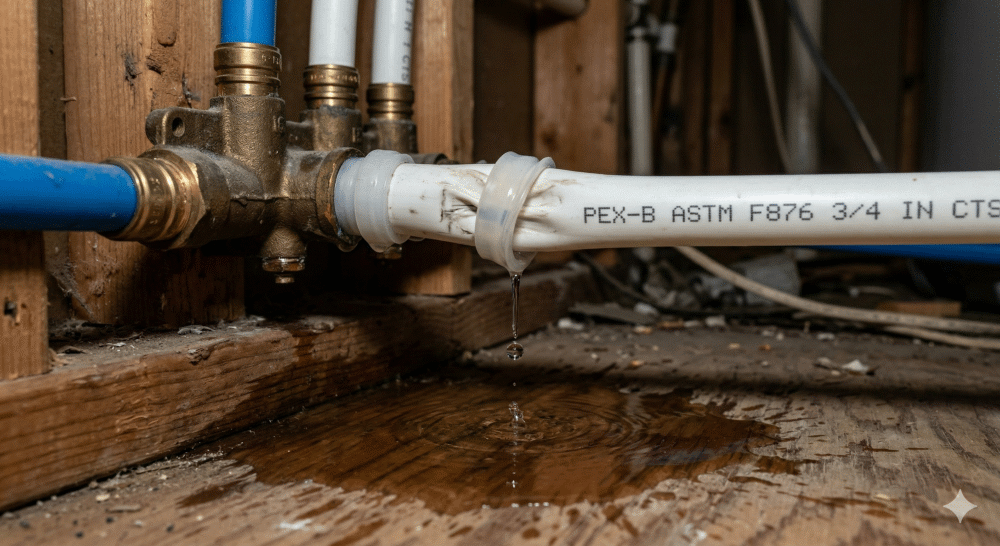
WHAT THIS MEANS FOR YOUR PROPERTY
In Palo Alto, homes that have lasted decades did so because they adapted.
Your plumbing system has not.
A copper upgrade is not about fixing what broke.
It’s about aligning your home’s internal systems with:
- Its environmental history
- Its structural design
- Its long-term preservation
FINAL TAKEAWAY
Floods come and go.
Moisture stays.
Stress accumulates.
Systems fail quietly—until they don’t.
In Palo Alto, upgrading your copper isn’t a repair decision.
It’s a preservation decision.