



🚨 Coyote Creek Flood — Full Breakdown Report
📍 Geographic + Structural Context (Pre-Event Environment)
The event centered around Anderson Reservoir and downstream flow through Coyote Creek into San Jose.

Critical preconditions:
- Reservoir system: Designed for flood control + water storage, but dependent on controlled release timing
- Downstream channel: Coyote Creek running through dense residential zones (Rock Springs, Olinder Park, Naglee Park)
- Urban proximity: Homes built directly adjacent to the creek with limited overflow buffer zones
- System assumption: Creek channel could handle managed releases under typical storm conditions
- Operational dependency: Human-controlled water release decisions under rapidly changing inflow conditions
🌧️ Weather + Environmental Conditions
This was a high-intensity atmospheric river event.
- Prolonged heavy rainfall across Northern California
- Significant runoff + watershed saturation
- Reservoir inflow exceeded forecasted levels
👉 Key dynamic:
Input (rainfall + runoff) exceeded the system’s ability to manage output safely
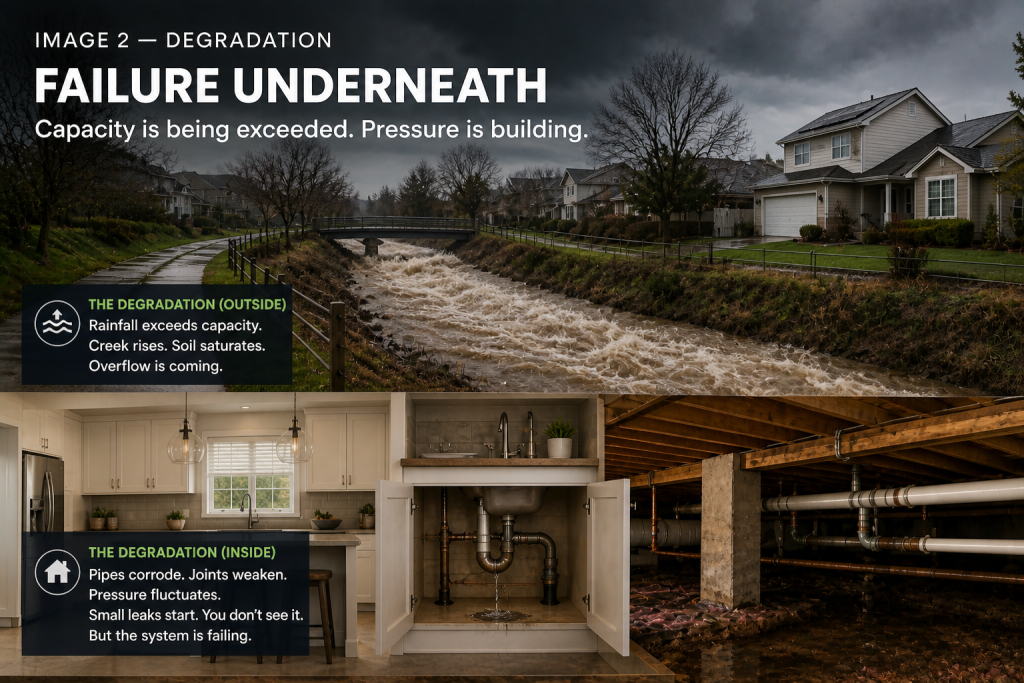
⚙️ Failure Mechanics (What Actually Broke)
Step-by-Step Breakdown
- Rapid Reservoir Inflow (Load Condition)
- Stormwater runoff surged into Anderson Reservoir
- Water levels rose faster than anticipated
- Capacity Threshold Reached
- Reservoir approached the maximum safe storage level
- Risk shifted from downstream flooding → dam safety concern
- Emergency Water Release / Overflow Condition
- Water discharged into Coyote Creek at high volume
- Flow rates exceeded downstream channel capacity
- Channel Overwhelm
- Creek unable to contain increased volume
- Water began to exceed banks
- Loss of Containment Boundary
- Once creek overtopped:
- Defined flow path lost
- Water spread laterally into neighborhoods
- Urban Flood Propagation
- Streets, yards, and homes became secondary flow channels
- Water followed:
- Lowest elevations
- Street grids
- Drainage pathways
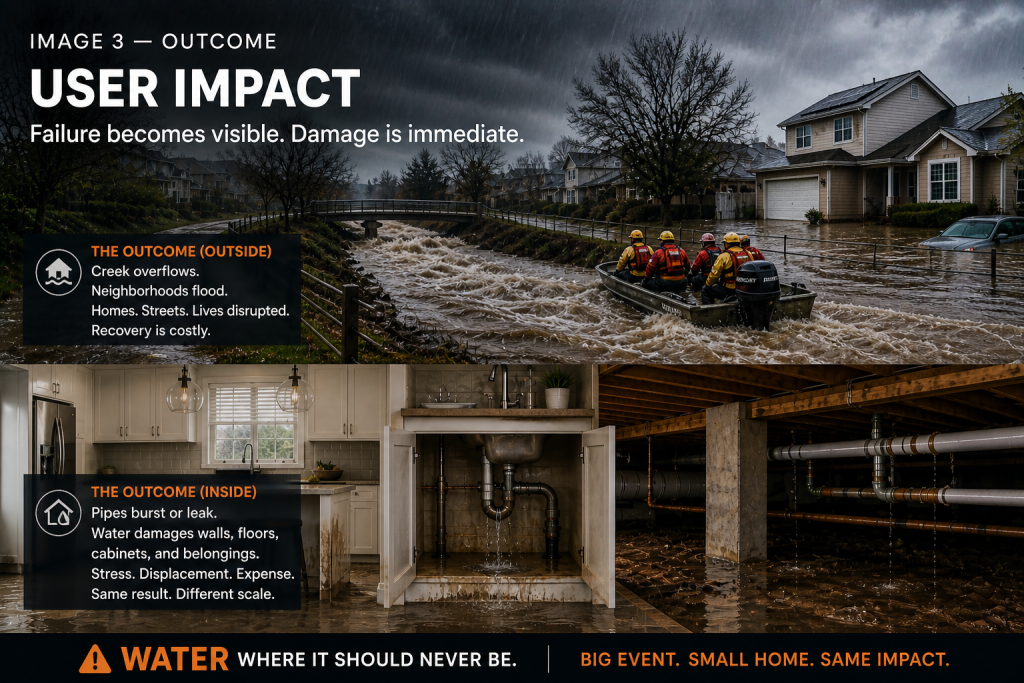
💥 The Event (February 2017)
- Timeline: Rapid escalation over 24–48 hours
- Initial warning signs:
- Rising creek levels
- Early localized flooding
Collapse Dynamics
- Creek overtopped banks
- Floodwaters entered residential zones quickly
- Spread intensified as flow continued

🏚️ Immediate Damage Profile
- 14,000+ residents evacuated
- Entire neighborhoods submerged
- ~$100 million in damages
Impact characteristics:
- Floodwater intrusion into homes
- Vehicle loss and displacement
- Infrastructure disruption (roads, utilities)
🧠 System-Level Failure Analysis
1. Capacity Mismatch
- Reservoir + creek system designed for:
- Controlled flow
Reality:
- Extreme inflow exceeded design assumptions
2. Sequential System Dependency
- Reservoir performance depended on:
- Creek capacity
When one failed:
- Entire system failed
👉 Linked systems = shared failure risk
3. Delayed Response Window
- Once capacity threshold was crossed:
- Options narrowed rapidly
👉 System shifted from:
- Controlled management → emergency reaction
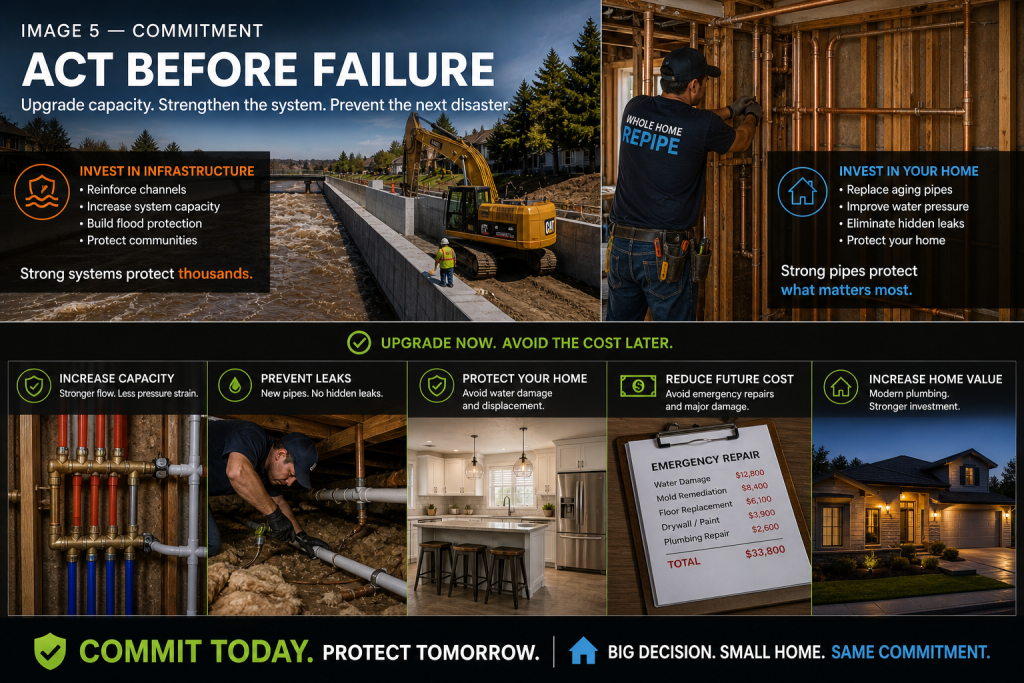
🔁 Direct Aftermath (Short-Term)
- Mass evacuations across multiple neighborhoods
- Emergency shelters activated
- Water rescue operations conducted
- Immediate actions included:
- Pumping operations
- Damage assessment
- Debris cleanup
🧱 Indirect Effects (Long-Term Changes)
🏗️ 1. Reservoir Management Reform
- Changes to:
- Release protocols
- Real-time monitoring systems
🌊 2. Flood Control Infrastructure Upgrades
- Improvements to:
- Creek channel capacity
- Floodplain management
📡 3. Emergency Communication Systems
- Enhanced warning systems for:
- Residents in flood-prone zones
🏘️ 4. Zoning + Risk Awareness
- Reevaluation of:
- Building near waterways
- Increased flood insurance awareness
🧩 Hidden Insights (What Most People Miss)
⚠️ 1. “The System Didn’t Fail at One Point”
- Reservoir worked
- Creek worked
But together:
- They exceeded total system capacity
⚠️ 2. Overflow Is Predictable—Location Is Not
Water will overflow.
The question is:
- Where does it go next?

⚠️ 3. Urban Areas Become Secondary Channels
Once water escapes:
- Streets act like rivers
- Homes become basins
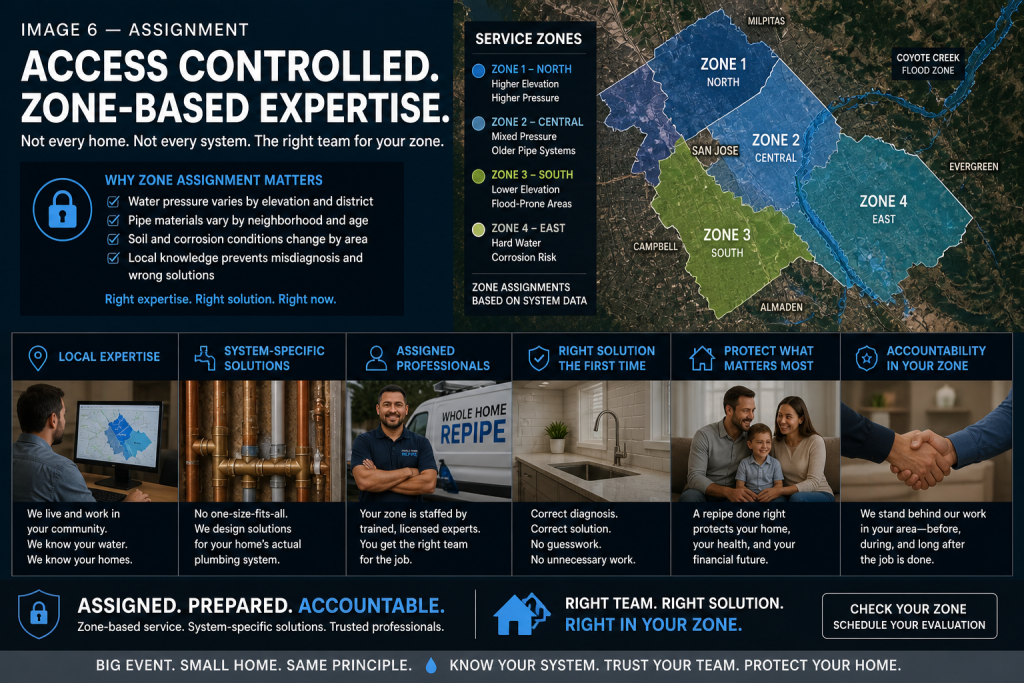
🧠 Contractor / System Thinking Translation
This event maps directly to residential system failures:
Infrastructure System | Residential Equivalent |
Reservoir overflow | Water heater overflow |
Creek channel | Drain system |
Overtopping banks | Drain backup |
Neighborhood flooding | Whole-home water spread |
👉 Same equation:
Overcapacity + no containment = system-wide exposure
🎯 Final Takeaways (Mechanical Framing)
- Root Cause: Reservoir inflow exceeded system capacity
- Trigger: Atmospheric river storm overwhelming watershed
- Failure Type: Overflow → channel exceedance → urban flooding
- Impact Multiplier: Population density + proximity to waterway
Lesson:
When the system overfills, the overflow becomes your neighborhood