



Los Altos Ranch Slab Leak Repair
Perspective: Geotechnical Analyst — When the Ground Moves, the System Follows
When This Becomes a Real Problem (Foundation Trigger)
- You’ve had even ONE confirmed slab leak
- Warm spots appear on floors (tile, wood, or concrete)
- Water bills increase without explanation
- Hairline cracks are forming in flooring or baseboards
- You’ve already repaired a slab leak once before
👉 This is where plumbing failure transitions into structural risk.

THEN → Living on Subtle Movement
Large parts of Santa Clara County have a history of land subsidence tied to groundwater extraction and soil consolidation. Areas influenced by systems like the Santa Clara Valley Aquifer experienced gradual settlement over decades.
That shift wasn’t dramatic.
It was slow, uneven, and continuous.
Ranch-style homes in Los Altos—built on slab foundations—were placed directly on top of that moving surface.
- Palo Alto Historic Copper Upgrades
- Los Altos Hills Custom Estate PEX
- Los Altos Ranch Slab Leak Repair
- Saratoga Hard Water Copper Repiping
- Monte Sereno Luxury Estate Repipe
- Los Gatos Hillside Copper Retrofit
- San Jose Willow Glen Galvanized Pipe Replace
- Rose Garden Historic Mansion PEX
- Almaden Valley Slab Leak Solutions
- Cupertino Ranch Pinhole Leak Fix
NOW → The Slab Stayed. The Ground Didn’t.
Concrete slabs feel permanent.
But they respond to what’s beneath them.
Over time:
- Soil expands and contracts with moisture cycles
- Minor settling creates uneven support under the slab
- The slab transfers that stress directly into embedded plumbing
Underneath your home:
- Copper lines are locked in place
- No room for movement
- No flexibility to absorb stress
That’s where failure begins.
FAILURE MECHANICS (Why Slab Leaks Happen Here)
This isn’t a pipe problem first.
It’s a ground problem.
What actually happens:
- Soil shifts → slab experiences micro-movement
- Rigid copper lines resist → stress builds at weak points
- Repeated cycles → metal fatigue and eventual rupture
Common outcomes:
- Pinhole leaks under pressure
- Hairline fractures that expand over time
- Sudden line breaks after months of stress buildup
The pipe didn’t randomly fail.
It was forced to absorb movement it wasn’t designed for.
Cost of Inaction: Foundation Compromise
Slab leaks are not surface problems.
They are subsurface erosion events.
When a leak continues under pressure:
- Water displaces soil beneath the slab
- Voids begin to form
- Load-bearing support becomes uneven
Over time:
- Sections of the slab settle or shift
- Cracks expand across flooring and walls
- Structural integrity becomes compromised
Escalation Path:
Pinhole leak → Soil erosion → Void formation → Foundation movement
👉 Ignoring a slab leak means allowing your plumbing to undermine your foundation from below
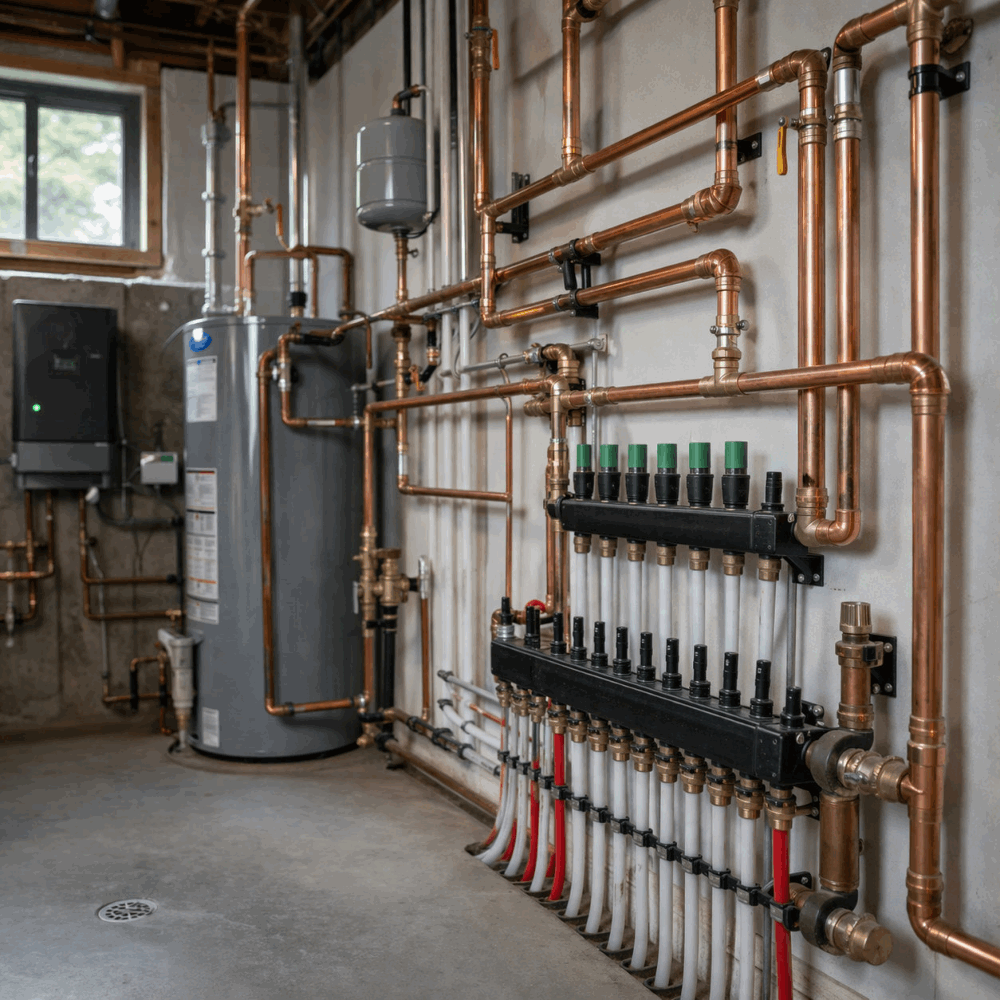
PATTERN RECOGNITION (Early Warning Signs)
Slab leaks rarely announce themselves loudly at first.
Los Altos homeowners typically notice:
- Warm spots on flooring (hot water line leaks)
- Unexplained increases in water bills
- Hairline floor cracks forming over time
- Low pressure in isolated areas of the home
Sometimes there’s no visible water at all—just subtle system changes.
THE GEOTECHNICAL REALITY
In slab-on-grade homes, plumbing is part of the foundation system.
Which means:
- You can’t treat leaks as isolated events
- You have to evaluate ground behavior + system design together
Repairing the pipe without addressing the environment often leads to repeat failures.
WHY SLAB LEAK STRATEGY MATTERS (NOT JUST REPAIR)
There are three primary approaches—and only one typically makes sense long-term in Los Altos conditions:
- Spot Repair (Short-Term)
- Break slab, fix localized section
- Works temporarily
- Does not address ongoing soil movement
- Reroute Above Slab (Preferred)
- Abandon vulnerable lines under concrete
- Run new system through walls/attic
- Removes pipe from movement zone entirely
- Full System Upgrade
- Replace aging system + redesign routing
- Eliminates repeat failure patterns
LOS ALTOS–SPECIFIC SOLUTION FRAME
A proper solution is built around removal from stress exposure.
Step 1: Precision Leak Detection
- Acoustic + thermal methods to locate failure without unnecessary demolition
Step 2: Movement Assessment
- Identify whether issue is isolated or systemic
Step 3: Strategic Rerouting
- Shift plumbing out of slab whenever possible
Step 4: System Stabilization
- Balance pressure + reduce internal stress
LOS ALTOS HOMEOWNER TIPS
- Don’t Ignore Small Floor Changes
Slight cracking or unevenness can indicate shifting below the slab—not just cosmetic aging. - Track Your Water Bill Monthly
A slow increase without lifestyle change is often the first measurable sign of a slab leak. - Feel for Temperature Variations
Warm or hot spots on tile or hardwood floors often point to a leaking hot water line beneath. - Avoid Repeated Spot Repairs
If you’ve had more than one slab repair, the issue is likely systemic—not isolated. - Know Your Home’s Era
1950s–1970s ranch homes are at the highest risk due to original pipe placement and materials.
WHAT THIS MEANS FOR YOUR PROPERTY
In Los Altos, slab leaks aren’t random failures.
They’re the result of:
- Soil behavior
- Foundation interaction
- Rigid system limitations
Treating them correctly means stepping back and asking:
“Is the system in the right place for this environment?”
If it’s not, no repair will hold long-term.

FINAL TAKEAWAY
The ground shifts.
The slab transfers it.
The pipe absorbs it—until it can’t.
In Los Altos ranch homes, slab leaks aren’t surprises.
They’re predictable outcomes of a system locked into moving ground.
The solution isn’t just fixing the leak.
It’s removing the system from the problem entirely.