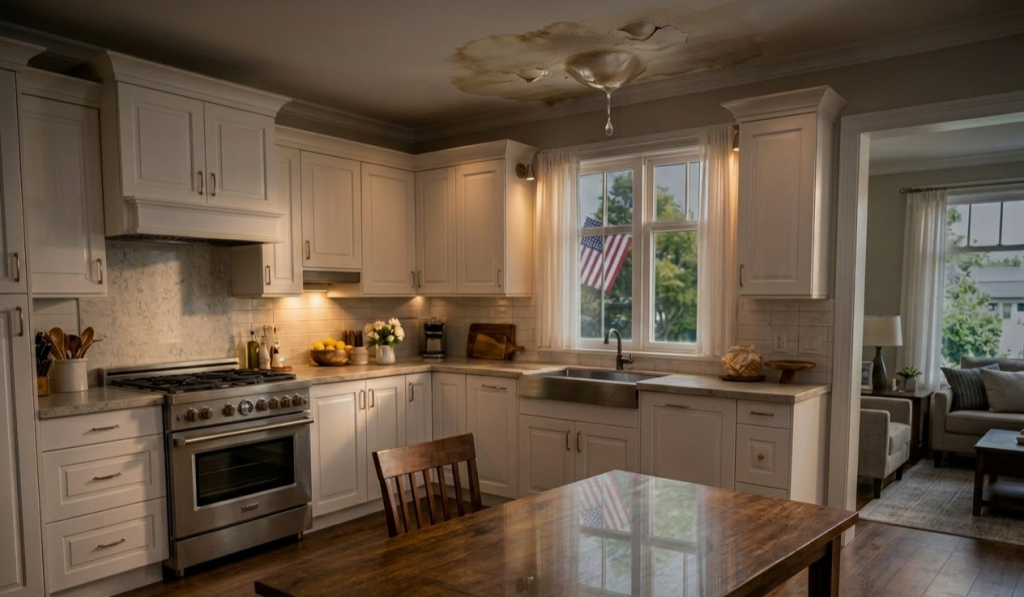
Indiana Plumbing Systems Under Freeze and Infrastructure Pressure
How This Helps Homeowners
Most plumbing failures across Indiana do not begin with one catastrophic winter storm.
Damage usually develops slowly as freezing temperatures, aging infrastructure, underground movement, moisture exposure, and decades of system fatigue combine underneath homes year after year.
Many homeowners first notice smaller warning signs:
- fluctuating water pressure
- recurring winter pipe noise
- basement moisture odor
- seasonal drainage slowdown
- unexplained leaks
- uneven hot water delivery
- foundation cracking near plumbing routes
Those symptoms often point toward larger infrastructure stress already building inside the system.
This research helps homeowners understand:
- why Indiana plumbing systems face elevated freeze-related pressure
- how aging housing infrastructure reacts to repeated winter expansion cycles
- what contractors repeatedly discover during repipes and underground repairs
- why older Midwestern plumbing systems deteriorate unevenly
- how soil movement and groundwater saturation affect buried utilities
- where freeze-thaw cycles create long-term pipe fatigue
- which historical housing eras carry the greatest plumbing exposure
Across Indiana, plumbing instability rarely comes from one isolated condition alone.
Environmental pressure accumulates gradually.
Ground movement reshapes underground support.
Pipe materials weaken over decades.
Water systems fluctuate seasonally.
Then the plumbing infrastructure eventually reacts visibly.
Not because the problem appeared suddenly.
Because the stress never fully stopped.
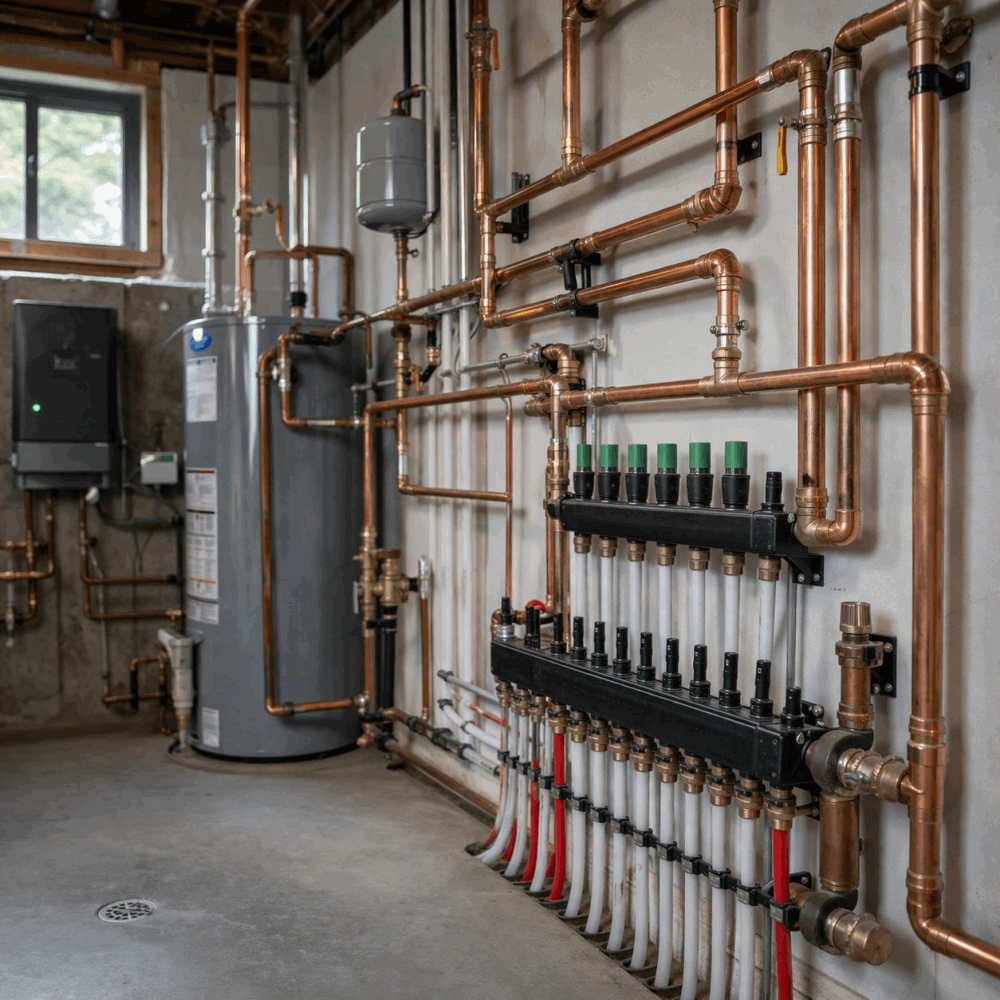
Indiana Winters Create Continuous Freeze-Thaw Stress
Freezing temperatures affect plumbing systems long before pipes actually burst.
Soil expands during severe cold.
Moisture trapped underground changes position.
Warmer afternoons soften support conditions.
Then nighttime temperatures drop again.
That repeated freeze-thaw cycling gradually alters underground plumbing stability across the state.
Indiana sits within a climate zone where winter temperatures often fluctuate aggressively rather than remaining consistently frozen for long periods. That constant expansion-and-relaxation pattern places significant stress on residential infrastructure.
Contractors throughout Indiana frequently identify underground movement near:
- shallow service lines
- basement entry points
- slab penetrations
- crawlspace piping
- exterior wall plumbing
- aging sewer laterals
Many failures emerge years after the original stress begins.
A pipe may survive dozens of winters while weakening internally each season.
Eventually one freeze cycle exposes the instability already developing underneath.
Aging Infrastructure Carries Hidden Mechanical Fatigue
Large portions of Indiana housing were built during industrial expansion, post-war suburban growth, and manufacturing-era development booms.
Many original plumbing systems still remain partially active today.
Older homes commonly contain:
- galvanized steel supply lines
- cast iron drainage systems
- aging copper retrofits
- threaded steel fittings
- mixed-material repair sections
- outdated shutoff assemblies
Each material reacts differently under long-term freeze exposure and pressure fluctuation.
Galvanized systems narrow internally through corrosion buildup.
Copper weakens after decades of expansion cycling.
Cast iron becomes increasingly vulnerable where underground moisture remains unstable.
Meanwhile, modern households place far heavier demand on those systems than original homeowners ever anticipated.
Earlier generations often lived with:
- fewer bathrooms
- lower fixture demand
- smaller appliances
- reduced simultaneous water usage
- simpler plumbing layouts
Current plumbing infrastructure now supports significantly larger pressure loads across much of Indiana.
Older systems absorb that stress continuously.
Eventually fatigue begins appearing throughout the network.
Indiana Basements Accelerate Moisture-Driven Deterioration
Basements remain common throughout much of Indiana housing.
That changes how plumbing systems age.
Spring snowmelt and seasonal rainfall increase hydrostatic pressure around foundations statewide.
Older waterproofing systems weaken gradually.
Drain tile systems deteriorate.
Sump environments become overloaded during saturation periods.
Humidity rises inside lower mechanical spaces.
Once moisture becomes persistent, plumbing deterioration usually accelerates.
Contractors regularly discover:
- oxidized copper lines
- rusted support hardware
- corroded shutoff valves
- condensation-heavy piping
- weakening cast iron drainage
- hidden seepage around service entries
Most homeowners focus primarily on visible flooding.
Meanwhile, hidden moisture quietly reshapes the plumbing environment for years before major damage appears.
Mechanical systems deteriorate gradually underneath the home long before leaks become obvious.
Clay Soil Movement Adds Underground Structural Pressure
Large sections of Indiana experience clay-heavy soil behavior strongly influenced by moisture variation.
Wet seasons expand surrounding ground.
Dry periods create contraction.
Freeze cycles add additional movement pressure during winter months.
Underground plumbing systems absorb that environmental instability continuously.
Rigid pipe materials struggle most under changing support conditions.
Long drainage runs become vulnerable first.
Underground joints weaken gradually.
Slope consistency changes over time.
Contractors throughout Indiana frequently trace slab leaks and sewer failures back to environmental movement rather than isolated defects alone.
Neighborhood-wide patterns often emerge because homes were built during similar eras using comparable installation standards and soil conditions.
One property develops underground leakage.
Nearby homes experience similar failures shortly afterward.
Environmental stress repeats geographically.
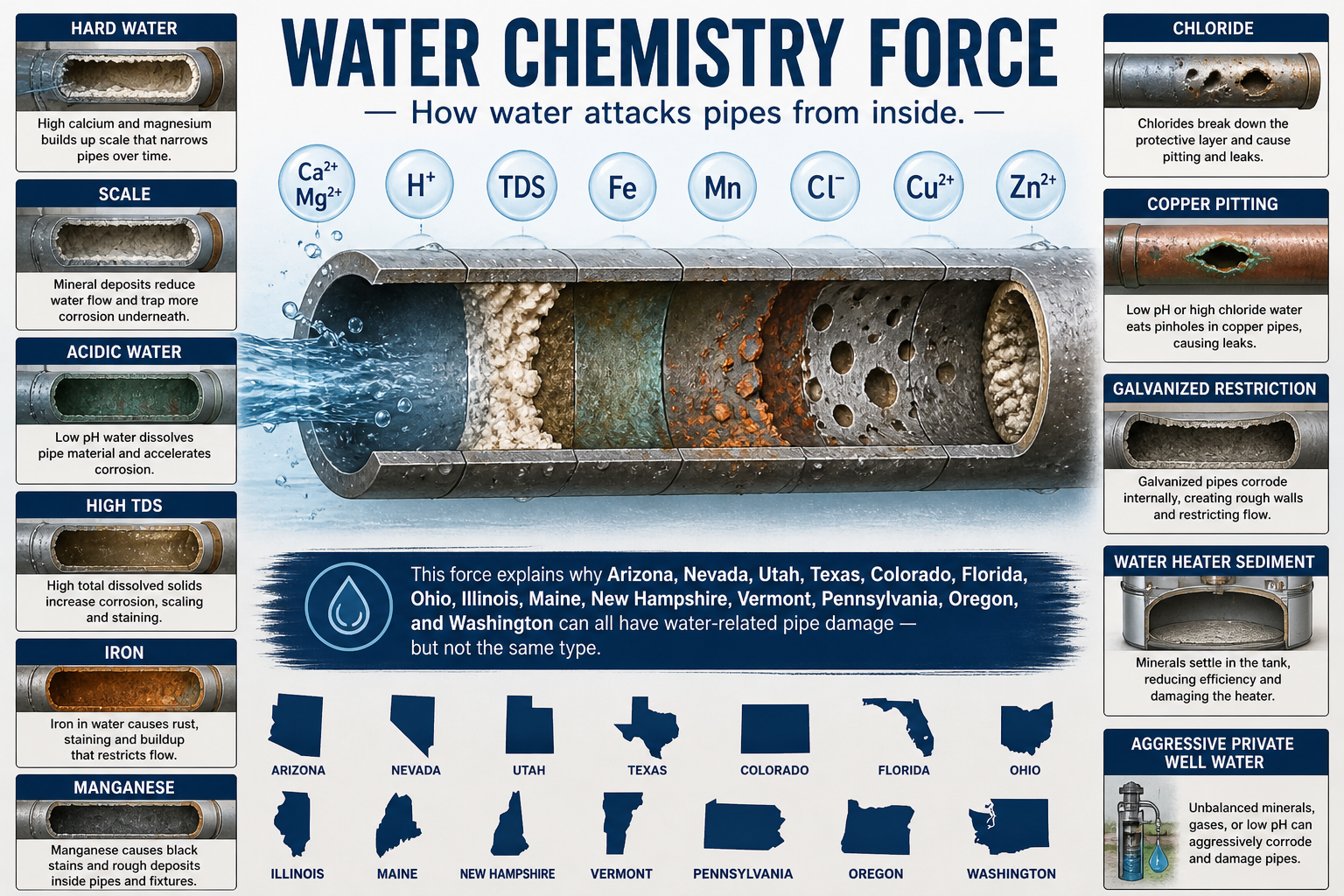
Freeze Exposure Reveals Weaknesses Already Developing
Extreme cold often acts as a pressure test for aging infrastructure.
Pipes rarely fail only because temperatures dropped below freezing.
Most systems already contain hidden vulnerabilities before winter arrives.
Contractors throughout Indiana routinely describe cold-weather plumbing emergencies as “exposure events.”
Freeze conditions reveal:
- existing corrosion
- weakened joints
- unstable underground supports
- aging shutoff assemblies
- pressure imbalance
- hidden material fatigue
Opening walls and floors during winter repairs frequently uncovers deterioration far beyond the visible leak itself.
Technicians commonly find:
- restricted galvanized interiors
- unsupported copper runs
- corroded fittings
- moisture-damaged framing
- cracking cast iron systems
- abandoned repair sections layered across decades
Many of those conditions formed progressively over long periods rather than during one winter alone.
Cold weather simply forces the system to react visibly.
Indiana’s Flooding History Influenced Infrastructure Conditions
Water shaped Indiana infrastructure long before modern plumbing systems existed.
Major flood events repeatedly altered drainage behavior, municipal development patterns, and underground utility stability across the state.
The Great Flood of 1913 permanently affected communities throughout Indiana and the broader Midwest, exposing infrastructure vulnerabilities tied to river systems, groundwater saturation, and overwhelmed drainage networks.
Environmental memory remains underground long after floodwaters disappear.
Homes near historical flood corridors frequently experience:
- elevated groundwater influence
- recurring saturation pressure
- underground corrosion acceleration
- foundation settlement
- drainage instability
- moisture migration beneath slabs
Contractors working throughout Indiana often identify long-term floodplain influence affecting buried plumbing systems decades later.
Water changes infrastructure slowly.
Soil retains those effects long after visible events fade from memory.
Mixed-Era Repairs Create Uneven Plumbing Behavior
Most older Indiana homes no longer operate with one continuous original plumbing system.
Generations of repairs, additions, and emergency fixes created layered infrastructure environments across the state.
Contractors regularly uncover:
- galvanized connected directly to copper
- abandoned active branches
- partial repipes without full redesign
- unsupported retrofit sections
- aging repair clamps
- uneven drainage corrections
- mismatched material transitions
Different materials react differently under freeze stress and pressure cycling.
One section remains stable.
Another nearby area weakens rapidly.
Those inconsistencies create uneven force distribution throughout the system.
Homeowners often assume isolated repairs permanently solved the issue.
Infrastructure environments usually continue evolving after localized fixes occur.
Municipal Pressure Variation Adds Long-Term Stress
Indiana cities expanded across multiple industrial and suburban growth eras.
Water systems originally designed around older population demands now support modern residential usage far beyond earlier expectations.
Pressure fluctuation places additional strain on aging plumbing materials statewide.
Repeated surges gradually weaken:
- valves
- solder joints
- appliance connections
- underground service lines
- fixture seals
- mechanical transitions
Residents often notice indirect symptoms first:
Pipe vibration.
Shower temperature swings.
Intermittent pressure loss.
Recurring valve leaks.
Mechanical sounds during nighttime usage.
Those behaviors frequently indicate long-term infrastructure stress already affecting the system internally.
What Contractors Repeatedly See Across Indiana Homes
Field technicians throughout Indiana consistently encounter similar infrastructure patterns regardless of city or region.
Common findings include:
- hidden corrosion behind finished walls
- heavily restricted galvanized piping
- moisture-damaged basement framing
- freeze-damaged crawlspace plumbing
- shifting underground laterals
- aging cast iron nearing collapse
- improperly balanced pressure systems
- decades of layered repair history
Certain neighborhoods reveal repeating failures house after house because homes share similar construction periods, environmental conditions, and infrastructure aging patterns.
Contractors recognize those regional trends quickly.
Homeowners typically experience only their individual symptoms without seeing the broader systemwide behavior.
That distinction matters.
Infrastructure pressure develops collectively across aging environments.
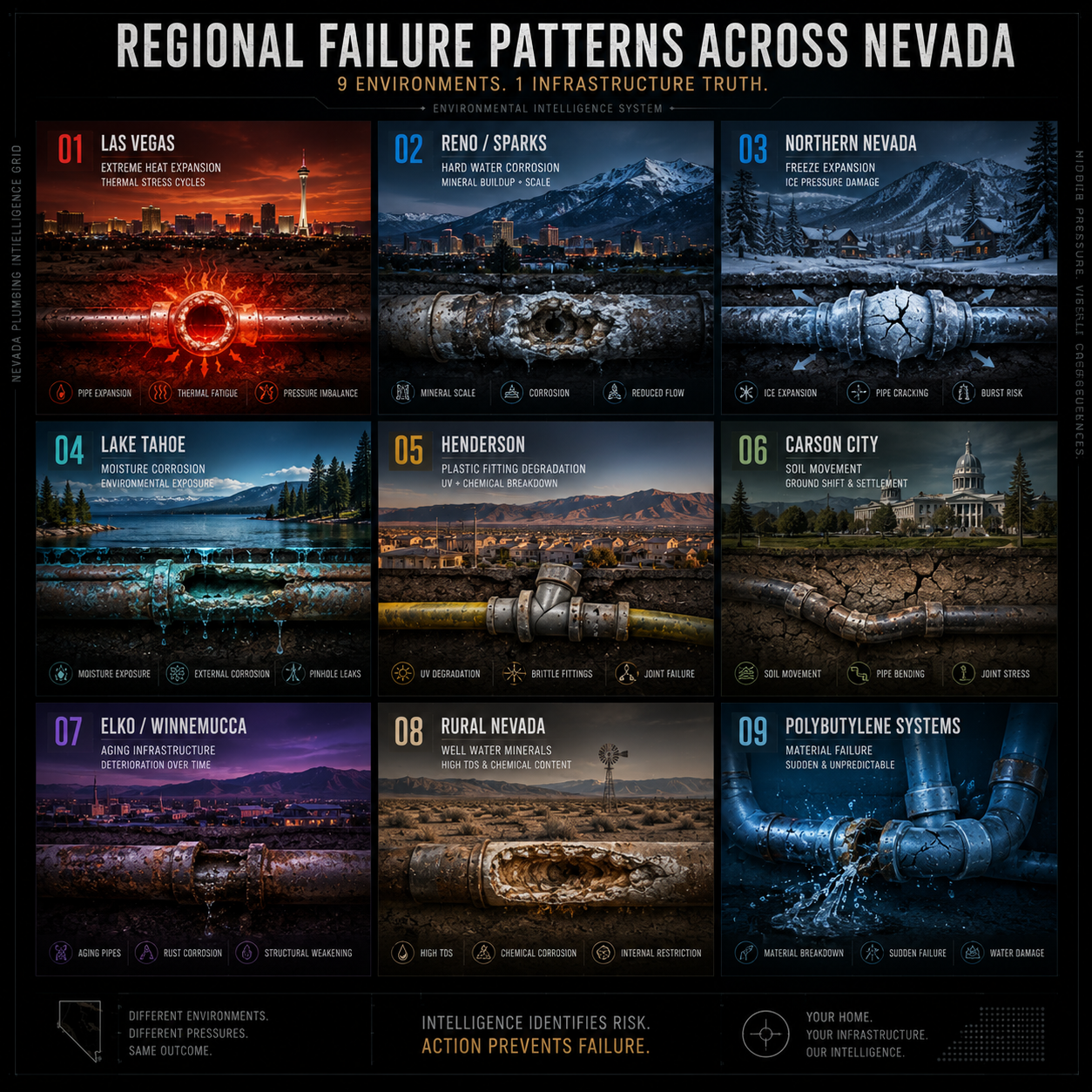
Indiana Plumbing Systems Usually Warn Before Major Failure
Most catastrophic plumbing events develop through smaller warning patterns first.
Pressure changes gradually.
Drainage slows seasonally.
Minor leaks reappear.
Basement odors increase.
Fixture balance weakens.
Mechanical noise becomes more noticeable during freeze periods.
None of those symptoms automatically indicate immediate disaster alone.
Together, however, they often reveal hidden infrastructure pressure already building throughout the system.
Indiana plumbing environments operate under overlapping stress from:
- freeze-thaw expansion
- aging housing infrastructure
- clay soil movement
- groundwater saturation
- moisture-heavy basements
- mixed-era repairs
- fluctuating municipal demand
Those combined forces gradually reshape plumbing systems statewide.
Understanding those patterns helps homeowners recognize infrastructure behavior before hidden stress escalates into major structural damage, emergency flooding, or widespread system instability.
That is the purpose of Home Failure Intelligence.
Recognizing the pressure before the infrastructure finally gives way.