
Polybutylene and Plastic Pipe Failure Zones
Written From The Perspective Of Nevada Expansion-Era Housing Infrastructure
Large sections of Nevada expanded rapidly during the housing growth cycles of the 1980s, 1990s, and early 2000s.
Entire neighborhoods appeared almost overnight across desert valleys, suburban corridors, and emerging residential communities. Builders focused heavily on speed, scalability, affordability, and material efficiency while attempting to keep pace with accelerating population growth throughout the state.
Polybutylene and other plastic piping systems became common during many of those expansion periods.
At the time, the materials appeared modern, lightweight, cost-effective, and easier to install than older metallic plumbing systems. Thousands of homes across Nevada incorporated plastic supply piping during large subdivision development cycles operating under intense construction demand.
Long-term environmental exposure eventually revealed a more complicated reality.
Desert heat,
pressure fluctuation,
hard water conditions,
thermal expansion,
freeze-thaw cycling,
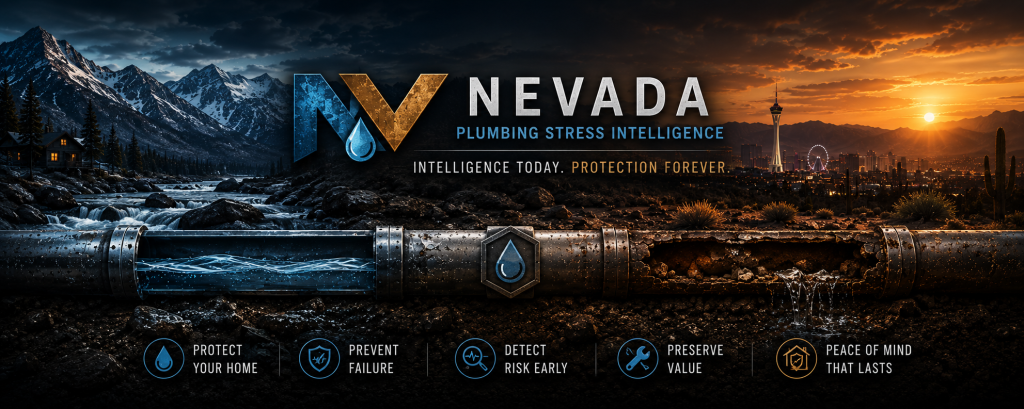
and aging infrastructure stress gradually contributed to failure patterns developing inside portions of Nevada’s residential plumbing systems.
Many homeowners never recognize those patterns until hidden leakage, slab moisture, wall saturation, or pressure instability becomes visible years later.
North Las Vegas Developed Under Rapid Expansion Pressure
North Las Vegas experienced major subdivision growth during periods when production housing expanded aggressively across Southern Nevada.
Large residential corridors were designed around affordability and construction speed. Plastic piping systems fit naturally into those development environments because builders needed scalable plumbing materials capable of supporting fast-cycle neighborhood construction.
Environmental stress accumulated quietly over time beneath many of those communities.
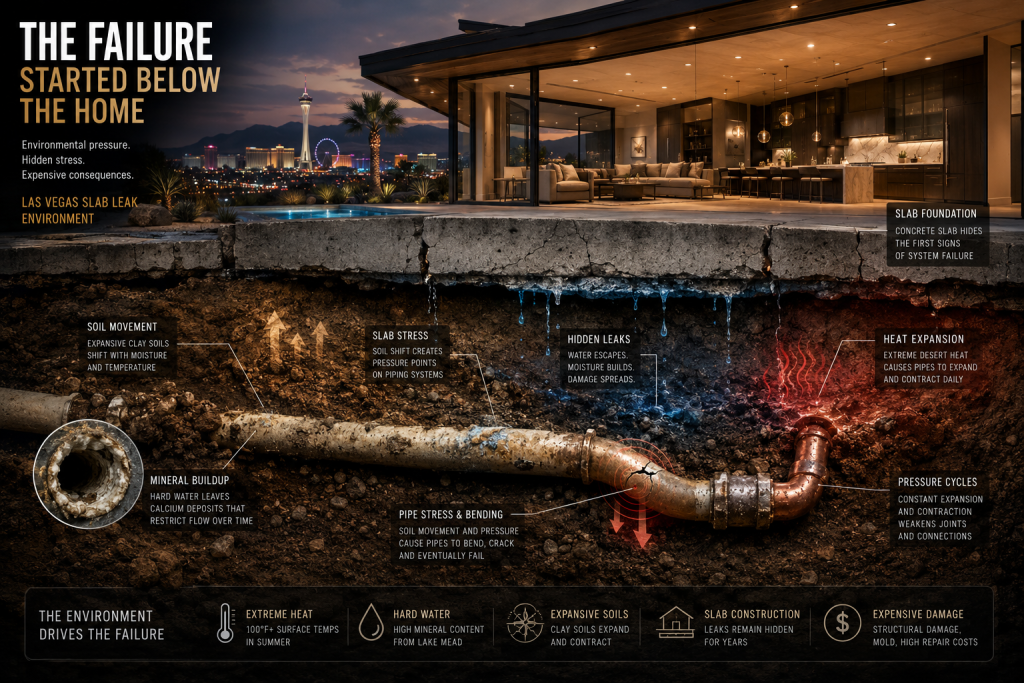
Extreme desert temperatures place repeated expansion pressure on plumbing systems operating inside walls, attics, slabs, and underground utility pathways. Municipal pressure fluctuation across rapidly expanding infrastructure corridors may further increase long-term material fatigue throughout older neighborhoods.
Many North Las Vegas homes now operate inside aging expansion-era plumbing environments where hidden deterioration can develop gradually before visible failure reaches public attention.
Henderson Reflects Aging Master-Planned Infrastructure Systems
Henderson expanded through carefully engineered suburban development designed to support long-term residential growth throughout the Las Vegas Valley.
Master-planned communities created organized infrastructure environments beneath large sections of the city. Polybutylene and plastic piping systems often became part of those broader residential expansion models during major housing cycles throughout the region.
Suburban stability can conceal hidden plumbing stress for years.
Pressure balancing,
water demand,
thermal cycling,
and long-term material aging gradually affect plumbing systems operating beneath slab foundations, inside wall cavities, and throughout expansion-era neighborhoods.
Earlier construction assumptions focused heavily on supporting growth efficiently.
Modern infrastructure conditions reveal how long-term environmental exposure can slowly destabilize plumbing materials beneath otherwise stable residential communities.
Enterprise Faces High-Demand Residential Plumbing Stress
Enterprise developed later than many surrounding areas yet expanded rapidly through large-scale residential and luxury housing construction.
Oversized homes,
complex plumbing layouts,
irrigation systems,
high fixture demand,
and continuous suburban growth increased pressure throughout local water infrastructure environments.
Plastic piping systems inside these homes often operate under sustained residential demand conditions.
Large houses frequently generate more complex pressure balancing challenges because plumbing networks stretch farther across properties while supporting greater fixture usage, irrigation loads, and water movement throughout the structure.
Environmental exposure across Southern Nevada further compounds long-term stress.
Heat accumulation,
hard water exposure,
and continuous expansion pressure may gradually weaken vulnerable plumbing systems operating beneath newer-looking residential environments.
Modern appearance does not always eliminate hidden infrastructure fatigue.
Fernley Combines Expansion Growth With Environmental Exposure
Fernley expanded quickly alongside transportation and industrial growth corridors throughout Northern Nevada.
Residential construction accelerated as workforce housing increased around regional economic development. Many neighborhoods developed rapidly during expansion periods emphasizing affordability and construction efficiency.
Plastic plumbing systems became common within portions of those growth environments.
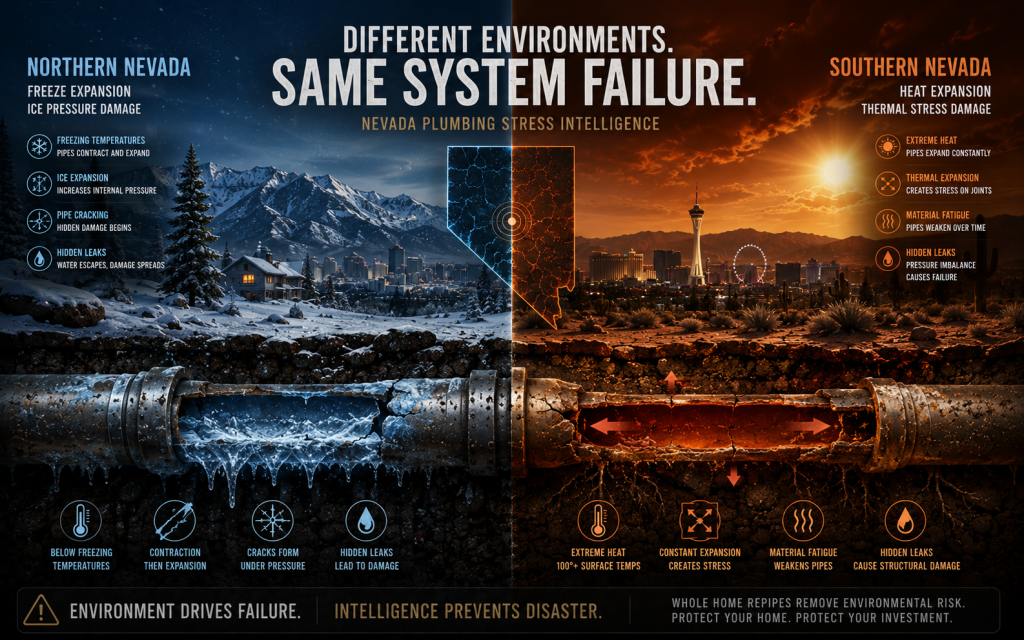
Northern Nevada introduces additional infrastructure stress patterns beyond desert heat exposure alone. Fernley plumbing systems may experience:
- temperature fluctuation
- freeze-thaw cycling
- seasonal expansion pressure
- long-term material contraction stress
- aging subdivision infrastructure fatigue
Environmental variation across the region creates repeated movement inside plumbing materials over time.
Long-term exposure to those conditions can gradually contribute to hidden leakage, pipe instability, pressure imbalance, and interior plumbing deterioration beneath homes operating inside expansion-era development corridors.
Pahrump Reflects Desert Growth Beyond Earlier Infrastructure Assumptions
Pahrump evolved from a quieter desert community into a rapidly expanding residential environment over recent decades.
Older infrastructure systems originally supported far smaller population expectations throughout the valley. Expansion gradually introduced denser subdivisions, newer housing developments, and larger residential plumbing demand across environmentally exposed desert terrain.
Plastic piping systems operating inside Pahrump often face multiple overlapping environmental pressures.
Extreme heat exposure,
ground movement,
hard water conditions,
flash flood environments,
and long-term desert thermal cycling all influence infrastructure stability throughout the region.
Earlier development assumptions did not always anticipate the scale of modern residential expansion now operating across portions of the valley.
Hidden plumbing stress frequently develops slowly beneath desert communities before visible warning signs appear inside the home.
Plastic Pipe Failure Often Begins Before Visible Plumbing Damage Appears
Polybutylene and aging plastic plumbing systems may experience gradual deterioration for years before major leaks become obvious publicly.
Common warning signs may include:
- unexplained moisture
- slab leak conditions
- fluctuating water pressure
- wall discoloration
- ceiling staining
- reduced fixture performance
- concealed leakage
- recurring plumbing repairs
Nevada creates a uniquely aggressive infrastructure environment because residential systems frequently operate under combinations of:
- desert heat exposure
- hard water conditions
- expansion-era construction pressure
- thermal cycling
- rapid growth infrastructure strain
- freeze-thaw variation in northern regions
Environmental accumulation rarely creates immediate visible failure.
Pressure usually develops quietly beneath the surface first.
Many Nevada neighborhoods built during major expansion cycles now operate inside aging plumbing environments where long-term material fatigue continues progressing beneath homes originally designed around entirely different growth assumptions decades earlier.