



Lake Mead Crisis (2003–2004): Water Supply Breakdown
Written From The Perspective Of A Hoover Dam Engineer In The 1930s
Construction crews once viewed the Hoover Dam as proof that engineering could permanently control the uncertainty of the American Southwest.
Massive concrete walls rose above the Colorado River during one of the most ambitious infrastructure projects in modern history. Federal planners believed large-scale water management would stabilize desert expansion for generations. Reservoir storage promised security for cities, agriculture, industry, and future development across the region.
Engineers during that era focused on controlling scarcity through scale.
Lake Mead represented more than stored water.
Confidence surrounded the belief that infrastructure could overcome environmental limitation permanently. Long-term growth models throughout the Southwest gradually formed around that assumption. Las Vegas remained relatively small at the time, yet planners already anticipated expansion far beyond the natural carrying capacity of the desert itself.
Hydraulic systems created stability where little naturally existed before.
Pipelines, pumping stations, reservoirs, pressure systems, and distribution infrastructure transformed Southern Nevada into an engineered water environment dependent on continuous balance beneath the visible surface of the region.
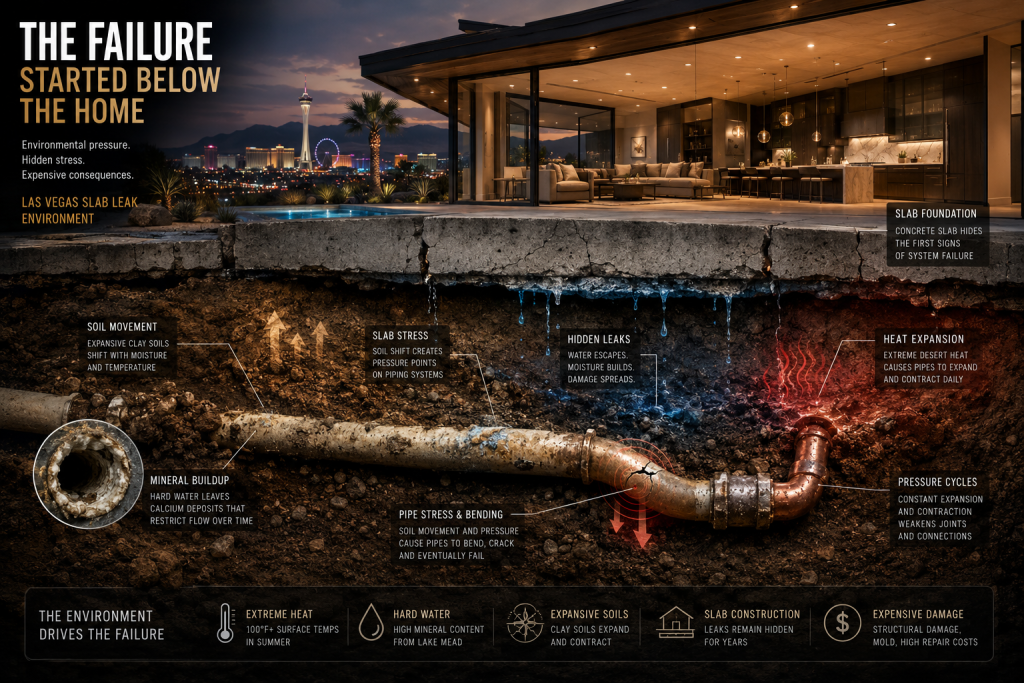
Desert Expansion Increased Pressure Across Regional Water Systems
Population growth accelerated dramatically during the decades following Hoover Dam construction.
Master-planned communities spread across Southern Nevada.
Tourism infrastructure intensified.
Commercial development expanded rapidly.
Golf courses multiplied throughout the desert.
Residential demand increased continuously across the valley floor.
Regional dependence on imported water deepened as urban expansion continued.
Consumption assumptions evolved around the belief that reservoir systems would remain operationally stable long-term. Lake Mead gradually became one of the most important infrastructure lifelines in the American Southwest. Entire metropolitan growth systems relied on the reservoir maintaining sufficient elevation and supply consistency.
Environmental pressure slowly accumulated beneath that stability.
Extended drought conditions during the early 2000s exposed vulnerabilities many earlier planners never fully expected to confront at modern scale. Reservoir levels declined visibly across Lake Mead between 2003 and 2004 as prolonged water stress intensified throughout the Colorado River Basin.
Declining shoreline elevations shocked much of the country.
Earlier engineers would have viewed the visual retreat of the reservoir as almost unimaginable after construction originally transformed the desert through large-scale water storage systems.
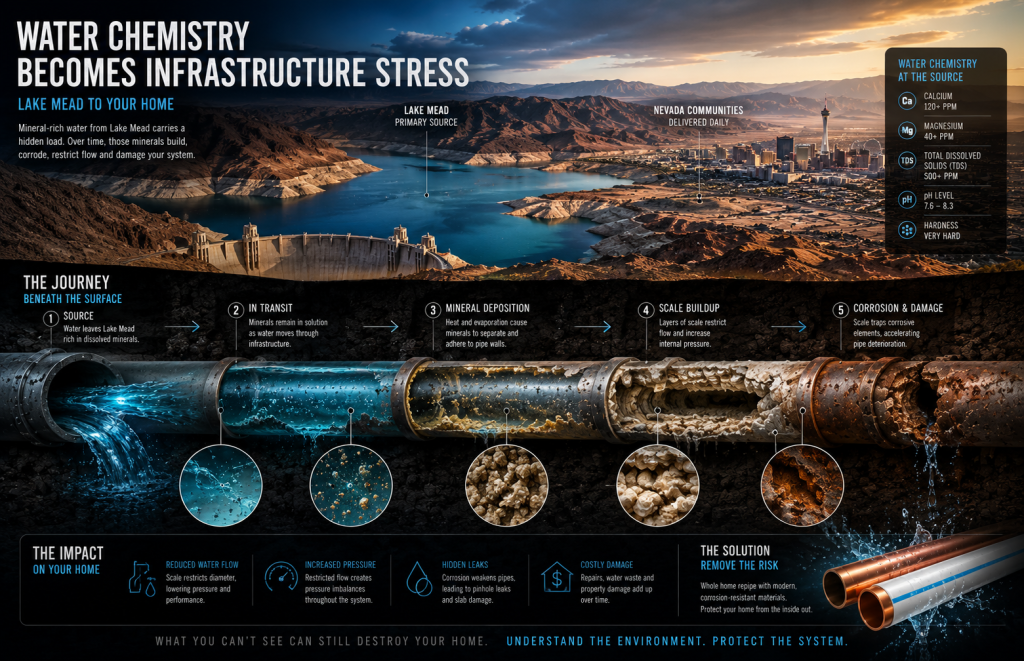
The Crisis Revealed The Fragility Of Engineered Water Dependency
Shrinking reservoir levels exposed more than drought conditions.
Hidden dependency became visible.
Southern Nevada depended on an enormous interconnected system of engineered balance operating continuously beneath modern expansion. Reservoir elevation influenced pumping systems, municipal distribution stability, long-term planning assumptions, groundwater management strategies, and future development confidence throughout the region.
Pressure increased because urban growth expanded faster than long-term environmental certainty.
Earlier infrastructure planners believed water engineering would stabilize the desert permanently. Modern conditions revealed how quickly environmental imbalance can challenge even the largest engineered systems when consumption pressure compounds across multiple decades.
Groundwater extraction also intensified throughout portions of the Southwest as drought conditions continued placing stress on regional supply systems.
Subsurface instability became an increasingly important concern.
Aquifer depletion can gradually compress underground soils over time. Settlement pressure develops slowly beneath structures, buried utilities, foundations, and municipal infrastructure before visible movement reaches the surface.
Long-term environmental imbalance often creates hidden infrastructure stress before major public failure occurs.
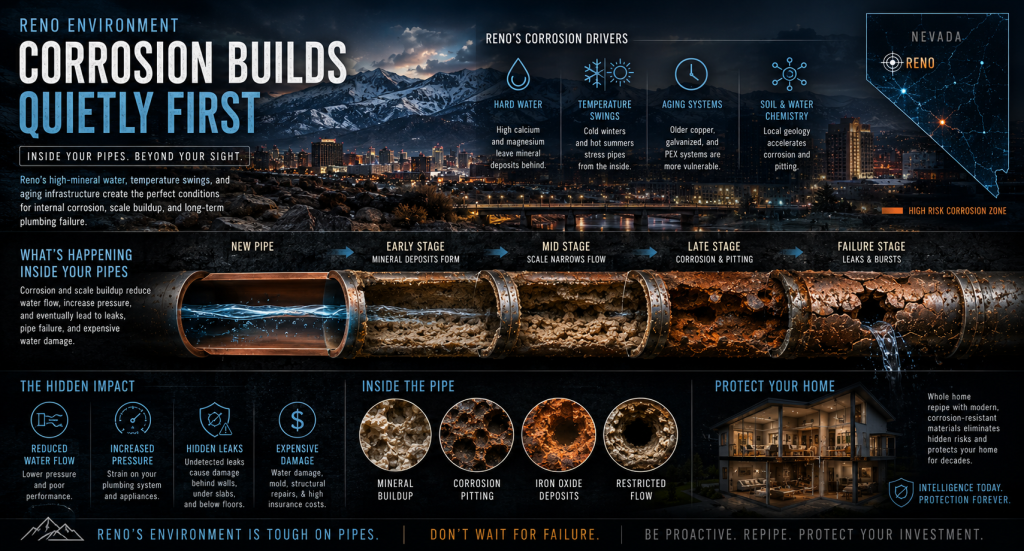
Water Instability Frequently Creates Invisible Infrastructure Pressure
Southern Nevada infrastructure systems operate within one of the most environmentally dependent regions in the United States.
Hidden stress patterns associated with water instability may contribute to:
- subsurface settlement
- slab movement
- buried pipe stress
- municipal pressure instability
- groundwater depletion
- foundation separation
- underground utility movement
- long-term structural imbalance
Desert cities rely heavily on engineered consistency beneath everyday life.
Pipelines must remain stable.
Reservoir systems must remain balanced.
Pressure zones must operate continuously.
Distribution infrastructure must adapt constantly to changing demand conditions.
Earlier Hoover Dam engineers believed they were building permanent environmental control for future generations.
Modern reservoir decline revealed something far more fragile beneath the surface of Southwestern expansion.
Infrastructure systems remain vulnerable when growth depends on environmental balance remaining stable indefinitely across regions where water itself must be engineered into existence.