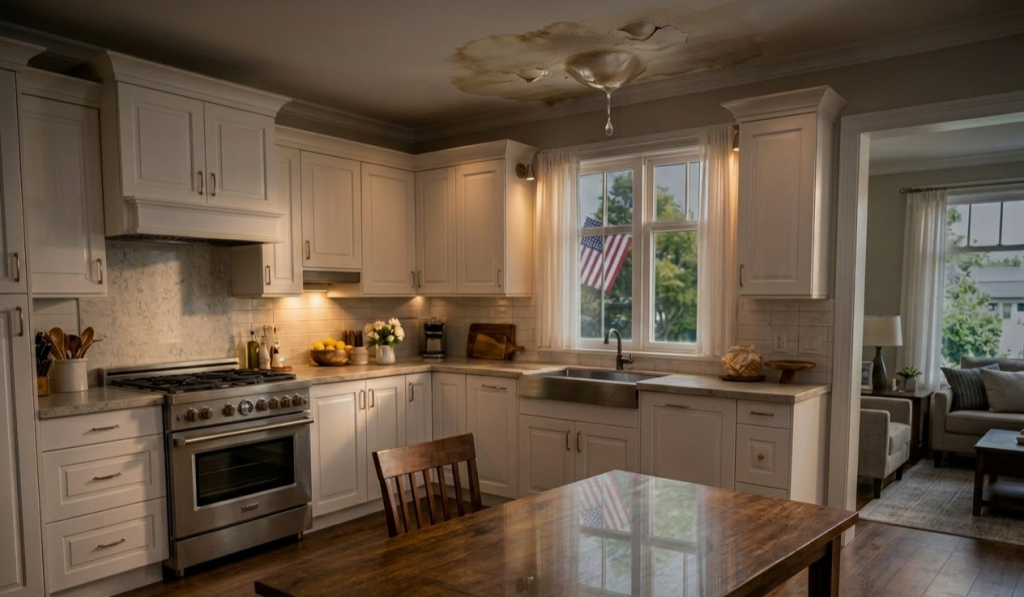
Why Atlanta Homes Develop Hidden Pipe Corrosion Conditions
This helps homeowners in Atlanta identify early corrosion risk inside their plumbing system, understand why deterioration develops out of sight, and make informed decisions before hidden damage turns into structural repair.
Most corrosion in Atlanta homes is not visible.
It progresses behind walls.
And, it spreads underneath floors.
By the time staining or leakage appears, internal deterioration is often advanced.
Corrosion is not a single event.
It is a long-term reaction to environmental exposure, water chemistry, pressure behavior, and system age.
Atlanta creates the conditions for that reaction to accelerate.
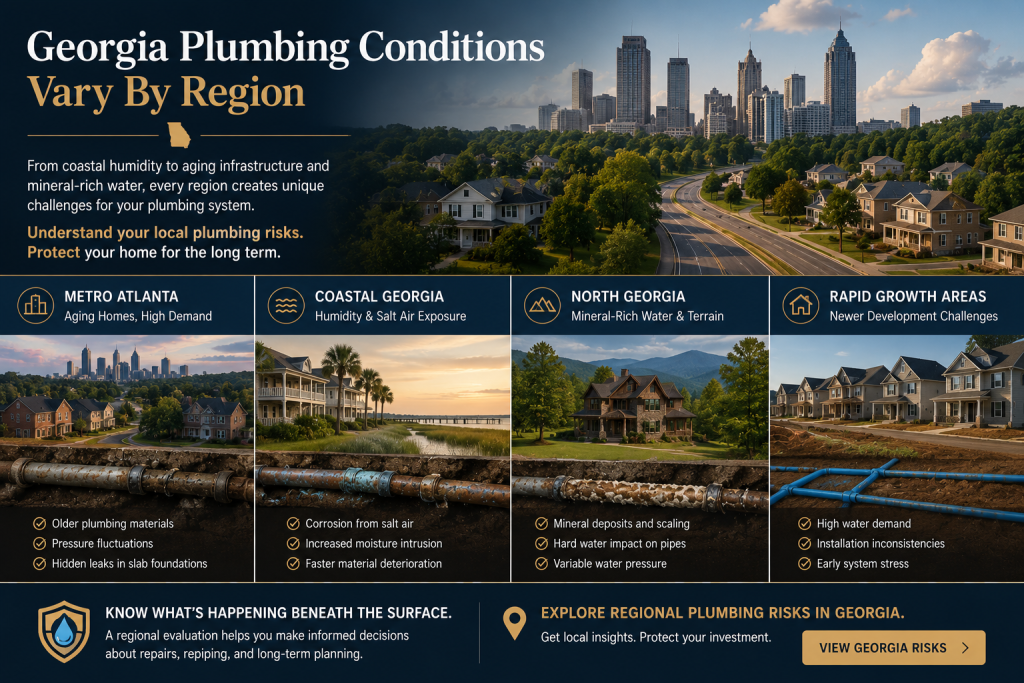
Humidity Creates a Constant Moisture Environment
Atlanta’s climate introduces persistent humidity into residential structures.
Moisture remains present in crawlspaces.
Air movement carries humidity into wall cavities.
Condensation forms on cooler pipe surfaces.
That environment keeps plumbing systems in a near-continuous exposure cycle.
Metal components do not fully dry.
Protective layers degrade faster.
Fittings begin weakening internally.
Support hardware corrodes over time.
Even minor moisture presence becomes significant when it is constant.
Corrosion accelerates under those conditions.
Water Chemistry Influences Internal Pipe Breakdown
Water composition plays a major role in corrosion development.
Municipal supply conditions vary across the Atlanta region.
Some areas experience mineral-heavy water.
Other areas show more aggressive chemical profiles.
Over time, internal pipe surfaces react to that chemistry.
Protective pipe walls begin to thin.
Scale may form unevenly.
Flow characteristics change.
That combination leads to:
- Internal pitting
- Surface degradation
- Flow restriction
- Increased friction inside supply lines
Corrosion does not always reduce flow immediately.
It often weakens the pipe first.
Failure appears later.
Aging Materials Increase Corrosion Exposure
Many Atlanta homes still contain older plumbing systems.
Galvanized piping continues internal breakdown.
Copper systems develop pinhole vulnerability after long-term exposure.
Older valves and fittings degrade from inside outward.
Material lifespan depends on environment.
Atlanta accelerates that timeline.
Extended moisture exposure, pressure cycling, and chemical interaction combine to weaken system components.
Deterioration is rarely uniform.
One section may weaken faster than others.
That localized weakness becomes the eventual failure point.
Pressure Variability Accelerates Material Fatigue
Atlanta’s rapid growth introduces pressure fluctuation across infrastructure systems.
Demand changes throughout the day.
New developments connect into existing supply networks.
Pressure regulators adjust constantly.
Internal pipe walls experience repeated expansion and contraction cycles.
That mechanical stress interacts with corrosion.
Weakened areas degrade faster.
Seals lose integrity.
Connection points become more vulnerable.
Corrosion and pressure do not act separately.
They compound each other.
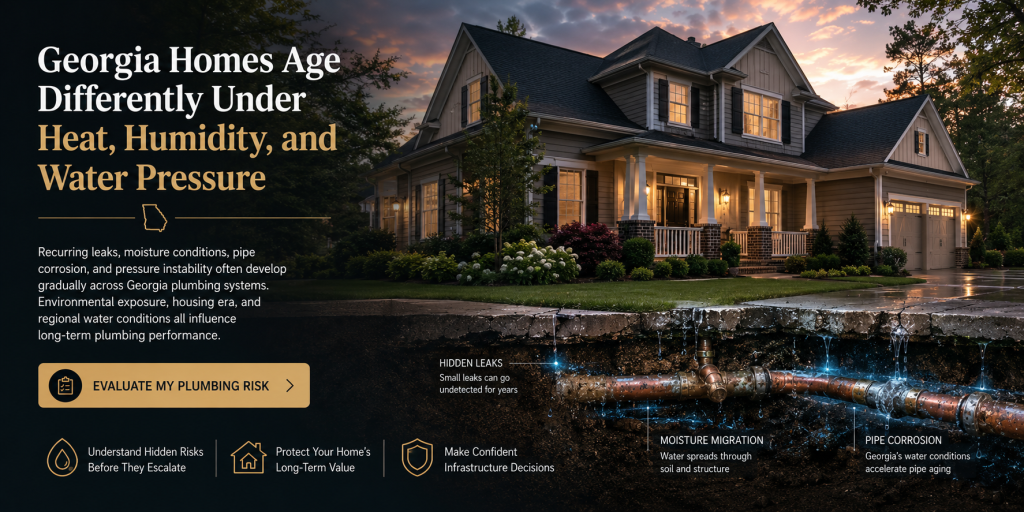
Hidden Areas Allow Corrosion to Progress Undetected
Most plumbing systems are concealed.
Pipes run behind finished walls.
Supply lines sit beneath slabs.
Connections exist inside ceilings and crawlspaces.
These areas are rarely inspected.
Early corrosion produces no visible symptoms.
Moisture may remain contained inside wall cavities.
Small leaks evaporate before detection.
Damage accumulates silently.
By the time signs appear, exposure may include:
- Insulation saturation
- Framing deterioration
- Mold development
- Subfloor damage
The visible symptom is often secondary.
The primary issue has already progressed.
Mixed Material Systems Increase Reaction Risk
Many homes contain multiple pipe materials due to renovations or partial repairs.
Copper may connect to galvanized.
PEX may transition into older metal lines.
Dissimilar materials create reaction points.
Electrochemical processes accelerate at these transitions.
Corrosion concentrates at connection zones.
Those areas become early failure points within the system.
Crawlspace and Slab Conditions Intensify Exposure
Atlanta homes frequently include crawlspaces or slab foundations.
Both environments contribute to corrosion risk.
Crawlspaces retain moisture over long periods.
Limited airflow slows drying.
Temperature variation creates condensation cycles.
Slab systems conceal piping beneath concrete.
Moisture can accumulate without visibility.
Soil conditions influence pipe exposure from below.
Both environments support long-term hidden deterioration.
Storm Cycles Contribute to Moisture Intrusion
Heavy rainfall events increase environmental moisture levels.
Ground saturation affects crawlspace humidity.
Drainage systems may temporarily overload.
Moisture enters areas that normally remain dry.
Repeated exposure compounds corrosion conditions.
The plumbing system absorbs that environmental change.
Each cycle adds incremental stress.

Corrosion Develops as a System-Wide Condition
Corrosion rarely affects a single isolated section.
It develops across the system.
One pipe weakens first.
Other areas follow over time.
Localized repairs address symptoms.
Underlying conditions remain.
That leads to recurring issues in different locations.
Repeated small repairs can indicate a larger system-wide deterioration pattern.
Atlanta Homes Experience Accelerated Hidden Corrosion
Multiple forces overlap in this environment.
Humidity sustains moisture exposure.
Water chemistry drives internal reactions.
Aging materials weaken over time.
Pressure variability adds mechanical stress.
Hidden installation areas prevent early detection.
Storm cycles increase environmental moisture.
Material transitions create reaction points.
Each factor contributes to internal pipe degradation.
Most homeowners only see the result.
Understanding these conditions allows earlier recognition of corrosion risk, better evaluation of system-wide health, and more informed decisions before hidden deterioration turns into widespread plumbing and structural damage.