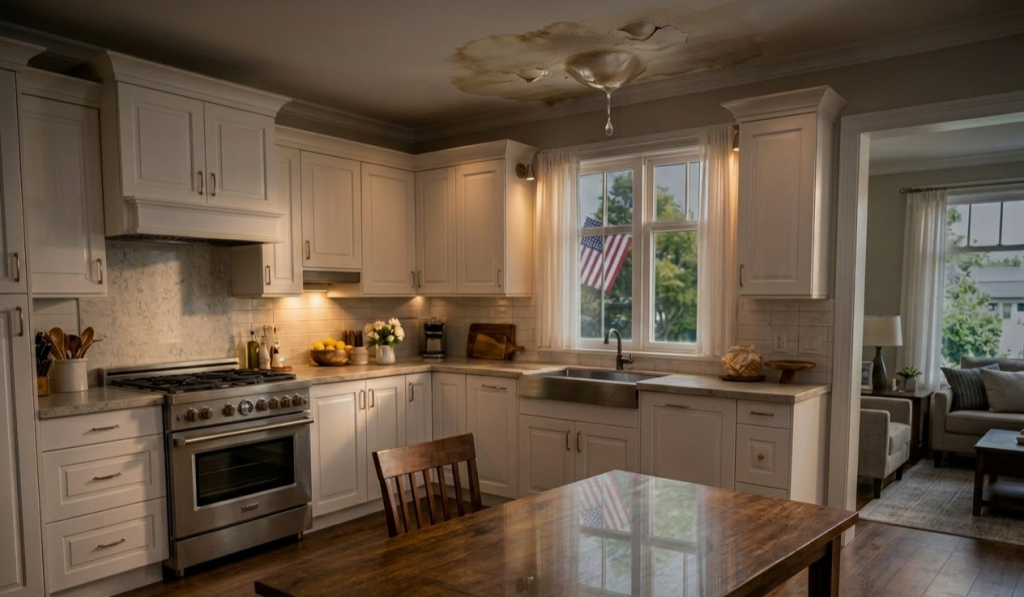
sinkholeSF28 — Water + Soil Interaction Breakdown
Water doesn’t destroy structures directly.
It changes the ground they rely on.
That’s where failure begins.
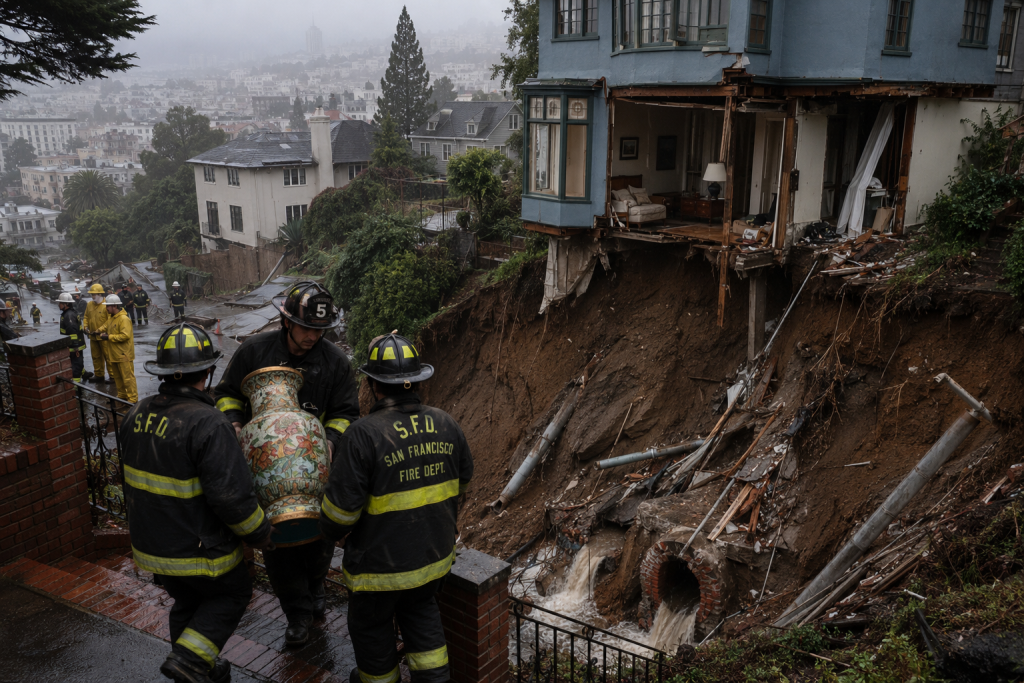
In 1995, a property in San Francisco didn’t collapse because of a single break.
A ~100-year-old sewer line lost containment during heavy rain.
Water exited the system.
Soil absorbed it.
Structure lost support.
The pipe failure mattered.
But the interaction between water and soil is what caused collapse.
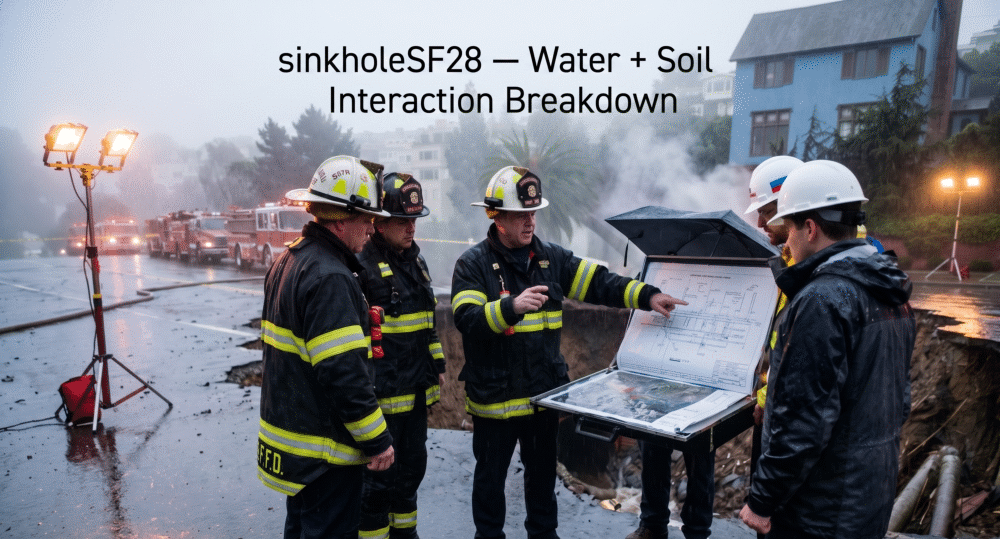
SYSTEM VS SYMPTOM BREAKDOWN
The visible event is structural failure.
The actual issue is environmental interaction.
What shows up:
- Sinkholes
- Foundation movement
- Sudden instability
- Surface collapse
What actually occurred:
- Water escaping from a closed system
- Soil saturation beyond capacity
- Loss of soil cohesion and density
- Redistribution of load beneath the structure
It changed the behavior of the ground.
FAILURE ORIGIN (NOT VISIBLE DAMAGE)
Failure starts at the interaction point.
Where water meets soil.
In the San Francisco Bay Area:
- Soil is sensitive to moisture variation
- Water movement alters compaction quickly
- Aging systems allow unintended water release
That creates a predictable breakdown:
- Pipe weakens from time and internal pressure
- Water escapes into surrounding soil
- Soil absorbs moisture and loses structural integrity
- Load-bearing capacity declines
- Ground shifts or collapses under stress
None of this requires a major break.
Only consistent exposure.
WHY REPAIRS DON’T SOLVE UNDERLYING CONDITIONS
Repairs restore the pipe.
They don’t restore the soil.
Fixing a leak:
- Stops active water flow at one point
- Does not remove moisture already introduced into the ground
- Does not rebuild soil density
- Does not correct system-wide leakage risk
The environment has already changed:
- Soil may remain saturated
- Load distribution may already be uneven
- Adjacent pipe sections remain vulnerable
So the underlying condition continues.
Even after the repair.
SYSTEM ALIGNMENT VS PATCHWORK
Water control requires system integrity.
Aligned system:
- Fully contains water within pipes
- Maintains consistent pressure across all lines
- Prevents leakage into surrounding soil
- Supports stable interaction with ground conditions
Patched system:
- Contains multiple potential leak points
- Creates pressure inconsistencies
- Allows intermittent water escape
- Introduces variability into soil conditions
Each leak affects the soil.
Each change in soil affects structural stability.
Patchwork systems multiply those interactions.
INFRASTRUCTURE → HOME (PATTERN TRANSLATION)
This same interaction breakdown happens in residential systems.
Infrastructure scale → Home scale
- Sewer failure → Plumbing leak
- Water escaping → Soil saturation under the home
- Soil weakening → Reduced support for foundation
- Collapse → Structural damage inside the property
The mechanism is identical.
Water changes soil.
Soil determines stability.

WATER + SOIL INTERACTION IN HOMES
Most homeowners focus on the pipe.
The real issue is what happens after the leak.
Early indicators:
- Damp soil near foundation
- Minor plumbing leaks
- Subtle changes in ground firmness
Mid-stage indicators:
- Repeated leaks in different areas
- Persistent moisture conditions
- Slight structural shifts
Late-stage indicators:
- Foundation cracking
- Uneven floors
- Sudden failure events
By the time structural damage appears—
the soil has already been compromised.
THE DECISION POINT
You can manage leaks as they occur.
Or you can control the system that prevents water from reaching the soil.
One addresses events.
The other controls conditions.
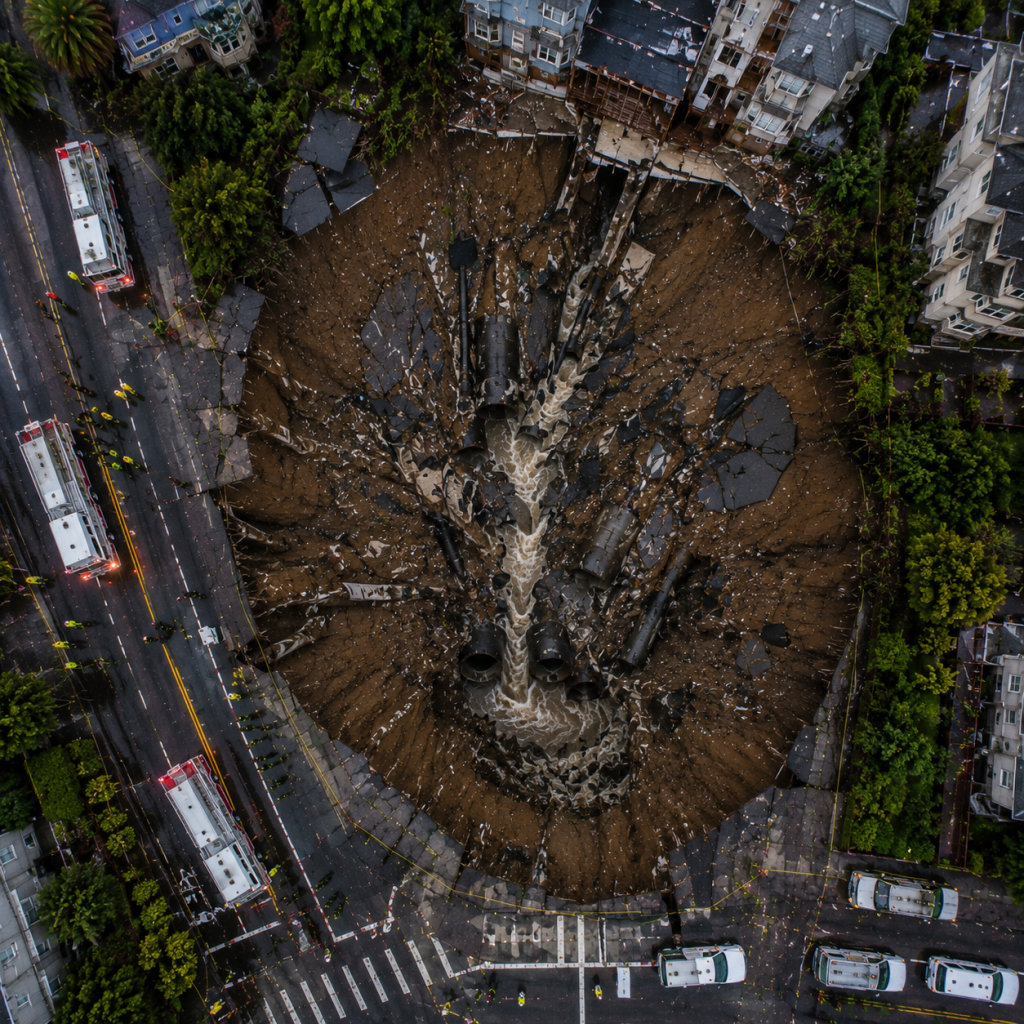
CONTROL THE SYSTEM, CONTROL THE OUTCOME
A full repipe prevents water-soil interaction breakdown.
- Eliminates aging, leak-prone piping
- Maintains full containment of water
- Prevents soil saturation beneath the structure
- Aligns the plumbing system with environmental demands
This is not a repair.
It’s system control.
Because once water changes the soil—
the structure is already at risk.