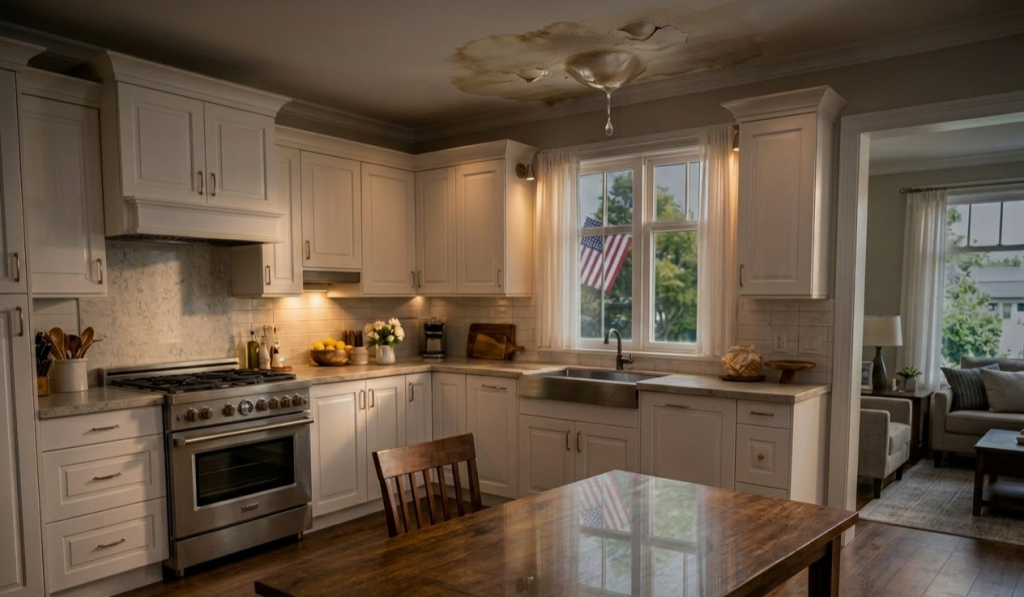
Why Indianapolis Homes Develop Hidden Pipe Corrosion Conditions
How This Helps Homeowners
Pipe corrosion rarely begins where homeowners can see it.
Most deterioration develops silently inside walls, underneath basements, below foundations, or within aging water distribution systems long before leaks appear.
Indianapolis homes experience a unique combination of environmental and infrastructure pressures that gradually accelerate internal plumbing decay:
- aging housing stock
- legacy galvanized piping
- fluctuating municipal water conditions
- freeze-thaw expansion cycles
- basement humidity exposure
- mixed-material repair histories
- long-term mineral accumulation
This research helps homeowners understand:
- why corrosion develops unevenly across Indianapolis neighborhoods
- how older plumbing materials react to decades of environmental stress
- what contractors repeatedly discover during leak investigations and repipes
- why pinhole leaks often appear after years of hidden restriction buildup
- how moisture exposure accelerates internal pipe deterioration
- where aging infrastructure places the greatest pressure on plumbing systems
- which warning signs usually appear before major corrosion failures emerge
Across Indianapolis, corrosion is rarely caused by one isolated condition.
Most systems deteriorate because several smaller forces remain active for decades at the same time.
Water chemistry changes slowly.
Pressure fluctuates repeatedly.
Humidity lingers around mechanical systems.
Older metals react internally.
Freeze expansion weakens vulnerable joints.
Eventually the plumbing system begins showing symptoms.
Not immediately.
Progressively.
Then visible damage finally appears after years of hidden decline.
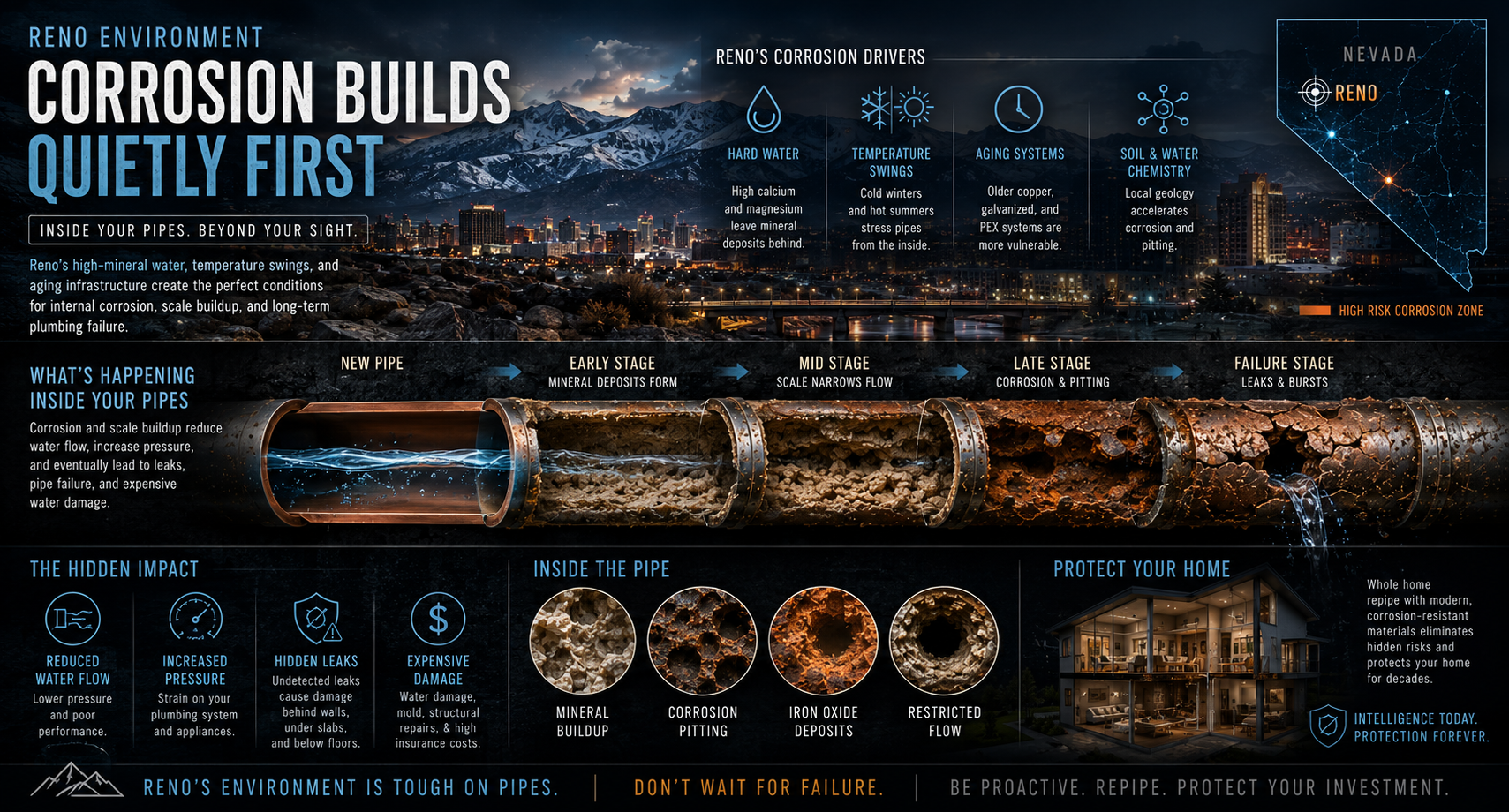
Indianapolis Housing Age Plays a Major Role in Corrosion Development
Large portions of Indianapolis were built during major industrial and suburban expansion eras spanning the early 1900s through the late twentieth century.
Many original plumbing systems still remain partially active today.
Older homes throughout Irvington, Broad Ripple, Butler-Tarkington, Meridian-Kessler, Fountain Square, and surrounding historic districts commonly contain aging infrastructure such as:
- galvanized steel supply lines
- cast iron drainage systems
- early-generation copper piping
- threaded steel fittings
- mixed-material repair transitions
- partially abandoned plumbing branches
Those materials age differently under stress.
Galvanized steel slowly narrows internally as oxidation accumulates along pipe walls.
Copper reacts to changing water conditions over decades.
Cast iron deteriorates both internally and externally depending on moisture exposure.
Contractors throughout Indianapolis regularly discover plumbing systems carrying corrosion patterns hidden for years behind finished walls and ceilings.
One section may appear structurally intact outside.
Internal flow restriction inside the same pipe can already be severe.
Homeowners often notice only indirect symptoms first:
Reduced pressure upstairs.
Discolored water after inactivity.
Temperature inconsistency between fixtures.
Recurring minor leaks.
Slow fixture recovery during simultaneous use.
Those behaviors frequently signal internal deterioration already spreading throughout the system.
Basement Moisture Quietly Accelerates Corrosion
Indianapolis homes commonly rely on basement mechanical environments.
That creates long-term humidity exposure conditions many homeowners underestimate.
Spring rainfall and snowmelt increase hydrostatic pressure around foundations throughout Central Indiana.
Older waterproofing systems weaken gradually.
Drain tile systems age.
Sump environments become overloaded during heavy seasonal saturation.
Humidity levels inside lower mechanical spaces rise slowly over time.
Once moisture becomes persistent, corrosion usually accelerates.
Cold-water lines develop exterior condensation.
Support brackets begin oxidizing.
Copper surfaces discolor.
Threaded fittings corrode around connection points.
Valve bodies deteriorate underneath insulation and storage clutter.
Contractors performing Indianapolis repipes often describe basement plumbing environments as hidden corrosion chambers operating quietly for decades.
Small environmental changes compound continuously underneath homes.
Many homeowners never enter unfinished mechanical areas frequently enough to recognize early warning signs.
Meanwhile, corrosion keeps advancing behind walls and above ceilings without interruption.
Freeze-Thaw Cycles Weaken Protective Pipe Integrity
Indianapolis winters create repeated expansion-and-contraction stress throughout residential plumbing systems.
Frozen soil expands underground.
Warmer temperatures soften support conditions.
Pipe materials contract during extreme cold.
Mechanical joints flex repeatedly over time.
That movement weakens protective surfaces surrounding aging metals.
Once small protective failures occur, corrosion often accelerates faster internally.
Contractors regularly observe freeze-related corrosion patterns near:
- crawlspace piping
- basement rim joists
- exterior wall plumbing runs
- hose bib connections
- slab penetrations
- underground service entries
Older Indianapolis homeowners frequently describe hearing ticking, popping, or vibration noises during major winter temperature swings long before visible leaks emerge.
Those sounds matter.
Mechanical stress often creates microscopic weaknesses corrosion later exploits internally.
Many plumbing systems fail slowly from combined environmental fatigue rather than one dramatic freeze event alone.
Mixed Repair Histories Create Uneven Corrosion Reactions
Indianapolis plumbing systems rarely remain untouched across generations.
Most older homes contain multiple decades of repairs, retrofits, additions, and emergency fixes layered together over time.
That creates inconsistent material interaction throughout active systems.
Contractors commonly discover combinations such as:
- galvanized connected directly to copper
- aging brass fittings near modern PEX
- partial repipes without pressure balancing
- abandoned active branches
- unsupported retrofit sections
- dissimilar metal transitions accelerating electrolysis
Different metals react differently when connected inside aging water systems.
Improper transitions can increase corrosion activity dramatically.
One section deteriorates faster than another.
Internal buildup becomes uneven.
Pressure stress concentrates inside vulnerable areas.
Eventually isolated leaks begin appearing repeatedly throughout the house.
Homeowners often assume each failure is unrelated.
Field technicians frequently recognize the broader pattern immediately.
Corrosion rarely stays isolated once system imbalance develops.
Municipal Infrastructure Aging Influences Residential Corrosion
Indianapolis infrastructure expanded across multiple generations of city growth.
Many municipal systems serving residential neighborhoods have operated under changing pressure demands for decades.
Original homeowners used significantly less water than modern households.
Early plumbing systems were not designed around:
- multi-bathroom layouts
- oversized water heaters
- high-capacity appliances
- luxury showers
- expanded additions
- modern simultaneous fixture demand
Pressure fluctuations place long-term stress on aging plumbing materials.
Repeated surges accelerate wear internally.
Protective pipe layers weaken gradually.
Valve assemblies deteriorate faster.
Mechanical vibration increases inside compromised systems.
Contractors throughout Indianapolis often identify neighborhood-wide patterns where homes built during similar eras experience recurring corrosion conditions simultaneously.
Entire blocks begin repiping within the same decade.
One house develops pinhole leaks.
Nearby homes follow months later.
Infrastructure environments shape system behavior collectively rather than individually.

Indianapolis Water Chemistry Conditions Affect Long-Term Pipe Stability
Water itself changes pipe behavior over time.
Mineral exposure, oxygen content, treatment adjustments, and flow conditions all influence how plumbing materials age internally.
Some Indianapolis homes experience gradual scale accumulation narrowing active water pathways.
Other systems develop aggressive internal corrosion where protective mineral layering never stabilizes properly.
Low-flow sections become especially vulnerable.
Unused branches stagnate.
Interior surfaces react continuously to changing conditions.
Contractors frequently discover hidden buildup inside older Indianapolis piping severe enough to restrict water delivery dramatically while exterior pipe surfaces still appear relatively normal.
Residents may first notice:
- inconsistent fixture pressure
- metallic taste changes
- reddish or brown discoloration
- recurring cartridge failures
- shortened appliance lifespan
- fluctuating hot-water performance
Corrosion usually announces itself indirectly before major leaks occur.
System behavior changes first.
Visible damage appears later.
Historic Flooding and Saturation Events Changed Infrastructure Conditions
Water has shaped Indianapolis infrastructure behavior for generations.
The Great Flood of 1913 permanently influenced regional drainage planning and urban development patterns throughout Indiana.
Repeated White River flooding events also exposed homes and utility systems to long-term saturation pressure across multiple decades.
Neighborhoods near historical flood corridors frequently experience elevated groundwater influence even years after major events disappear from public attention.
That environmental memory remains active underground.
Contractors working near older low-lying Indianapolis districts commonly identify:
- accelerated underground corrosion
- saturated utility corridors
- moisture-damaged basement infrastructure
- weakened cast iron drainage systems
- recurring seepage environments
- foundation settlement tied to prolonged moisture exposure
Corrosion accelerates significantly when underground moisture conditions remain unstable for long periods.
Water changes infrastructure behavior slowly but continuously.
What Contractors Repeatedly Discover During Indianapolis Repipe Projects
Opening walls inside aging Indianapolis homes often reveals hidden deterioration far beyond the original leak location.
Technicians regularly encounter:
- severely narrowed galvanized interiors
- pinhole copper failures hidden behind insulation
- rusted threaded joints
- moisture-damaged framing near slow leaks
- corroded shutoff assemblies
- deteriorated cast iron drainage sections
- abandoned lines still holding residual moisture
- heavy mineral buildup restricting active flow
Certain homes show evidence of corrosion progression spanning decades.
Small repairs delayed broader system replacement.
Temporary fixes masked larger infrastructure decline.
Pressure imbalance increased over time.
Flow restriction worsened gradually.
Eventually the plumbing environment became unstable throughout the structure.
Many homeowners only discover the full extent once a repipe begins.
Contractors often describe Indianapolis corrosion conditions as cumulative rather than sudden.
Every year of exposure compounds the next.
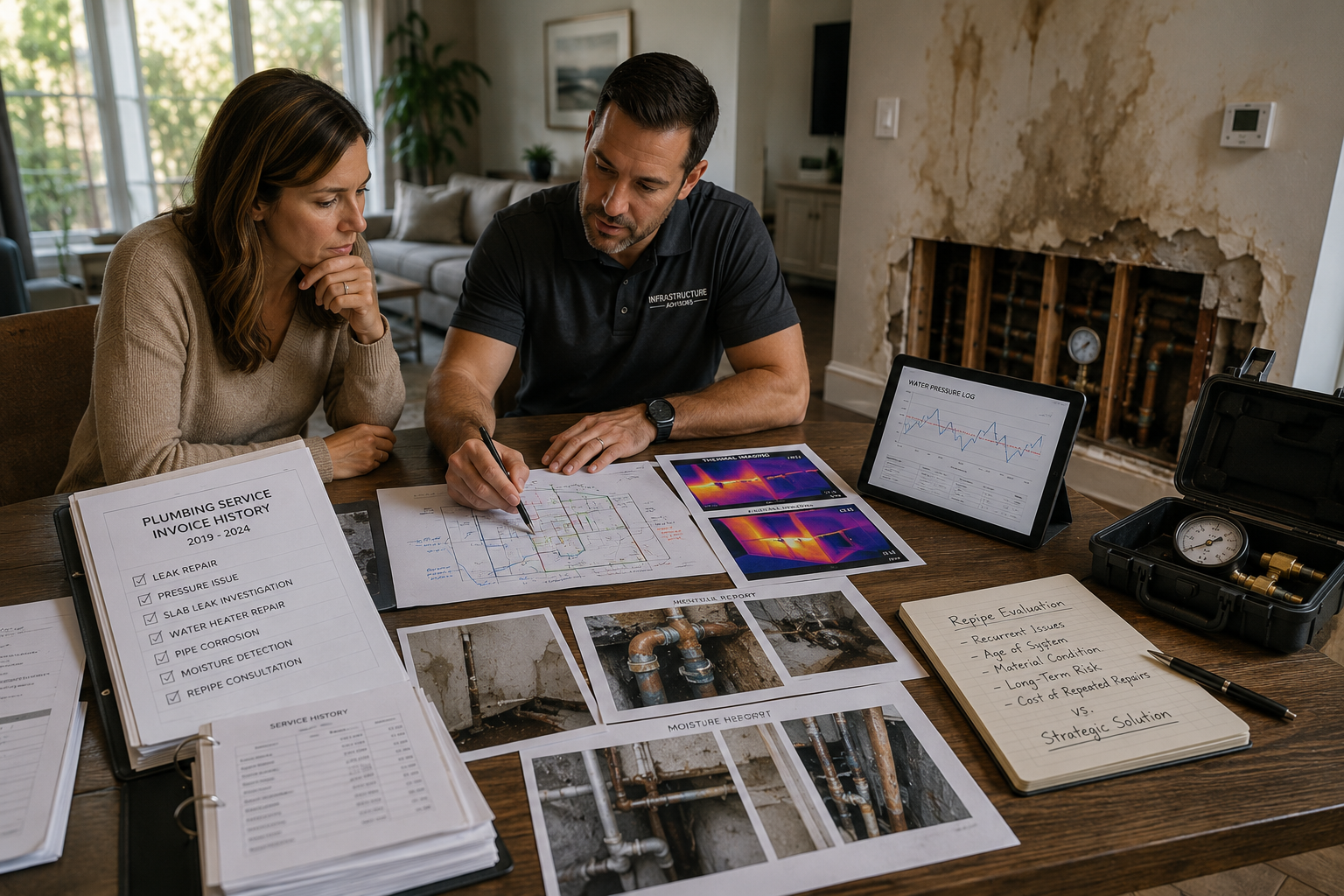
Hidden Corrosion Usually Produces Warning Patterns First
Major pipe failures rarely occur without earlier system reactions.
Pressure shifts slowly.
Water discoloration appears intermittently.
Minor leaks return repeatedly.
Fixture balance weakens.
Valve performance declines.
Drainage odors become more noticeable near mechanical spaces.
None of those symptoms automatically indicate catastrophic failure alone.
Together, however, they often reveal hidden corrosion environments developing underneath the surface.
Indianapolis homes face overlapping long-term stress from:
- freeze-thaw movement
- aging housing infrastructure
- basement moisture exposure
- mixed plumbing materials
- fluctuating municipal pressure
- groundwater saturation
- decades of repair layering
Those conditions gradually reshape plumbing systems across the city.
Understanding how corrosion develops helps homeowners recognize infrastructure behavior before deterioration escalates into structural damage, emergency flooding, or widespread system instability.
That is the purpose of Home Failure Intelligence.
Pattern recognition before failure escalation.