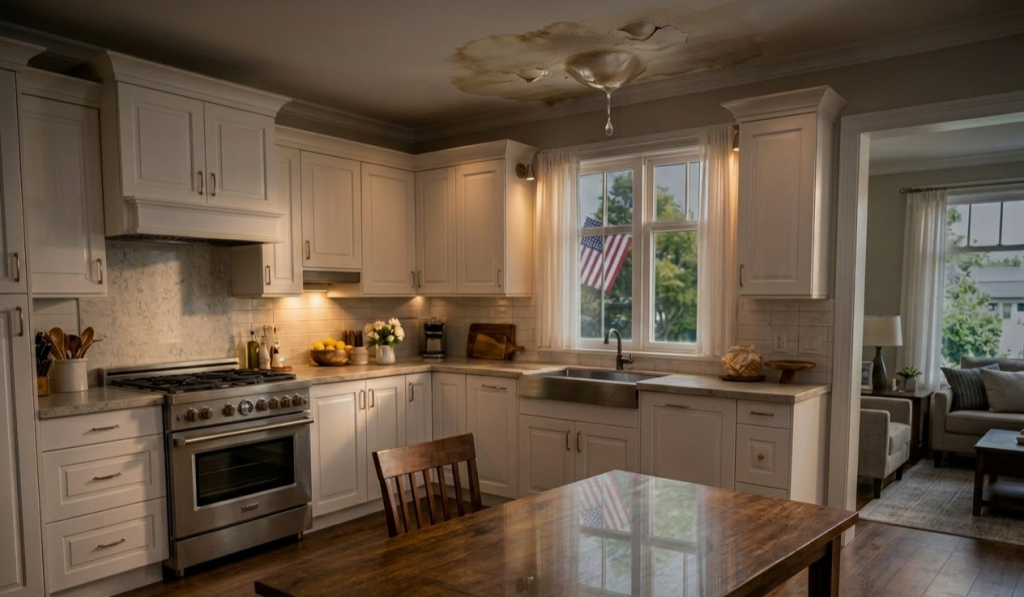
Fort Wayne Underground Plumbing Stress During Winter Expansion
How This Helps Homeowners
Underground plumbing failures in Fort Wayne rarely begin with one dramatic winter event.
Most systems weaken gradually beneath the surface as freeze expansion, soil movement, moisture saturation, and aging infrastructure interact year after year.
Many homeowners only see the final stage:
- a slab leak
- collapsing drainage
- recurring backups
- sudden pressure loss
- frozen service lines
- foundation moisture intrusion
Long before those failures appear, underground plumbing environments are already changing.
This research helps homeowners understand:
- why Fort Wayne winters place long-term stress on buried plumbing systems
- how freeze-thaw cycles reshape underground support conditions
- what contractors repeatedly discover underneath aging neighborhoods
- why older service lines deteriorate unevenly across the city
- how groundwater saturation weakens drainage infrastructure
- where winter expansion pressure creates hidden slab leak risks
- which historical housing eras carry elevated underground plumbing exposure
Across Fort Wayne, plumbing instability usually develops below visibility first.
Ground conditions shift quietly.
Soil expands incrementally.
Pipe supports weaken underground.
Moisture enters older infrastructure pathways.
Then the plumbing system begins reacting slowly over time.
Not every winter creates immediate damage.
Repeated winters change the environment itself.
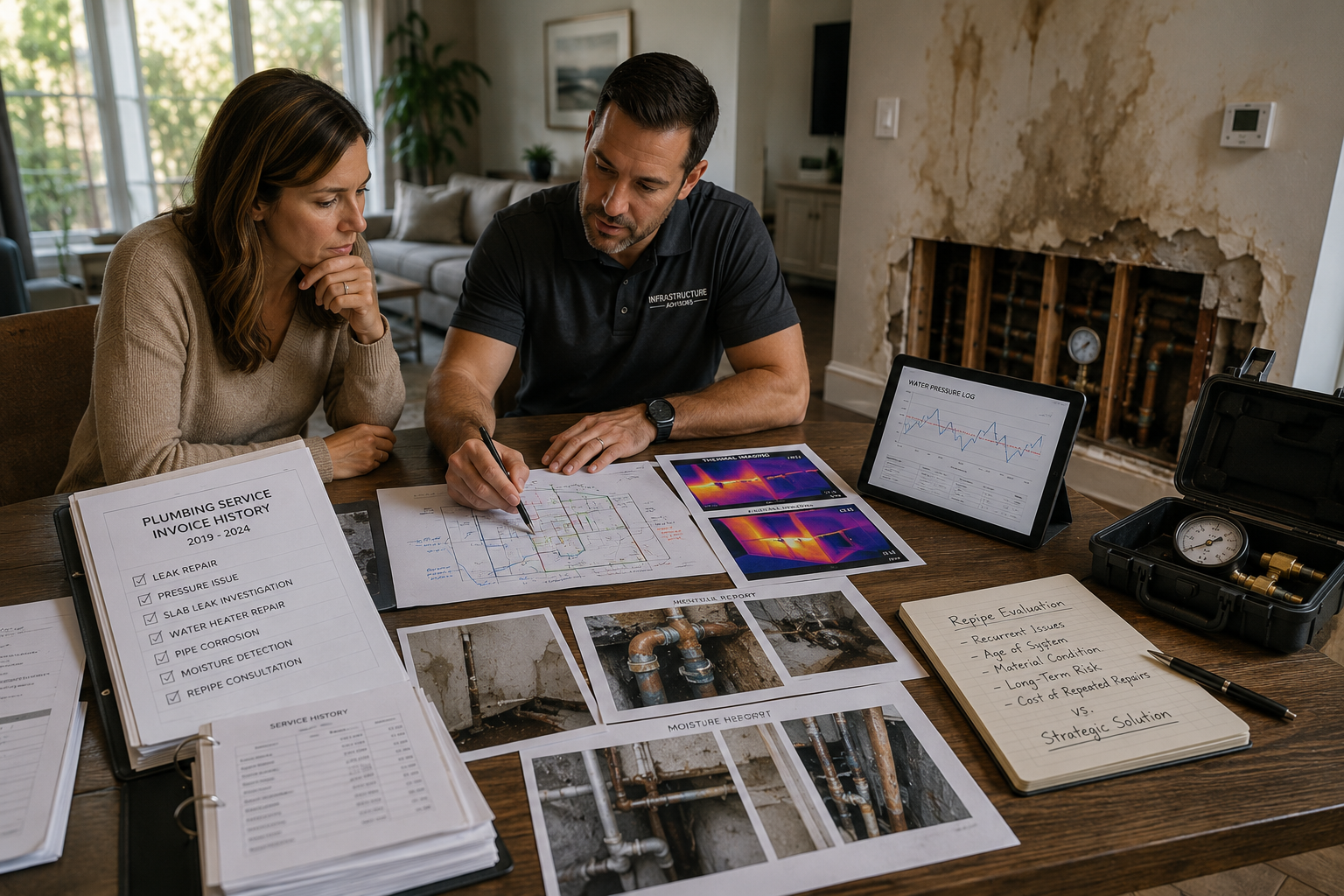
Fort Wayne Developed Around Water, Industry, and Expansion Corridors
Fort Wayne grew where rivers, transportation systems, rail networks, and industrial development intersected.
That geography shaped underground infrastructure from the beginning.
The city sits near the convergence of the St. Joseph, St. Marys, and Maumee Rivers, creating long-standing moisture and drainage management challenges throughout surrounding neighborhoods.
Early homeowners focused primarily on practicality:
- heating reliability
- industrial access
- transportation proximity
- durable construction
- flood survivability
Long-term underground plumbing lifespan rarely became the central concern during earlier development eras.
Many original neighborhoods throughout Fort Wayne still rely on aging infrastructure environments installed generations ago.
Contractors regularly encounter:
- deteriorating underground service lines
- aging cast iron drainage systems
- galvanized supply remnants
- older clay sewer laterals
- mixed-material underground repairs
- partially abandoned utility pathways
Those systems now operate under modern demand conditions they were never originally designed to support.
Water usage increased.
Homes expanded.
Appliance loads multiplied.
Mechanical systems became more complex.
Underground infrastructure absorbed that pressure slowly over decades.
Winter Freeze Expansion Quietly Reshapes Underground Pipe Support
Frozen ground does not remain static.
Soil expands during severe cold.
Moisture trapped underground shifts position.
Thaw periods soften support conditions.
Then freezing temperatures return again.
That cycle gradually changes how underground plumbing systems carry weight and pressure.
Fort Wayne winters create repeated expansion stress beneath homes, streets, sidewalks, and foundations throughout the region.
Older utility corridors become especially vulnerable because installation depth standards varied significantly across earlier construction eras.
Contractors throughout Fort Wayne often identify underground movement near:
- shallow service lines
- older sewer laterals
- slab penetrations
- crawlspace transitions
- exterior shutoff assemblies
- foundation entry points
Many homeowners never connect seasonal plumbing behavior to underground movement.
Yet recurring warning signs frequently appear first:
Pressure fluctuations during winter.
Drainage slowing after freeze events.
Hairline foundation cracking.
Intermittent basement seepage.
Pipe noises during temperature swings.
Those system reactions often signal underground stress accumulation already developing below the surface.
Clay Soil and Saturation Conditions Increase Plumbing Instability
Large portions of Northeast Indiana experience clay-heavy soil behavior affected by changing moisture conditions throughout the year.
Wet seasons saturate surrounding ground.
Dry periods create contraction.
Winter freezing introduces additional expansion pressure.
That constant environmental movement transfers stress into buried plumbing systems continuously.
Rigid pipe materials struggle most under unstable support conditions.
Older cast iron and clay sewer systems become increasingly vulnerable over time.
Long underground runs may begin shifting unevenly.
Drainage slope changes gradually.
Joints weaken internally without visible surface symptoms initially appearing.
Contractors performing Fort Wayne sewer and repipe projects regularly trace failures back to long-term soil movement rather than isolated pipe defects alone.
Environmental stress usually develops slowly.
Then one winter accelerates the visible damage already building underneath.
Homes located near historical low-lying drainage areas often experience elevated underground moisture exposure for decades without homeowners realizing how much that affects infrastructure behavior.
Basement Systems Carry Hidden Winter Moisture Pressure
Fort Wayne homes commonly rely on basements for mechanical routing and utility access.
That creates another layer of winter-related plumbing stress.
Snowmelt and seasonal saturation increase hydrostatic pressure around foundations throughout colder months and spring thaw periods.
Older waterproofing systems weaken gradually.
Drain tile systems deteriorate.
Foundation seepage pathways expand over time.
Humidity levels rise inside lower mechanical environments.
Once basement moisture becomes persistent, underground plumbing systems often deteriorate faster.
Contractors frequently discover:
- corroded drainage stacks
- moisture-damaged pipe supports
- rusted shutoff assemblies
- condensation-heavy copper lines
- weakened cast iron beneath slab sections
- basement seepage near service entry points
Many homeowners focus primarily on visible water intrusion.
Meanwhile, underground infrastructure continues absorbing moisture stress underneath the home long before major flooding occurs.
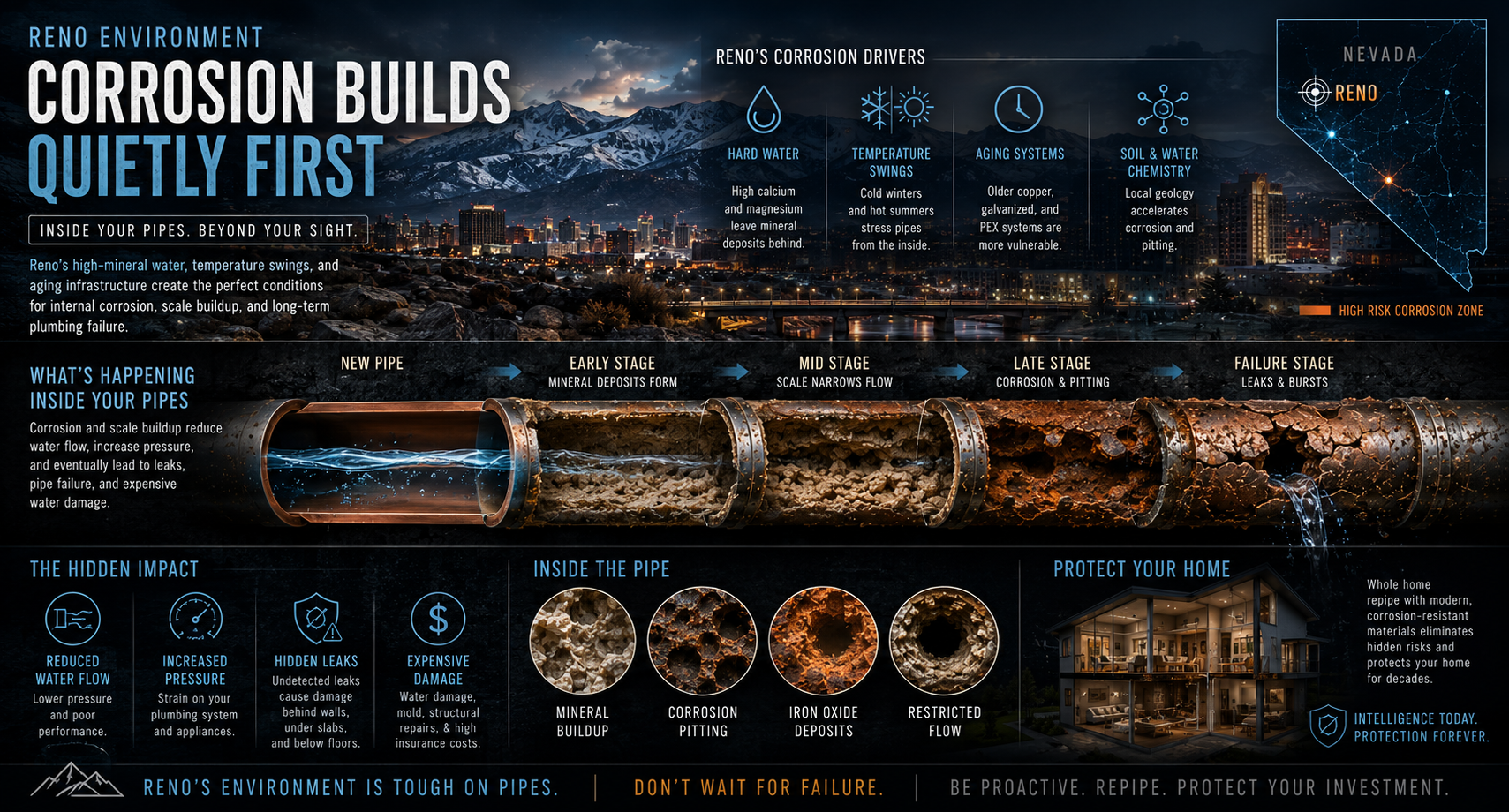
Fort Wayne’s Older Neighborhoods Show Repeating Infrastructure Patterns
Certain plumbing failures repeat geographically across Fort Wayne because many homes were constructed during the same development periods using similar materials and installation methods.
Technicians working in older neighborhoods often encounter recurring conditions house after house.
One block may experience:
- aging galvanized restriction
- sewer lateral collapse
- winter-related service line cracking
- cast iron deterioration
- recurring basement seepage
- pressure imbalance tied to older infrastructure
Another area may reveal widespread slab-edge movement connected to soil expansion and long-term drainage instability.
Contractors recognize those neighborhood-wide patterns quickly because underground systems age collectively under similar environmental conditions.
Homeowners usually experience only their individual property symptoms without seeing the broader infrastructure picture.
That difference matters.
Plumbing systems rarely deteriorate randomly across aging Midwestern cities.
Patterns repeat where environmental forces remain consistent.
Historic Flooding and River Conditions Shaped Underground Infrastructure
Fort Wayne’s river geography influenced infrastructure behavior long before modern plumbing systems existed.
Repeated flooding events throughout Indiana history changed how neighborhoods developed, where utility corridors expanded, and how drainage systems evolved.
Major regional flooding periods exposed weaknesses in older underground infrastructure repeatedly over generations.
Saturated soil conditions accelerate:
- underground corrosion
- sewer deterioration
- lateral shifting
- drainage instability
- foundation settlement
- pipe joint separation
Environmental memory remains active underground even after visible flood damage disappears.
Contractors working near older river-adjacent sections of Fort Wayne frequently identify long-term moisture influence affecting buried plumbing systems decades later.
Water changes infrastructure slowly.
Soil remembers saturation patterns long after homeowners forget earlier flood cycles.
Mixed-Era Repairs Create Uneven Underground System Behavior
Most older Fort Wayne homes no longer contain one continuous original plumbing system.
Decades of repairs, retrofits, additions, and emergency fixes created layered underground infrastructure environments.
Contractors regularly uncover:
- partial sewer replacements
- mixed pipe materials
- abandoned underground branches
- poorly supported transition points
- aging repair clamps
- uneven slope corrections
- disconnected drainage sections
Different materials react differently to freeze expansion and moisture exposure.
One underground section may remain stable.
Another nearby area begins separating under seasonal movement pressure.
Those inconsistencies create uneven stress distribution throughout the system.
Homeowners often assume a single repair solved the issue permanently.
Underground environments usually continue evolving after localized fixes occur.
What Contractors Repeatedly Discover During Winter Plumbing Failures
Cold-weather emergency calls across Fort Wayne frequently reveal much larger infrastructure problems hiding underneath the immediate symptom.
A frozen pipe may expose:
- deeper corrosion conditions
- underground movement
- pressure imbalance
- weakened service connections
- drainage collapse beginning nearby
- long-term moisture deterioration
Field technicians commonly describe winter failures as “exposure events” rather than isolated incidents.
Extreme cold often reveals weaknesses already developing quietly for years.
Opening floors and walls inside older homes regularly uncovers:
- restricted galvanized interiors
- cracked cast iron sections
- moisture-damaged framing
- unsupported basement piping
- shifting underground drainage
- corroded service entries
Most of those conditions formed progressively across decades of environmental stress.
Winter simply forces the system to react visibly.
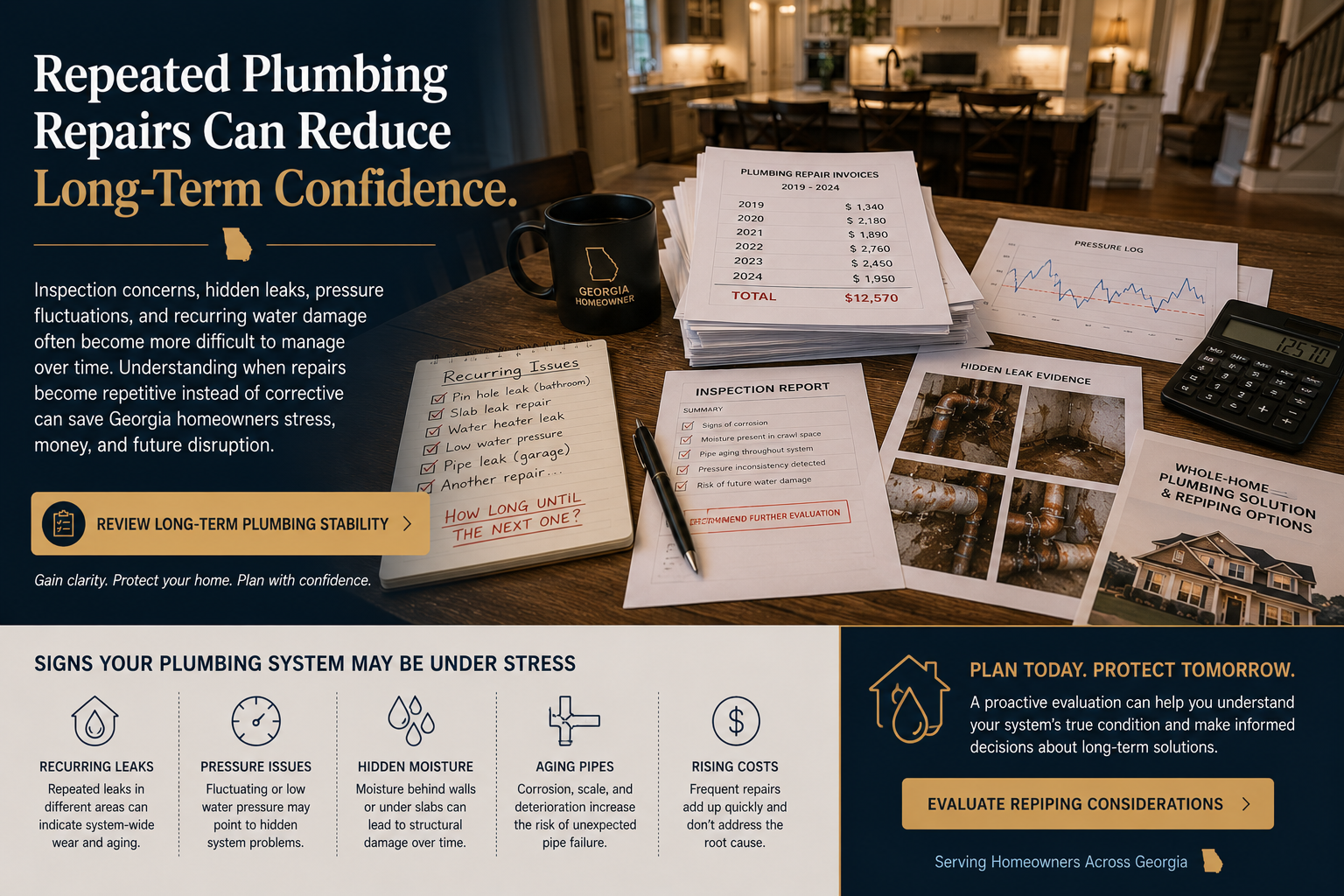
Underground Plumbing Stress Usually Produces Early Warning Signs
Major underground failures rarely appear without earlier behavioral changes.
Pressure weakens gradually.
Basement odors become more noticeable.
Drainage timing shifts seasonally.
Minor seepage develops near foundations.
Recurring winter pipe noise increases.
Fixture performance becomes inconsistent.
None of those symptoms automatically indicate catastrophic failure by themselves.
Together, however, they often reveal hidden underground stress environments forming beneath the home.
Fort Wayne plumbing systems operate under overlapping pressure from:
- freeze-thaw expansion
- clay soil movement
- aging infrastructure
- river-driven moisture conditions
- basement saturation exposure
- mixed-era repair histories
- underground drainage instability
Those forces reshape buried plumbing systems slowly over time.
Understanding those patterns helps homeowners recognize environmental infrastructure behavior before underground stress escalates into major structural damage, emergency flooding, or full-system instability.
That is the purpose of Home Failure Intelligence.
Seeing the pressure before the ground finally reacts.