sinkholeSF18 — Aging Infrastructure Meets Coastal Stress
Urban systems do not fail in isolation.
They fail where environment and infrastructure intersect.
San Francisco sits at that intersection. Coastal moisture. Variable soils. Aging underground networks. Continuous demand.
In 1995, a Sea Cliff property collapsed when a century-old sewer line failed during heavy rain. The pipe did not fail because of a single event. It failed because long-term degradation met short-term environmental stress.
That convergence defines systemic risk in coastal cities.
Infrastructure Age vs Load Demand
San Francisco’s underground systems were built across multiple eras.
Each era carried different assumptions:
- Lower water usage per property
- Less concentrated runoff from paved surfaces
- Fewer simultaneous demand spikes across neighborhoods
Today, those assumptions no longer hold.
Modern usage introduces higher and more volatile flow conditions. Storm events produce rapid inflow surges. Residential and commercial systems operate at greater intensity.
At the same time, the infrastructure carrying that load continues to age.
Materials lose structural integrity. Joint systems weaken. Protective linings degrade.
The system absorbs more stress with less capacity.
This creates a persistent imbalance:
- Increased hydraulic load vs declining material strength
- Modern demand cycles vs legacy system design
- Extended service life vs original lifespan expectations
The result is not immediate failure.
It is gradual instability across the network.

Subsurface Monitoring Limitations
Cities do not monitor underground systems in real time.
They rely on scheduled inspections, maintenance records, and reactive repair data.
This introduces structural limitations:
- Inspections are intermittent, not continuous
- Access constraints limit full system visibility
- Historical records may not reflect undocumented modifications
- Environmental conditions between inspections are not captured
In coastal environments, conditions change quickly.
Moisture levels fluctuate. Soil density shifts. Ground movement occurs at micro levels.
These changes are not fully observable through standard inspection cycles.
As a result, the system’s actual condition diverges from its recorded condition.
That gap is where risk develops.
Why Failures Remain Undetected
Failure progression begins below the threshold of detection.
Early-stage degradation is internal.
Minor leaks form. Pipe walls thin. Joints separate slightly.
Water begins to escape into surrounding soil.
In coastal areas, this process accelerates.
Moisture is already present. Soil saturation increases quickly. Structural support weakens faster than in drier environments.
At this stage:
- System function appears normal
- Flow continues without interruption
- No surface indicators are present
Below ground, conditions are changing.
- Soil cohesion decreases
- Load-bearing capacity shifts
- Voids begin to develop around weakened sections
Each stage is incremental.
None trigger immediate response.
Failure becomes visible only when accumulated degradation reaches a tipping point.
At that point, collapse appears sudden.
The underlying process has been active for years.
Coastal Stress Compounding System Pressure
Coastal cities introduce a layered stress environment.
San Francisco combines several factors:
- Elevated moisture exposure
- Variable soil composition
- Continuous ground movement
- Aging infrastructure networks
During heavy rain, these factors align.
- Increased internal flow raises pipe pressure
- External soil saturation reduces structural support
- Ground movement alters alignment and stress distribution
- Existing material fatigue limits system response
These forces do not act independently.
They amplify each other.
A weakened pipe under normal conditions may remain stable.
Under compounded coastal stress, it becomes a failure point.
This is how localized degradation becomes a system-level event.

Mapping Risk in a Coastal Infrastructure System
Risk mapping in a coastal city is inherently uncertain.
Infrastructure data provides location.
It does not provide real-time condition.
In San Francisco, variability is high:
- Different installation periods across neighborhoods
- Mixed materials and repair histories
- Soil conditions that shift with moisture levels
- Micro-movement patterns that are not consistently tracked
Planners use indicators to prioritize risk:
- Age of infrastructure segments
- Known problem zones with recurring repairs
- Areas with high groundwater interaction
- Regions subject to soil movement
These indicators guide planning.
They do not eliminate blind spots.
The most critical vulnerabilities often develop between inspection cycles and outside mapped assumptions.
Post-Event Planning and Code Implications
After a failure event, response is focused and immediate.
The affected infrastructure is replaced. Surrounding ground is stabilized. Access and safety are restored.
Post-event analysis identifies contributing conditions.
Policy responses typically include:
- Updated material standards for replacement
- Increased inspection frequency in similar zones
- Enhanced stormwater management considerations
- Prioritization of high-risk infrastructure segments
These changes improve localized resilience.
They do not fully resolve systemic exposure.
Legacy systems remain in operation across the city.
Upgrades occur in phases.
Environmental stress continues to act on both old and new segments.
Long-term planning must address full-system interaction, not isolated failure points.
System Translation: Coastal Infrastructure to Residential Risk
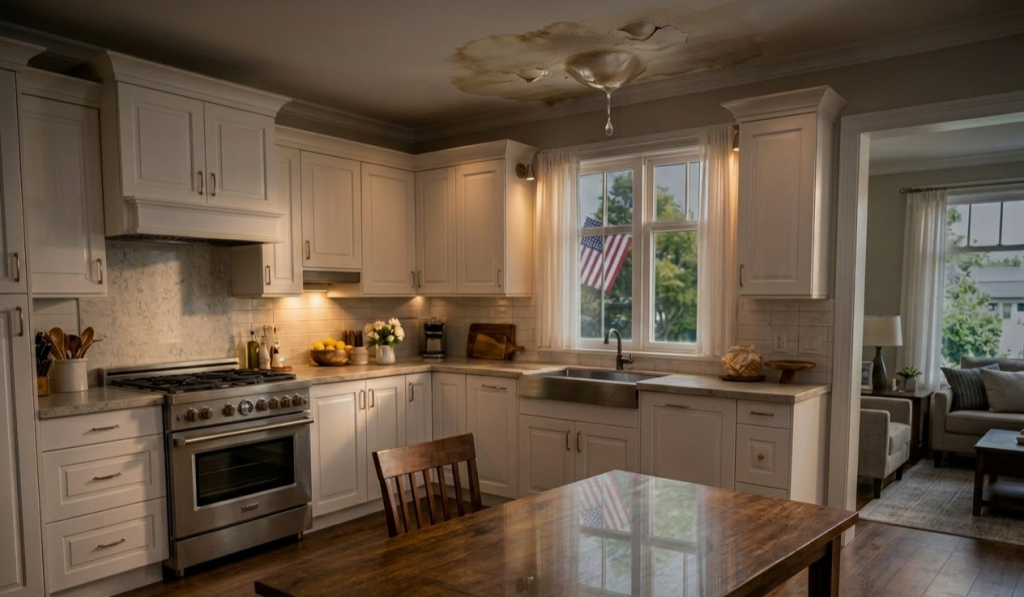
The same forces affecting city infrastructure apply at the residential level.
Scale changes. Mechanics do not.
- Sewer degradation → interior pipe corrosion or leaks
- Soil saturation → crawlspace moisture or slab instability
- Ground movement → pipe stress and misalignment
- Sudden collapse → pipe rupture and interior flooding
Homes in coastal environments operate within this broader system.
Internal plumbing does not exist independently.
It is influenced by external conditions and infrastructure performance.
Understanding that connection is critical for risk management.

Long-Horizon Planning Reality
Cities manage infrastructure through phased investment.
Full replacement is constrained by cost, access, and operational disruption.
This creates a hybrid system:
- New segments integrated with aging infrastructure
- Variable performance across short distances
- Uneven risk distribution across neighborhoods
Surface stability does not indicate system health.
Subsurface conditions determine long-term reliability.
Planning must account for uncertainty, variability, and environmental compounding.
Direction Forward
Coastal infrastructure requires a different evaluation model.
One that accounts for:
- Continuous environmental stress
- Aging material performance
- Dynamic subsurface conditions
This shifts the focus:
From reactive repair to predictive assessment.
From isolated fixes to coordinated system upgrades.
From visible condition to underlying risk analysis.
System-level audits provide a structured approach to this problem.
They identify where infrastructure is operating outside safe thresholds.
They allow intervention before failure becomes visible.
Explore how system-level plumbing evaluations identify hidden risks and prevent underground failure in high-moisture environments: