Idaho Falls Freeze Expansion and Pressure Imbalance Risks
How This Helps Homeowners
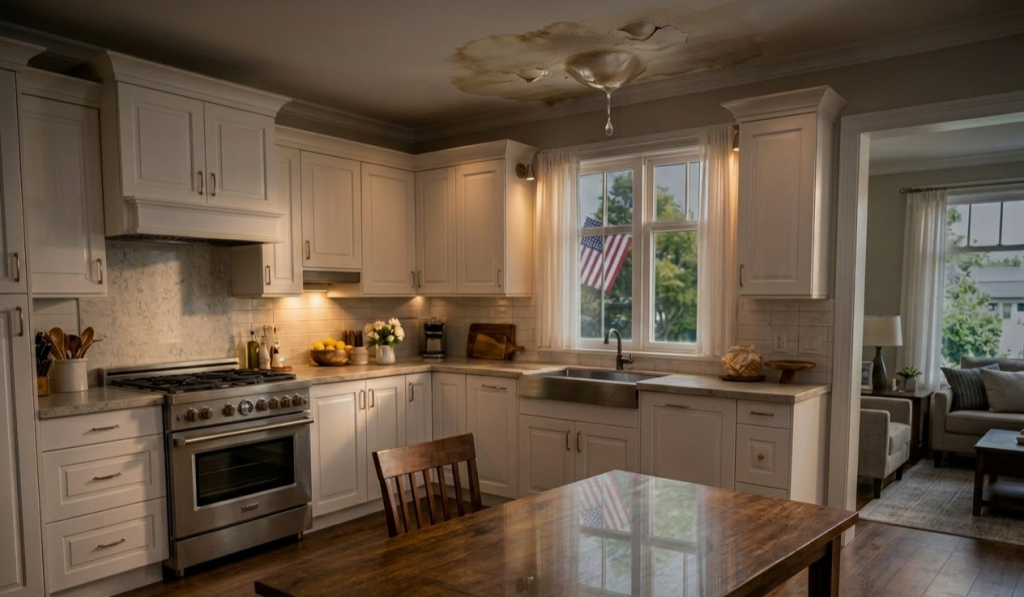
Plumbing failures across Idaho Falls often begin long before a pipe bursts visibly inside the home.
Small pressure inconsistencies.
Minor seasonal leaks.
Reduced fixture balance.
Intermittent pipe noise during winter.
Uneven hot water delivery between floors.
Many of those symptoms trace back to freeze expansion stress and long-term pressure imbalance developing quietly underneath the plumbing system over time. Understanding how Idaho Falls winters, groundwater conditions, agricultural expansion, elevation changes, and seasonal temperature swings affect residential plumbing helps homeowners identify hidden risks earlier before underground leaks, pipe separation, slab damage, or major structural repairs become significantly more expensive.
Idaho Falls Plumbing Systems Operate Inside Extreme Seasonal Swings
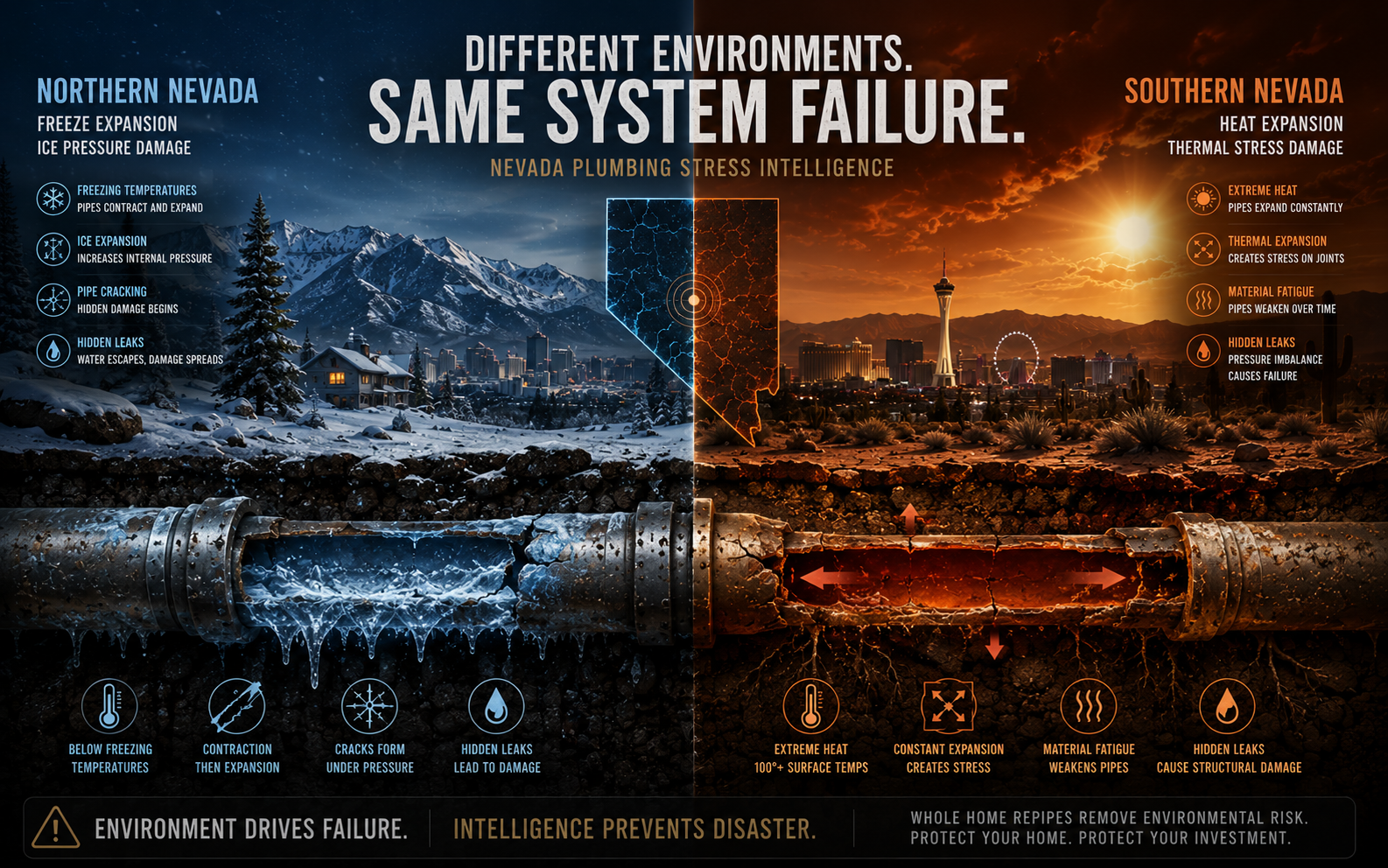
Eastern Idaho creates one of the most aggressive freeze environments in the region.
Winter temperatures remain severe for extended periods.
Rapid temperature transitions place continuous stress on residential plumbing infrastructure throughout Idaho Falls and surrounding communities.
Water expands during freezing conditions.
Pipe materials contract repeatedly under prolonged cold exposure.
Mechanical systems cycle constantly between thermal extremes throughout the year.
Early homeowners across Idaho Falls often built around practicality and survival rather than long-term infrastructure flexibility. Many older systems were installed during eras when homes carried lower fixture demand, smaller plumbing networks, and far less year-round water usage compared to modern residential expectations.
Current systems absorb much heavier operating pressure.
Environmental stress compounds that difference over time.
Freeze Expansion Slowly Weakens Underground Plumbing
Frozen pipes represent only the visible version of freeze damage.
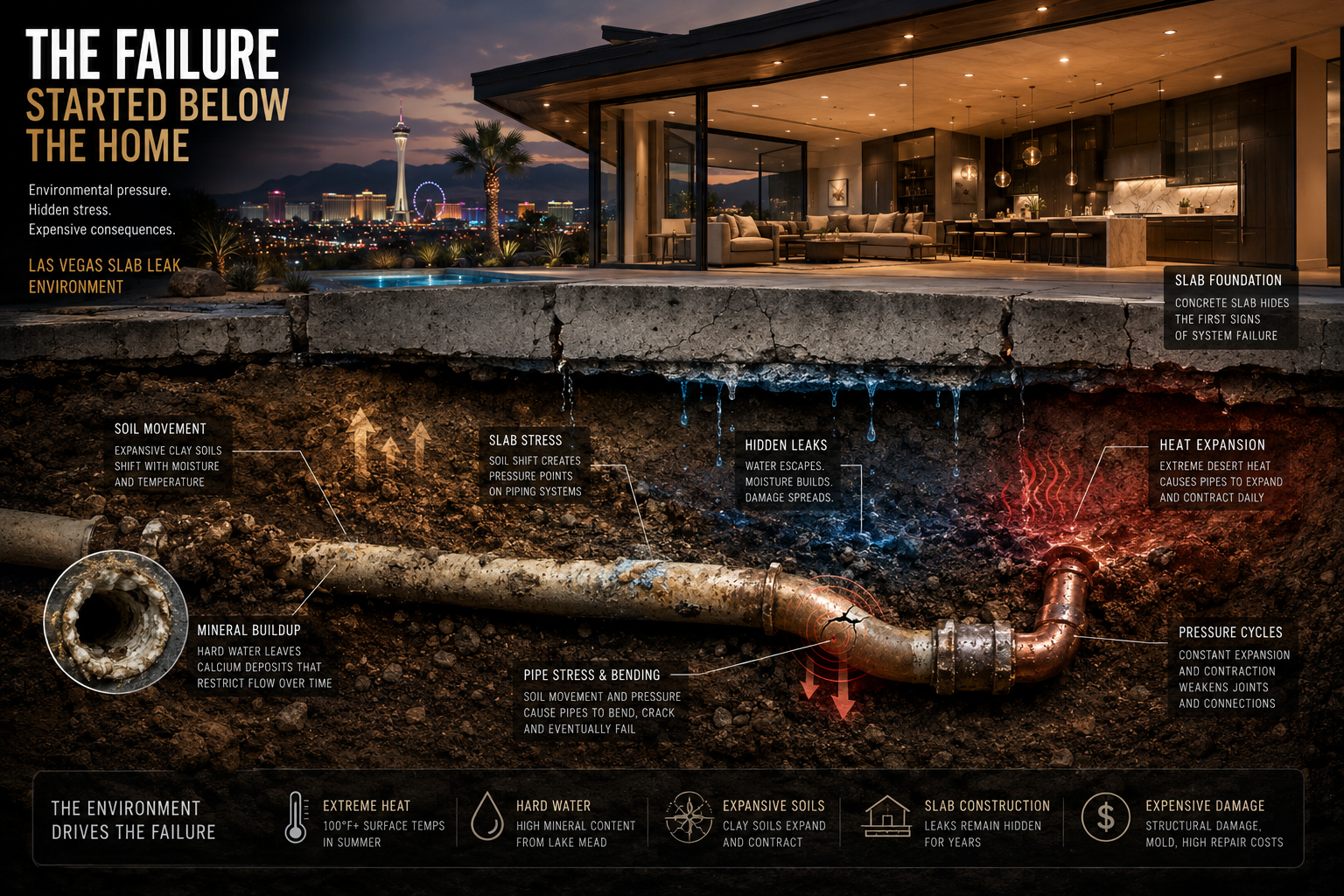
Subsurface movement creates additional long-term deterioration underneath the property itself.
Moisture trapped inside surrounding soil expands during deep freeze periods and contracts again during seasonal thaw cycles. Underground utility lines absorb repeated shifting pressure underneath foundations, driveways, crawlspaces, and landscaping corridors.
Small alignment changes accumulate gradually.
Directional fittings experience continuous tension.
Pipe joints weaken underneath recurring seasonal movement.
Contractors throughout Idaho Falls frequently uncover underground fractures that developed over multiple winters rather than one isolated freeze event.
Minor leaks often remain hidden because frozen or saturated soil conceals moisture migration beneath the surface initially.
Pressure imbalance commonly appears before visible structural symptoms develop indoors.
Snowmelt Conditions Intensify Underground Saturation
Eastern Idaho winters do not end cleanly.
Heavy snowpack eventually transitions into widespread saturation conditions during spring thaw periods.
Groundwater movement increases substantially underneath residential neighborhoods after prolonged freeze exposure.
Drainage systems absorb additional environmental loading.
Underground leaks become harder to identify because surrounding soil already contains elevated moisture naturally during thaw cycles.
Contractors frequently encounter foundation dampness, shifting slab conditions, and underground utility stress tied directly to repeated snowmelt exposure across older Idaho Falls properties.
Long-term saturation weakens soil stability around buried plumbing infrastructure over time.
Environmental movement quietly compounds pressure on already vulnerable systems.
Pressure Imbalance Develops Quietly Across the Entire Home
Pressure problems rarely begin dramatically.
One bathroom fixture may weaken slightly.
A second-floor shower might fluctuate inconsistently.
Outdoor irrigation occasionally changes indoor water behavior.
Those subtle changes often indicate larger system imbalance developing underneath the surface.
Idaho Falls homes frequently experience pressure variation caused by elevation shifts, municipal cycling, freeze-related restriction, aging regulators, mineral buildup, and expanding residential demand across older infrastructure networks.
Repeated fluctuation stresses vulnerable plumbing components continuously.
Valves fatigue gradually.
Supply lines absorb uneven operating pressure across different areas of the structure.
Contractors often discover widespread imbalance conditions during evaluations where homeowners originally believed they were addressing only one isolated fixture issue.
Hard Water Restriction Amplifies Freeze Stress
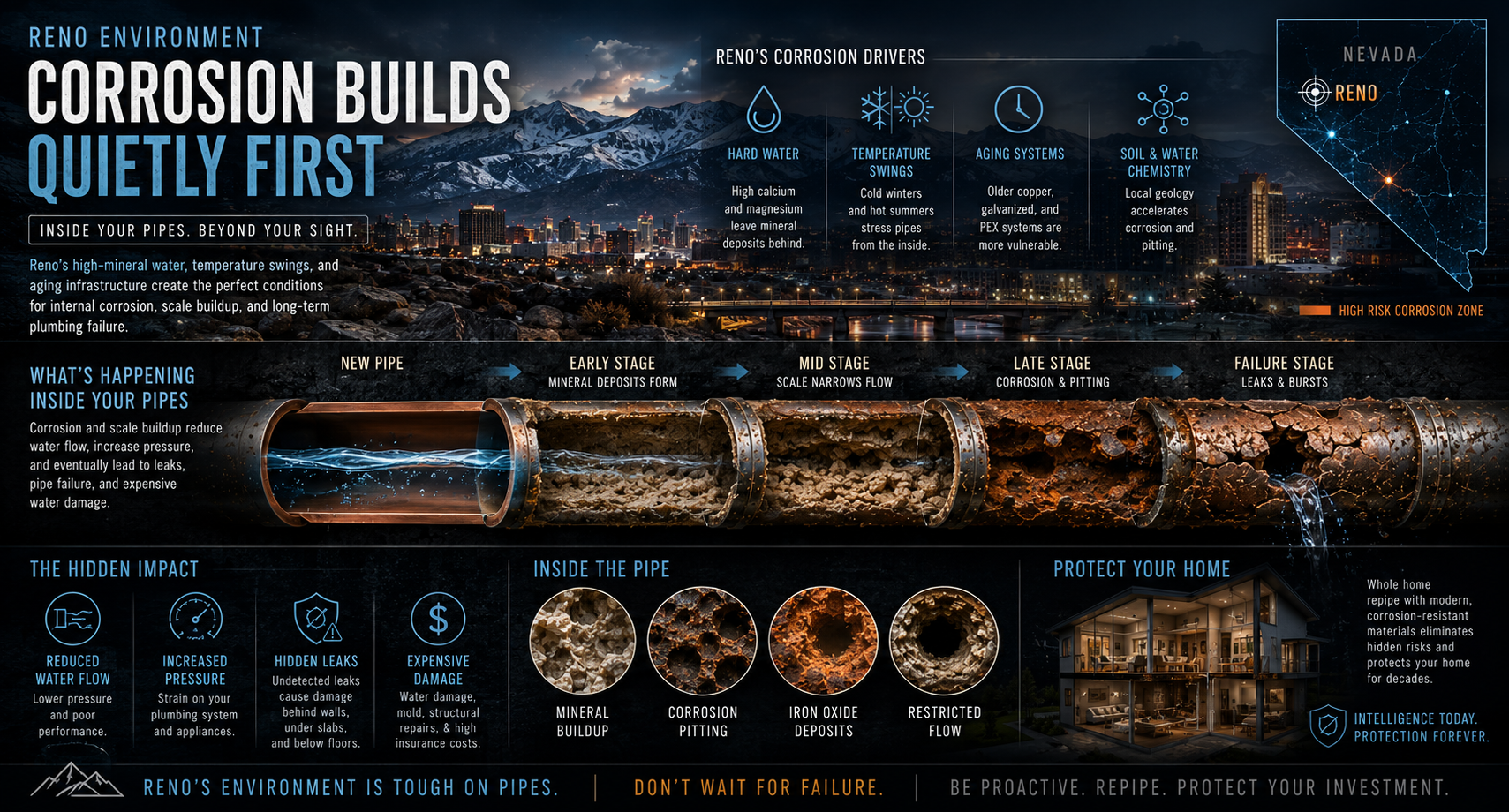
Eastern Idaho groundwater commonly carries elevated mineral content.
Scale accumulation slowly narrows interior pipe diameter over time.
Restricted pathways change how water behaves during freezing conditions.
Pressure concentrates unevenly around narrowed sections of the plumbing system.
Older copper and galvanized lines become increasingly vulnerable once mineral buildup combines with seasonal thermal expansion.
Contractors frequently uncover freeze-related failures adjacent to heavily scaled sections of aging pipe throughout Idaho Falls homes.
Many homeowners adapt gradually to declining pressure without realizing hidden restriction continues reshaping the system internally year after year.
The plumbing network compensates quietly until environmental stress eventually exceeds system tolerance.
Crawlspaces and Basements Carry Elevated Risk
Older Idaho Falls homes often contain plumbing infrastructure routed through basements, utility corridors, or crawlspaces exposed to fluctuating environmental conditions.
Cold air infiltration creates localized freeze zones underneath the structure.
Insulation gaps increase vulnerability around exterior-facing supply lines.
Seasonal condensation develops during transitional weather periods.
Restricted airflow slows drying after minor leaks occur.
Contractors routinely encounter hidden corrosion, deteriorating supports, moisture saturation, and long-term pipe stress underneath homes where environmental exposure remained active for years without direct homeowner awareness.
Most deterioration expands invisibly until flooring movement, odor development, or visible leakage finally emerges upstairs.
Agricultural Infrastructure Shaped Regional Plumbing Behavior
Water management defines eastern Idaho historically.
Irrigation systems, canal infrastructure, and agricultural expansion reshaped underground moisture behavior throughout the Idaho Falls region over generations.
Former agricultural land eventually transitioned into suburban development across many residential corridors.
Soil conditions changed underneath those properties over time.
Long-term irrigation exposure influenced settlement behavior, groundwater movement, and underground saturation patterns surrounding newer subdivisions.
Contractors frequently observe shifting drainage pathways and unstable underground conditions beneath neighborhoods originally developed on transformed agricultural terrain.
Environmental history continues affecting modern plumbing performance beneath the surface today.
Contractors Frequently See Layered System Fatigue
Most plumbing failures across Idaho Falls develop through accumulated stress rather than one isolated event.
Freeze pressure interacts with aging materials.
Mineral buildup compounds restriction.
Pressure cycling weakens fittings gradually.
Thermal expansion repeatedly stresses seals and joints throughout the structure.
Contractors often discover multiple hidden vulnerabilities during what initially appears to be a simple repair visit.
One burst pipe may reveal broader underground instability.
A leaking valve frequently exposes pressure imbalance affecting the entire home.
Visible failures usually represent the final stage of a much longer deterioration process already underway.
Rapid Regional Growth Increased Infrastructure Demand
Eastern Idaho growth expanded residential demand substantially across recent decades.
New subdivisions connected into infrastructure systems originally developed under lower population expectations.
Larger homes introduced higher fixture counts and increased year-round water usage.
Pressure behavior shifted throughout expanding service areas.
Some neighborhoods now experience operating conditions very different from those present when the original plumbing systems were first installed.
Environmental loading increased quietly underneath the region’s infrastructure as development accelerated outward.
Residential plumbing systems absorb those changes continuously beneath the surface.
Idaho Falls Homes Experience Constant Environmental Pressure
Freeze expansion remains active every winter.
Pressure imbalance develops gradually across aging systems.
Snowmelt saturation alters underground stability.
Mineral-heavy water reshapes pipe interiors slowly over time.
Thermal cycling repeatedly stresses vulnerable plumbing components throughout the structure.
Understanding those combined patterns helps homeowners recognize why Idaho Falls plumbing failures often emerge quietly before eventually escalating into larger structural and water damage conditions.
Most systems deteriorate incrementally.
Environmental pressure simply continues building until the infrastructure finally reacts visibly.