sinkholeSF20 — From Collapse to Code Changes in SF
Cities rarely change because of theory.
They change because something fails.
In 1995, a Sea Cliff property in San Francisco collapsed after a century-old sewer line failed during heavy rain. The event forced a shift—from assuming system stability to confronting subsurface uncertainty.
Failure became data.
And data reshaped policy.
Infrastructure Age vs Load Demand
San Francisco’s underground systems reflect layered development.
Pipes installed decades ago were designed for a different city:
- Lower daily water demand
- Less concentrated stormwater runoff
- Simpler network connections
Today, those same systems operate under modern conditions.
Higher density increases usage. Impermeable surfaces accelerate runoff. Peak flows occur more frequently and with greater intensity.
At the same time, infrastructure continues to age.
- Materials weaken
- Joints lose integrity
- Internal surfaces degrade
This creates a structural imbalance:
- Legacy capacity vs modern load
- Aging materials vs increasing pressure cycles
- Extended use vs original lifespan
The system remains operational.
But it operates closer to failure thresholds.

Subsurface Monitoring Limitations
City infrastructure is largely invisible.
Monitoring depends on indirect methods:
- Scheduled inspections
- Maintenance records
- Surface-level indicators
These methods provide partial insight.
They do not capture continuous change.
Key constraints include:
- Limited access to buried systems
- Incomplete or outdated installation records
- Inability to observe surrounding soil conditions in real time
- Inspection cycles that miss progression between intervals
Cities manage what they can observe.
Subsurface systems evolve outside that visibility.
Why Failures Remain Undetected
Infrastructure failure is not a single event.
It is a sequence.
It begins with small, internal changes:
- Minor leaks at pipe joints
- Gradual material thinning
- Slight alignment shifts
These changes allow water to escape.
Soil begins to absorb moisture.
Structural conditions start to change below ground.
- Soil density decreases
- Load-bearing capacity weakens
- Voids begin to form
At this stage, the system still functions.
There are no visible indicators.
Over time, these processes compound.
Pressure fluctuations increase stress. Water movement accelerates erosion. Ground movement alters support conditions.
Eventually, the system crosses a threshold.
Collapse occurs.
The visible event is sudden.
The underlying process is long-term.
Event to Policy: How Collapse Drives Code
After a failure, cities analyze.
Not just the event.
The system conditions that allowed it.
In San Francisco, events like the Sea Cliff collapse influence multiple layers of planning:
- Inspection protocols are revisited
- High-risk zones are reclassified
- Material standards for replacement are updated
- Stormwater and load assumptions are adjusted
Code does not change instantly.
It evolves through accumulation.
Each failure contributes to a larger dataset.
Over time, that dataset informs:
- Capital improvement planning
- Replacement prioritization
- Engineering standards for new installations
Policy becomes a reflection of past failures.
Limits of Code-Based Solutions
Code changes improve future installations.
They do not fully resolve existing conditions.
Legacy infrastructure remains in operation.
- Older materials continue to carry load
- Previous installation methods remain in place
- Environmental exposure continues to affect aging systems
Upgrades occur incrementally.
Full replacement is constrained by cost and disruption.
This creates a hybrid system:
- New segments built to updated standards
- Older segments operating under outdated assumptions
Risk is reduced in parts.
It persists across the whole.
Mapping vs Reality in a Dynamic System
Infrastructure maps show where systems are located.
They do not show how systems are performing.
In a city like San Francisco, variability is high:
- Different installation periods across neighborhoods
- Mixed materials and repair histories
- Soil conditions influenced by moisture and movement
Mapping provides structure.
It does not provide condition certainty.
Planners use indicators to estimate risk:
- Age of infrastructure
- Frequency of past repairs
- Environmental exposure factors
These estimates guide decisions.
They do not eliminate uncertainty.
System Translation: Infrastructure to Property-Level Risk
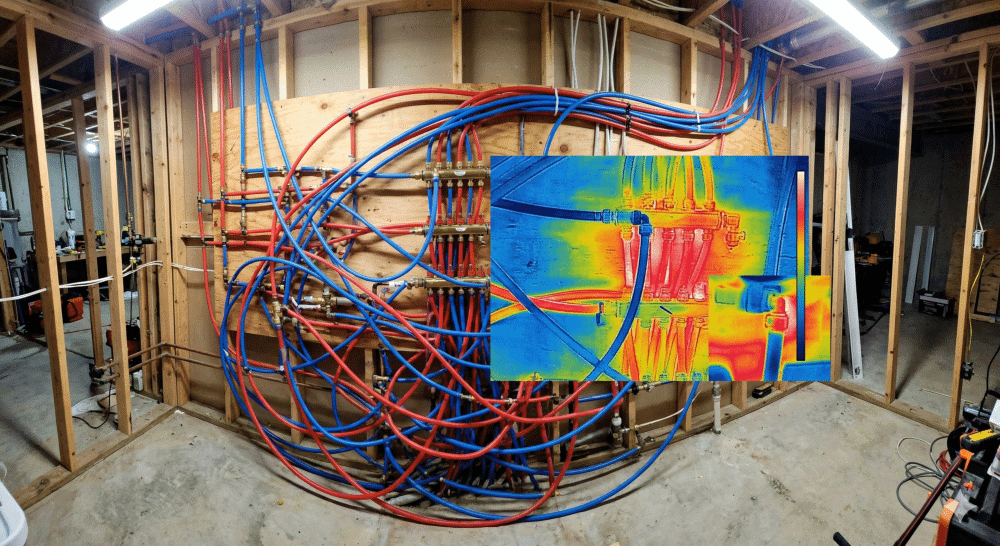
The same forces that drive infrastructure failure operate at smaller scales.
- Aging sewer lines → aging interior plumbing
- Soil instability → foundation stress
- Pressure variability → pipe fatigue
- Sudden collapse → internal flooding
Homes connected to city systems are part of this network.
They are influenced by external conditions.
They are not isolated systems.
Understanding that connection is critical for long-term reliability.
Post-Event Planning Reality
After collapse, cities adjust.
But adjustments are bounded.
- Budgets limit replacement speed
- Access constraints limit intervention scope
- Operational needs require systems to remain active during upgrades
Planning becomes phased.
High-risk areas are addressed first.
Lower-risk areas remain in service.
This creates a distribution of risk across the city.
Not all segments are equal.
Not all failures are predictable.
Direction Forward
Infrastructure resilience requires more than repair.
It requires systemic evaluation.
- Assessing age relative to load demand
- Identifying zones where environmental stress compounds risk
- Prioritizing upgrades based on underlying conditions, not visible performance
At the city level, this informs long-term planning.
At the property level, it reinforces the need for proactive assessment.
System-level audits bridge the gap between visible condition and hidden risk.
They provide a structured approach to identifying where failure is forming.
Before it becomes an event.
Explore how system-level plumbing evaluations reveal hidden vulnerabilities and support proactive upgrades: