San Francisco Bay Area Pressure Instability and Pipe Failure Risk
How This Helps Bay Area Homeowners
Most plumbing failures in the San Francisco Bay Area do not begin with a visible leak.
They begin with pressure.
Pressure that rises, drops, and shifts across the system.
Pressure that stresses pipes, joints, and valves long before anything breaks.
By the time water appears where it should not, the system has often been under unstable pressure conditions for years.
Understanding Bay Area pressure instability helps homeowners:
- recognize early-stage system stress before failure occurs
- identify pressure-related damage inside otherwise “working” plumbing
- understand why leaks often appear in different areas over time
- avoid repeated repairs that do not address pressure conditions
- see how elevation, infrastructure, and water demand affect their home
- make better long-term decisions about regulation, repiping, or system upgrades
The goal is not to react to leaks.
The goal is to understand the pressure conditions creating them.
Because in the Bay Area, plumbing systems often fail under unstable pressure.
Not just age.
Modeled from the national framework at Plumbing Whole Home Repipe Home Failure Intelligence.

San Francisco Bay Area Is A Pressure-Variable Plumbing Environment
The Bay Area operates across one of the most complex municipal water systems in the country.
This includes:
- varied elevation across cities and neighborhoods
- long-distance water transport systems
- high-demand urban infrastructure
- aging municipal components in some regions
- pressure zones and regulation points
These factors create variability.
Not just in supply.
But in how pressure behaves across different homes.
Elevation Changes Create Pressure Differences
The Bay Area includes:
- coastal zones
- hillside communities
- valley systems
- high-elevation neighborhoods
Water pressure must adjust across these elevation changes.
This creates:
- high pressure in lower elevation areas
- reduced pressure in higher elevation zones
- pressure compensation through regulators and pumps
Homes may experience:
- higher-than-expected pressure
- inconsistent pressure across fixtures
- localized system stress
Elevation is one of the primary drivers of pressure variability.
Pressure Cycling Wears Down Plumbing Systems
Pressure is not always constant.
Systems experience:
- increases during low-demand periods
- drops during peak usage
- fluctuations due to infrastructure adjustments
Each change introduces stress.
Especially at:
- joints
- valves
- fittings
- older pipe sections
Over time, this leads to:
- seal degradation
- joint fatigue
- micro-fractures
- reduced system tolerance
The system weakens gradually.
Aging Infrastructure Adds Instability
Parts of the Bay Area rely on older municipal infrastructure.
This can introduce:
- inconsistent pressure delivery
- variation across neighborhoods
- temporary pressure surges
- localized system imbalance
When aging infrastructure interacts with modern demand:
- stress increases
- pressure becomes less predictable
- system strain rises
Homes connected to these systems experience that variability directly.
Pressure Amplifies Existing Weaknesses
Pressure instability does not create all failures.
It exposes them.
Weak points include:
- aging copper systems
- corroded pipe sections
- previous repair zones
- mixed-material connections
Under stable pressure, these areas may hold.
Under fluctuating pressure, they fail.
This leads to:
- leaks in older sections
- failures near previous repairs
- sudden breaks after pressure changes
Pressure turns minor weaknesses into active failures.
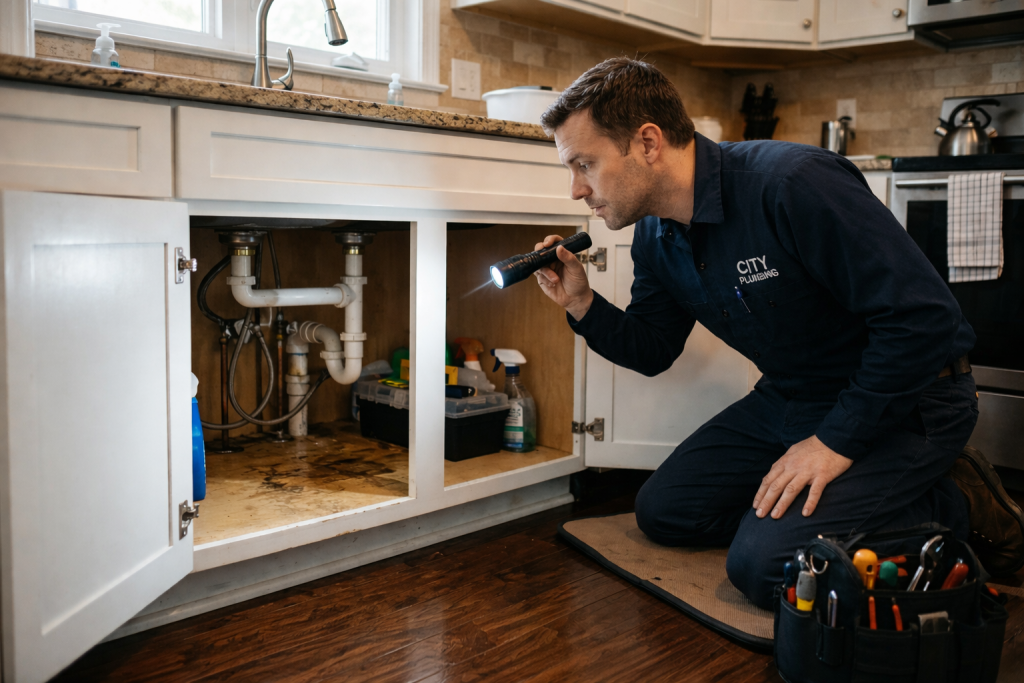
Water Chemistry Adds Internal Stress
Many Bay Area homes also experience mineral-related conditions.
Which can lead to:
- internal buildup
- restricted flow
- uneven pressure distribution
This creates additional stress inside the system.
Especially when combined with external pressure variability.
The system is being stressed from both directions.
Ground Movement Interacts With Pressure
The Bay Area includes seismic and soil movement conditions.
This creates:
- slight shifts in pipe alignment
- stress at slab penetrations
- underground pipe displacement
When movement combines with pressure:
- joints weaken faster
- stress concentrates at connection points
- failure probability increases
The system is responding to both movement and pressure simultaneously.
Why Failures Often Appear Sudden
Most homeowners experience pressure-related failures without warning.
But the system followed a progression:
- pressure variability
- material fatigue
- internal and external stress buildup
- weakening at specific points
- pressure event or fluctuation
- visible failure
The final stage is sudden.
The buildup is not.
Why Repairs Often Do Not Last
Many repairs address the visible leak.
But do not correct:
- pressure instability
- system-wide stress
- underlying weaknesses
This leads to:
- new leaks in other areas
- repeated service calls
- expanding failure zones
- shorter repair lifespan
The system was repaired locally.
Not stabilized globally.
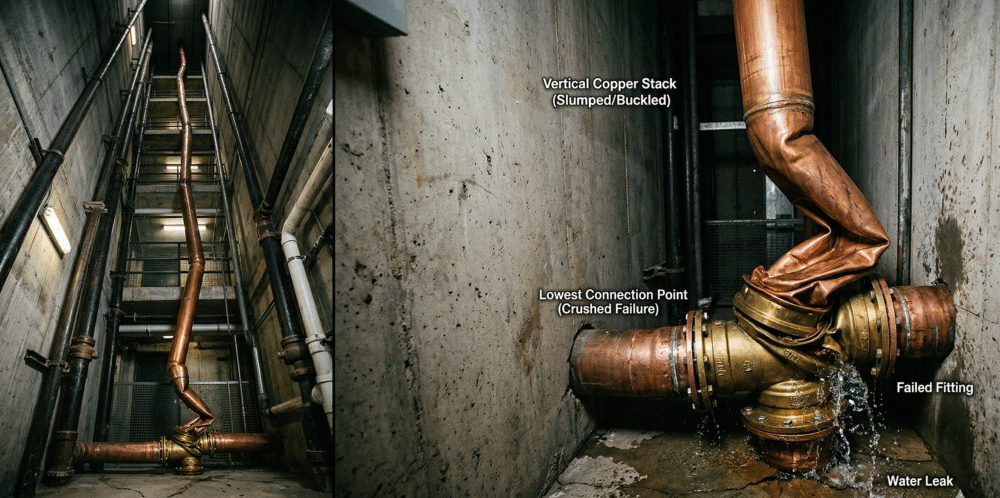
Early Warning Signs In Bay Area Homes
Some systems show indicators before major failure.
Including:
- fluctuating water pressure
- banging or noisy pipes
- recurring leaks in different locations
- inconsistent fixture performance
- visible corrosion or scale
- pressure spikes at certain times of day
These signs often indicate pressure-related stress.
Not isolated issues.
Human-System Acceleration Factors
Environmental pressure exists.
But human decisions influence outcomes.
Common factors include:
- lack of pressure regulation
- ignoring pressure fluctuations
- delaying system evaluation
- repeated spot repairs
- improper upgrades
- DIY modifications
In the Bay Area, pressure variability is constant.
Unmanaged systems degrade faster.
Final Positioning Statement
San Francisco Bay Area plumbing systems fail where pressure instability overlaps with aging infrastructure, water chemistry, and ground movement.
That pressure develops through:
- elevation-driven variability
- municipal system fluctuations
- internal restriction
- external movement
- material fatigue
- delayed detection
The visible leak is only the final stage.
The real system stress builds over time.
Understanding pressure instability in the Bay Area helps homeowners recognize risk earlier, reduce repeat failures, and make better long-term decisions about their home’s plumbing system.