Florida Home Failure Intelligence
This helps Florida homeowners identify hidden plumbing risks early, understand why failures keep repeating, and make better decisions before small issues turn into full system breakdowns.
Most plumbing failures across Florida do not begin with a sudden break.
They develop through layered environmental pressure acting on the system over time.
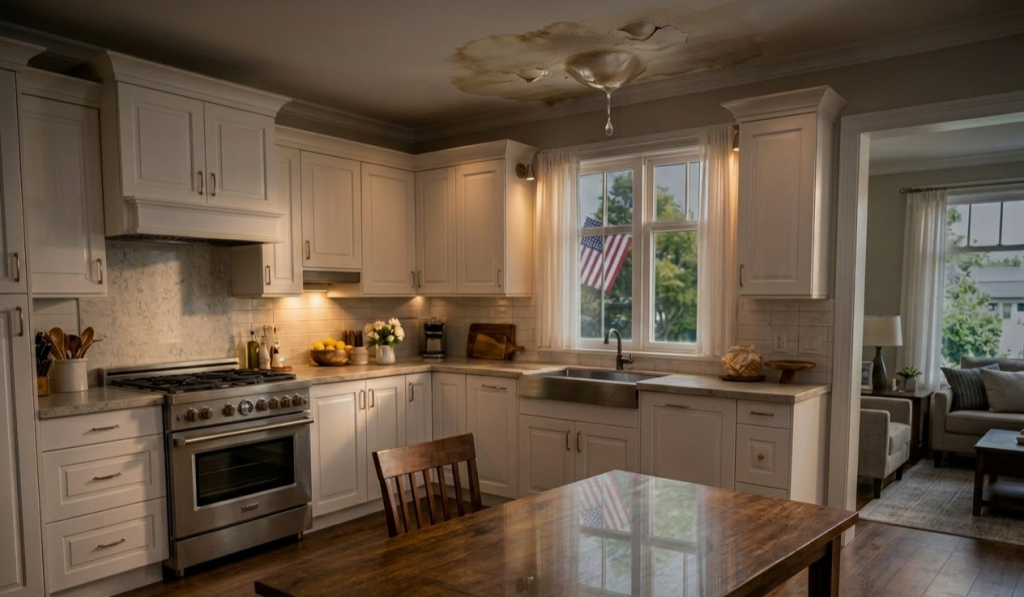
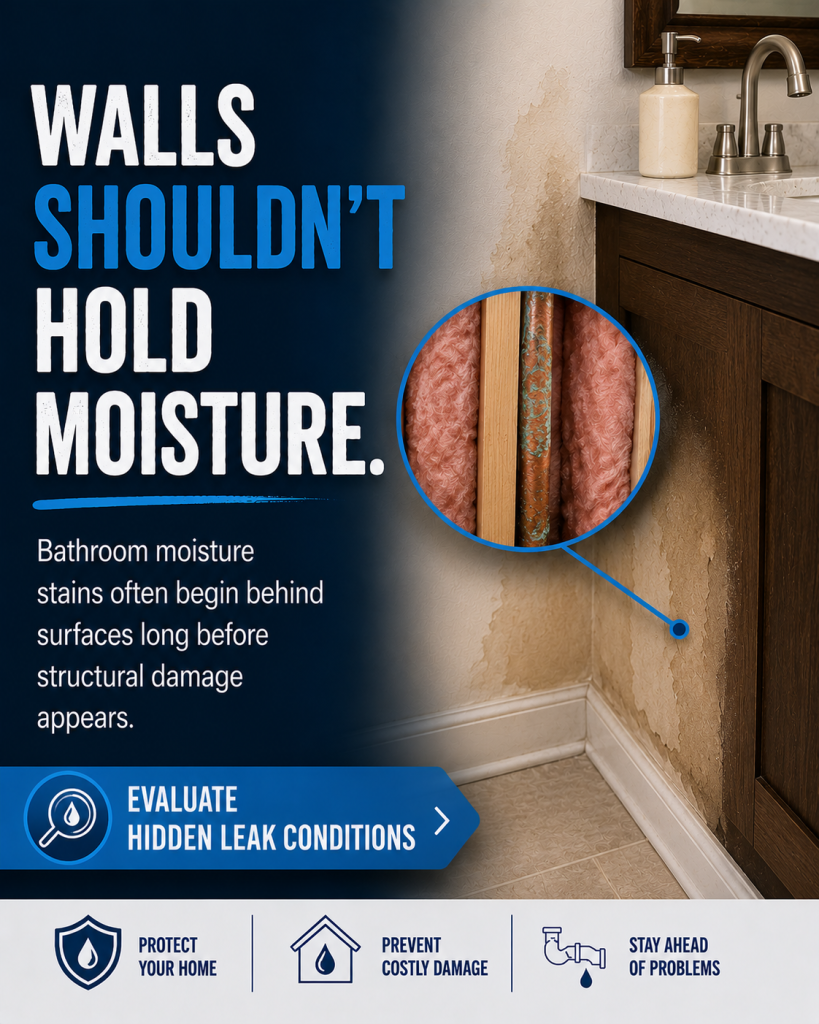
Homeowners often encounter inconsistent water pressure, unexplained moisture, slow drainage, or recurring system issues without understanding the root cause.
Those signals typically appear after the system has already been under stress for years.
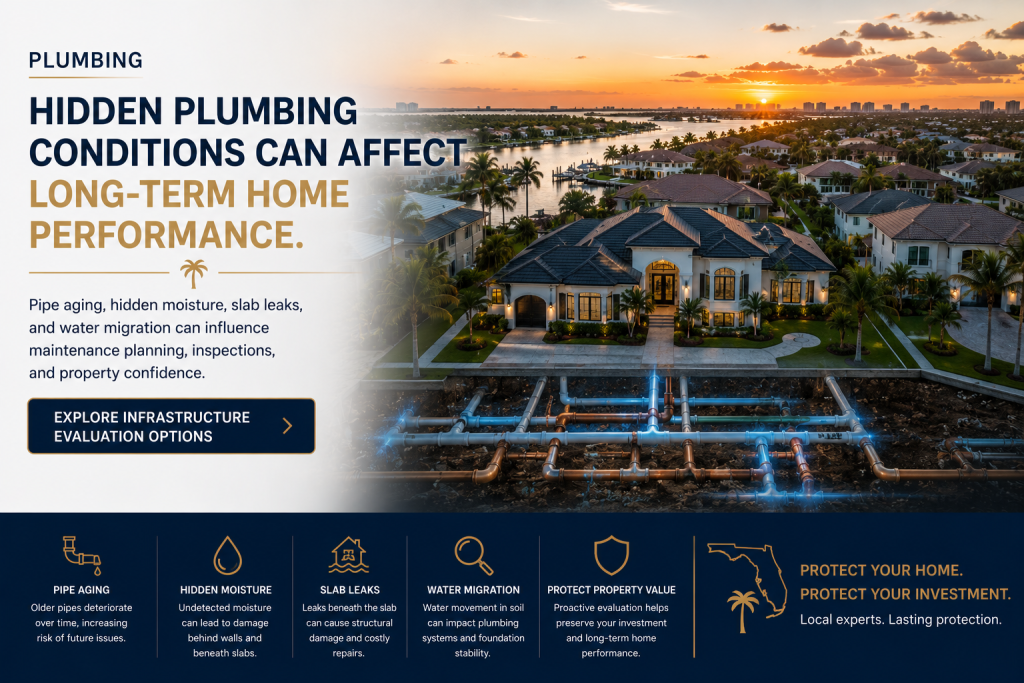
Florida creates a unique operating environment where plumbing systems are exposed to continuous external and internal forces.
Moisture surrounds the structure from below and above.
Heat cycles through the system daily.
Ground conditions shift beneath slab foundations.
Salt exposure accelerates material breakdown.
Water tables apply pressure from underneath the home.
Each factor changes how plumbing systems age, respond, and ultimately fail.
Florida Is A Multi-Force Plumbing Failure Environment
Florida does not present a single dominant risk.
Multiple forces operate simultaneously and often amplify one another.
The state combines high groundwater levels, saturation cycles, limestone subsurface instability, coastal corrosion, thermal expansion, humidity-driven deterioration, and rapid construction growth.
This creates a compounding effect.
Weak points do not stay isolated.
They expand under pressure and begin interacting with other vulnerabilities in the system.
Plumbing systems that might perform reliably in drier or more stable environments often degrade faster under Florida conditions.
The Florida Failure Stack
Most failures across Florida are the result of overlapping environmental stress rather than a single defect.
Saturation And High Water Table Pressure
Large portions of Florida operate with groundwater positioned close to the surface.
Rainfall patterns and storm cycles repeatedly saturate the soil.
That saturation reduces the stability of underground pipe support.
Drain lines begin to shift as soil consistency changes.
Slope integrity slowly degrades.
Connections experience stress as movement increases over time.
Drainage performance declines even without a visible break.
Detection becomes more difficult because surrounding moisture conditions mask early warning signs.
Water intrusion often blends into an already damp environment, delaying response and increasing the scale of damage.
Karst And Sinkhole Subsurface Movement
Florida’s limestone geology introduces structural instability beneath the home.
Subsurface material can dissolve, creating voids that alter how weight is distributed.
Plumbing systems depend on consistent support to maintain alignment and function.
When that support changes, the system absorbs the movement.
Drain lines lose pitch.
Connections separate at stress points.
Slabs shift unevenly across the structure.
Repairs that focus only on the visible issue often fail to resolve the underlying cause.
Recurring plumbing problems frequently indicate ongoing subsurface movement rather than isolated defects.
Coastal Salt And Humidity Corrosion
Air exposure plays a direct role in plumbing system deterioration across Florida.
Coastal environments introduce salt into the air.
Humidity keeps surfaces consistently exposed to moisture.
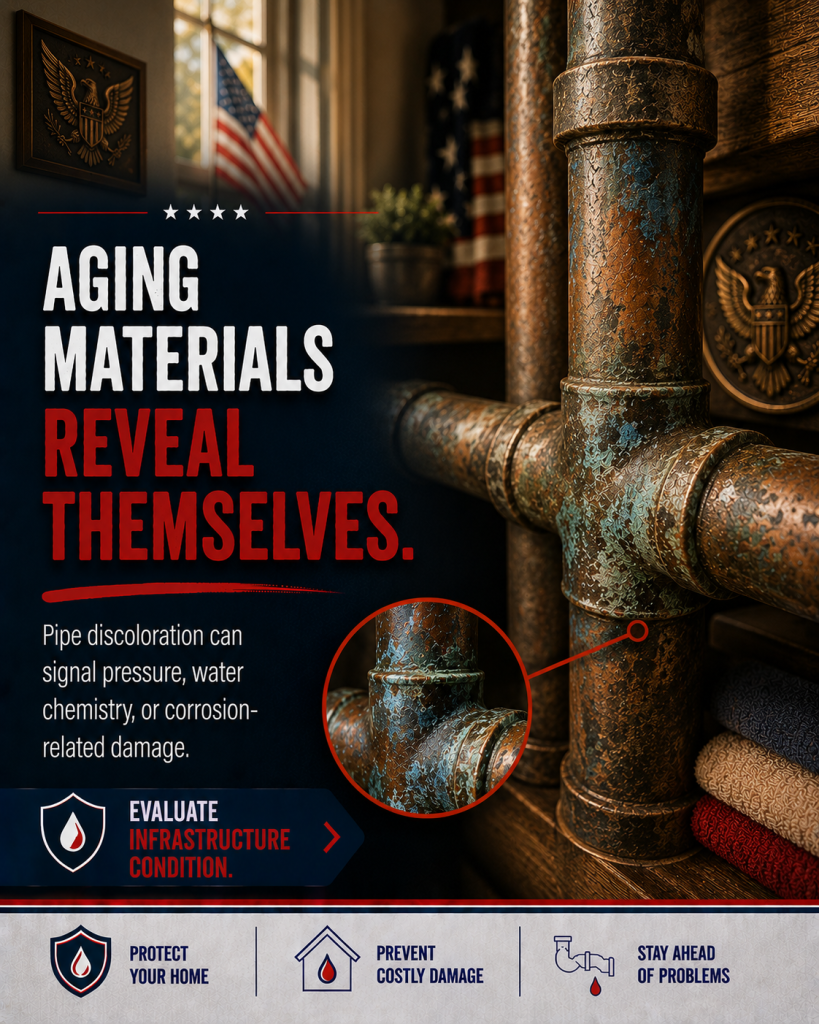
This combination accelerates corrosion on external plumbing components and mechanical systems.
Valves, fittings, supports, and exposed piping begin degrading from the outside inward.
Structural integrity weakens before internal flow is affected.
Failures often occur at connection points where corrosion and pressure intersect.
Heat And Thermal Expansion Stress
Florida plumbing systems operate under sustained thermal exposure.
High temperatures, combined with humidity, extend the duration of heat retention around the structure.
Pipes expand and contract repeatedly throughout the day.
Closed systems accumulate pressure when expansion is not properly controlled.
Components fatigue under continuous stress cycles.
Thermal conditions contribute to pressure irregularities, valve wear, and long-term system imbalance.
Legacy Cast Iron Drain System Deterioration
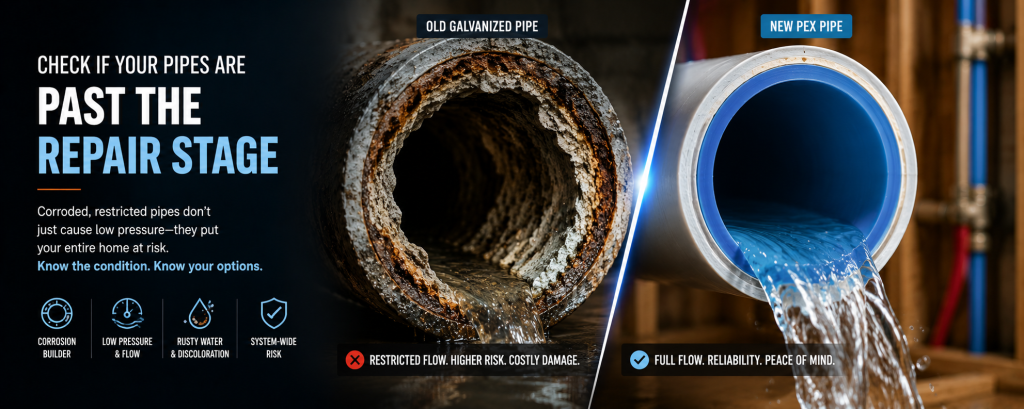
Many Florida homes still rely on aging cast iron drainage systems.
These systems have experienced decades of exposure to moisture both internally and externally.
Corrosion develops along the interior walls while external conditions weaken structural support.
Flow capacity decreases as scaling builds inside the pipe.
Sections begin to degrade, channel, or collapse.
Drainage issues that appear minor often indicate larger system-wide deterioration.
Localized repairs tend to fail when surrounding sections remain in the same stage of decline.
Boom-Build Construction Pressure
Rapid development across Florida has introduced additional risk through high-speed construction cycles.
Volume often takes priority over long-term consistency.
Underground plumbing systems may be installed with minimal margin for future movement or environmental stress.
Improper support, inconsistent slope, and rushed transitions create vulnerabilities that remain hidden during early occupancy.
In many cases, the conditions that lead to failure exist from the moment the system is installed.
Luxury Load And System Complexity
Florida contains a high concentration of large residential properties with complex plumbing systems.
Extended pipe runs, multi-zone water delivery, recirculation systems, outdoor plumbing, and auxiliary structures increase system demand.
Each added component introduces additional stress points.
Pressure variation becomes more difficult to control.
Small inefficiencies compound across larger systems.
Complexity increases both the likelihood of failure and the difficulty of accurate diagnosis.
Why Florida Plumbing Failures Stay Hidden
Environmental conditions in Florida reduce the visibility of early-stage failure signals.
Humidity masks moisture-related issues.
Subsurface conditions remain concealed beneath slab construction.
Ground saturation hides underground leakage.
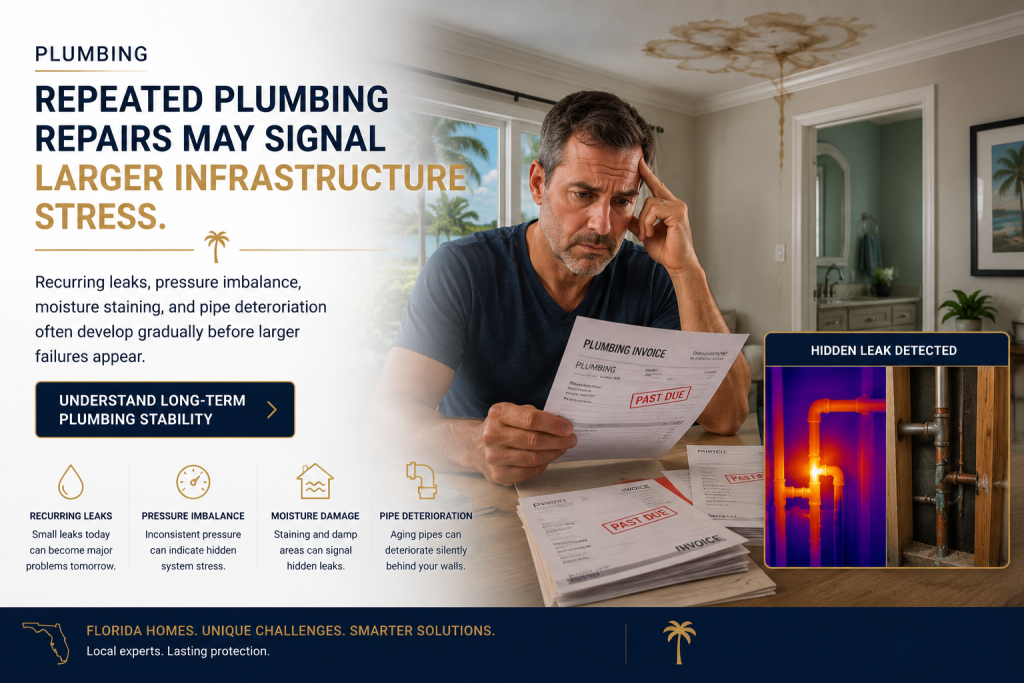
By the time visible symptoms appear, the system has often been under sustained stress for an extended period.
Homeowners typically see the outcome rather than the underlying cause.
Florida Homes Operate Under Continuous Environmental Load
Plumbing systems in Florida function within constant environmental pressure.
Moisture, heat, ground movement, corrosion, and demand load operate simultaneously rather than independently.
These forces interact and compound over time.
The same plumbing issue carries different implications depending on the surrounding environment.
In Florida, the environment itself often drives how failures develop and how quickly they escalate.
Understanding these patterns allows homeowners to evaluate risk earlier, interpret warning signs more accurately, and take action before isolated issues evolve into full system failure.