

🚨 Outer Sunset Sewer System — Full Breakdown Report
Outer Sunset & Westside, San Francisco (Recurring Events)
Why This Matters to Homeowners in San Francisco:
In coastal neighborhoods, sewer systems don’t just overload—they corrode over time, increasing the chance of backups into your home.
- San Francisco Sinkhole Collapse (1995): Subsurface System Failure
- Mission District Flooding (2014): Urban Drainage Overload
- Twin Peaks Water Pressure Failures (Recurring): Elevation System Stress
- Pacific Heights Water Main Breaks (Recurring): Aging Infrastructure Failure
- Outer Sunset Sewer Backups (Recurring): Coastal System Corrosion
- SOMA Flooding Events (Recurring): High-Density Drainage Failure
- San Francisco Firestorm Water Failure (1906): Infrastructure Collapse Event
- Bernal Heights Hillside Failures (Recurring): Drainage + Soil Instability
- Richmond District Pipe Corrosion (Recurring): Material Breakdown Pattern
- Citywide Aging Pipe Failures (Recurring): Systemwide Degradation
📍 Geographic + Structural Context (Pre-Event Environment)
This is a recurring coastal sewer failure pattern centered in the Outer Sunset along the Pacific edge of San Francisco.
Primary regions and neighborhoods affected (for scale + search relevance):
- Core impact zone: Outer Sunset
- Adjacent coastal areas: Outer Richmond, Parkside
- Nearby districts: Inner Sunset, Golden Gate Park
- Regional context: San Francisco
Critical preconditions:
- Coastal exposure: Salt air and moisture accelerate corrosion
- Aging sewer infrastructure: Older pipes vulnerable to degradation
- Combined system: Stormwater and wastewater share capacity
- Flat terrain: Limited gravity-driven drainage efficiency
- Outflow dependency: System must discharge toward ocean

🌊 Environmental + System Conditions
These failures occur during both storm events and normal operation, due to long-term corrosion.
Common contributing conditions:
- Coastal moisture and salt exposure
- Heavy rainfall increasing system load
- Tidal conditions affecting outflow
- Long-term material degradation
👉 Key dynamic:
The system weakens over time, then fails under stress or overload
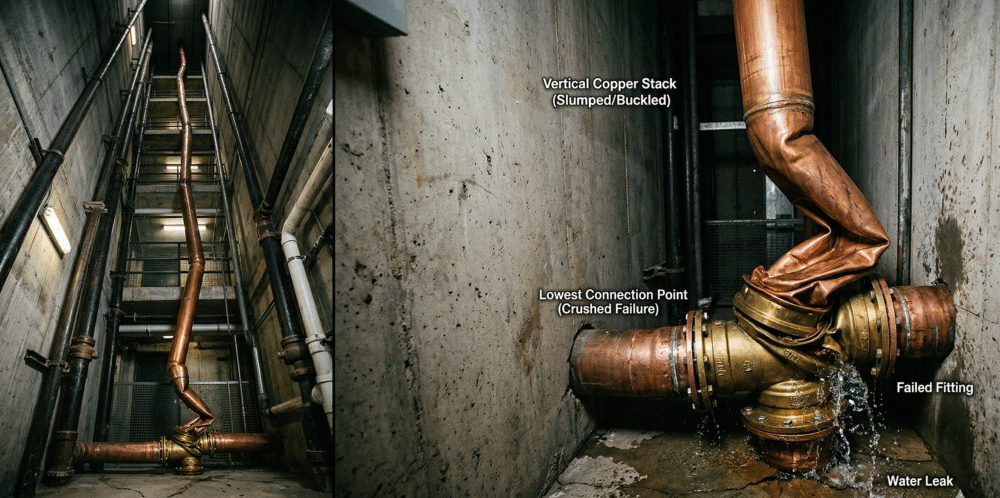
⚙️ Failure Mechanics (What Actually Breaks)
Step-by-Step Breakdown
- Long-Term Corrosion (System Degradation)
- Salt-laden air and moisture degrade pipe materials
- Interior and exterior corrosion weaken structure
- Capacity Reduction + Structural Weakness
- Pipe diameter effectively reduced
- Weak spots develop in pipe walls
- Inflow Surge During Rain Events
- Stormwater enters combined sewer system
- Volume increases beyond normal levels
- System Surcharge (Primary Failure Mode)
- Pipes fill and become pressurized
- Flow slows and backs up
- Backflow Activation
- Water reverses into:
- lateral lines
- home connections
- Residential Sewer Backup
- Wastewater enters homes through:
- drains
- toilets
- floor fixtures

💥 The Event (Recurring Pattern)
- Timeline: Gradual degradation → sudden backup
- Initial warning signs:
- slow drains
- odors
- intermittent backups
Collapse Dynamics
- System transitions from:
- weakened → overloaded → reversing
👉 Failure combines long-term corrosion with short-term overload
🏚️ Immediate Damage Profile
- Sewer backups in homes across affected areas
Damage characteristics:
- Raw sewage intrusion
- Contamination of interior spaces
- Health hazards requiring remediation
🧠 System-Level Failure Analysis
1. Corrosion-Driven Failure
- Coastal conditions accelerate pipe degradation
2. Combined System Vulnerability
- Stormwater + sewage increase load
3. Outflow Limitation
- Ocean discharge constraints affect system performance
🔁 Direct Aftermath (Short-Term)
- Emergency cleanup and sanitation
- Temporary system relief after storms
- Repairs to damaged infrastructure
🧱 Indirect Effects (Long-Term Changes)
🏗️ 1. Sewer Infrastructure Upgrades
- Replacement with corrosion-resistant materials
🌊 2. Backflow Prevention Systems
- Increased installation of:
- backwater valves
📡 3. Monitoring + Maintenance Programs
- Better tracking of system condition
🏘️ 4. Coastal Infrastructure Planning
- Adaptation to environmental exposure
🧩 Hidden Insights (What Most People Miss)
⚠️ 1. “The System Is Deteriorating Constantly”
Damage happens slowly over time
⚠️ 2. Corrosion Reduces Capacity
Not just strength
⚠️ 3. Backups Start Before Failure
Early warning signs appear first
🧠 Contractor / System Thinking Translation
Infrastructure System | Residential Equivalent |
Sewer main | Home drain system |
Corrosion | Pipe degradation |
Surcharge | System pressure |
Backflow | Sewer backup |
👉 Same equation:
Corrosion + overload = wastewater backflow into the home
🏠 What This Means for Your Home
- Coastal exposure increases plumbing wear
- Slow drains can signal system problems
- Backups often originate outside your home
- Prevention systems can reduce risk
🎯 Final Takeaways (Mechanical Framing)
- Root Cause: Long-term corrosion of sewer infrastructure
- Trigger: Stormwater overload and system surcharge
- Failure Type: Backflow → residential sewer intrusion
- Impact Multiplier: coastal environment + aging systems
- Lesson:
Coastal systems don’t just overload—they weaken first, then fail