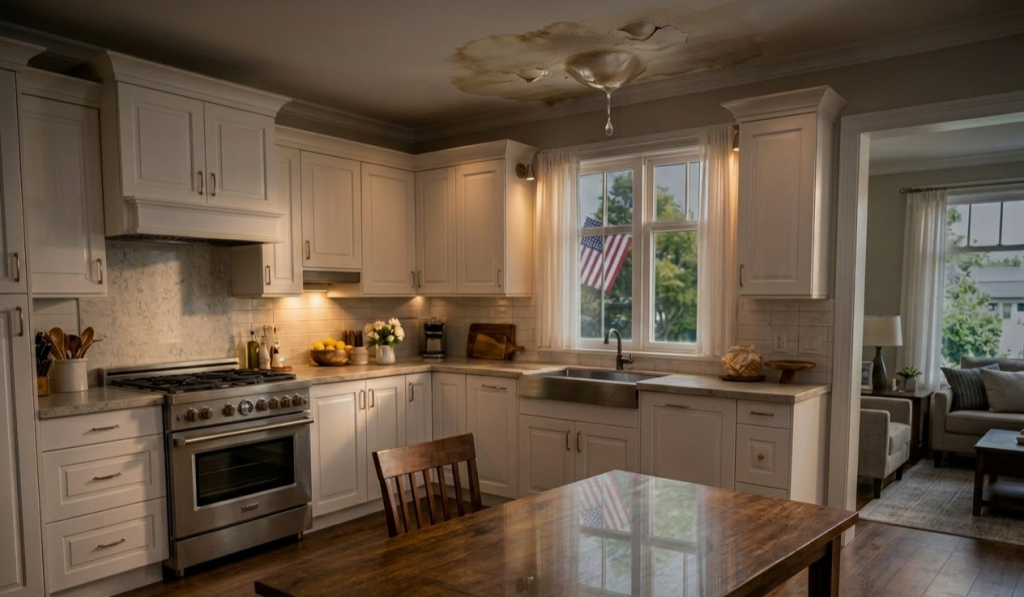
Anchorage Freeze Events Destroying Residential Plumbing Systems
How This Helps Anchorage Homeowners
Most plumbing failures in Anchorage do not start with a burst pipe.
They start with freezing conditions building inside the system.
Water slows.
Then stops.
Then expands.
Pressure builds silently inside walls, crawlspaces, and utility runs.
By the time a homeowner sees water, the pipe has already failed.
Understanding Anchorage freeze events helps homeowners:
- recognize early-stage freezing before rupture occurs
- understand why pipes burst during thaw—not just during cold
- identify high-risk areas inside their home’s plumbing layout
- prevent repeat freeze failures after repairs
- see how insulation, routing, and heat loss drive system risk
- make better long-term decisions instead of reacting to emergencies
The goal is not just to fix frozen pipes.
The goal is to understand why they freeze in the first place.
Because in Anchorage, freezing is not an event.
It is a system condition.
Modeled from the national framework at Plumbing Whole Home Repipe Home Failure Intelligence.
Anchorage Is A Freeze-Dominant Plumbing Environment
Anchorage plumbing systems operate under sustained cold exposure for long periods each year.
Freezing conditions are not rare.
They are expected.
This environment includes:
- extended sub-freezing temperatures
- rapid temperature swings during shoulder seasons
- long winter duration
- snow accumulation and melt cycles
- wind-driven heat loss
- cold-soil interaction beneath structures
These factors create constant pressure on residential plumbing systems.
Even when systems appear stable.
Freeze Pressure Builds Inside The Pipe
When water freezes, it expands.
Inside a closed plumbing system, that expansion creates internal pressure.
Pressure does not distribute evenly.
It concentrates at weak points:
- elbows
- fittings
- valves
- previous repair locations
- aging material sections
The pipe may not burst immediately.
Instead:
- water freezes
- pressure increases
- internal cracking occurs
- the system holds temporarily
- thaw begins
- water escapes through the damaged section
This is why many Anchorage homeowners discover leaks during warming periods.
Not during the coldest nights.
Freeze Often Begins In Predictable Locations
Most freeze events follow consistent patterns inside residential systems.
High-risk zones include:
- exterior-facing walls
- uninsulated cavities
- crawlspaces
- attic runs
- garage-adjacent piping
- under-sink cabinet areas on exterior walls
- long horizontal pipe runs with low flow
These areas lose heat faster.
Water stagnates more easily.
And freezing begins sooner.
The rest of the system may remain functional while isolated sections freeze.
Insulation Gaps Create Hidden Failure Points
Insulation does not need to fail completely to create risk.
Small gaps are enough.
Especially in Anchorage conditions.
Common vulnerabilities include:
- incomplete insulation coverage
- compressed insulation
- displaced insulation during repairs
- poorly sealed penetrations
- air leakage pathways
- unprotected pipe transitions
Cold air reaches the pipe.
Heat escapes.
Freezing begins locally.
This creates isolated pressure zones inside the system.
Crawlspaces And Utility Runs Under Stress
Many Anchorage homes rely on crawlspaces or utility corridors to route plumbing.
These areas are highly sensitive to:
- temperature fluctuation
- air movement
- insulation quality
- moisture conditions
If heat loss exceeds protection, pipes begin to freeze.
Even if the interior of the home remains warm.
Over time, this leads to:
- repeated freeze cycles
- pipe fatigue
- joint weakening
- support system stress
- eventual rupture
These areas are rarely monitored closely.
Which allows conditions to develop unnoticed.
Freeze–Thaw Cycling Weakens The System
Anchorage systems experience repeated freeze–thaw transitions.
Especially during:
- early winter
- late winter
- spring thaw periods
Each cycle introduces expansion and contraction.
This creates:
- micro-fractures
- seal degradation
- joint loosening
- material fatigue
The system weakens incrementally.
The final failure may occur during a routine temperature shift.
Not an extreme event.

Why Failures Appear Sudden
Most homeowners experience freeze-related failures as sudden emergencies.
But the system followed a sequence:
- insulation or heat loss vulnerability
- localized freezing
- pressure buildup
- internal material damage
- thaw event
- visible leak or burst
The final stage is immediate.
The buildup is gradual.
System Design Determines Survival
In Anchorage, plumbing performance depends heavily on system design.
Critical factors include:
- pipe routing location
- insulation quality
- heat tracing systems
- enclosure of vulnerable sections
- airflow control
- temperature management
Poor design choices increase exposure.
Even in newer homes.
Well-designed systems reduce risk significantly.
Even under extreme conditions.
Repaired Pipes Often Freeze Again
Many homeowners repair a burst section and assume the problem is resolved.
But the original condition remains:
- insulation gaps
- exposure to cold air
- system routing vulnerability
- lack of heat protection
The new pipe reconnects to the same environment.
This leads to:
- repeat freezing
- additional failures
- expanding damage zones
The system was repaired.
Not corrected.

Human-System Failure In Cold Environments
Environmental pressure is constant in Anchorage.
But human decisions determine system resilience.
Common acceleration factors include:
- shutting off heat in unused areas
- failing to monitor crawlspaces
- ignoring early freeze signs
- delaying insulation upgrades
- improper DIY repairs
- lack of seasonal system preparation
In cold environments, small decisions have large consequences.
Because the system operates close to its limits.
Final Positioning Statement
Anchorage plumbing systems fail under freeze pressure more than age alone.
That pressure develops through:
- sustained cold exposure
- localized heat loss
- insulation gaps
- freeze–thaw cycling
- system design limitations
- delayed detection
The visible pipe burst is only the final stage.
The real system stress builds long before failure occurs.
Understanding Anchorage freeze conditions helps homeowners anticipate risk, reduce repeat failures, and make better long-term decisions about protecting their home’s plumbing system.